Why "Floral Tattoo Artist Near Me" Is the Right Question. But Only Part of It
Searching for floral tattoo artists near you is a sensible starting point. But proximity only solves the logistics. It doesn't tell you whether the artist you find can actually execute a delicate rose curve without the line thickening mid-petal, or whether their shading will hold definition two years after the session.
Floral work sits at the crossroads of fineline precision, realist shading, and compositional instinct. A studio that does well with bold black lettering may struggle with the controlled gradients of a peony. The gap between a decorative flower scribbled in flash and a genuinely botanical piece is wide. Your real task isn't finding someone nearby. It's evaluating quality before you commit.
This guide covers what that evaluation actually looks like, with specific reference to the work coming out of our floral tattoo service here in Lisbon.
What Floral Tattoos Actually Are (and the Styles Within the Style)
Floral is a subject matter, not a single technique. A wildflower on a forearm and a photorealistic rose on a thigh are both floral tattoos. They require entirely different skills. Knowing which sub-style fits your vision changes who you should be looking for.
Fineline Botanical
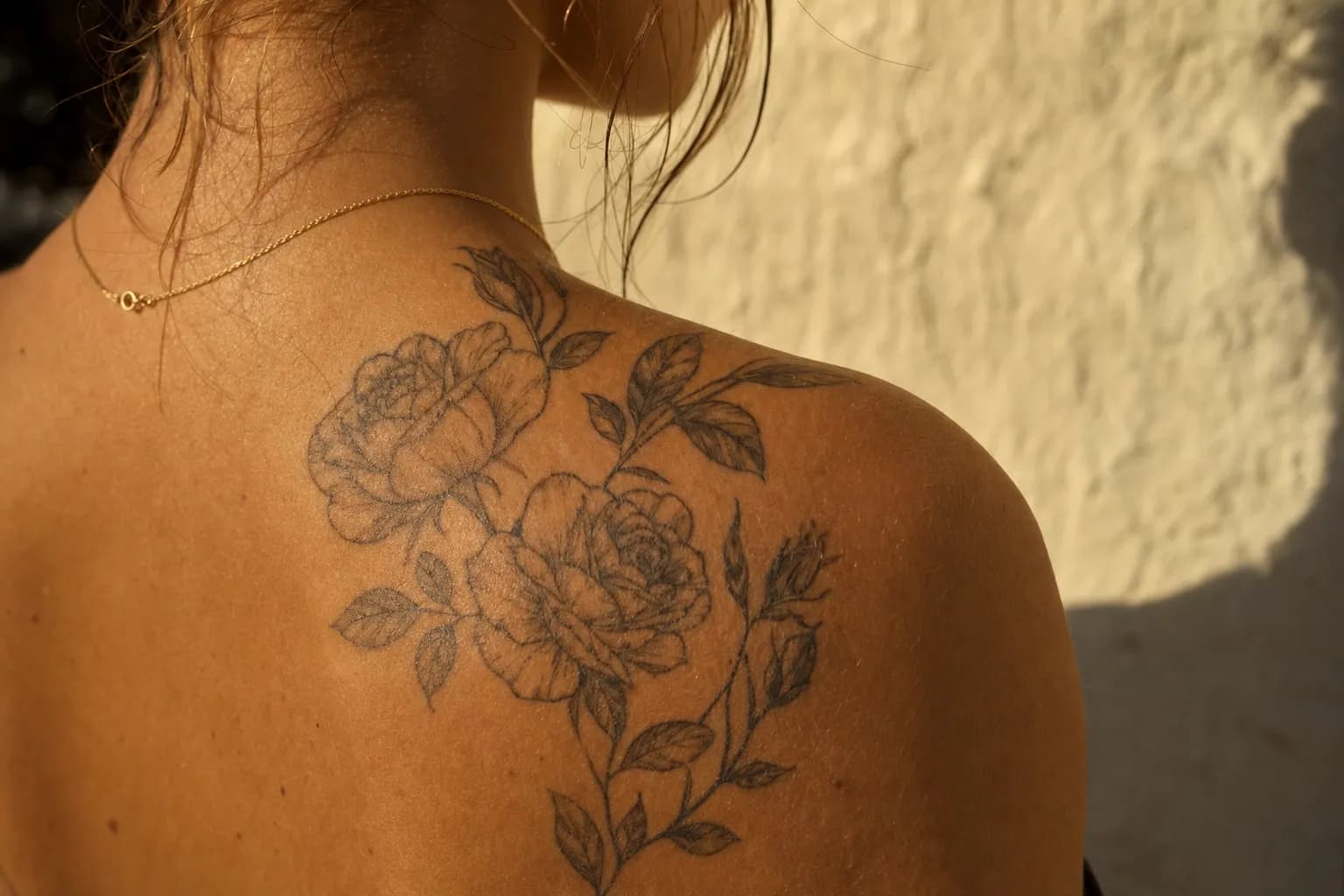
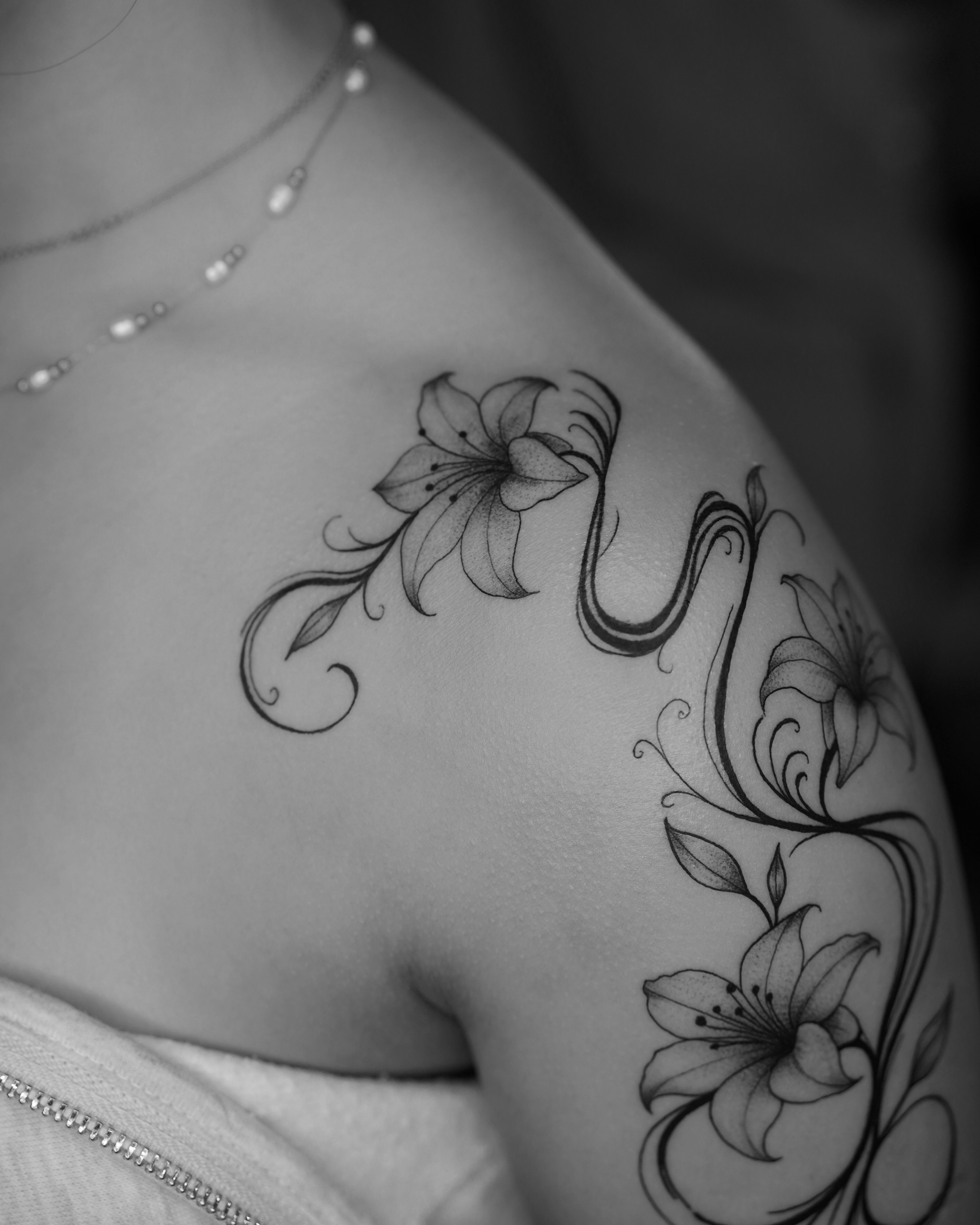
Fineline botanical work uses a single needle to draw hair-thin lines with no heavy fill. Think botanical illustration rather than painting. The lines carry all the information: petal shape, leaf vein, stem texture. There's no thick outline to hide hesitation. Every stroke is visible, so consistency across the whole piece matters enormously.
If you're drawn to pieces that look engraved rather than painted, this is likely your style. For a sense of what precise fineline botanical work looks like at scale, see this fineline floral shoulder piece from the studio's portfolio.
Micro Realism Florals
Micro realism brings photographic depth to a small canvas. A 5cm rose rendered in micro realism will show shadow, reflected light, and petal translucency. It's technically demanding work: you're compressing the tonal range of a large painting into a space the size of a matchbox. If you want detail that makes people look twice, what the micro realism style actually demands is worth understanding before you book.
Minimalist Floral
Minimalist florals strip the image back to its essential silhouette. Negative space does the work that shading would normally do. Restraint is the whole point. One misplaced line breaks the composition because there's nothing else to draw the eye away from it. This is harder than it looks.
The Craft Behind Good Botanical Work
Line Consistency and Petal Symmetry
Petal curves demand controlled wrist movement at consistent speed. Speed up through a curve and the line thins. Slow down and it thickens. Do both in the same petal and the result looks nervous rather than organic. Line weight consistency is the single clearest visual indicator separating skilled botanical work from rushed approximations. Look at the edges of petals in any portfolio piece: do they hold the same weight from tip to base?
Shading and Depth Without Muddiness
Shading in floral tattoos uses a magnum shader (a curved cluster of needles arranged in a fan shape) to build soft gradients across petals. Push too hard or work too wet and the pigment spreads, turning a delicate gradient into a grey smudge. The technique requires a lighter hand than most styles. Healed gradient work is the honest test: fresh ink always looks cleaner than it will settle.
Skin tone and undertone also affect how ink reads in botanical pieces. A light wash that reads as blush pink on pale skin can disappear entirely on deeper tones. The artist adjusts pigment choices accordingly at consultation, not as an afterthought.
How Size Affects Detail Longevity
Tiny florals under 4cm compress a lot of detail into a small area. If the lines sit too close together, they migrate toward each other as the skin heals and ages, turning distinct petals into an indistinct patch. An experienced artist knows which details to simplify at small scale and which elements to keep. If the stencil looks complex enough to lose itself in two years, it probably will.
Lisbon's humid summers add another variable. The city sits on the Atlantic, and July humidity regularly makes fresh ink sweat out faster than in drier climates. A new floral sleeve needs particular care in the first two weeks if you're sitting in August. More on that in the placement and healing section below.
How the Studio Approaches Floral Work
The Consultation: From Reference to Custom Sketch
Every floral design here is drawn from scratch. No flash sheets are reused unchanged. You'll bring references. Photographs, pressed flowers, illustrations, anything that captures the feeling you're after. And the artist uses those to understand your visual language, not to trace directly onto your skin.
The process starts with a pencil sketch, loose and proportional, to get the organic flow of the composition right before anything is committed. From there it moves to digital refinement, where line weights are adjusted and the stencil is finalised. This two-stage approach matters: organic curves drawn freehand first, then cleaned up digitally, read differently on skin than designs built entirely on screen.
Placement and How It Shapes the Design
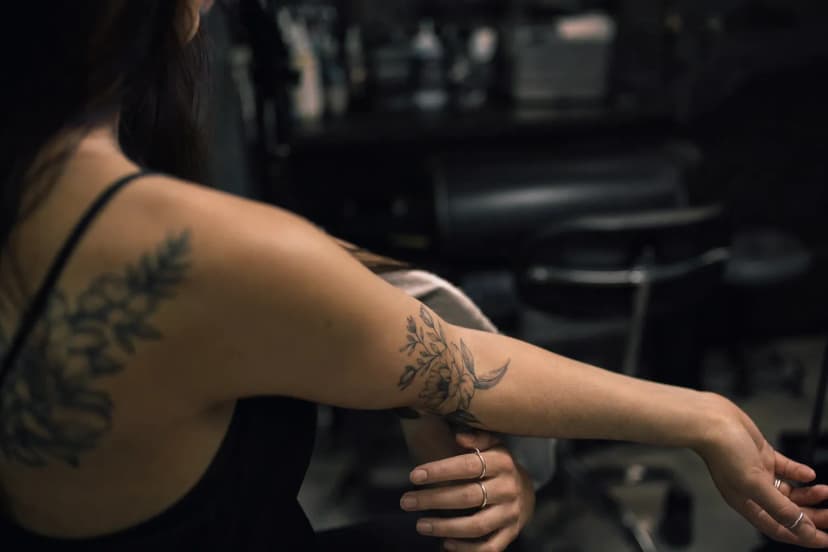
Placement changes everything about how a floral design is drawn. A shoulder piece wraps a convex surface; a forearm piece needs to read from multiple angles as the arm rotates. The ribcage involves skin that moves with every breath, which limits how fine the lines can go. The thigh offers more canvas and more stable skin for larger, more detailed compositions.
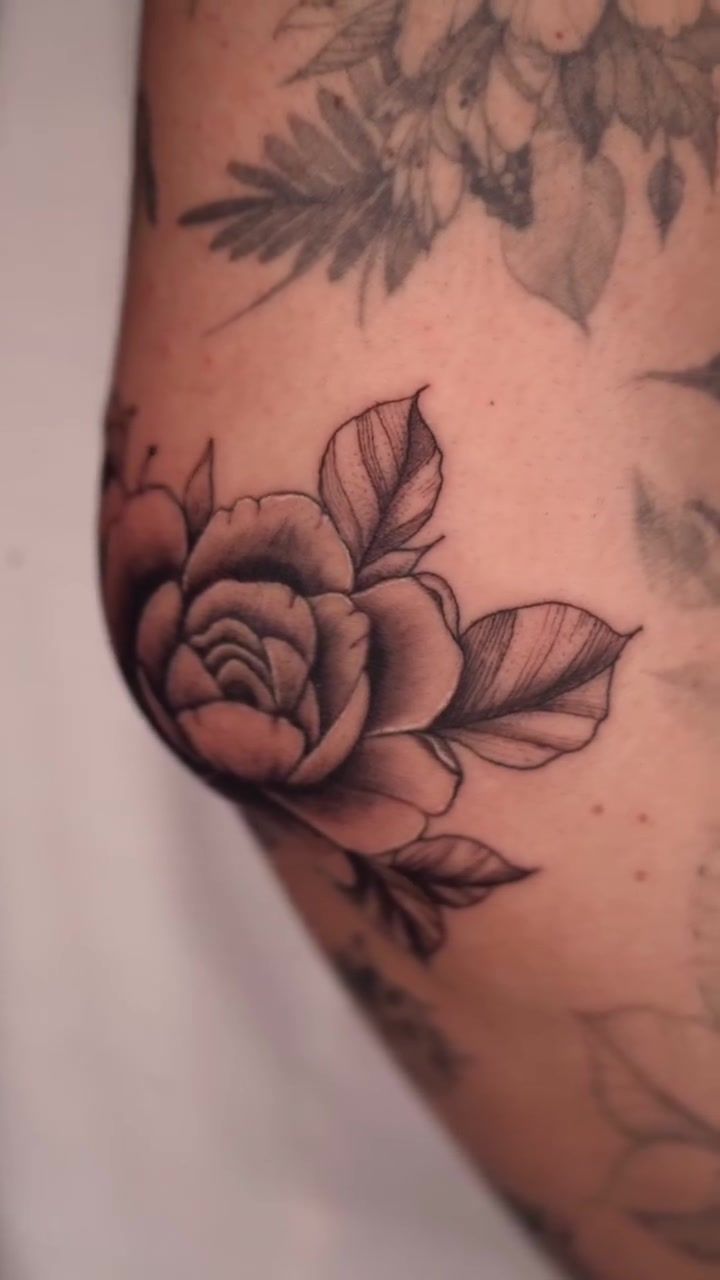
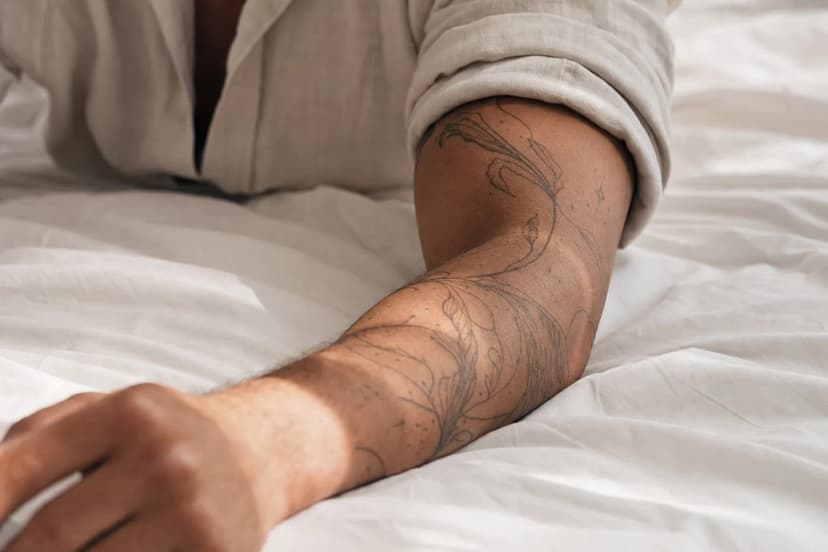
The elbow crease, for example, is one of the most technically challenging placements for fine botanical work. See this rose on the elbow, part of a floral sleeve in progress, to understand how composition adapts to that specific anatomy.
What the Session Actually Looks Like
A single rose outline with minimal shading typically takes 90 minutes. A shoulder composition with multiple blooms, layered petals, and soft gradient shading runs two to three hours. Larger sleeve build-outs happen across multiple sessions, usually spaced four to six weeks apart to allow full healing between phases. The artist gives you a realistic session estimate once the design is sketched, not before.
Placement, Sizing, and Healing: The Practical Reality
The outer shoulder and outer forearm are generally the most forgiving placements for fine botanical work. They're relatively flat, don't rub against clothing the way inner-arm placements do, and stay still during movement. The thigh works well for larger compositions. The ribcage and inner bicep are workable but involve more skin stretch, which can distort delicate curves over time.
| Placement | Healing Complexity | Typical Session Length | Best For |
|---|---|---|---|
| Outer shoulder | Low | 2-3 hours | Detailed multi-bloom compositions |
| Outer forearm | Low-Medium | 90 min-2 hours | Single stems, fine botanical illustration |
| Thigh | Medium | 2-4 hours | Larger realistic floral pieces |
| Ribcage | High | 2-3 hours | Simpler linework, less fine shading |
| Inner bicep | High | 90 min-2 hours | Minimalist florals with fewer lines |
| Elbow area | Very High | 1.5-2 hours per phase | Bold anchor elements in a sleeve |
Aftercare during Lisbon's summer months needs particular attention. The UV index in July and August sits consistently high, and fresh botanical ink on exposed skin can oxidise and fade unevenly if you're spending time in Príncipe Real's outdoor cafés or along the waterfront at Cais do Sodré. Covering the piece for the first two weeks of sun exposure is non-negotiable. For guidance on which placements hold up best on smaller pieces, the studio's guide on which placements actually work for smaller pieces goes into more detail.
Winter in Lisbon is milder, but skin can dry out more than people expect. Consistent moisturising through the first month keeps fine botanical lines from settling with a rough or patchy edge.
What to Prepare for Your Floral Appointment
- Bring reference images. Photographs of real flowers, botanical prints, or even pressed specimens work well
- Wear or bring clothing that gives clear access to the placement area without you needing to undress fully
- Eat a proper meal before the session; blood sugar drops make longer sessions harder
- Arrive with clean, moisturised (but not heavily lotioned) skin on the placement area
- Avoid alcohol for at least 24 hours before the appointment. It thins the blood and affects how ink sits
- If you're coming from outside central Lisbon, the studio is accessible from several metro lines; confirm the exact location when you book
What to Look for When Evaluating Any Floral Artist's Portfolio
The most important thing you can ask any flower tattoo artist near you: do you have healed photos? Fresh tattoos always look sharper than they'll settle. A piece photographed ten minutes after the session still has skin trauma around it that makes lines look crisper than they are. Healed photos, taken six to twelve weeks later, show you what actually stays.
"One strong healed photo tells you more about an artist's technical ability than twenty fresh shots. Fresh ink is forgiving. Healed work is honest."
Beyond healed vs fresh, look for consistency across multiple pieces rather than one exceptional hero shot. Any artist can have a good day. Consistent quality across ten different floral pieces in ten different placements is a much stronger signal.
Check the line edges on petals specifically. Do they stay crisp at the tip, or do they feather (spread slightly into the surrounding skin)? Feathering can happen due to technique, needle choice, or skin type, but a skilled botanical tattoo artist in Lisbon knows how to account for all three. Also look at the negative space: in fineline and minimalist florals especially, the empty space is as deliberate as the lines. If it looks accidental, it usually is.
For a deeper understanding of what separates strong botanical portfolios from the rest, read the studio's guide on what quality botanical work actually looks like, and for Lisbon-specific context, what floral work demands from a Lisbon artist covers the local variables in detail.
If you're researching across styles and want to understand how fineline botanical work sits within the broader fineline discipline, the guide on what to look for in fineline work in Lisbon is a useful companion read. And if you're considering combining floral elements with script, the article on what great script work actually takes covers the technical demands of lettering that pairs cleanly with botanical motifs.
Looking for the best floral tattoo artist Portugal has available? Start with portfolios that show healed botanical work across multiple placements and styles. The studio's full floral portfolio shows exactly that range, from shoulder compositions to sleeve build-outs to single-stem minimalist pieces.
- Request healed photos specifically. Ask directly if they're not visible in the portfolio
- Look for at least five to ten floral pieces across different placements, not just one body part
- Check line weight consistency on curved petal edges, not just straight stems
- Ask which needle configuration they use for shading (magnum shader for soft gradients; round shaders for tighter areas)
- Evaluate negative space: is it deliberate, or does it look like detail that didn't survive healing?
- Compare the complexity of the design to the scale it's tattooed at. Detail that's too dense for the size will blur
Frequently Asked Questions
How long does a floral tattoo take to complete?
A single floral piece, such as one rose or a small wildflower cluster, typically takes 90 minutes to three hours. A larger shoulder or thigh composition with multiple blooms and shading usually needs two or three separate sessions. The artist will give you a realistic session estimate during your consultation once the design is sketched and the placement is confirmed.
Which placement works best for a floral tattoo?
The outer shoulder, forearm, and thigh offer relatively flat, stable skin that holds fine botanical lines well. The ribcage and inner bicep are workable but involve more skin movement, which can distort delicate curves. Placement also affects how the design flows with your body's natural contours, so it's worth discussing in detail before committing to a location.
Will fine line floral tattoos fade faster than bold-line ones?
Fine line florals require careful aftercare and are more sensitive to prolonged sun exposure. That said, a well-executed fineline piece placed on lower-movement skin and consistently moisturised holds its definition for many years. The quality of the original linework is the biggest factor: crisp, consistent lines fade more gracefully than rushed or uneven ones, regardless of line weight.
Do I need multiple sessions for a floral sleeve?
Almost certainly, yes. A full floral sleeve is typically broken into three to five sessions, each two to four hours, spread at least four to six weeks apart to allow healing between phases. This pacing also lets the artist and client refine the design as it progresses, which is especially useful for larger compositions that need to flow cohesively across the arm.
Can I combine floral elements with lettering or geometric designs?
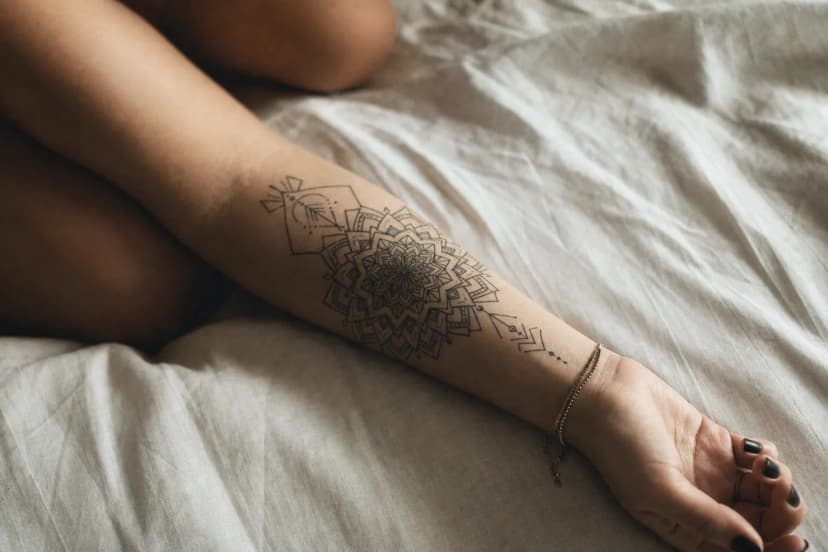
Yes, and it's a combination the studio works with regularly. Botanical motifs pair naturally with fine script lettering and with geometric framing elements. The key is balancing line weights and visual tones across styles: a heavy gothic script next to hairline petals needs careful compositional planning to read as intentional rather than mismatched.