Why Fine Line Is One of the Most Demanding Styles in Tattooing
What "fine line" actually means. And what it doesn't
Pull up the phrase "fine line tattoo" on any image search and you'll find everything from whisper-thin botanicals to dense portrait work. The term gets used loosely. In practice, it describes a specific technical approach: using a single needle or a tight three-round (3RL) configuration to draw lines at roughly the width of a human hair, with no surrounding bulk of ink to carry the weight.
That distinction matters. In bold traditional styles, a 2mm line variation is invisible once the piece heals. In fine line work, that same variation is the whole tattoo. There's nowhere to hide.
Fine line is also not synonymous with "fades quickly". A myth worth addressing directly. Ink sits in the dermis, the layer of skin beneath the surface epidermis. If a skilled artist packs it there correctly, the depth and placement of a delicate design hold just as well as a bold piece. What causes premature fading is poor ink saturation, bad placement choices, or unprotected sun exposure. Not the style itself.
Single-needle versus traditional multi-needle setups
A standard tattoo machine runs a grouping of needles soldered together. Five, seven, fourteen or more, depending on the task. Shading, colour fill, and bold linework all benefit from those wider configurations. They deposit ink across a larger surface area quickly.
A single-needle setup does the opposite. One needle point moves through the skin at a controlled depth, drawing a line that can be as fine as 0.3mm. The 3RL configuration (three needles arranged in a tight round) gives fractionally more ink flow while staying almost as precise. Both require slower machine movement and deliberate hand pressure. Speed is the enemy here. Rushing a single-needle pass creates inconsistent line weight. Thicker where the needle slowed, thinner where it accelerated. And that inconsistency reads clearly in a healed piece.
The Styles That Live Inside Fine Line Work
Fine line is a technique, not a finished style. Think of it as the instrument. What you play on it varies considerably.
Minimalism: knowing what to leave out
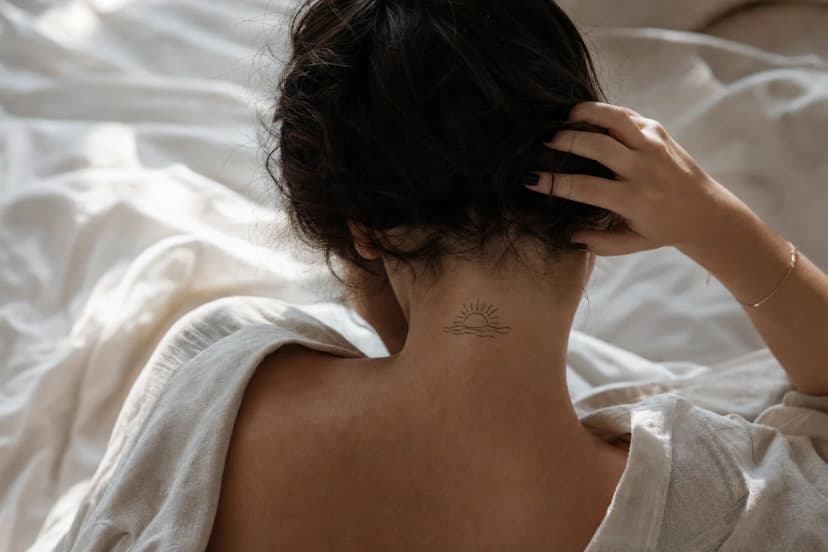
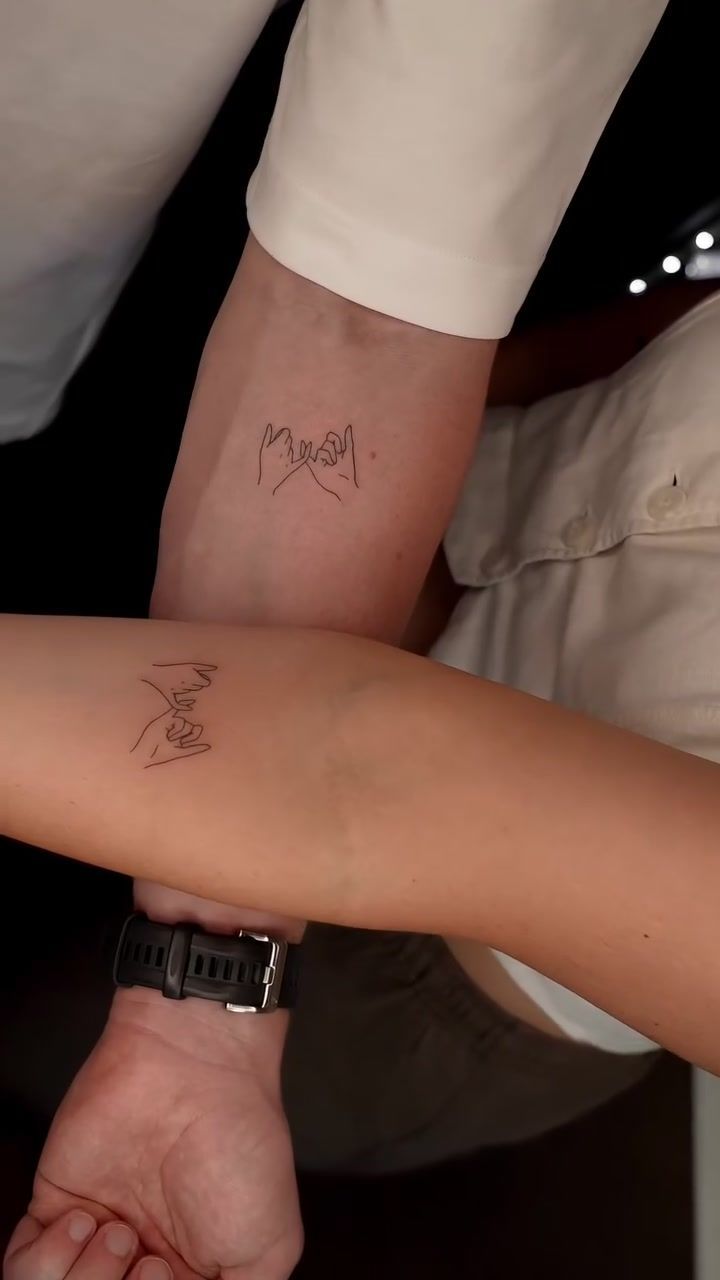
A minimalist tattoo isn't just a small one. It's a design where every element has earned its place, and anything that doesn't carry meaning has been removed. The challenge is editorial, not technical. Deciding what to strip away without losing the idea. Fine line precision makes that restraint visible. A single clean arc means something. A single messy one means nothing.
Micro realism: photographic detail at small scale
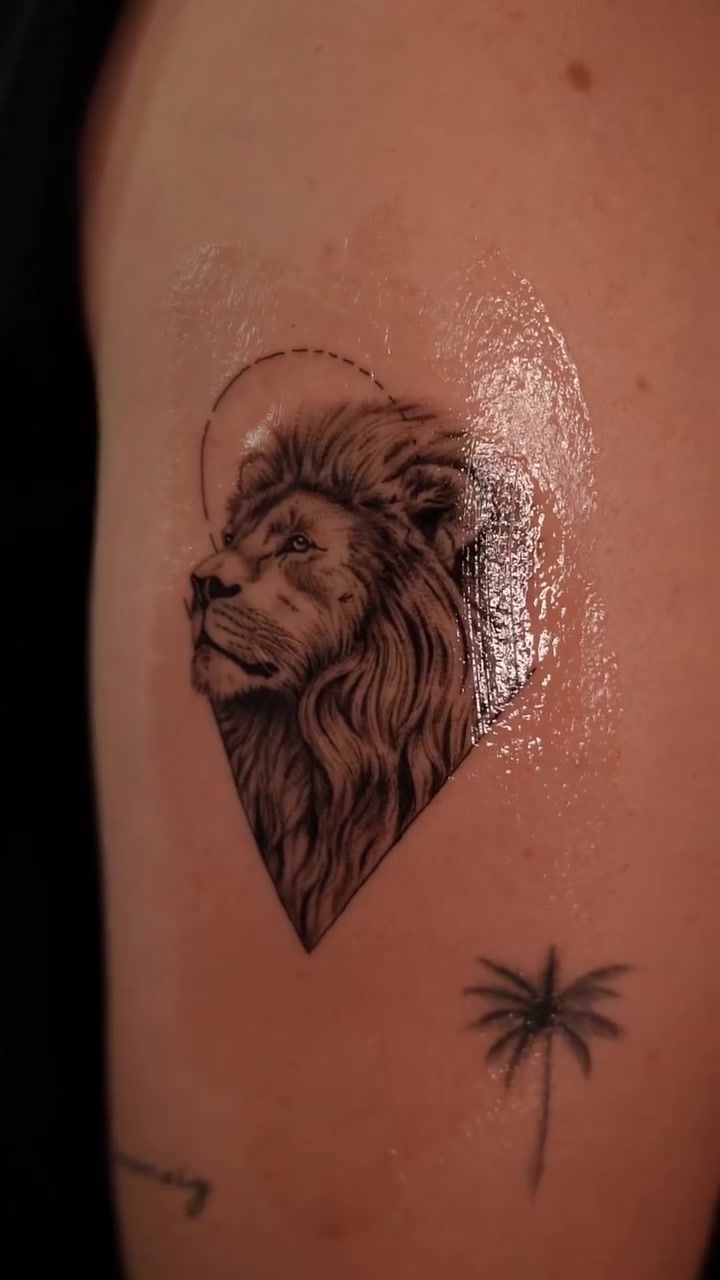
Micro realism tattoos compress photographic depth and texture into a compact footprint. A portrait the size of a coin. A shell with visible ridges. Getting that level of detail into a small area requires fine line technique for the outlines and transitions, combined with precise shading that suggests volume without muddying the overall read. See this lion portrait in diamond on the upper arm. The geometric framing and the soft realism of the lion's face coexist because the linework is controlled enough to let both register clearly.
Geometric and ornamental: where math meets skin
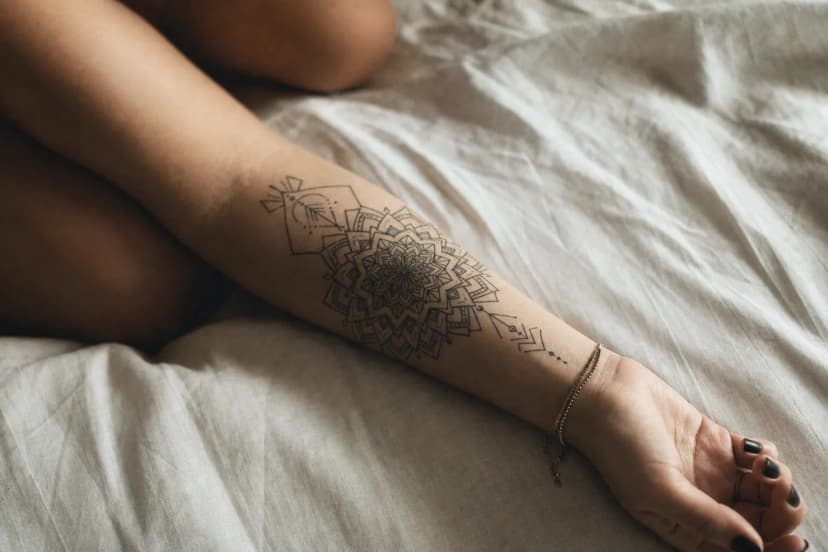
Geometric work is where the zero-margin-for-error reality of fine line tattooing becomes most obvious. If the stencil for a mandala sits 2mm off-centre, you'll see it every time you look at the piece. The symmetry check happens before the needle touches skin, not after. This Marcus Aurelius geometric fineline piece shows how portraiture and strict geometric framing can coexist. But only when the placement of both elements is correct from the first mark.
Ornamental work follows similar logic but allows more organic flow. This ornamental sternum piece demonstrates how fine line weight and negative space work together to create something that feels both structured and soft against the body's natural curves.
Floral and botanical linework
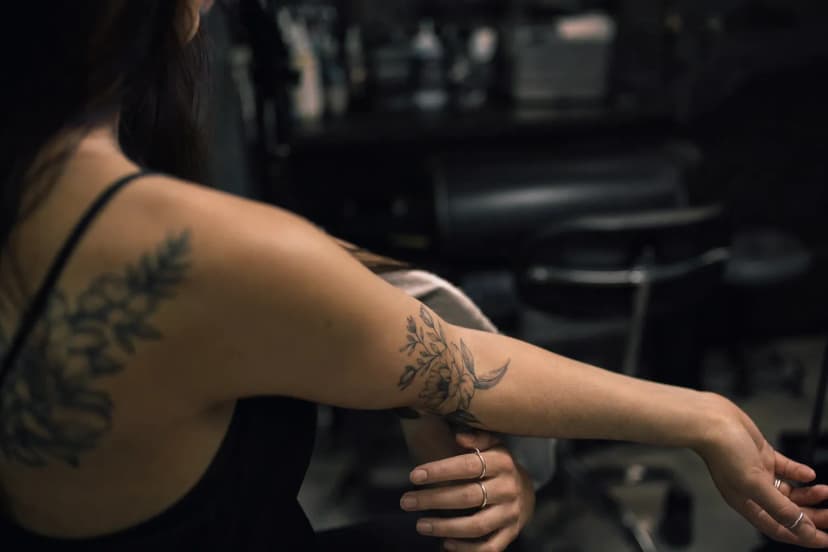
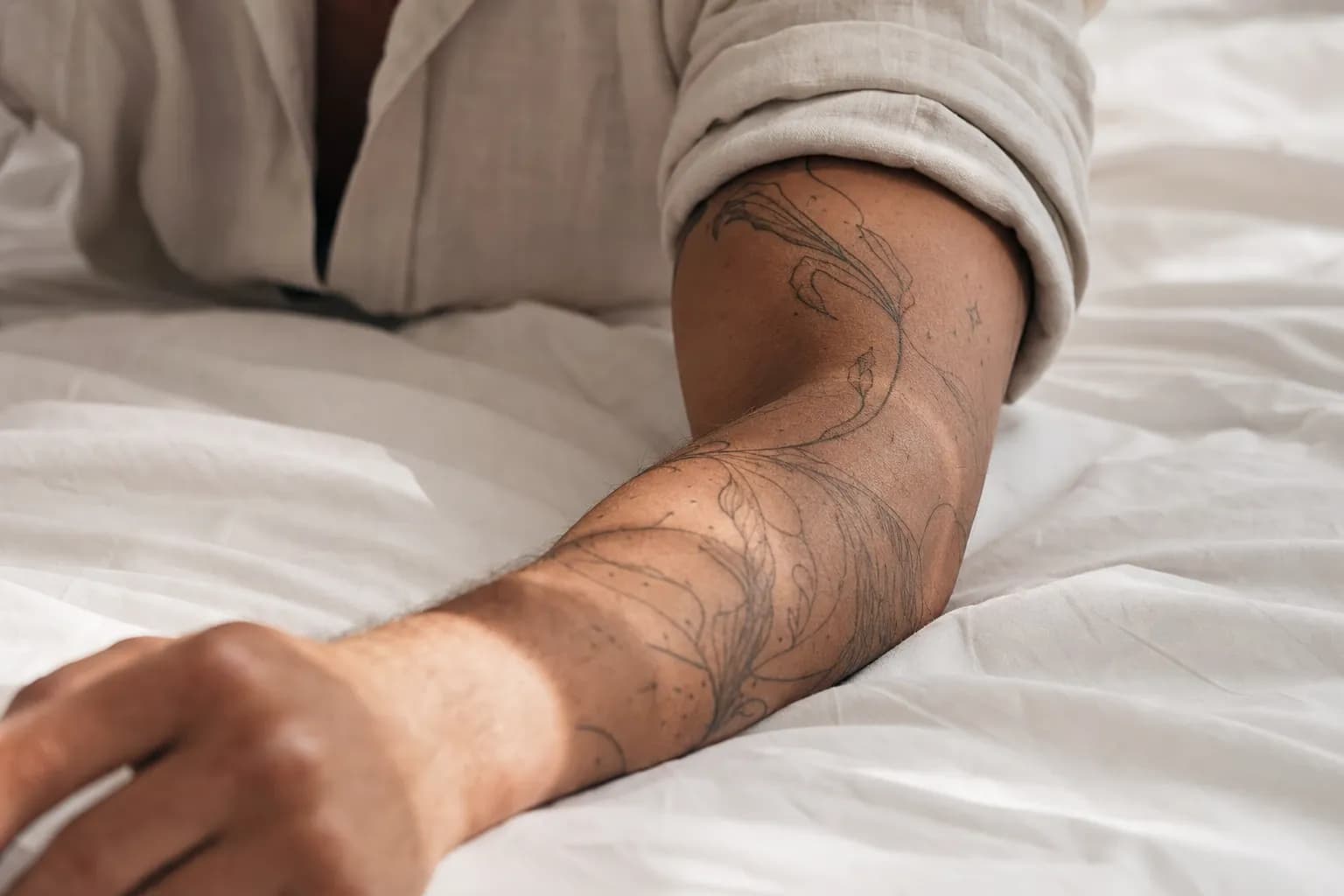
Botanical designs rely on fine line for a different reason: natural subjects need to feel light. A rose drawn with heavy outlines becomes a graphic symbol. The same rose drawn in fine line reads as an actual flower. Because the weight of the line matches the weight of the petal. Needle movement speed and ink flow are adjusted throughout the piece, heavier at stems and lighter at the tips of petals, to maintain that naturalistic quality.
Lettering in fine line is its own discipline entirely. If you're considering script or custom typography, read about what great fineline lettering actually takes before your consultation. It'll help you arrive with better references and clearer questions.
How the Studio Approaches Fine Line in Lisbon
Consultation and custom design
The studio doesn't work from flash sheets. Every piece begins as a conversation about what you want, where you want it, and why. From there, a custom design is sketched specifically for your placement and proportions. That process takes time. Which is why the consultation happens before the session, not on the day.
The studio operates in Lisbon, accessible from central areas including Príncipe Real and Cais do Sodré. If you're coming in from further out, the nearest metro connections make it manageable without needing to drive. Details come through at booking.
Stencil precision and placement approval
Before any needle work begins, the stencil is applied to your skin and assessed under full studio lighting. The artist checks alignment from multiple angles. If anything is even slightly off. Asymmetry on a mandala, a line that doesn't sit true to the body's curve. The stencil is removed, the skin is cleaned, and it's repositioned. This step doesn't get skipped to save time.
"The stencil is the last moment you can fix a problem for free. Everything after that is permanent."
Session length and pacing
Most fine line sessions run between one and a half and three hours. A small minimalist piece may take ninety minutes including stencil setup and placement approval. A detailed back panel or sleeve segment gets divided across multiple sessions rather than rushed into one long sitting. The artist works methodically. Steady passes, consistent needle depth, regular checks of the emerging line weight against the reference design. You can explore the full scope of the studio's fineline service to understand what's possible across different scales and subject matters.
Placement, Sizing, and What Happens to Fine Lines Over Time
Where fine line heals best on the body
Skin is not a uniform canvas. Different areas have different cell turnover rates, friction levels, and fat-to-muscle ratios underneath. All of which affect how ink settles and stays in the dermis long-term.
| Placement | Friction level | Fine line suitability | Notes |
|---|---|---|---|
| Upper arm (outer) | Low | Excellent | Stable skin, low movement, clean healing |
| Back (upper/mid) | Low | Excellent | Large canvas, good ink retention, easy to protect |
| Sternum | Low-moderate | Very good | Bra straps can cause friction; consider clothing during healing |
| Thigh (outer) | Low-moderate | Very good | Skin moves with muscle but heals well when kept moisturised |
| Forearm (inner) | Moderate | Good | Sun-exposed. Needs consistent SPF once healed |
| Fingers / palms | Very high | Poor | Rapid cell turnover, ink migration, frequent touch-ups needed |
| Feet / toes | High | Poor | Constant pressure and friction compromise fine line retention |
Size minimums. Why going too small can backfire
There's a floor for every design. A simple geometric symbol or a single stem can be quite compact. A realistic portrait or a detailed mandala cannot. Each element inside the design. Eyes, petals, letterforms. Needs physical room to exist as a distinct mark. Pack them too close together and the skin's natural healing process, which softens and spreads ink slightly as it settles, merges those marks into a grey smudge.
The studio assesses minimum viable size at consultation. That conversation happens before the stencil is cut, not after it's already sitting on your skin.
Lisbon's climate and how humidity affects the healing window
Lisbon summers run humid from June through September. That moisture in the air can slow surface drying during the first ten days of healing, when the skin is still forming a protective barrier over the fresh ink. It doesn't make healing impossible. But it means checking the dressing more carefully and keeping the area clean and dry after any contact with water. Lisbon's summer UV index regularly exceeds 8, which matters for anyone healing a delicate tattoo during those months. Fresh pigment sitting close to the skin surface is vulnerable to UV degradation long before the dermis has fully locked it in.
Aftercare for Fine Line Tattoos: The Practical Reality
The first 72 hours
The studio applies a transparent film dressing immediately after the session. This stays on for three to five days, depending on how the skin is responding. The film keeps the area moist, protects against bacteria, and lets you see the piece without touching it. After removal, the routine is simple: wash gently with unscented soap, pat dry, and apply a thin layer of unscented balm twice daily.
- Keep the dressing dry. No swimming, no heavy sweating
- Don't re-wrap in cling film after the film dressing comes off
- Avoid tight clothing over the tattooed area for at least the first week
- No direct sun exposure on the fresh tattoo at all during the healing period
Weeks two through four
The surface skin will peel, usually between days five and ten. This is normal. The epidermis is shedding its top layers as part of the healing cycle. Do not pick or scratch. Picking lifts small sections of ink from the dermis before it's fully anchored, creating gaps in thin lines that require a touch-up to correct.
By week four, the surface looks healed. The ink is still settling underneath for another four to six weeks after that. During this entire period, and indefinitely outdoors once fully healed, SPF 50 is non-negotiable in Lisbon's sun. UV breaks down pigment gradually. Fine lines, with their relatively lower ink volume, show that degradation faster than bold work does.
- Days 1-5: film dressing on, keep dry, no direct sun
- Days 5-10: film off, gentle wash twice daily, thin balm application
- Days 10-28: peeling phase, no picking, continue moisturising
- Week 4 onward: SPF 50 every time the area is sun-exposed, permanently
Frequently Asked Questions
Do fine line tattoos fade faster than bold tattoos?
Not necessarily. Fading comes down to placement, sun exposure, and how well the ink was packed into the dermis during the session. A well-executed delicate tattoo on a low-friction area like the outer arm, kept moisturised and out of the sun, holds beautifully for years. Poor technique or a high-friction placement fades any style. Not just fine line.
How small can a fine line tattoo realistically be?
It depends entirely on what's inside the design. A single clean symbol or a short word can be quite compact. A realistic face or intricate mandala needs enough space for each element to stay distinct as the ink settles. The studio assesses minimum viable size at consultation. Not after the stencil is already on your skin, which is too late to change direction without starting over.
How long does a fine line tattoo session take?
Most sessions run between one and a half and three hours. Larger or more complex pieces are split across multiple sittings rather than rushed. The artist works at a measured, deliberate pace. Inconsistent line weight shows up immediately in a healed piece, and there's no way to fix it without reworking the whole area.
Can fine line tattooing work on olive or darker skin tones?
Yes. The approach adjusts slightly. Ink selection and contrast levels matter more on deeper skin tones so that lines read clearly against the skin. The studio discusses this openly at consultation. A fine line tattoo on Lisbon's diverse range of clients works well when the design is chosen thoughtfully for the skin's specific undertone and depth.
What should I bring to my fine line consultation in Lisbon?
Bring reference images that capture the mood, subject, and rough scale you're imagining. They don't need to be tattoo photos. Paintings, illustrations, and photographs all work. Write down your placement preference and any sizing constraints. Specific references save time and help the studio sketch a direction that actually fits what you're picturing.
How do I care for a fine line tattoo healing during a Lisbon summer?
Keep the fresh tattoo away from direct sun entirely for the first four weeks. Lisbon's summer UV index regularly reaches 8 or above, which degrades fresh pigment before the dermis has fully locked it in. Once healed, SPF 50 every time you're outdoors. Avoid the beach or pool until healing is complete. Both saltwater and chlorine disrupt early ink settling significantly.