The Search for Precision
Search "geometric tattoo near me" and you'll get pages of results. What you won't always see is the quality gate. Crooked lines. Circles that almost close. Mandalas where one quadrant is visibly wider than the opposite. These aren't beginner mistakes. They're precision failures that show up clearly in geometric work precisely because there's nowhere to hide.
Painterly styles absorb small errors into texture and shading. Geometry doesn't. Every line either holds its angle or it doesn't. That's the first thing worth understanding before you book anything.
This guide covers what precision geometric tattooing actually demands: technically, physically, and in the specific context of getting work done in Lisbon.
What Geometric Tattooing Actually Is
Sacred geometry vs. Decorative geometry
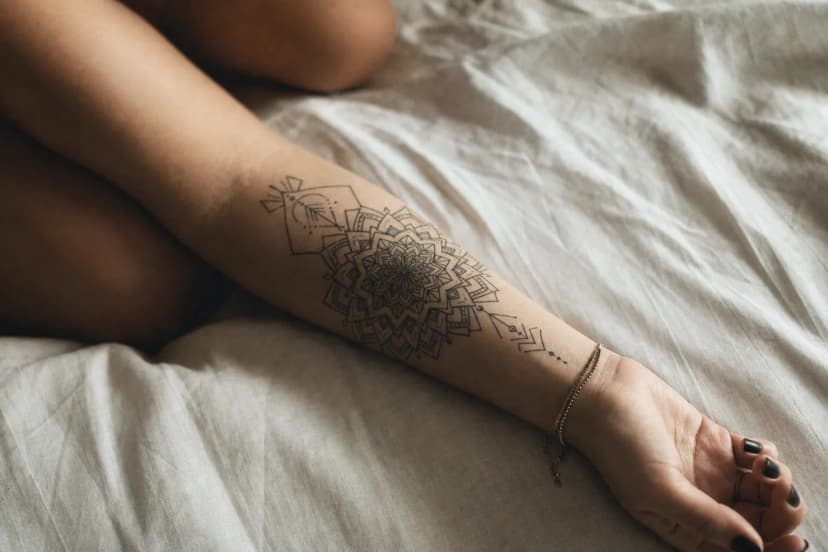
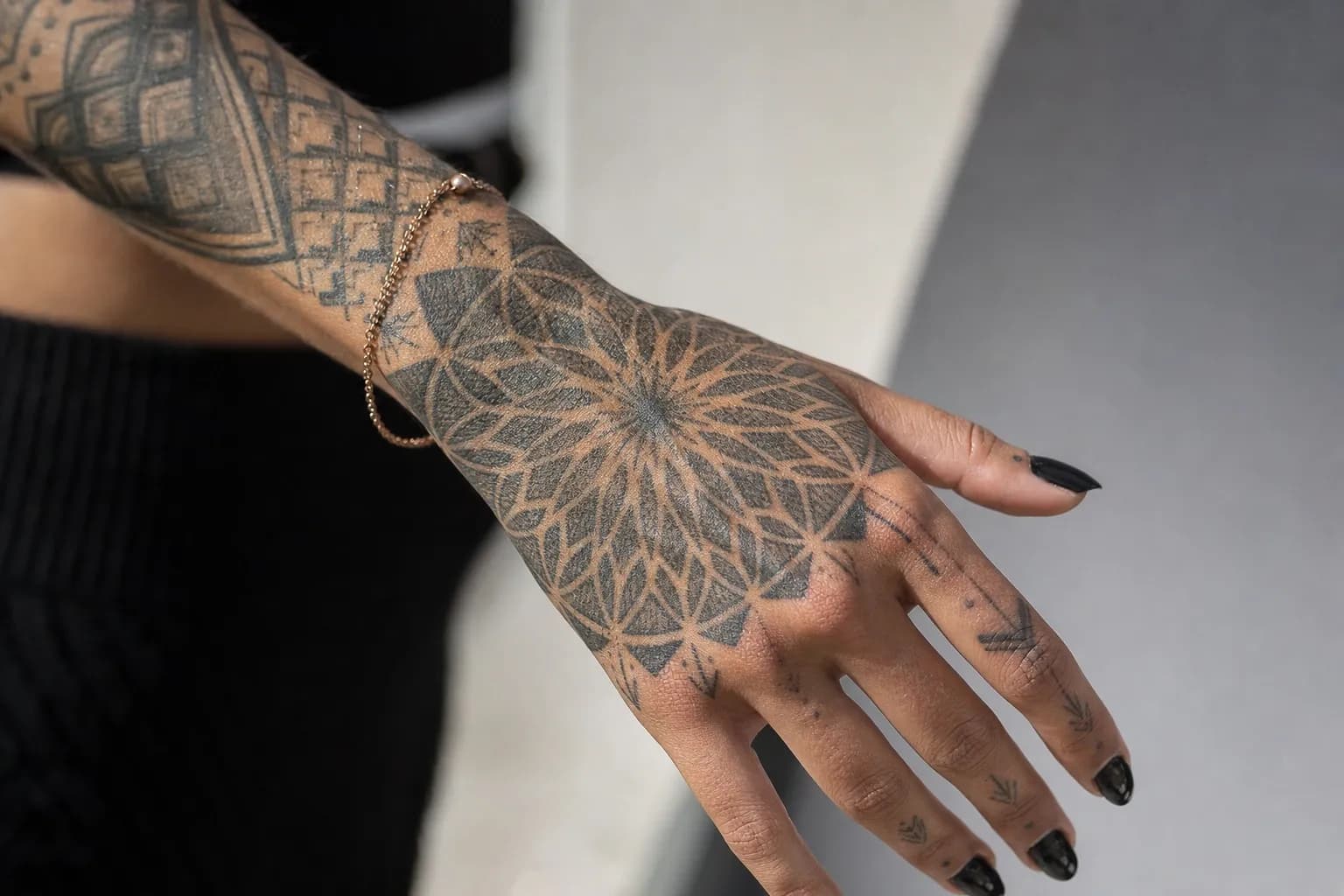
Decorative geometry is pattern for its own sake: repeating shapes, clean borders, interlocking forms that look sharp on skin. Sacred geometry goes further. The Flower of Life, Metatron's Cube, the Sri Yantra. These carry symbolic weight rooted in philosophy, spirituality, and mathematics. A mandala (Sanskrit for "circle") represents the universe in Hindu and Buddhist traditions. Knowing the difference helps you decide what you actually want on your body.
Both fall within the studio's geometric tattoo service. The difference shows up in the consultation, where the artist asks what the piece means to you before sketching a single line.
Where the style comes from
Geometric patterns in skin marking appear across cultures going back thousands of years. Polynesia, ancient Egypt, indigenous communities across the Americas. The geometry was never purely decorative. It mapped cosmology, identity, and status onto the body.
Closer to home in Lisbon, the azulejo tile tradition offers a striking local parallel. Those blue-and-white geometric tile panels covering church facades and metro stations compress complex mathematical symmetry into flat surfaces. Translating that aesthetic onto skin raises exactly the same spatial problems a tile-maker solves on a wall. Except the surface curves.
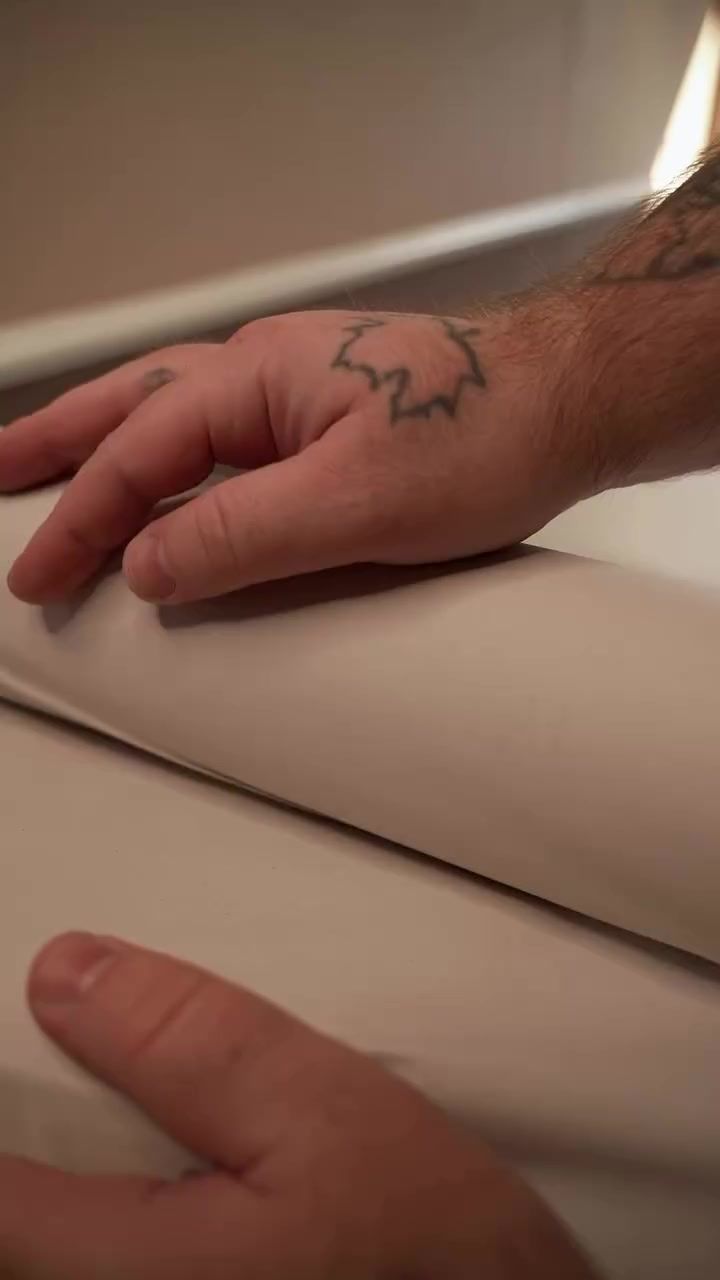
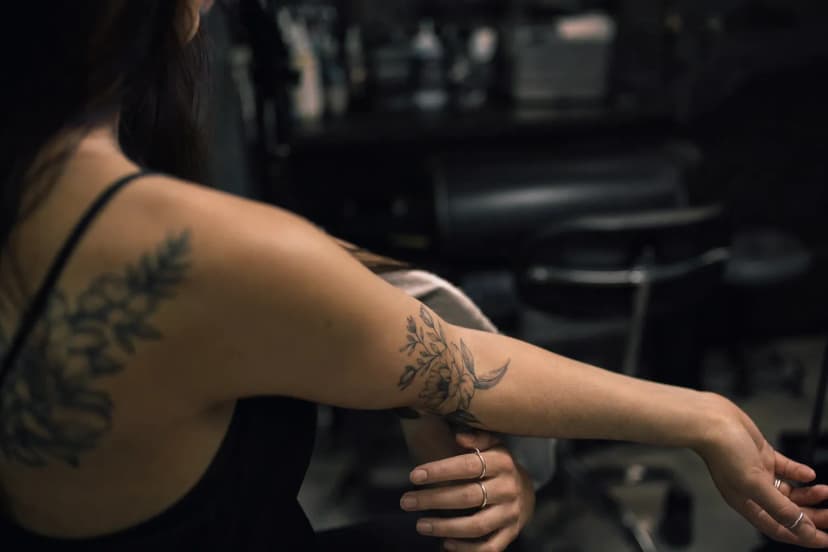
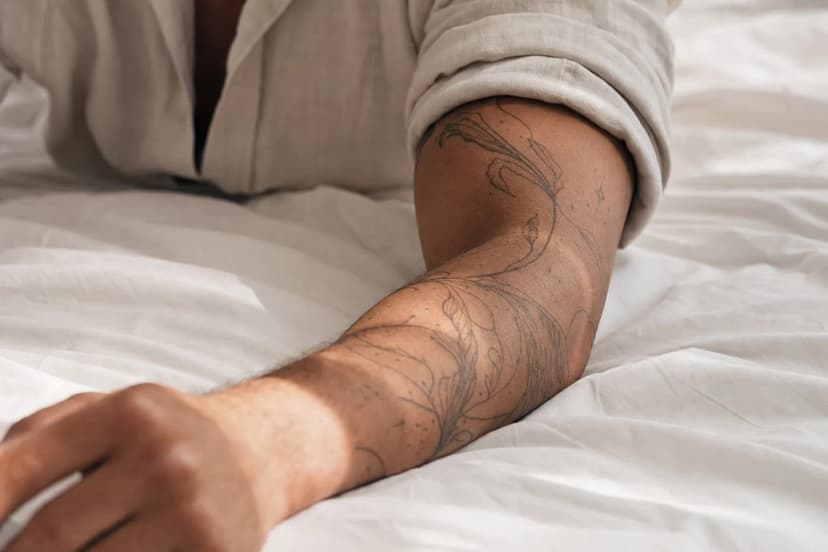
At this studio, geometric work frequently intersects with fineline tattooing: single-needle lines fine enough to render delicate detail inside a geometric frame, often in black and grey.
Why Geometry Is One of the Hardest Styles to Execute
The stencil problem
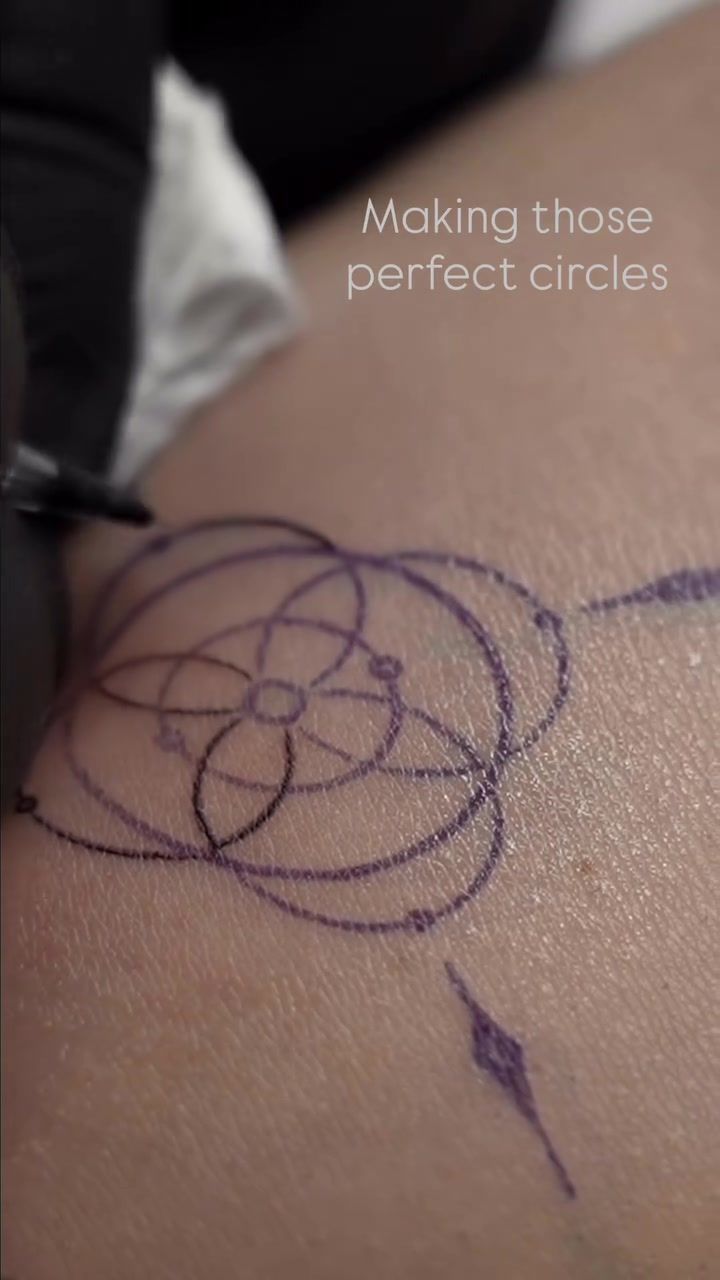
Every tattoo begins with a stencil transfer. A temporary copy of the design pressed onto your skin. For most styles, 2mm of drift is imperceptible. For a mandala, it's catastrophic. If the centre sits 2mm off on a curved forearm, every ring you add around it amplifies the error. By the outer rings, the spacing will be visibly uneven on one side.
Experienced artists working in a sacred geometry tattoo context don't just apply the stencil and start. They measure. They use body landmarks. They check that the centre point sits correctly relative to the arm's axis before a single needle touches skin.
Skin movement and needle depth
A flat stencil must be interpreted onto a three-dimensional, curved surface. The forearm, the thigh, the ribcage. Each has its own curvature, and each distorts a flat pattern differently when the skin is stretched or relaxed. An artist who hasn't worked out how their specific stencil will wrap around the specific body part will produce lines that look straight on paper and crooked in real life.
Consistent needle depth matters more in geometric work than in almost any other style. Blowouts. Where ink bleeds laterally beneath the skin into the dermis too broadly. Are ugly in any tattoo. Against a clean geometric line, they're immediately obvious. Controlling depth requires consistent hand pressure across a session that might last two or three hours.
How the Studio Approaches Geometric Work
The consultation and design phase
The studio never adapts a generic template to your body. It works the other way around. The artist maps proportions to the specific placement first: measuring the limb, accounting for the muscle structure underneath, and sketching with those dimensions as the constraint. A mandala designed for a forearm won't simply be scaled up for a thigh. The proportions are rebuilt from scratch.
This takes longer. It's also the only way to get a piece that sits correctly on your body rather than just sitting on it.
Combining geometry with other styles
Some of the most interesting work happens at the boundary between styles. A geometric framework can hold a micro-realist figure in a way that gives both elements more visual power than either would have alone. The Icarus in Geometric Architecture piece is a good example: a classical figure mid-fall, framed by precise architectural geometry that amplifies the mythological drama.
"Geometric structure gives organic subjects a place to breathe. The grid doesn't constrain the figure. It makes the figure mean something more."
Fineline botanicals growing out of a mandala edge, or a portrait set inside an octagonal frame, are both well within the studio's range. The design process involves deciding where each style occupies its own visual territory so they don't compete.
Placement, Size, and How Geometric Tattoos Age
Where you put a geometric piece affects how long it holds its clarity. High-friction areas, sun-exposed skin, and joints all accelerate ink migration over time. A precision geometric tattoo artist thinks about this before you sit down.
| Placement | Longevity of fine lines | Typical session length | Notes |
|---|---|---|---|
| Inner forearm | Good. Lower friction, less direct sun | 2-3 hours (palm-sized) | Slight curvature; stencil alignment critical |
| Outer forearm / sleeve | Good, with consistent SPF care | 2-4 hours per phase | Sun exposure from Lisbon summers accelerates fading |
| Thigh | Very good. Minimal friction, less UV | 3-5 hours (large composition) | Flat surface; excellent for large mandalas |
| Ribcage | Good if weight stays stable | 2-3 hours | Skin moves significantly; stencil placement requires care |
| Hand / finger | Lower. High friction, constant flex | 45 min to 1.5 hours | Touch-ups likely; designs kept simple |
Lisbon's humid August heat is worth planning around. Fresh tattoos need to breathe. Sweating heavily over a piece in its first ten days raises the risk of irritation and patchy healing. If your consultation falls in summer, the artist may suggest September or October, when the city cools and skin heals more predictably. Mild autumn is genuinely the better season for detailed geometric work here.
On sizing: a mandala under 6cm in diameter compresses the linework dangerously. Lines that sit 0.5mm apart at application can merge after healing as the ink settles into the dermis. The studio's practical baseline is 8cm for a piece with multiple rings. Smaller designs work when the ring count is reduced to match the scale. The geometric circles for pets memorial piece shows how small-format geometry can hold when the complexity is calibrated correctly.
Sun exposure is a real factor in Lisbon, particularly if you spend time around Cais do Sodré or Bairro Alto in summer. SPF 50 over healed geometric work isn't optional. It's what keeps the fine lines crisp rather than faded within a couple of years.
What to Bring to Your Consultation
Walking in with clear references saves everyone time and produces better work. Here's what actually helps.
- Reference images that show line weight, not just motif. A thin-line mandala and a bold-line mandala look completely different healed. Bring images that show the weight you want.
- Know your placement before you arrive. The studio books by placement, not just by style. "I want a geometric piece" is a starting point. "I want it on my left outer forearm, roughly palm-sized" is a booking.
- Have a rough sense of scale. Hold your hand over the intended area. That's a useful reference for the conversation.
- Be honest about your schedule. A palm-sized mandala typically fits into one two-to-three hour session. A forearm sleeve or back composition combining geometric architecture with figurative work may need two or three sessions spaced four to six weeks apart, letting each phase heal before new linework is added nearby.
- Come with clean, moisturised skin. Not freshly sunburned, not freshly waxed, not actively irritated. Skin condition affects how the stencil transfers and how the ink sits.
If you're drawn to the craft precision involved here, the same thinking applies to custom typography. The guide on what precision lettering demands from an artist covers adjacent territory worth reading before your consultation.
What to bring in terms of mindset: patience with the design process. The artist won't rush the proportion mapping. That's not inefficiency. It's the reason the piece looks right once it's on your skin.
- Eat a proper meal two hours before your session
- Wear or bring clothing that gives easy access to the placement area
- Avoid alcohol for 24 hours beforehand. It thins the blood and affects how cleanly ink sits
- Hydrate well in the days leading up, especially in Lisbon's dry summer heat
Frequently Asked Questions
How long does a geometric tattoo take to heal?
Surface healing typically takes two to three weeks; the deeper dermis layer settles over six to eight weeks. During Lisbon's humid summers, keep the piece out of direct sun and away from salt water. Avoid tight clothing over the area for the first ten days, particularly on ribs or forearms.
Can geometric tattoos be combined with realism or fineline styles?
Yes, and the combination often produces striking results. A geometric frame around a micro-realist portrait, or fineline botanicals growing out of a mandala structure, are both well within the studio's range. The key is planning the design so each style occupies its own visual territory without competing.
What size should a mandala tattoo be to hold its detail long-term?
As a practical baseline, a mandala needs at least 8cm in diameter to keep its inner ring lines from merging after healing. Smaller designs can work if the ring count is reduced. The artist adjusts complexity to fit the chosen size, never the other way around.
How do I know if a geometric tattoo artist's lines are actually straight?
Look at healed work in the portfolio, not fresh pieces. Fresh ink always looks crisp. Healed geometric tattoos reveal whether lines held their weight, circles closed cleanly, and symmetry survived the skin's settling process. Ask the studio specifically to show healed examples during your consultation.
How many sessions does a large geometric piece require?
A palm-sized mandala usually fits into a single two-to-three hour session. A forearm sleeve or back composition with geometric architecture and figurative elements may need two or three sessions spaced four to six weeks apart, allowing each phase to heal before linework is added to adjacent areas.