Small Doesn't Mean Simple
A 2cm piece with lines spaced too closely looks sharp the day it's done. Six months later, those lines have merged into a grey smudge. The skin didn't fail; the design did. Small-scale tattoo work has almost no room for that kind of error, and that's exactly what makes it one of the most technically demanding formats in the studio.
People often assume that a small tattoo lisbon clients want must be a quick, low-stakes job. It isn't. Less space means every decision, from line weight to the gap between two elements, is magnified. Get the proportions wrong by 1.5mm on a 3cm piece and it reads as a mistake every time you look at it.
The artists working at the highest level of small-scale tattooing aren't rushing. They're slowing down.
Which Styles Actually Work at a Small Scale
Minimalism: the case for intentional reduction
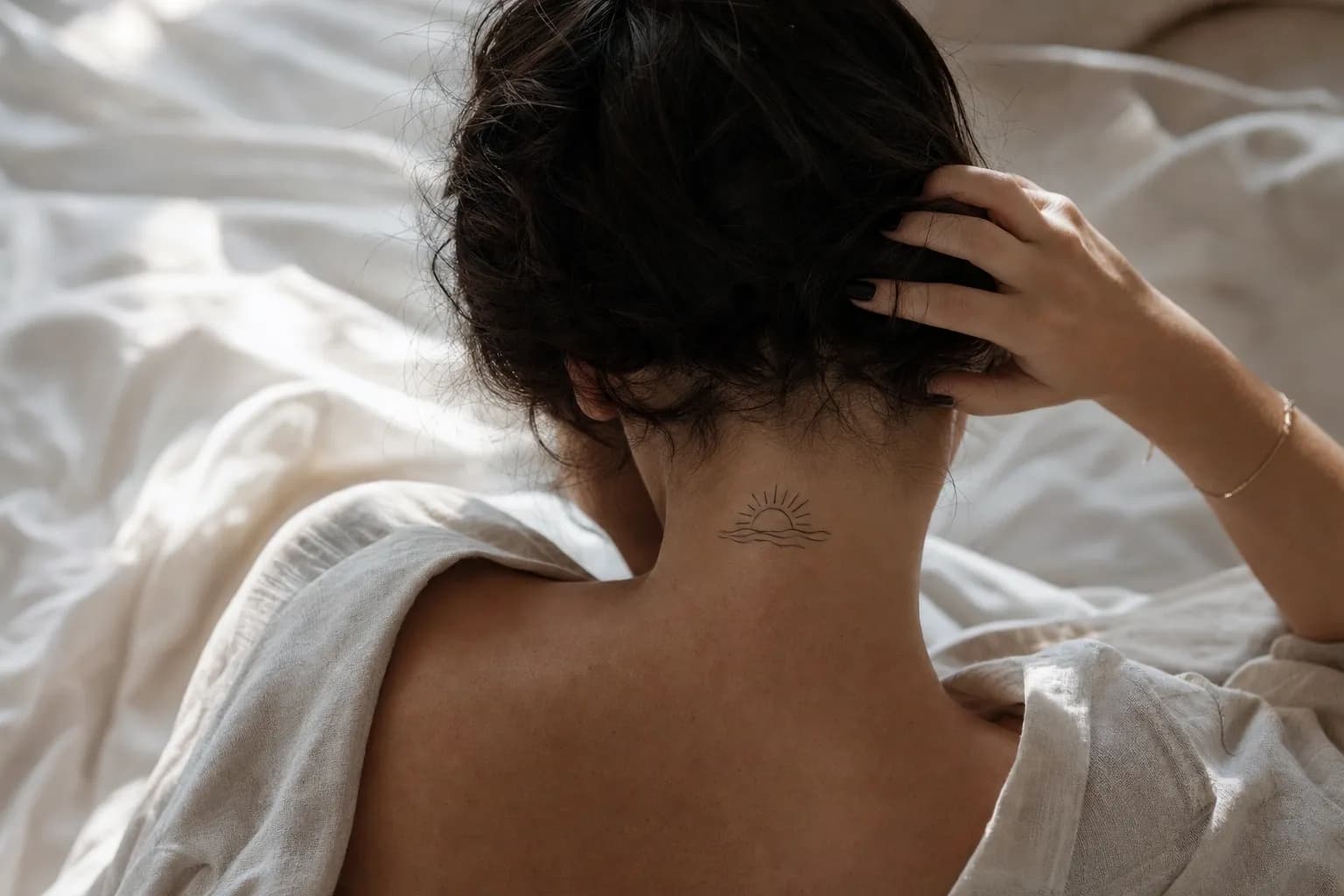
Minimalism, in tattoo terms, isn't about doing less because it's easier. It's about identifying the load-bearing elements of a design and removing everything else. A mountain reduced to three lines. A wave as a single curve. What remains has to carry the whole idea.
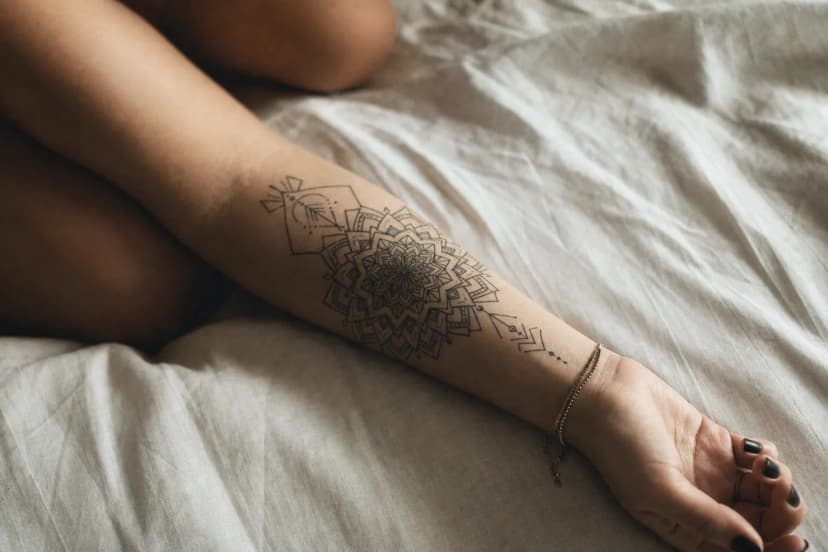
Good minimalism tattoo work at a small size reads clearly because the design was built for that scale from the start. It wasn't a larger piece shrunk down. The negative space around each element is part of the composition, not leftover room.
Styles that rely on heavy black fills, thick outlines, or dense shading don't compress well. They need physical room to breathe, and at 3-4cm they turn muddy. Minimalism sidesteps that problem by design.
Fineline: single-needle precision at tiny sizes
Fineline tattooing uses very fine needles, often a single needle, to produce lines that are almost thread-thin. Where a standard liner needle might be 3-5 round liner configuration, a single-needle setup uses one point moving through the skin at precisely controlled speed and depth. The result is a line with a fraction of the width, and a margin for error that shrinks accordingly.
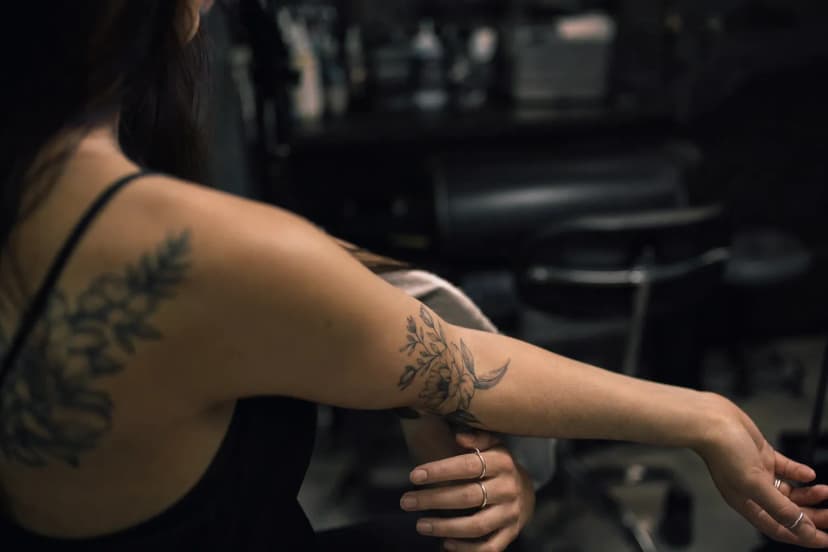
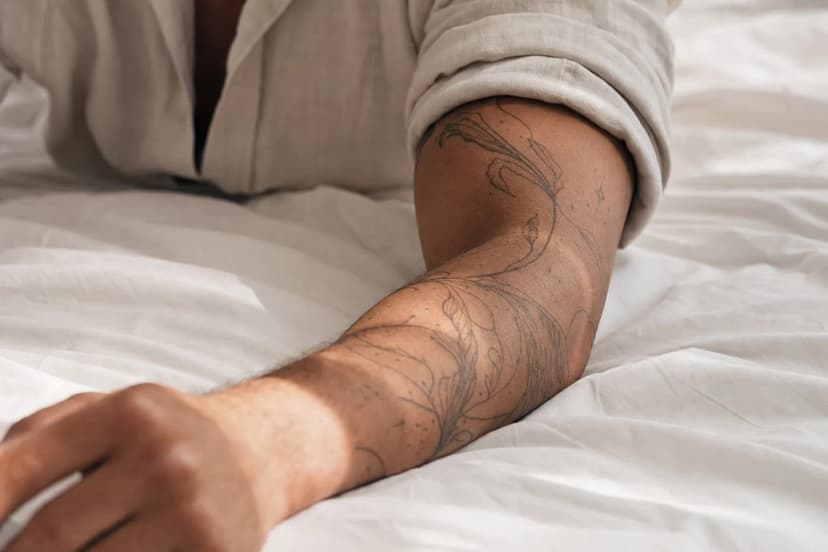
For a small fineline tattoo in Portugal's climate, this technique fits the format better than almost anything else. Fine lines allow complex detail, botanical shapes, architectural references, and portraiture elements to sit inside a space the size of a coin without competing with each other.
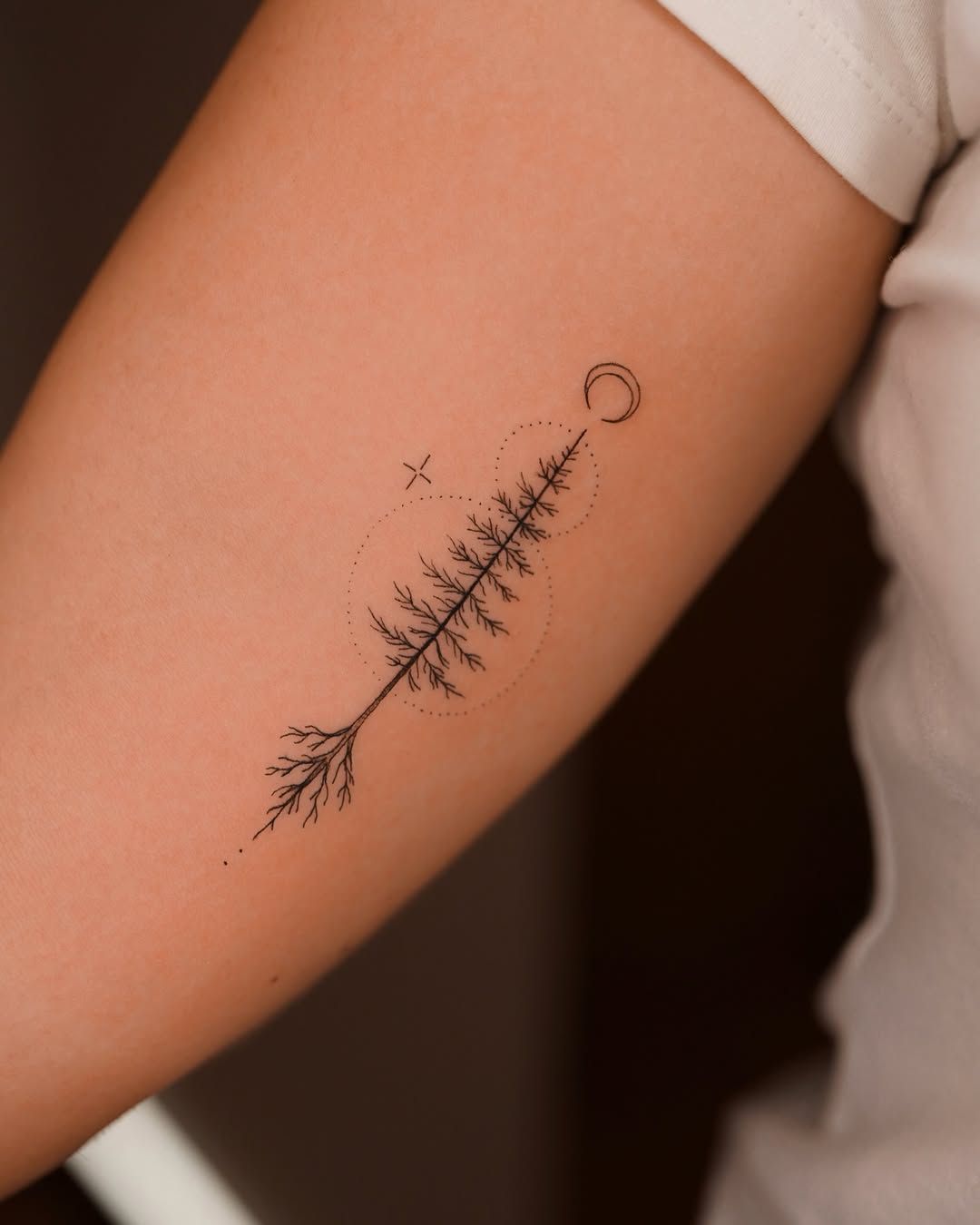
The trade-off is permanence. Very fine lines can soften over time, particularly on high-movement placements. The studio accounts for this at the design stage, building in enough line contrast to hold as the skin ages. Explore fineline tattooing in more detail on the service page.
Micro realism: photorealism packed into a postage stamp
Micro realism is its own category. It takes the goal of a realism tattoo, an image that reads like a photograph, and compresses it into a very small footprint. A portrait the size of a 50-cent coin. A hummingbird with visible feather texture at 4cm tall. Getting that right requires a different set of machine settings, slower passes, and a steady hand that doesn't hesitate.
For clients who want maximum visual information in minimum space, the micro realism service is where to look. It's technically the most demanding format the studio offers at small scale, and the sessions reflect that.
Placement: Where You Put a Small Tattoo Determines How It Ages
Placement isn't just aesthetic preference. It's the single biggest variable in how a small tattoo holds up over years. High-friction zones like fingers, palms, and the inner wrist are in constant motion, rubbing against fabric, keyboards, and everyday surfaces. The skin there also regenerates faster than on the upper arm or shoulder blade, which means ink migrates upward and detail softens quicker.
Behind the ear, on the inner forearm, along the shoulder blade, or at the top of the ankle: these placements give the ink a more stable home. Not because healing is guaranteed there, but because the mechanical stress is lower.
Lisbon's summers run hot and humid from June through September. A fresh tattoo on the inner forearm in August means managing sweat, which lifts the protective film on healing skin and can draw out ink before it sets. The upper arm, covered loosely, handles that environment better. It's a practical consideration, not a dealbreaker, but worth timing if you have flexibility in your schedule.
| Placement | Expected Longevity | Typical Session Length (small piece) | Notes |
|---|---|---|---|
| Upper arm / shoulder blade | Long, stable | 45-90 minutes | Low friction, easy to protect from sun |
| Inner forearm | Good, some softening over time | 45-90 minutes | Watch for summer sweat during healing |
| Ankle / shin | Moderate, depends on footwear | 45-75 minutes | Sock friction is a real factor |
| Behind the ear | Good, if kept dry | 30-60 minutes | Hair products and sweat affect healing |
| Finger / hand | Shorter; touch-ups likely | 30-60 minutes | High skin-cell turnover; ink fades faster |
| Ribcage / sternum | Very good | 60-120 minutes | Low sun exposure; breathable clothing helps |
How the Studio Approaches Small Tattoos
The consultation and design phase
The consultation is where a small tattoo either becomes viable or gets redesigned. The studio asks you to bring reference images, discuss placement precisely, and sometimes marks the area on your skin before anything else happens. Proportion is decided on the body, not on paper, because a 4cm design on a slender wrist reads differently than the same design on a broader forearm.
If a client requests a size that won't hold the level of detail in their reference, the studio says so directly. That conversation protects you. A design that looks perfect on screen at postage-stamp size may need to be opened up by 1-2cm to keep the lines from merging as the skin heals.
Stencil accuracy at small scale
The stencil, the temporary transfer applied to your skin before tattooing begins, is the blueprint. If the stencil sits 2mm off-centre on a 3cm piece, that error will be visible in the finished tattoo every time you look at it. On a larger piece, 2mm is recoverable. At small scale, it isn't.
"The smaller the piece, the more time we spend on placement before the machine runs. Rushing that stage is where small tattoos go wrong."
Machine settings also shift for small work. Voltage, needle depth, and speed all get adjusted to prevent overworking the skin in a tight area. Pushing too much ink into a small zone causes blowout, where the ink bleeds laterally beneath the surface and blurs fine lines. The studio uses lighter passes and finer needle configurations for small-scale pieces than it would on a large back piece.
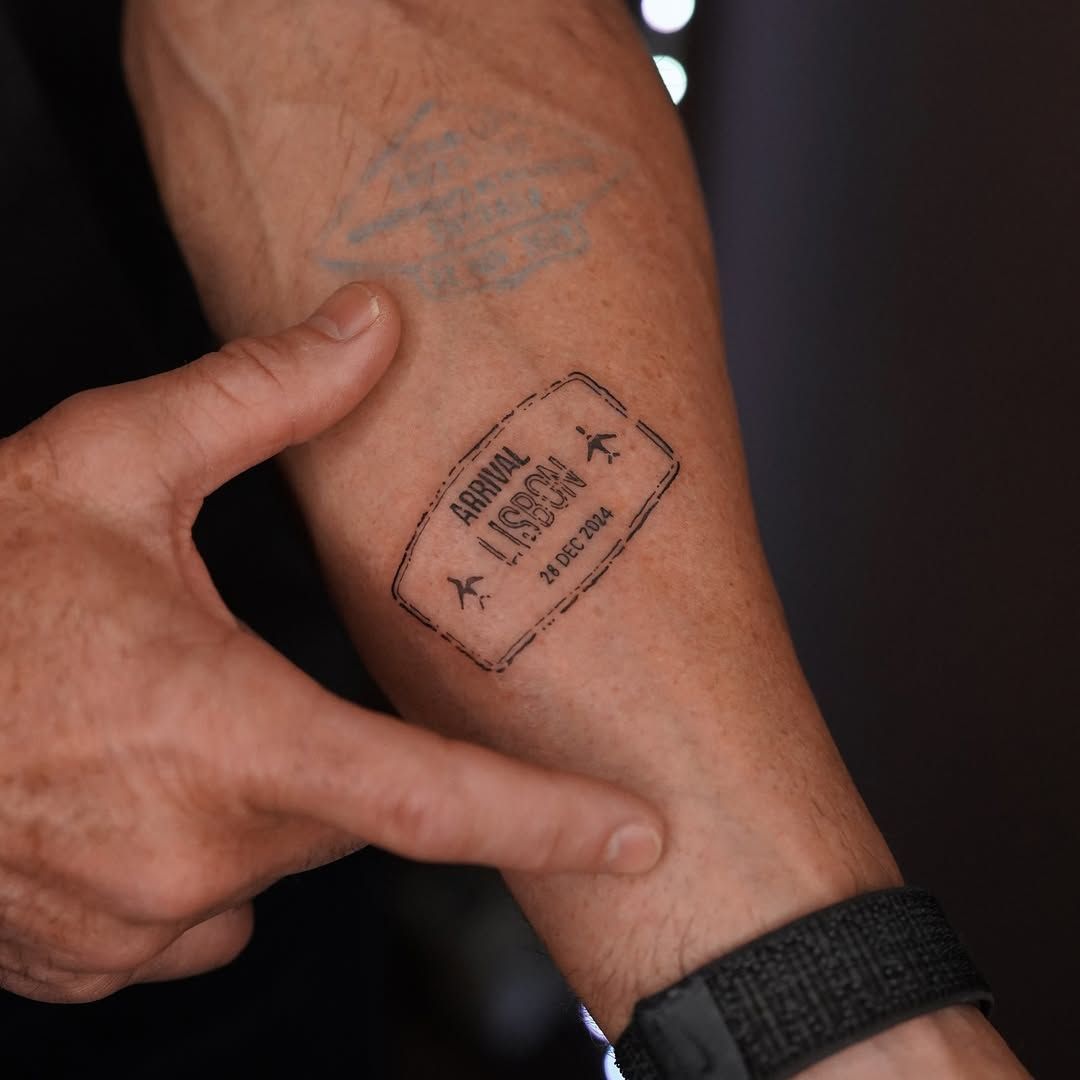
Two pieces in the portfolio show what careful design and stencil work produce at a compact scale. The Lisbon passport stamp piece uses lettering and graphic elements inside a tight, defined border, every millimetre considered. The loading bar piece takes an even more reductive approach.
Healing a Small Tattoo in Lisbon's Climate
Small tattoos heal faster than large ones in terms of surface area, but they're no less vulnerable in the first two weeks. The dermis, the deeper skin layer where the ink actually lives, goes through the same process regardless of the tattoo's size.
- Keep the area wrapped with breathable film for the first 24-48 hours, depending on placement.
- Clean gently with unscented soap twice daily. Pat dry; don't rub.
- Apply a thin layer of fragrance-free moisturiser two to three times a day once the wrap comes off.
- Avoid direct sun on the fresh tattoo for at least two weeks. Lisbon's sun from June to September is intense; even a 15-minute walk through Alfama at midday counts.
- Skip swimming, saunas, and prolonged soaking until the surface has fully closed, usually around 10-14 days.
Healed lines settle into the dermis over 6-8 weeks. What you see at day three, slightly raised, possibly cloudy, occasionally flaking, is not the final result. Most small fineline pieces clarify significantly between weeks two and six as the skin normalises. Don't judge the tattoo until it's fully healed.
Lisbon summers also mean more outdoor time, more sunscreen conversations, and more clients coming back with sun-damaged fresh work from an afternoon near Cais do Sodré. SPF 50 on a healed tattoo is good practice year-round. On a healing one, it's not yet appropriate; cover physically instead.
If you're thinking about adding script to your small piece, the guide on what great lettering actually takes covers the specific craft considerations for text at small sizes.
What to Bring to Your Appointment
Preparation makes a real difference in a short session. A 60-minute appointment that starts with a clear brief runs very differently from one that begins with a vague idea and a 10-minute phone scroll.
- Reference images: Bring 5-10 images that show the style, subject, and mood you want. A curated Pinterest board or a folder of screenshots works well. Fifty images with no common thread is harder to work with than five strong ones.
- Placement decision: Know roughly where on your body you want the piece. If you're unsure between two spots, bring that question; the studio can help you decide based on design and longevity.
- Appropriate clothing: Wear or bring something loose that exposes the placement area without a struggle. Reaching a shoulder blade through a tight crew-neck wastes time and causes unnecessary awkwardness.
- A meal beforehand: Tattooing on an empty stomach is a reliable way to feel lightheaded. Eat something real in the two hours before your session.
The studio is accessible by metro from central Lisbon. Check current transport options from Príncipe Real, Baixa-Chiado, and Intendente depending on your starting point.
- Don't come in with alcohol in your system from the night before. It thins the blood and affects how the skin takes ink.
- Don't bring sunburned skin to a tattoo appointment. Burned skin is already compromised and cannot be tattooed safely.
- Avoid fresh self-tanner on the area. It interferes with stencil transfer and makes accurate placement harder.
Frequently Asked Questions
How small is too small for a tattoo in Lisbon?
The practical floor for most designs is around 1.5 to 2 centimetres. Below that, fine lines tend to merge as the skin heals and detail disappears within a year. During consultation, the studio will flag if a requested size can't hold the design long-term and suggest a workable minimum that keeps the integrity of the concept.
Do small tattoos fade faster than large ones?
Placement matters more than size. A tiny tattoo on the upper arm in a low-friction zone ages well. The same design on a finger fades noticeably faster because skin there regenerates quickly and takes constant mechanical wear. Style also affects longevity: high-contrast minimalist work holds longer than very fine micro-detail at the same placement.
How long does a small tattoo session take?
Most small minimalist or fineline pieces take between 45 minutes and two hours, including stencil placement and setup. Micro realism at a small scale can run longer because the shading requires more careful passes. The studio gives you a realistic time estimate at consultation once the design is finalised, so you can plan your day accordingly.
Can I get a small tattoo on my finger or hand?
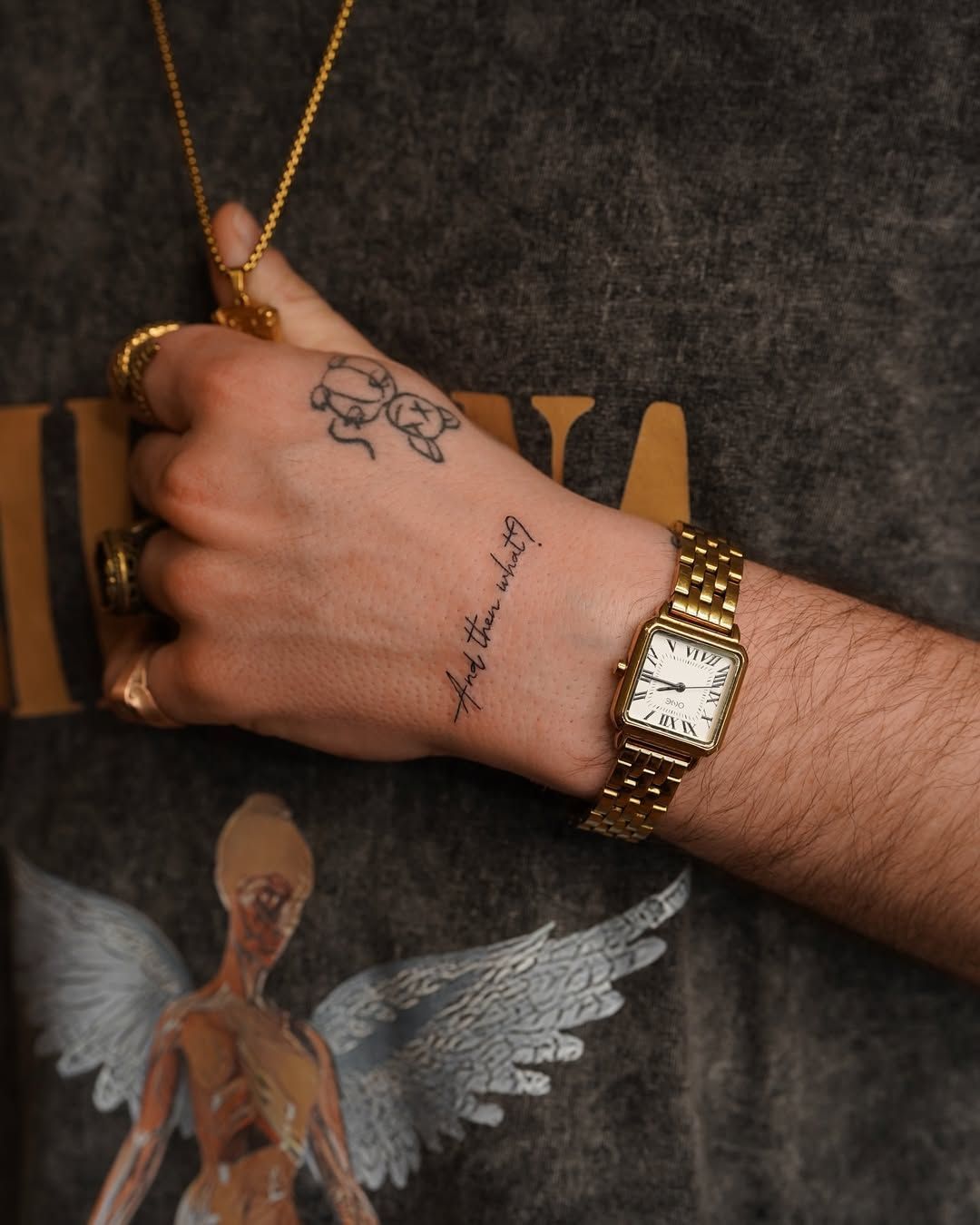
Yes, but go in with clear expectations. Hand and finger tattoos fade faster than almost any other placement due to constant use and rapid skin-cell turnover. The studio can execute them beautifully, as you'll see in the hand lettering and floral portfolio work, but touch-ups are more likely here than on a shoulder or inner forearm.
Is minimalism the same as fineline tattooing?
Not exactly. Minimalism describes a design philosophy: stripped-back shapes, negative space, no unnecessary elements. Fineline describes a technical method using very fine needles to create delicate lines and subtle shading. Many minimalist tattoos use fineline technique, but you can have bold-line minimalism or highly detailed fineline work. They overlap often, but they're different things.