Why Healing Looks Alarming at First
The moment the bandage comes off, most clients feel a small wave of panic. The image looks swollen, the lines look thick, and the tonal contrast that made the design so compelling in the studio seems to have vanished. This is completely normal. Fresh ink sits in a layer of trauma, and what you're seeing is not the finished piece.
The first 72 hours
In the first three days, the skin is actively responding to the needle work. Plasma and lymph fluid rise to the surface, forming a thin film over the area. On a bold piece, this is barely noticeable. On a micro realism tattoo, where the detail relies on precise tonal shifts rather than thick outlines, that same film can make everything look blurry and merged.
The pigment itself sits in the dermis, the deeper skin layer beneath the surface epidermis. During these first days, the epidermis above it is inflamed and slightly opaque. Lines look wider than they were placed. Shadows look muddy. Give it time.
Week one: peeling and clouding
Around days four to seven, the surface skin begins to peel. This is the epidermis shedding its damaged outer cells. Underneath is fresh, translucent skin that settles over the pigment layer. The tattoo often looks lighter at this point, almost washed out. New clients mistake this for ink loss. It isn't. The pigment is still there, sitting exactly where it was placed. The new skin just needs time to become transparent enough to let it through clearly.
For a full day-by-day healing breakdown, the pattern is consistent across most styles, but micro realism is more sensitive to each phase because the visual result depends on such fine tonal precision.
The Week-by-Week Healing Breakdown for Micro Realism
Weeks 1-2: surface healing
Surface skin closes quickly. By the end of week two, the peeling is usually done and the area no longer feels raw or tight. But this is not the same as healed. The dermis is still integrating the pigment, and the new epidermis above it is still thickening and maturing.
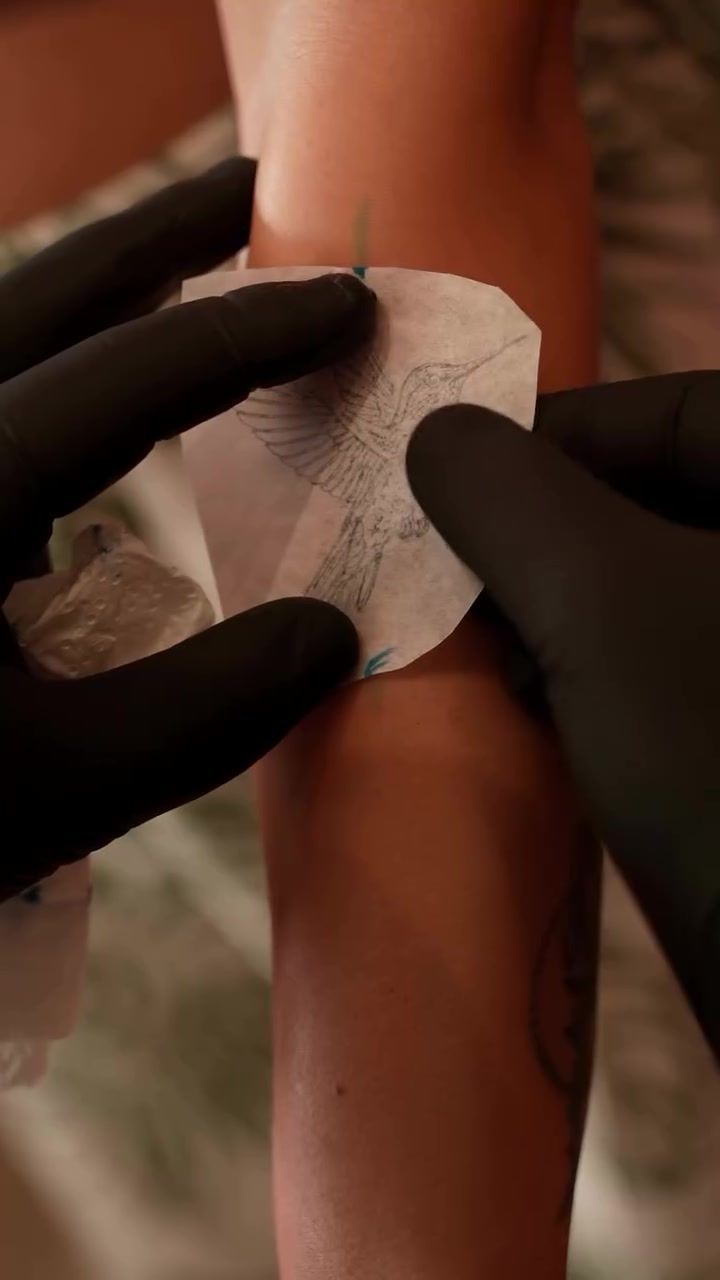
Weeks 3-4: the milky veil
This phase catches almost everyone off guard. The skin above the tattoo looks slightly milky, as if someone has applied a thin coat of frosted glass over the image. It's new epidermal tissue forming, and it temporarily mutes contrast and softens edges. The detail isn't gone. It's just obscured while the skin finishes its work.
Clients who photograph their piece at week three and compare it to the fresh image often think something went wrong. Nothing did. Experienced artists know to ask clients to wait and not assess results until at least week six.
Weeks 5-8: true settle-in
By week five, the milky veil clears. By week eight, the pigment has fully settled into the dermis and the skin above it has normalised. This is when you see the actual healed result. Some pieces look noticeably better at week eight than they did at week two. The contrast reads more cleanly. Shadows appear more three-dimensional. Fine detail that seemed lost during peeling reappears with surprising sharpness.
Lisbon summers complicate this timeline. High humidity from June through September slows surface drying, which can extend the peeling phase slightly and keep that milky appearance longer. Mild Lisbon winters, on the other hand, tend to support smoother healing, with less moisture fluctuation in the skin. If you're getting tattooed in July and spending mornings walking from Alfama down to Cais do Sodré in full sun, the first two weeks demand extra care.
What Changes in a Healed Micro Realistic Tattoo
Line weight and contrast
Very fine lines placed close together can merge slightly as the skin heals. This isn't a mistake; it's physics. Skin is a living material, and even a millimetre of natural spread in the dermis affects how adjacent lines read. On a well-designed piece, this is planned for. On a piece that was tattooed too densely or by an artist focused only on the fresh photo, it becomes muddy quickly.
If the stencil sits 2mm off-centre on a portrait, you'll see it every time you look at the piece. The same principle applies to line spacing: tight groupings that look perfect fresh can lose definition within months. The studio spaces lines deliberately, leaving enough room for the skin to do what skin does.
How much detail survives
Good micro realism is designed with the healed result in mind, not just the fresh result. That means using needle groupings that deposit pigment at the right depth, controlling how densely any given area is worked, and knowing which textures translate through healing and which don't. Hair strands, feather filaments, and fabric weaves all require different spacing decisions. For a detailed look at what affects micro realism longevity, placement and aftercare habits matter as much as technique.
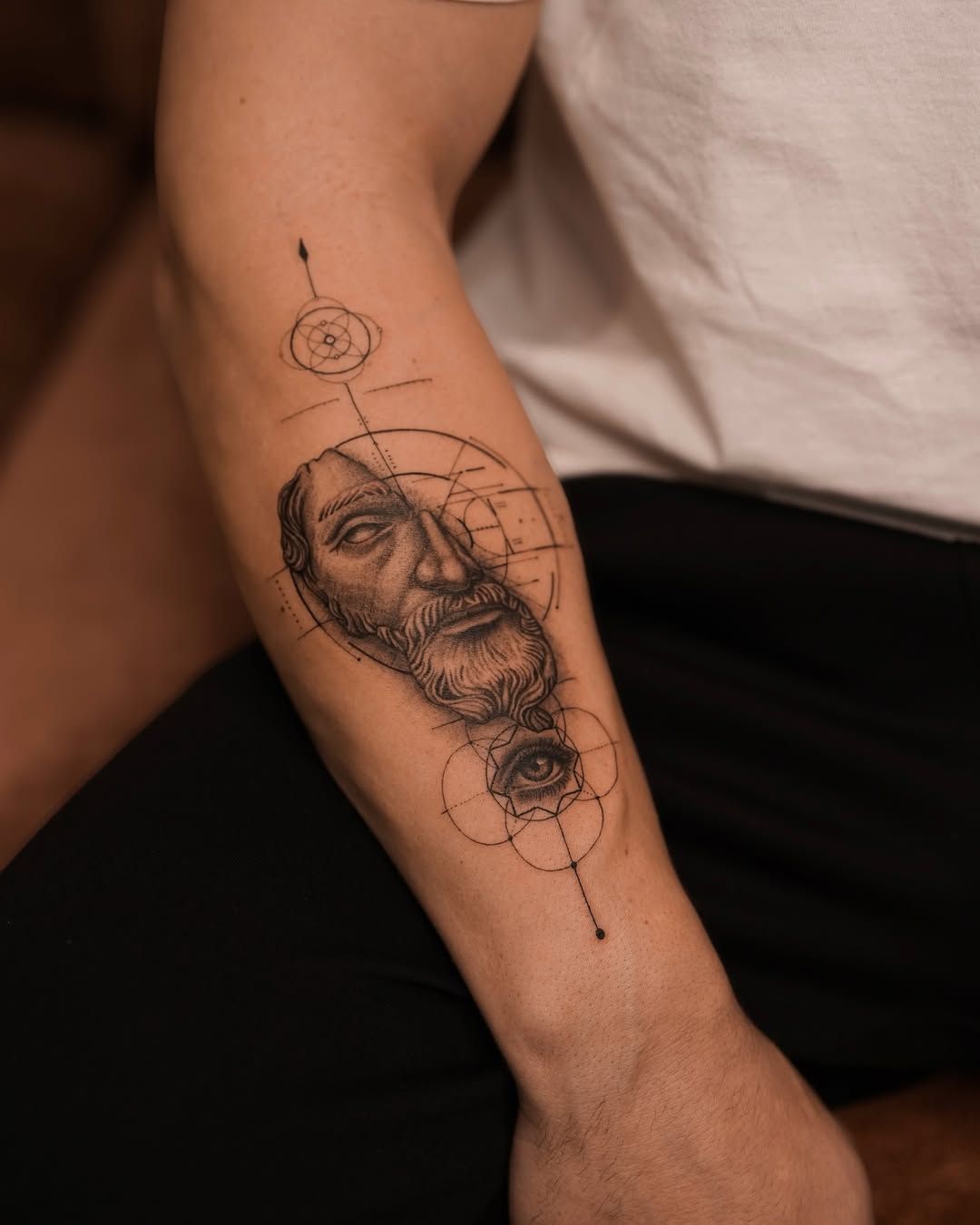
Colour shift in black and grey
Black and grey work often looks richer once it heals. Fresh ink can appear stark and slightly flat under the plasma layer. After the dermis settles, the gradients develop depth and the transitions between shadow and highlight read more smoothly. This is one reason experienced realism artists prefer black and grey for smaller, high-detail pieces: colour pigments shift unpredictably, while a well-placed greywash ages gracefully.
How the Studio Designs for the Healed Result
Spacing and line weight choices
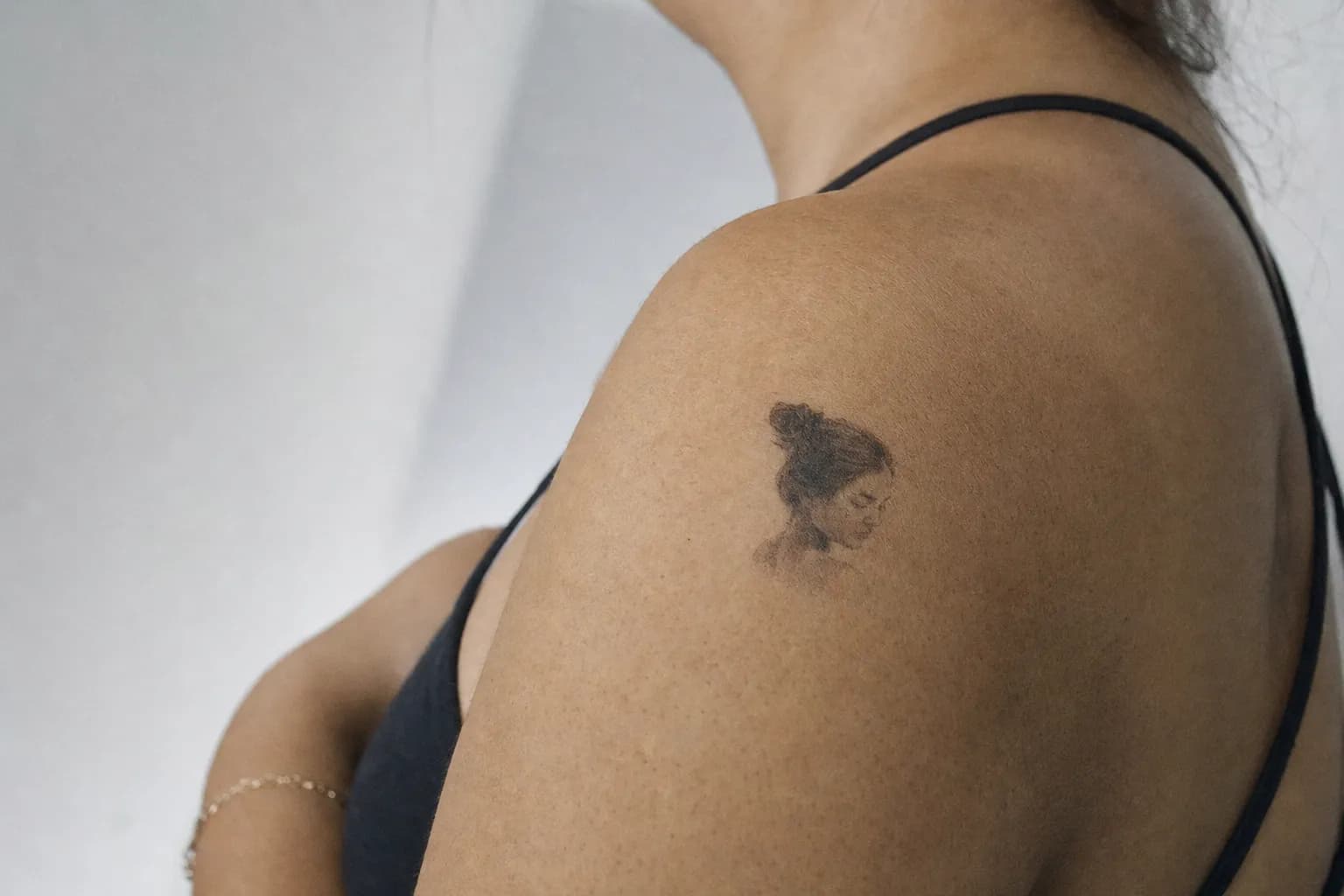
The artist sketches every micro realism piece with two versions in mind: how it looks fresh, and how it will read in eighteen months. That means resisting the urge to pack too much detail into a small space. A 5cm portrait with thirty visible eyelashes looks extraordinary in the fresh photo. Six months later, on skin that has moved and moisturised and been out in the Lisbon sun, those lashes may have merged into a smudge. Fewer, better-placed marks often produce a cleaner healed result than a dense composition.
Line weight is chosen not just for aesthetic effect but for durability. Hair-fine lines below a certain gauge will fade faster than slightly heavier ones. The studio calibrates this based on placement, skin type, and how much natural movement the area sees.
Placement decisions that protect longevity
Placement consultations at the studio always cover three things: daily sun exposure, joint movement, and skin texture. A wrist piece on someone who walks from Príncipe Real to Lapa every morning in summer gets more UV than an upper arm piece under a T-shirt sleeve. That's a real variable, not an abstract one.
High-movement zones like the inner elbow, the back of the knee, and the side of the hand create mechanical stress on healed pigment. The dermis flexes repeatedly, and over time that movement disperses fine lines outward. The studio avoids placing intricate micro realism in these zones unless the client fully understands the faster ageing involved.
- Upper arm and forearm: low movement, predictable UV management, recommended for most micro realism designs
- Ribcage and sternum: low sun exposure, moderate skin movement, good longevity but a demanding session
- Inner wrist: high sun exposure in Lisbon summer, moderate flexion. Requires disciplined SPF habits
- Fingers and hands: high friction, frequent washing, fastest-fading zone for delicate work
- Back and shoulder blade: excellent longevity, typically protected from direct sun, ideal for larger compositions
Aftercare That Actually Protects the Detail
The critical first two weeks
Moisture balance is the thing most clients get wrong. Too much cream traps bacteria against the healing wound and softens the scab layer prematurely, pulling pigment with it. Too little causes the surface to dry out and crack, which also pulls pigment. The goal is a thin, breathable layer of fragrance-free aftercare cream, applied two to three times daily, not a thick occlusive coating.
Keep the area out of standing water. Showers are fine; baths, pools, and the sea are not. Salt water in particular can draw pigment from a healing piece, and the Tagus riverfront in August is tempting but worth avoiding for the first two weeks. For a thorough aftercare guide for fresh tattoos, the fundamentals apply across all styles, though micro realism is less forgiving of mistakes.
- Wash gently with unscented soap twice daily, pat dry with a clean cloth
- Apply a thin layer of fragrance-free aftercare cream within a few minutes of washing
- Keep the area out of direct sunlight for the entire healing period
- Avoid submerging in any water. Pool, sea, bath. For at least two weeks
- Do not pick or scratch peeling skin, even when it's irritating
- Wear loose, breathable fabric over the area if clothing is unavoidable
Long-term care habits
Sun is the single biggest enemy of micro realism detail. UV radiation breaks down pigment particles in the dermis over time, reducing contrast and erasing the tonal precision that makes the style work. This is more damaging to delicate work than to bold traditional styles, because fine detail relies on small differences in value that UV slowly collapses.
From May to September in Lisbon, UV index regularly reaches eight or above. SPF 50 on any exposed healed piece, reapplied every two hours outdoors, is the most effective long-term protection available. Moisturising daily also matters: hydrated skin keeps pigment looking vivid longer than dry, flaking skin does.
"The healed result is where the real work shows. Anyone can make a piece look beautiful fresh. Designing for how it reads in a year. That's the discipline."
Sizing, Placement and Longevity: a Practical Reference
Different placements age at different rates. The table below gives realistic expectations based on zone, movement level, and typical UV exposure for someone living in Lisbon. These are general guidelines; individual skin type, aftercare habits, and sun exposure all shift the outcome.
| Placement Zone | Movement Level | Sun Exposure (Lisbon) | Expected Longevity | Touch-up Likelihood |
|---|---|---|---|---|
| Upper arm / shoulder | Low | Low to moderate | 5-8 years before refresh | Low |
| Forearm (outer) | Low | High in summer | 3-6 years with SPF discipline | Moderate |
| Inner wrist | Moderate | High | 2-4 years for fine detail | High |
| Ribcage / sternum | Low to moderate | Low | 5-8 years | Low |
| Back / shoulder blade | Low | Low | 6-10 years | Low |
| Fingers / hands | Very high | High | 1-2 years for detail | Very high |
| Inner elbow / back of knee | High | Low to moderate | 2-3 years for fine work | High |
Touch-ups are a normal part of owning a high-detail piece, not a sign that something went wrong. Most studios recommend waiting a full eight to twelve weeks after your session before assessing whether a correction is needed. Assessing at week three, during the milky veil phase, leads to unnecessary worry and sometimes premature decisions. Patience is the most useful tool in micro realism healing.
Sizing also affects how well detail survives. A 4cm portrait has less room for gradation than a 10cm one, and the same level of density in a smaller space means lines are inherently closer together. The studio's consultation process covers realistic expectations for any given size, so you know what the healed result will actually look like before ink touches skin. You can explore the full range of what's possible through the studio's micro realism guide for Lisbon clients.
Frequently Asked Questions
How long until a micro realistic tattoo is fully healed?
The surface skin heals in two to three weeks, but the pigment fully settles into the dermis over six to eight weeks. During that period the tattoo may look cloudy or muted. Judge the final result at around week eight, not week two, especially in warmer climates like Lisbon where humidity can extend the surface phase.
Will I lose detail as my micro realism heals?
Some softening is normal as skin grows over the pigment layer. A well-executed piece is designed with this in mind: the artist spaces lines and controls contrast so the healed result reads clearly. Pieces tattooed too densely or placed in high-friction spots will lose more definition. Good technique accounts for natural skin spread from the start.
Do micro realism tattoos need touch-ups after healing?
Often yes, at least once. Very fine lines and delicate shading can heal unevenly the first time, especially on textured skin. Most studios recommend waiting a full eight to twelve weeks post-session before assessing whether a touch-up is needed. Good aftercare reduces how much correction is required, but some refinement is a normal part of the process.
How does Lisbon's climate affect micro realism healing?
Lisbon summers are hot and sunny, which increases UV damage risk during the healing window and speeds moisture loss in the skin. Mild winters are generally easier for healing. From May to September, fresh work on exposed areas like the forearm or wrist needs careful shading from direct sun throughout the entire eight-week settle period.
What SPF should I use on a healed micro realism tattoo?
SPF 50 or higher, applied every two hours during outdoor exposure. Sun degrades the pigment particles in the dermis over time, reducing contrast and sharpness. This matters more for micro realism than for bolder styles because the fine detail relies on precise tonal differences that UV slowly erases. Daily application is the most effective long-term protection.