The First 24 Hours: Your Skin Just Took a Lot of Punctures
What redness, swelling and fluid are telling you
A fresh tattoo is an open wound. That's not dramatic language. It's just anatomy. The needle has punctured your epidermis thousands of times and deposited ink into the dermis below, and your body's first response is exactly what you'd expect: redness, swelling, warmth, and a clear or straw-coloured fluid weeping from the surface.
That fluid is plasma. It carries white blood cells to the site and begins the clotting process. It will dry to a thin film over the tattoo within hours. This is healthy and normal, and it is not ink loss.
In Lisbon's humid summers, the skin around the tattoo can feel warmer and look more flushed than it might in a cooler climate. That's expected. What you're watching for is redness spreading noticeably beyond the tattoo's edge, especially if it's hot to the touch and getting worse by the hour. That's the signal to seek professional advice, not to search for answers online.
Wrap on or wrap off. What the studio sent you home with
There are two different approaches to initial covering, and they're not interchangeable. Traditional cling wrap (the kind from the kitchen) keeps the wound moist and protected for the first few hours, but it traps heat and needs to come off within two to four hours. It's still used for larger pieces where second-skin film isn't practical across every contour of the body.
Second-skin is a thin, transparent, medical-grade adhesive film. Brands like Saniderm or Dermalize. That breathes, stays on for three to five days, and lets you shower normally while it works. The studio uses it for most standard sessions. You'll see fluid and ink pooling under the film on day one. Leave it alone. The film is doing its job.
- No touching the fresh tattoo with unwashed hands
- No soaking in the bath or swimming, even for a quick dip
- No gym session that produces heavy sweat or friction against the piece
- No direct sun on the fresh area
Days 2 to 4: Redness Fades, Soreness Peaks, Ink Looks Bold
The weeping stops. Now what?
By day two the plasma has dried and the surface has begun to stabilise. The tattoo will look slightly raised and very bold. Almost too bold. That's the epidermis reacting to trauma, not a sign that the ink is sitting wrong. It will settle.
You may notice the ink looks slightly milky or has a sheen to it. Again, this is the skin's surface layer reacting. The ink itself is already locked into the dermis. Give it time.
First wash and moisturiser application
Once the second-skin film is removed (follow the studio's specific timing guidance), your first wash matters. Use lukewarm water. Not hot, which opens pores and stresses the skin. With a fragrance-free, gentle soap. Work it in with clean fingertips using very light circular pressure. Rinse thoroughly, then pat dry with a clean paper towel. Do not rub.
Moisturiser goes on immediately after, in a thin layer. Think barely there. Enough to keep the skin from drying out, not enough to smother it. Two to three times a day is the right rhythm. A thick layer traps bacteria and slows the process. For product guidance, the choosing the right aftercare cream article covers what to look for on the label and what to avoid.
Days 5 to 10: The Peel. Why You Must Not Pick It
What peeling skin is doing for your tattoo
Somewhere between day five and day seven, the tattoo will start to peel. Thin, sometimes coloured-looking flakes of dead skin will lift away from the surface. This is the tattoo peeling stage, and it's one of the most misunderstood parts of the process.
The ink is in the dermis. The peeling happens in the epidermis above it. Those flakes are not ink. The tattoo is not fading. Your skin is simply shedding the cells that were disrupted by the needle, exactly the way a mild sunburn sheds skin a few days after the burn.
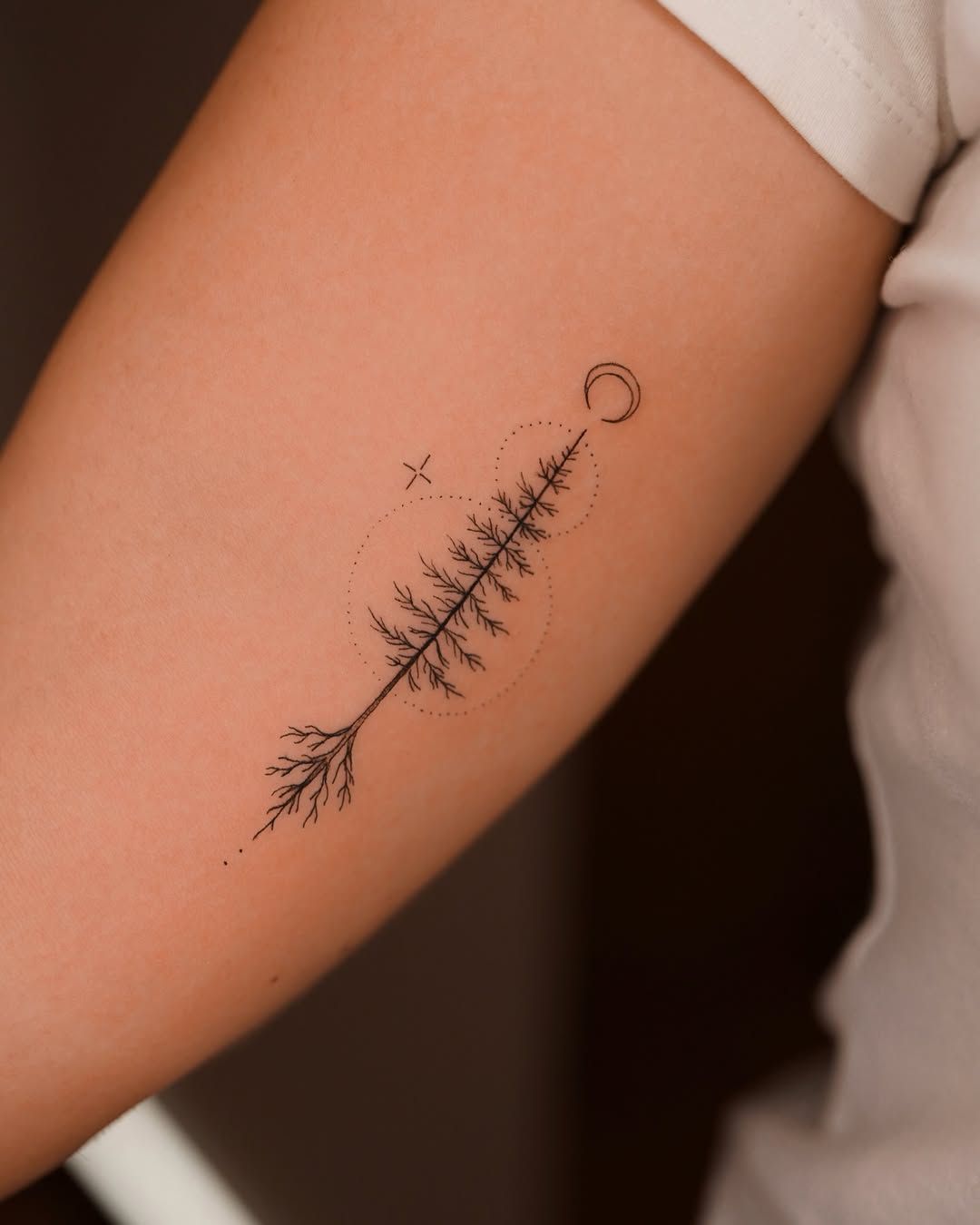
During this phase the tattoo will also look dull and possibly patchy. That's normal. The clarity you saw right after the session will return once the skin finishes renewing. What you do in this window determines whether it returns cleanly.
Fineline and micro realism: why the stakes are higher here
Picking is the single most common way people damage their own tattoo. And for some styles, the consequences are worse than for others.
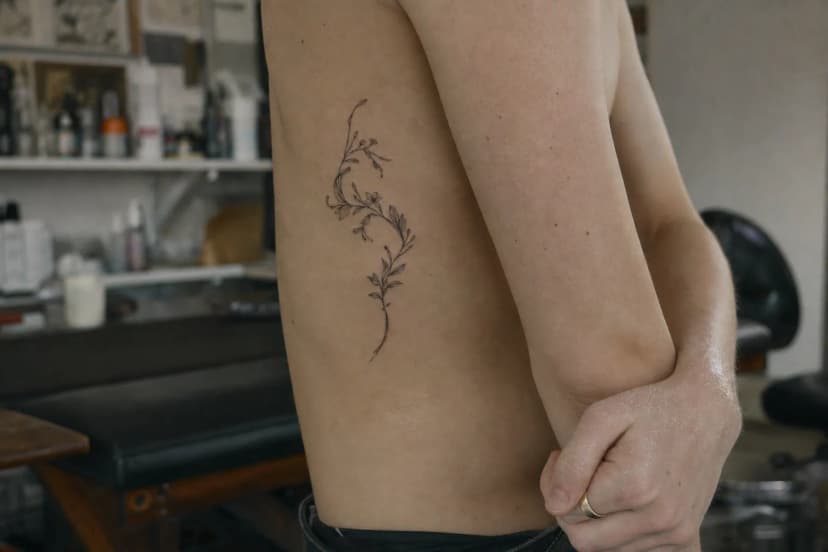
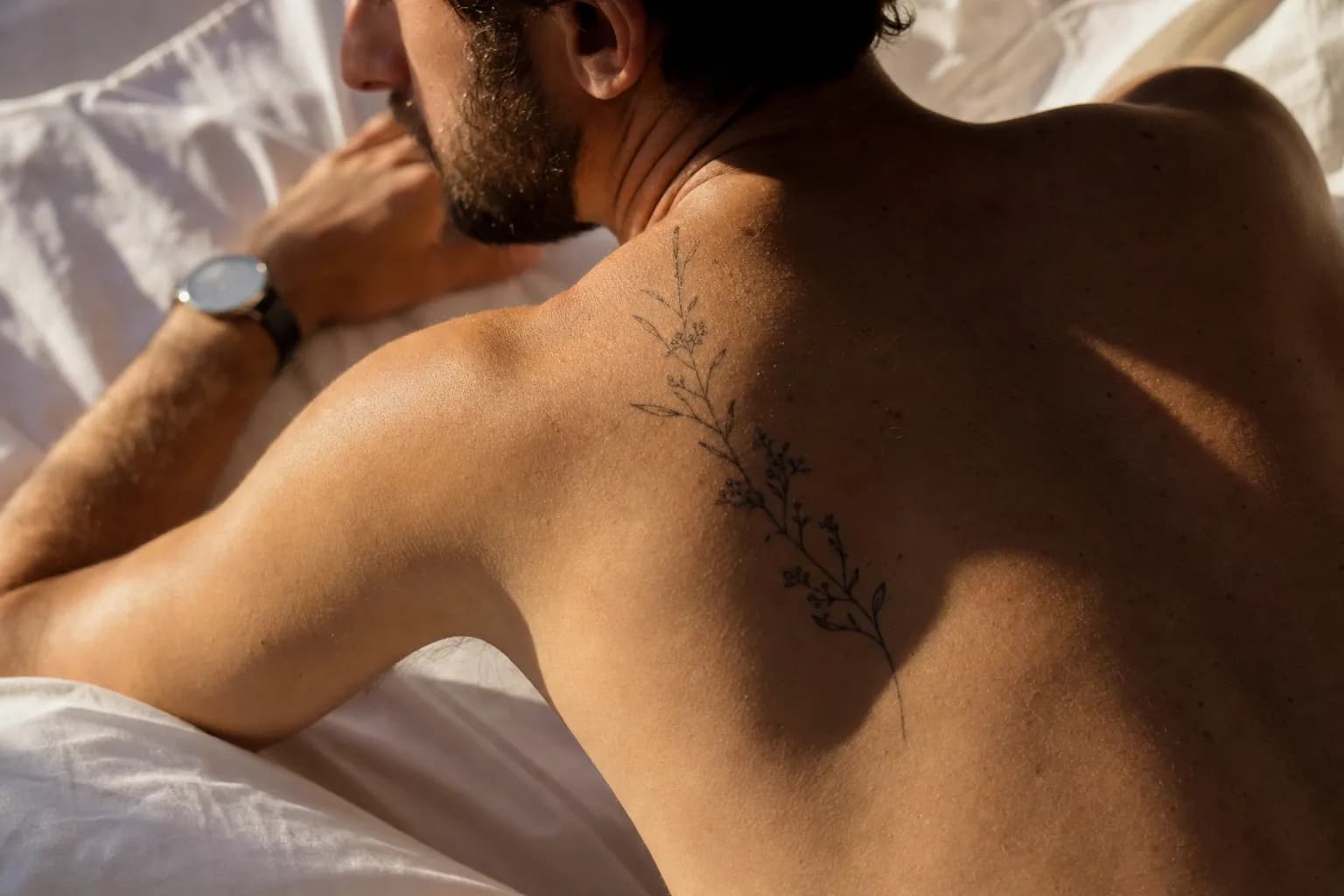
Fineline tattoo work relies on hairline-thin marks placed precisely in the dermis. When you pull a flap of peeling skin manually, you don't just remove dead cells. You create micro-tears in the still-healing surface and can drag pigment up with the skin. The result is a gap in a line that was previously continuous. In a bold traditional tattoo, one small gap might be invisible. In a fineline piece, you'll see it every time you look.
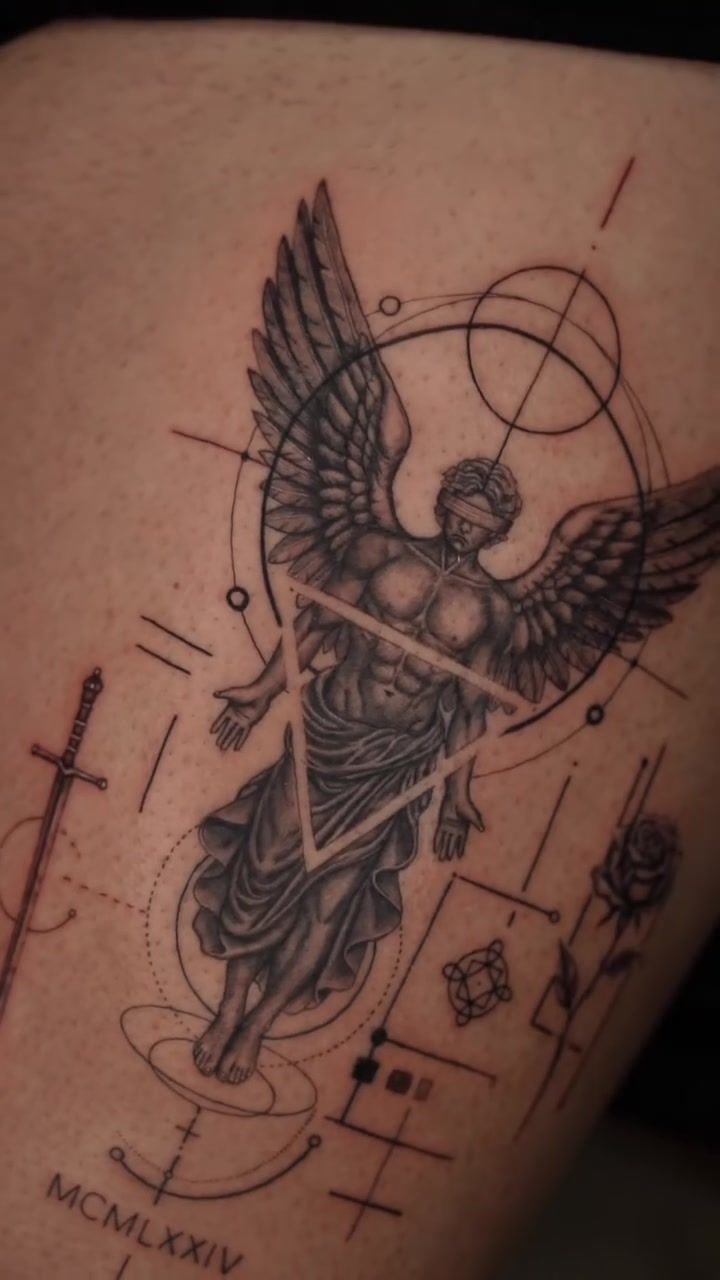
The same risk applies to micro realism pieces, where tiny gradations of shading build depth at very small scale. One picked patch can flatten an area that was supposed to have dimension.
Itching is intense during this phase. A clean, cold compress held against the tattoo for thirty seconds gives relief without damage. You can also pat. Never scratch. With a clean finger. That's it.
- Let flakes fall away on their own
- Keep moisturising two to three times a day, even as it peels
- Cold compress for itch. Compress, not scratch
- Stay out of direct sun, pools, and the sea
Weeks 2 to 4: Surface Healed, Deeper Work Continuing
The milky layer: why the tattoo still looks dull
By the end of week two, the epidermis has largely closed over. But the tattoo still doesn't look like the photos in the portfolio. It has a frosted, slightly veiled quality. Like looking at the design through a thin layer of wax paper.
This is the regenerating epidermis sitting over settled ink in the dermis. The new skin cells are not yet fully transparent. They will become so. Most clients hit the four-to-six-week mark and suddenly notice the tattoo has "arrived". The colours are richer, the lines are sharper, and the frosted layer has gone. This is what the tattoo healing stages week by week actually look like in practice, not just in diagrams.
Sun, swimming and Lisbon summer. The actual risks
Lisbon gets strong UV from May through September. Long outdoor lunches in Príncipe Real, afternoons at the terrace bars around Cais do Sodré, walks along the river. All of it exposes a healing tattoo to significant sun. UV degrades pigment before it fully sets, and it does so without any visible warning until the tattoo has healed and you're looking at washed-out lines.
Keep the piece covered with loose clothing when you're outside. If clothing isn't possible, SPF 50 is the minimum. And for swimming. In the Tejo, at Cascais, or in any pool. Wait four weeks at absolute minimum. Six weeks is better. Submerging a healing tattoo softens the forming skin layer, opens it to bacteria, and can draw out ink that hasn't yet fully settled into the dermis.
For more on how Lisbon's climate specifically affects your aftercare choices, how Inktrox performs in Lisbon's climate is worth reading before you pick your aftercare product.
Weeks 4 to 8: Full Depth Healing and What 'Healed' Actually Means
When the ink truly settles into the dermis
Surface healed is not the same as fully healed. Most people understand this in theory but underestimate what it means in practice. The dermis. The layer where the ink actually lives. Keeps remodelling for six to eight weeks after a session. Skin cells renew, collagen rebuilds, and the ink particles finish migrating into their permanent positions.
Around week six to eight, the last layer of skin renews and the tattoo reads with its full clarity. Lines that looked slightly soft at week three are now sharp. Shading that looked flat now has depth. This is what "how long does a tattoo take to heal" really means when answered honestly. Not the two weeks of surface closure, but the full eight-week dermal process.
Touch-ups: when to ask and when to wait
The studio will not assess or book a touch-up before eight weeks have passed. This isn't policy for policy's sake. What looks like a gap or a faded line at week three very often resolves completely by week six, as the dermis finishes its work. Touching up skin that hasn't finished healing risks compounding damage, not fixing it.
If at eight weeks you still see areas that concern you, get in touch. For the underlying biology of what your skin is doing at each stage, the tattoo healing time article goes deeper into the cellular mechanics.
Healing by Style: A Practical Comparison
Different styles heal at different rates. Dense, heavily worked areas take longer to settle than sparse fineline pieces. The table below reflects real observations from the studio, not generic estimates.
| Style | Surface Heal | Full Dermal Settle | Special Care Note |
|---|---|---|---|
| Fineline | 10 to 14 days | 6 to 8 weeks | No picking at all. Gaps in hairline marks are permanent |
| Micro Realism | 10 to 14 days | 6 to 8 weeks | Shading patches are visible if skin is disturbed mid-heal |
| Realism | 14 to 21 days | 8 weeks | Dense ink saturation takes longer to fully settle |
| Geometric | 10 to 14 days | 6 to 8 weeks | Crisp edges depend on no distortion during the peel phase |
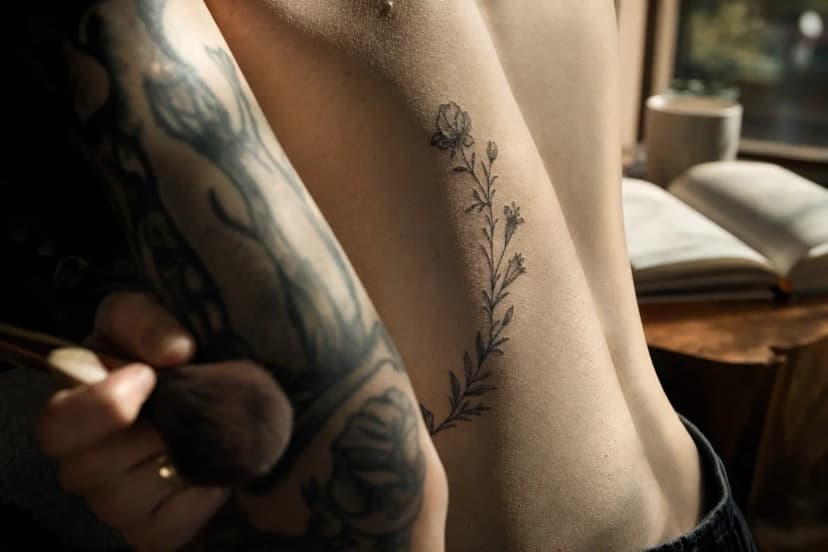
| Floral | 10 to 14 days | 6 to 8 weeks | Petal gradients need the full window to read correctly |
| Lettering | 10 to 14 days | 6 to 8 weeks | Any picking shows as broken letterforms. Especially in fine script |
Back pieces and sleeves. Areas where multiple sessions build dense coverage. Take longer again. The skin in heavily worked zones can take ten to twelve weeks to fully settle, simply because the cumulative trauma is greater. For script and lettering tattoos in particular, clean edges are non-negotiable, and any interference during the skin-shedding phase shows directly in the crispness of the letterforms.
What the Studio Tells Every Client Before They Leave
"The tattoo is finished when you walk out. The healing is the last part of the work. And that part is yours to do. Moisturise lightly, keep it clean, leave it alone, and trust the process."
Here's what you want to have at home before your appointment, not after:
- Fragrance-free, gentle soap (no antibacterial formulas with triclosan)
- Unscented moisturiser or a dedicated tattoo aftercare balm
- Clean cotton clothing that won't press tightly on the piece
- Paper towels for patting dry (fabric towels hold bacteria)
And here are the mistakes the studio sees most often, in order of how much damage they cause:
- Picking or pulling peeling skin. The number one cause of patchy healed results
- Over-moisturising. Thick layers suffocate the skin and delay healing
- Sun exposure within the first four weeks. Fades pigment before it sets
- Swimming or soaking before week four. Softens the skin barrier and risks infection
- Going to the gym and letting sweat sit on the piece for extended periods
- Using heavily scented products, which can trigger allergic reactions in healing skin
- Wearing tight synthetic clothing over the tattoo, especially in Lisbon's summer heat
If you're walking home through Príncipe Real or catching the metro from Cais do Sodré after your session, keep the piece covered and out of direct sun for that first journey. A loose cotton layer over the wrap is all you need. The new tattoo care routine is simple. It just requires consistency over several weeks, not complicated products.
For a detailed breakdown of specific product options, the choosing the right aftercare cream guide covers ingredients and application technique. If you want to know how specific aftercare products hold up in Lisbon's Atlantic climate specifically, read how Inktrox performs in Lisbon's climate.
Frequently Asked Questions
How long does a tattoo take to fully heal?
The surface skin closes within two to three weeks for most people. But the dermis. The deeper layer where the ink actually lives. Keeps remodelling for six to eight weeks. Fineline and micro realism pieces in particular need that full window before the lines read with their true clarity and sharpness.
Is it normal for a tattoo to peel after a few days?
Yes. Around days five to ten the epidermis sheds the dead skin cells disrupted by the needles. The ink is already held in the dermis below, so peeling skin does not mean losing colour. The danger is picking. Pulling dead skin manually can lift pigment and leave gaps in fine line work.
Can I go to the beach while my tattoo is healing in Lisbon?
Wait at least four to six weeks before swimming in the sea, the Tejo or a pool. Submerging a healing tattoo saturates the skin, softens the forming scab layer, and opens a route for bacteria. Lisbon's long summer days also mean strong UV exposure, which can degrade pigment before it fully settles.
Why does my tattoo look dull or faded after it peels?
A thin layer of regenerating epidermis sits over the ink during weeks two and three, giving the tattoo a slightly milky or frosted look. This is not fading. It's your skin rebuilding. Once that layer fully matures, usually by week four to six, colour and line clarity return.
When can I get a touch-up if the line work looks patchy?
The studio won't assess or book a touch-up before full healing is confirmed. Generally eight weeks minimum. What looks like a gap or thin line at week three often resolves on its own as the dermis finishes settling. Booking earlier risks touching up skin that simply hasn't finished healing yet.