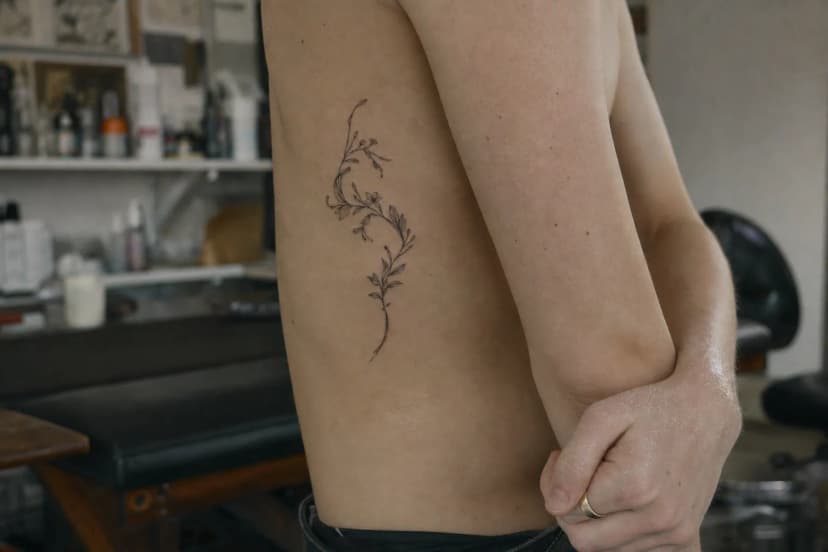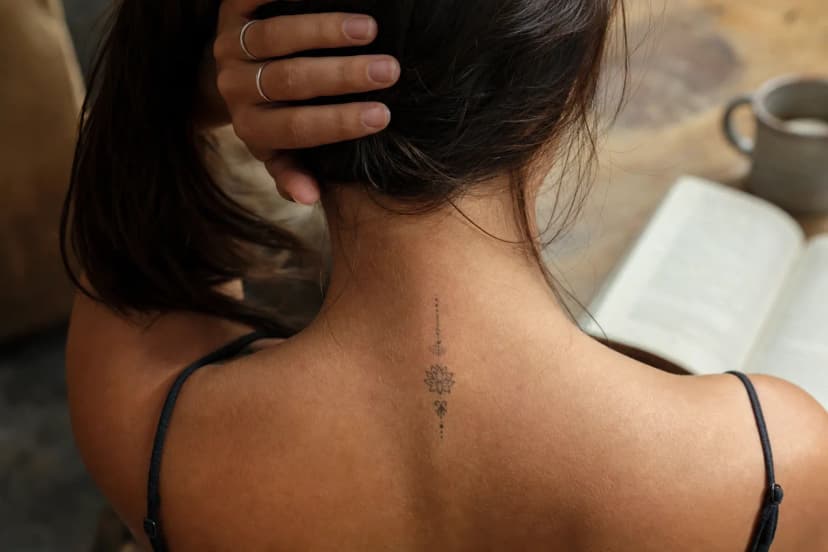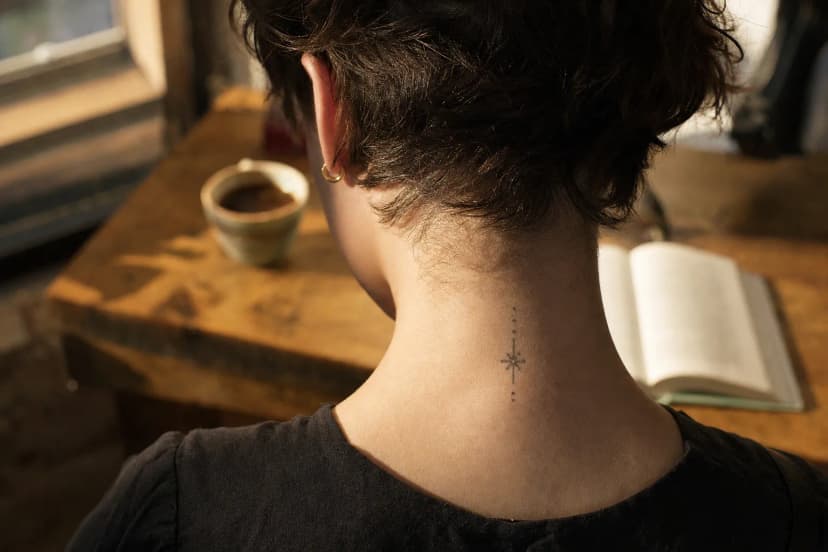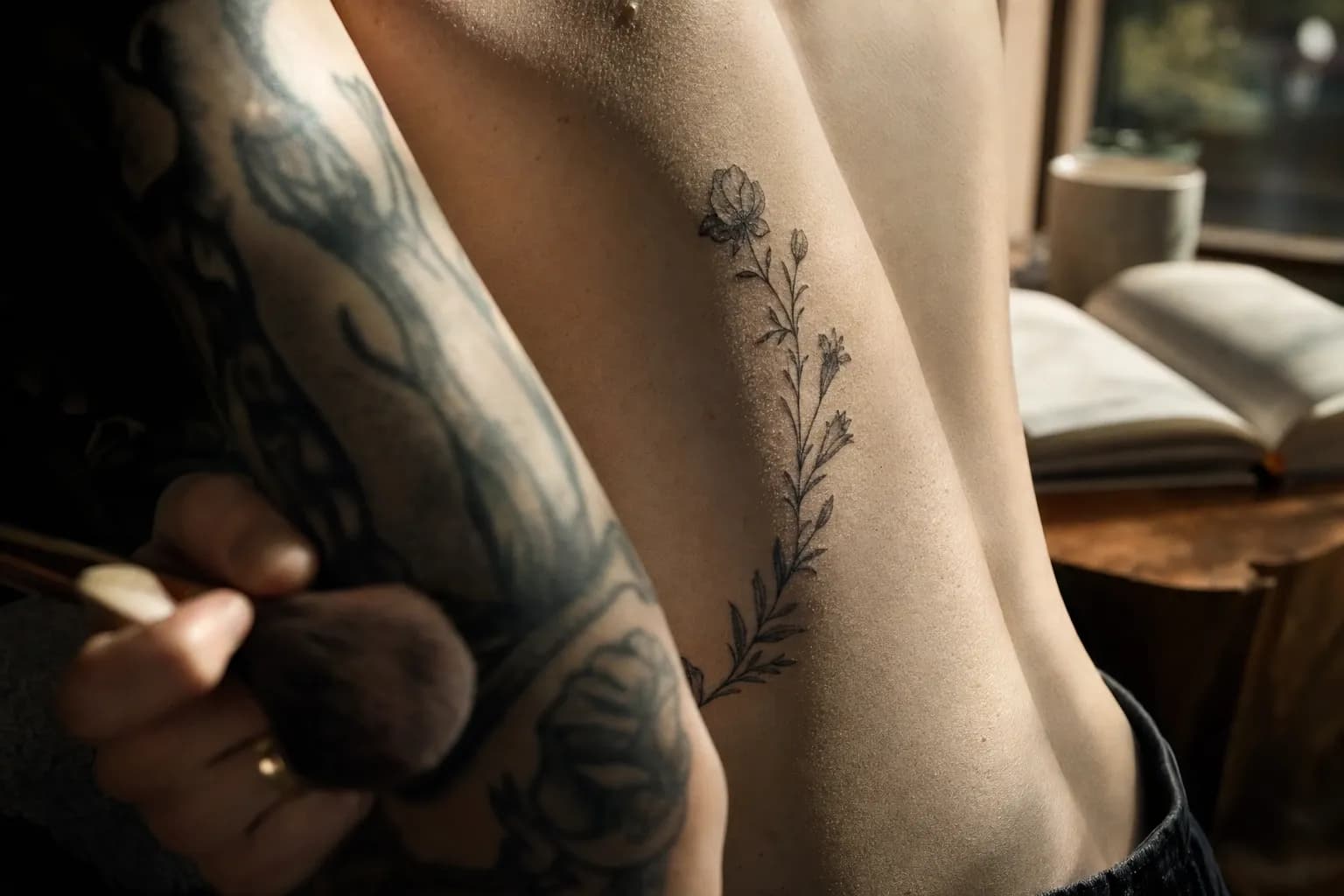
Why People Reach for Makeup in the First Place
A wedding is coming up. Your partner's family is traditional, the photos will last forever, and the script piece wrapping your forearm suddenly feels like the wrong conversation to have at the reception. Or perhaps a job interview landed in your diary and the dress code is conservative. Tattoo cover up makeup exists precisely for moments like these: specific occasions, specific days, no permanent decisions required.
Sometimes the reason is more personal. A tattoo you got at twenty-three no longer feels like yours at thirty-one. You're not ready to commit to a permanent fix, but you don't want it visible at every summer event in Príncipe Real either. Makeup buys you time.
This guide covers both sides honestly. Cosmetic coverage is a practical short-term tool. Design decisions are permanent. Knowing what makeup can and cannot do helps you choose the right solution for the right moment.
How Tattoo Cover Up Makeup Actually Works
Tattoo ink sits in the dermis, the second layer of skin sitting below the epidermis you can touch. Makeup sits entirely on top of the epidermis. There is no product that physically blocks the ink. What you're doing with coverage makeup is creating an optical illusion: enough pigment on the surface to prevent the eye from reading what's underneath.
That distinction matters. It explains why coverage is always approximate, why lighting affects the result, and why a heavily saturated black piece is harder to conceal than a healed fine line. You're not removing anything. You're overpainting.
The product categories worth knowing
Three types of product do the actual work. Full-coverage cream concealers carry high pigment density, meaning more colour particles per gram of product. They block ink far more effectively than standard foundation. Transfer-resistant formulas contain film-forming agents that resist smudging onto clothing or another person's skin.
Colour-correcting primers are the second category. These are tinted bases applied before any flesh-toned product. Setting sprays and translucent powders are the third. They lock everything in place. Without a setting step, even the best coverage product will migrate within two or three hours.
When choosing any product for this purpose, look for three properties: high pigment concentration, a transfer-resistant or waterproof formula, and fragrance-free ingredients. Fragranced products can irritate skin that has been prepped and layered, especially in warm weather.
The colour-correction step most people skip
Dark tattoos, particularly black and blue-black ink, need a warm-toned corrector applied before any flesh-toned concealer. This comes from basic colour theory: orange sits opposite blue on the colour wheel, so a warm orange or peachy-red corrector neutralises the cool tones of the ink. Without this step, the tattoo shows through the coverage as a grey or greenish shadow.
The corrector doesn't need to be thick. A thin, even layer does the job. The flesh-toned product goes on top. Applying it heavily underneath just adds bulk that cracks and settles into fine lines by midday.
Step-by-Step: Applying Cover Up Makeup on a Tattoo
The method matters as much as the product. Rubbing any coverage product into the skin smears the layers and reduces opacity. Pressing and patting preserves the layered structure that actually hides the ink.
- Cleanse and moisturise the area. Clean, dry skin holds product better. Apply a light, fragrance-free moisturiser and wait at least ten minutes before touching any coverage product. Skin that is still absorbing moisture will reject the concealer.
- Apply colour corrector in thin layers. Use a damp sponge, not fingers. Fingers are too warm and too porous; they absorb product and push it unevenly. Build the corrector in two thin layers rather than one heavy pass.
- Pat full-coverage concealer over the corrector. Use a fresh, slightly damp sponge. Press the product gently into the skin rather than dragging. If the tattoo is still visible, add a second layer after the first has dried slightly, around two minutes.
- Set with translucent powder. Press the powder in with a velvet puff or a damp sponge. Do not dust it on with a fluffy brush. A pressing motion compacts the layers; a sweeping motion disturbs them.
- Finish with setting spray. Hold the spray roughly 30 centimetres from the skin and apply two passes in a cross pattern. Let it dry completely before touching the area or pulling on clothing over it.
One honest note on Lisbon's climate. If you're attending an outdoor dinner in Chiado or an evening event in July or August, humidity and heat will challenge even the best-set formula. Prepare with an extra layer at step three, and carry a small touch-up kit. A pressed powder compact and a dab of your coverage product takes up almost no space in an evening bag.
What Coverage You Can Realistically Expect
Not every tattoo responds the same way to the best makeup to cover tattoos. The size, age, ink density, and colour of the piece all affect what's achievable. The table below gives honest expectations rather than optimistic ones.
| Tattoo type | Coverage difficulty | Realistic outcome |
|---|---|---|
| Small, healed fineline in grey or black | Low to moderate | Near-complete coverage possible with two layers and proper setting |
| Large, dense black or realism piece | High | Significant reduction in visibility; faint outlines may remain in direct light |
| Colourful tattoo with mixed tones | High to very high | Requires multiple corrector shades; full coverage difficult without professional application |
| Healed tattoo (six months or older) | Lower than fresh work | Faded edges are easier to conceal; dense centres still challenging |
| Fresh or still-healing tattoo | Do not attempt | Applying makeup over healing skin risks infection and pigment loss. Wait for full healing |
Fresh tattoos are a particular concern. Surface skin typically closes within four to six weeks, but the dermis takes closer to three months to fully settle. Applying any cosmetic product over peeling or scabbing skin introduces bacteria and can drag pigment out of the still-healing tissue. No event is worth that risk.
"Complete invisibility on a large, dark piece is genuinely rare without a professional makeup artist. Setting your expectation at 'significantly less visible' rather than 'invisible' helps you plan more effectively for the day."
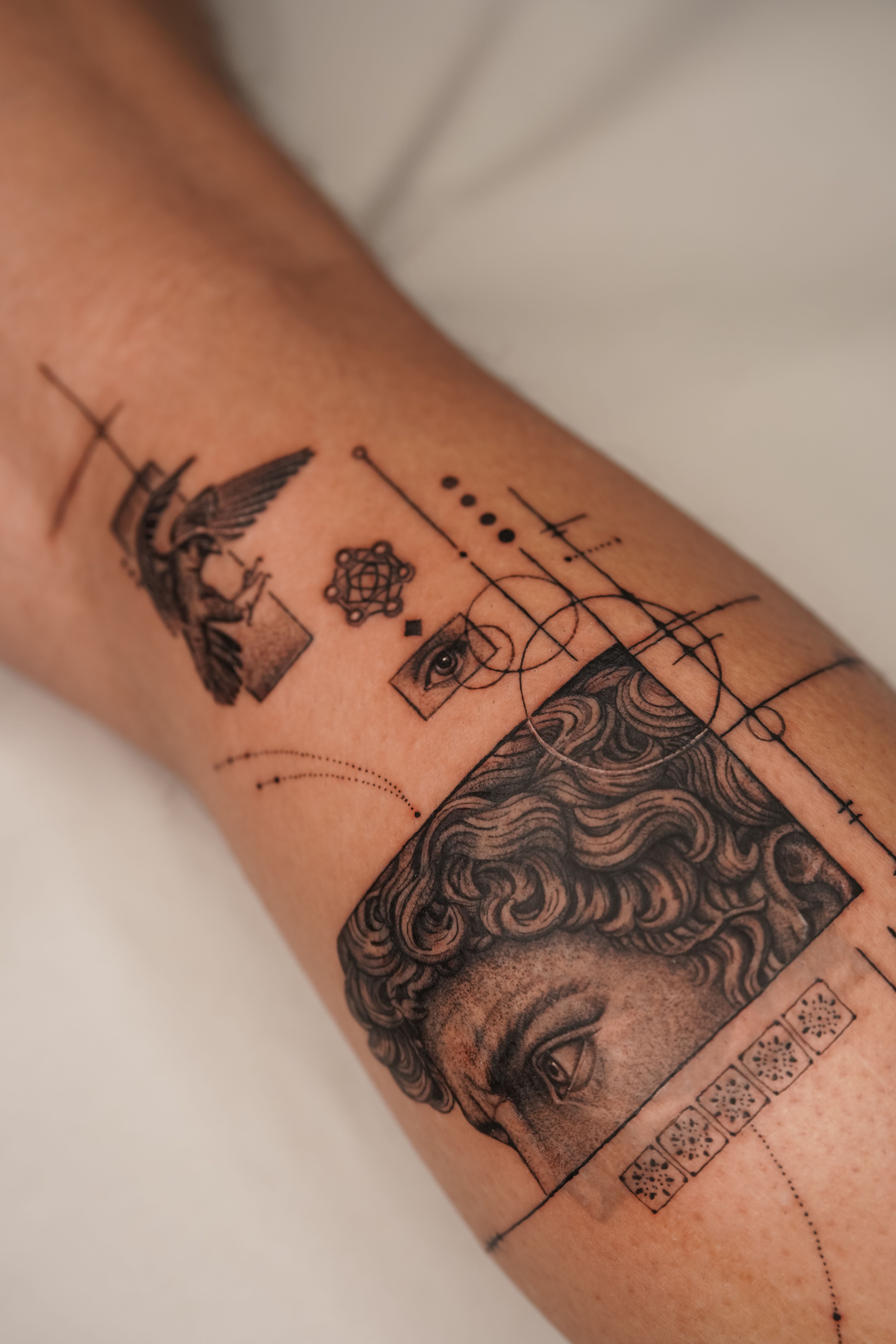
Darker, denser pieces like solid realism work are the hardest to conceal. The more ink packed into a given area of skin, the more optical mass you need to override it. That's simply the physics of pigment on pigment.
When Makeup Isn't Enough: Thinking About a Permanent Solution
If you're concealing the same tattoo before every family gathering, every formal event, every job interview, that frequency is telling you something. Makeup is a reasonable tool for a specific occasion. It's not a sustainable routine for a design that no longer fits your life.
A cover-up tattoo integrates the existing work into a new design, permanently. It requires careful planning: the artist needs to account for the original ink's density, colour, and placement. Understanding what actually works in a cover-up tattoo before your first consultation saves time and sets realistic expectations. There's also a useful overview of best cover up tattoos and the designs that hold up long-term if you want to explore what's possible visually.
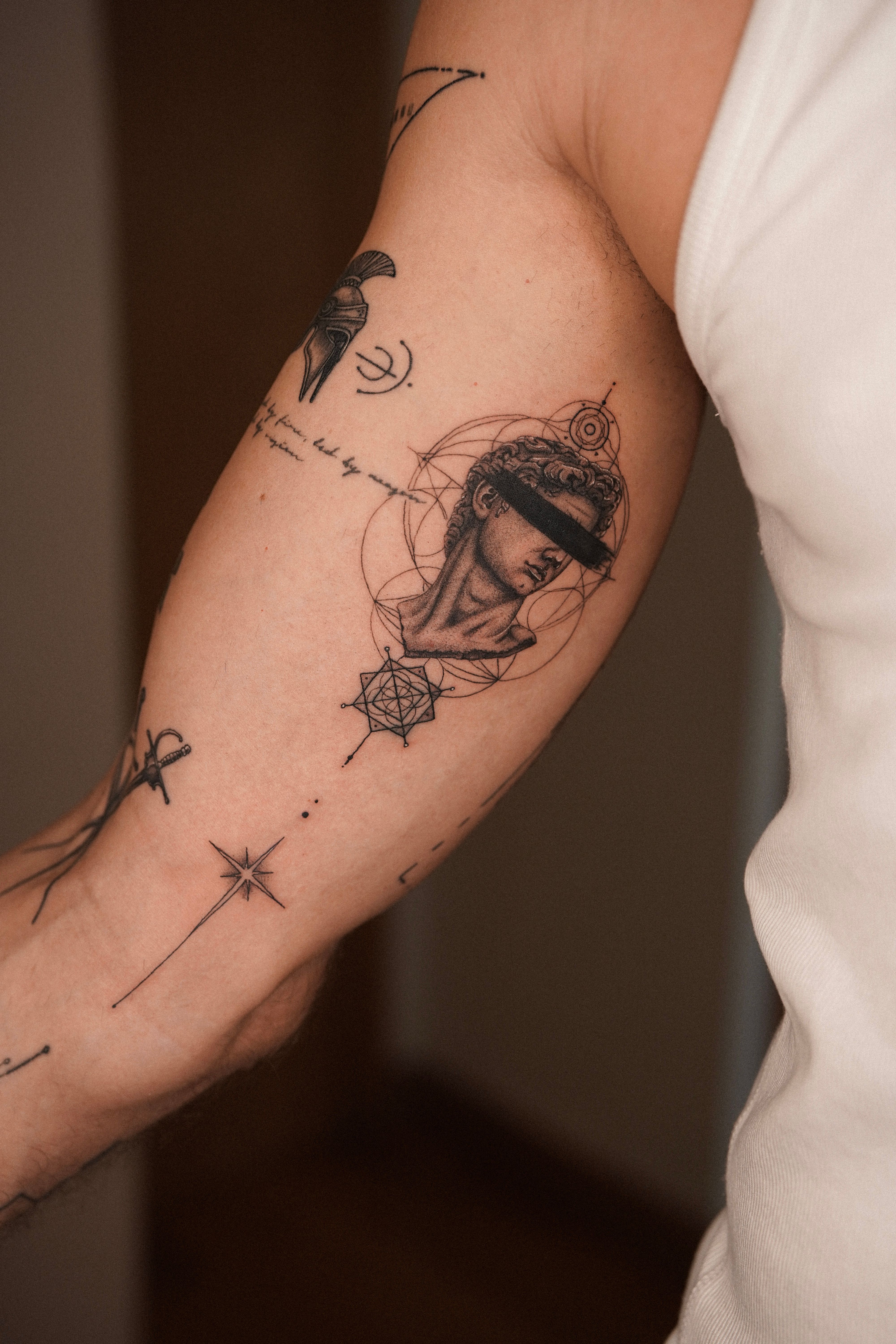
For tattoos that are lighter in density, fineline tattooing can sometimes provide a more delicate overlay that reshapes the old design rather than fully burying it. This only works when the original piece is compatible in terms of size and tone. The studio assesses this at consultation, not before.
What the studio does not offer is removal. If a permanent fix is your goal, a consultation here will clarify whether a cover-up design is achievable or whether a different path makes more sense first.
Practical Considerations for Lisbon-Based Clients
Anyone looking for a temporary tattoo cover in Lisbon during summer is working against the environment. July and August bring sustained humidity and temperatures that accelerate product breakdown. A formula that holds eight hours in a cool, dry room may need a touch-up after four hours at an outdoor event in Alfama or along the waterfront at Cais do Sodré.
Placement adds another layer of complexity. Forearm tattoos and collarbone pieces are high-friction zones. Transfer onto a shirt collar, a suit jacket, or a partner's outfit is a real risk, and one the studio has seen clients navigate more than once. If the tattoo is in a contact zone, test the full coverage method at home for two to three hours before the event day. You want to know the formula's limits before you're in the middle of a wedding ceremony.
- Carry a small pressed-powder compact for touch-ups mid-event
- Keep a dab of your coverage product sealed in a small container in your bag
- Wear a setting spray in a travel-size bottle if the event is outdoors or long
- Do a full rehearsal application at least two days before the event so skin has time to recover if irritation occurs
- Never apply any coverage product over a tattoo that is still in the healing phase
For practical guidance on healing well after a tattoo in Lisbon, including timeline specifics and product choices suited to the local climate, the studio's guide on healing well after a tattoo in Lisbon covers this in detail. Surface healing generally completes around four to six weeks post-session, but full dermal settlement takes closer to three months. No cosmetic product should go over the area until that surface phase is fully done.
One more note on how to cover a tattoo with makeup when clothing is involved. Opt for outfits that don't require you to pull tight fabric directly over the covered area repeatedly. Every drag of fabric against a coverage application risks disturbing the layers, particularly the powder setting step that holds everything together.
Frequently Asked Questions
Can you cover a black tattoo completely with makeup?
Fully concealing a dark black tattoo is difficult but achievable with the right preparation. You'll need a warm-toned colour corrector first, then a high-pigment cream concealer, set firmly with translucent powder and a long-wear setting spray. Larger, denser pieces may still show faint outlines depending on lighting conditions.
Is it safe to put makeup on a healing tattoo?
No. A tattoo that is still peeling or scabbing is an open wound in the deeper skin layers. Applying makeup during this period risks introducing bacteria and can pull pigment out of the healing skin. Wait until the tattoo is fully healed at the surface, typically four to six weeks after the session.
How long does tattoo cover up makeup last in the heat?
In Lisbon's summer conditions, a well-set application typically holds for four to six hours before needing a touch-up. High humidity and heat accelerate product breakdown. A setting spray is not optional in those conditions. Carry a compact and a small amount of your coverage product for mid-event corrections.
What's the difference between regular foundation and tattoo concealer?
Tattoo-specific concealers carry a much higher pigment concentration and a thicker, transfer-resistant formula. Regular foundation is designed to even out skin tone, not to block dark ink. For a visible tattoo, standard foundation alone will not provide sufficient coverage and will likely transfer onto clothing within an hour of application.
When should I consider a cover-up tattoo instead of makeup?
If you're reaching for concealer regularly, or if the design no longer represents who you are, a cover-up tattoo is worth exploring. A well-planned cover-up integrates the old work into a new design permanently. Makeup is a practical short-term fix; a cover-up tattoo is a considered, lasting decision that removes the need for concealment entirely.