The Real Question Behind Every Cover Up
Picture a script tattoo from ten years ago. The letters have spread slightly, the ink has faded to a grey-green, and every time you glance at your wrist you feel a small, low-level disappointment. Or maybe it's a blown-out outline on your forearm. Shapes that once felt sharp now bleeding at the edges. Either way, the question isn't simply "can this be fixed?" The real question is: what is actually possible, and what will the result honestly look like?
A cover up tattoo is one of the most technically demanding things a tattoo artist does. The old pigment sits in the dermis (the second layer of skin, below the surface), and it doesn't disappear. New ink must be dense enough or dark enough to visually suppress what's already there. That's a physics problem as much as a design problem, and understanding it early will save you from disappointment later.
This guide covers cover up tattoo ideas that actually hold up, which tattoo cover up styles perform best, and what the studio needs to know before a single line is drawn.
What Makes a Cover Up Tattoo Work
Darkness, density and ink age
Old ink fades over time because pigment particles break down and the immune system slowly disperses them. A tattoo that's ten years old and has seen a lot of Lisbon sun will have lost much of its original density. That's good news for cover up work: lighter, more faded ink gives the incoming pigment far more room to dominate. Fresh, solid black lines are the hardest to work over, because the new ink is competing with pigment that hasn't budged yet.
The studio will assess the original tattoo's tone and saturation before suggesting any direction. If the piece is heavily saturated, the artist may recommend a few laser fading sessions first. Even two or three laser treatments can shift a dense black piece enough to double the available cover up tattoo ideas.
Size: why bigger is almost always necessary
Here's the rule the artist communicates in every cover up consultation: the finished piece will typically need to be 20 to 40 percent larger than the original. The incoming design must completely surround the existing outline. If the new composition stops at the same edge as the old one, that old edge will show through at the border.
This surprises most clients. They expect a like-for-like swap. But the new artwork needs to extend beyond the original's perimeter and use shading or density to absorb those outer lines into the composition. Accepting this early makes the whole process smoother. For a fuller breakdown of what actually works in a cover up, the studio's earlier guide goes deeper into the logic.
Shape compatibility between old and new design
A solid circle is easy to hide inside a dark floral cluster. A thin horizontal script line across the wrist is much harder, because it runs against the natural flow of most designs. The shape of the original dictates which new shapes can realistically mask it. A geometric star with points radiating outward is difficult to cover with anything that doesn't also radiate outward in a similar pattern. The studio maps this during consultation, before any design work begins.
Which Styles Work Best for Cover Ups
Realism and micro realism
Realism tattoos use graduated shading. Smooth transitions from deep black to soft grey. That absorb underlying lines naturally. When an artist blocks in a dark shadow zone over an old outline, the outline disappears into the tonal shift. It's one of the most effective approaches for cover up tattoo work on heavily saturated pieces.
Micro realism works on the same principle at a smaller scale. A photorealistic eye or architectural detail, rendered with deep blacks and fine mid-tones, can swallow a surprising amount of old ink underneath it. The key is that the darkest zones of the new piece must sit directly over the darkest zones of the original.
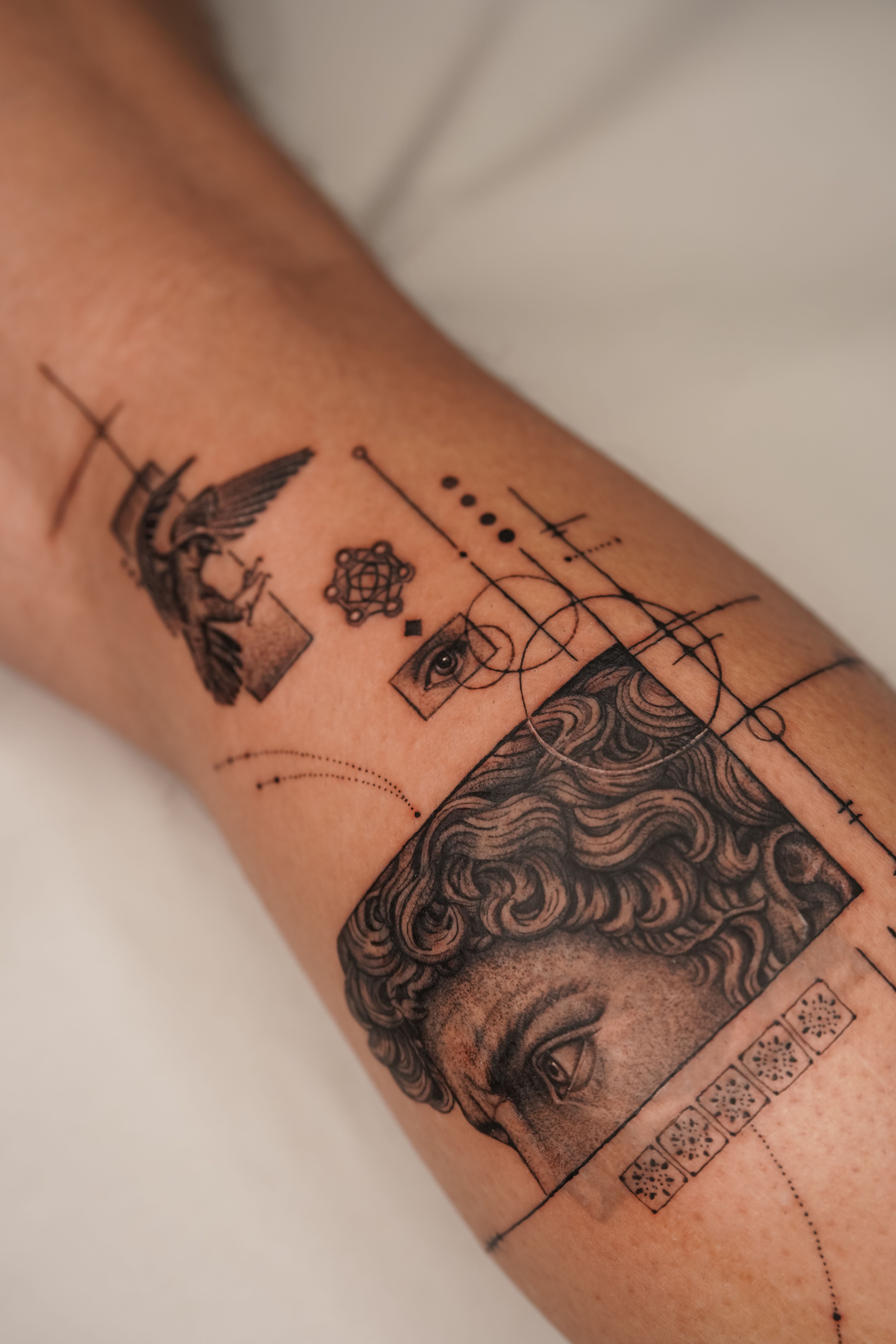
You can see how this approach comes together in this David statue cover up, where classical sculpture detail and geometric framing work together to eliminate the original piece.
Floral and botanical
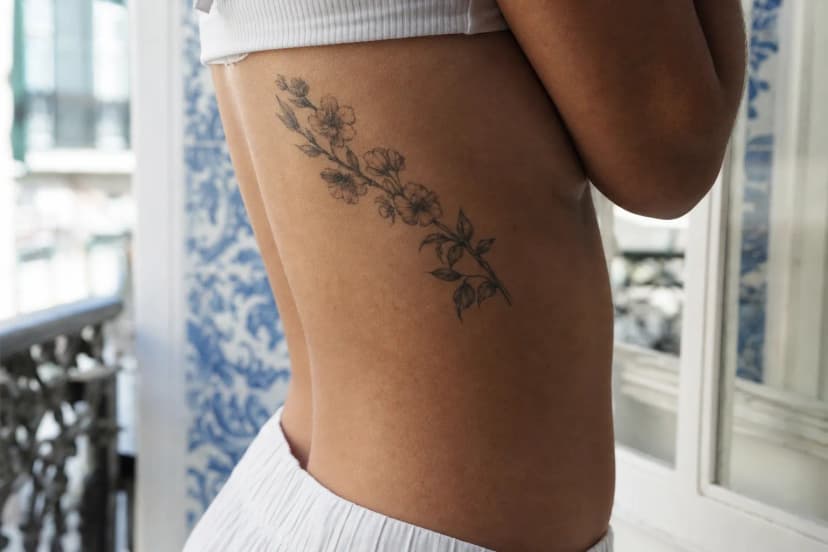
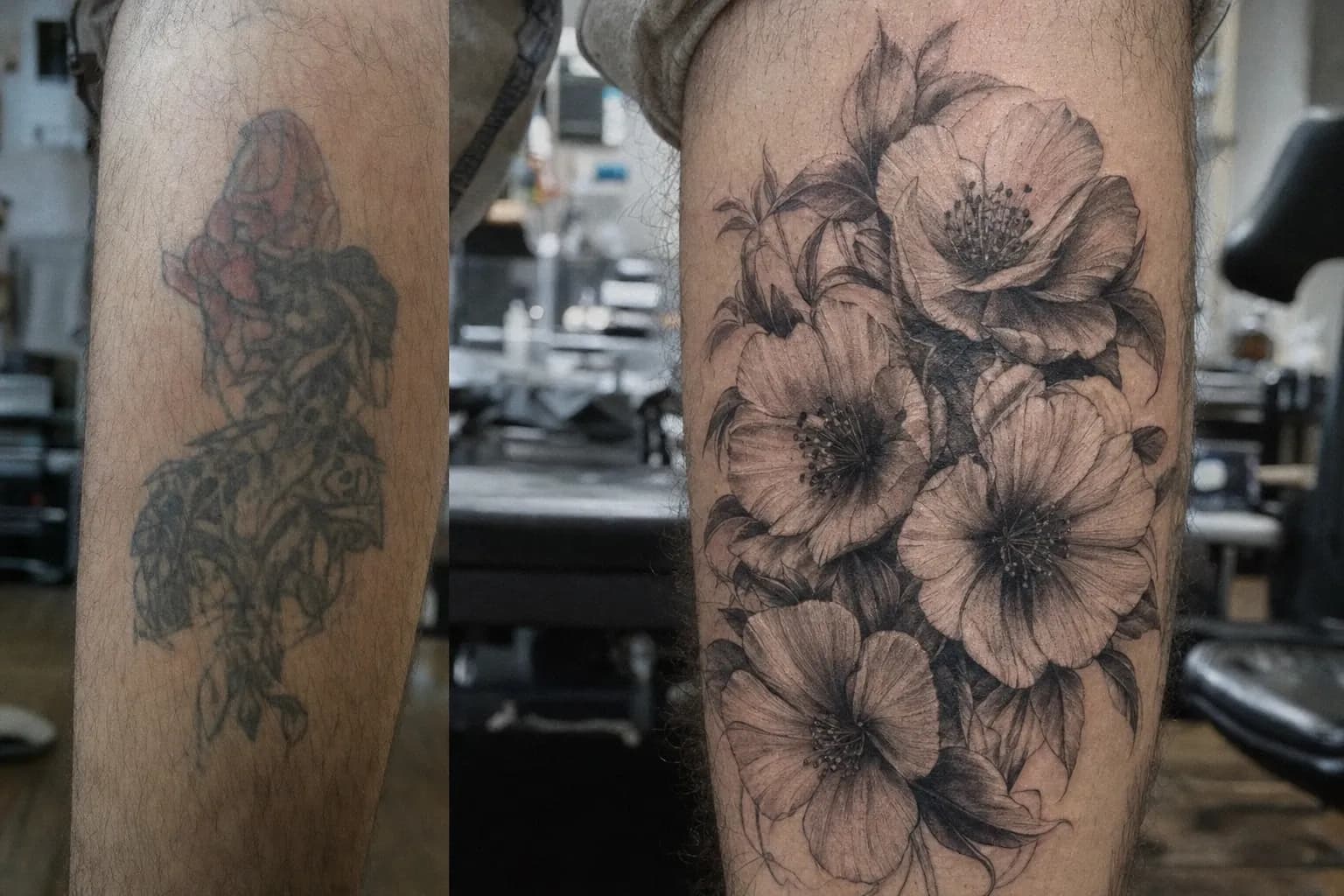
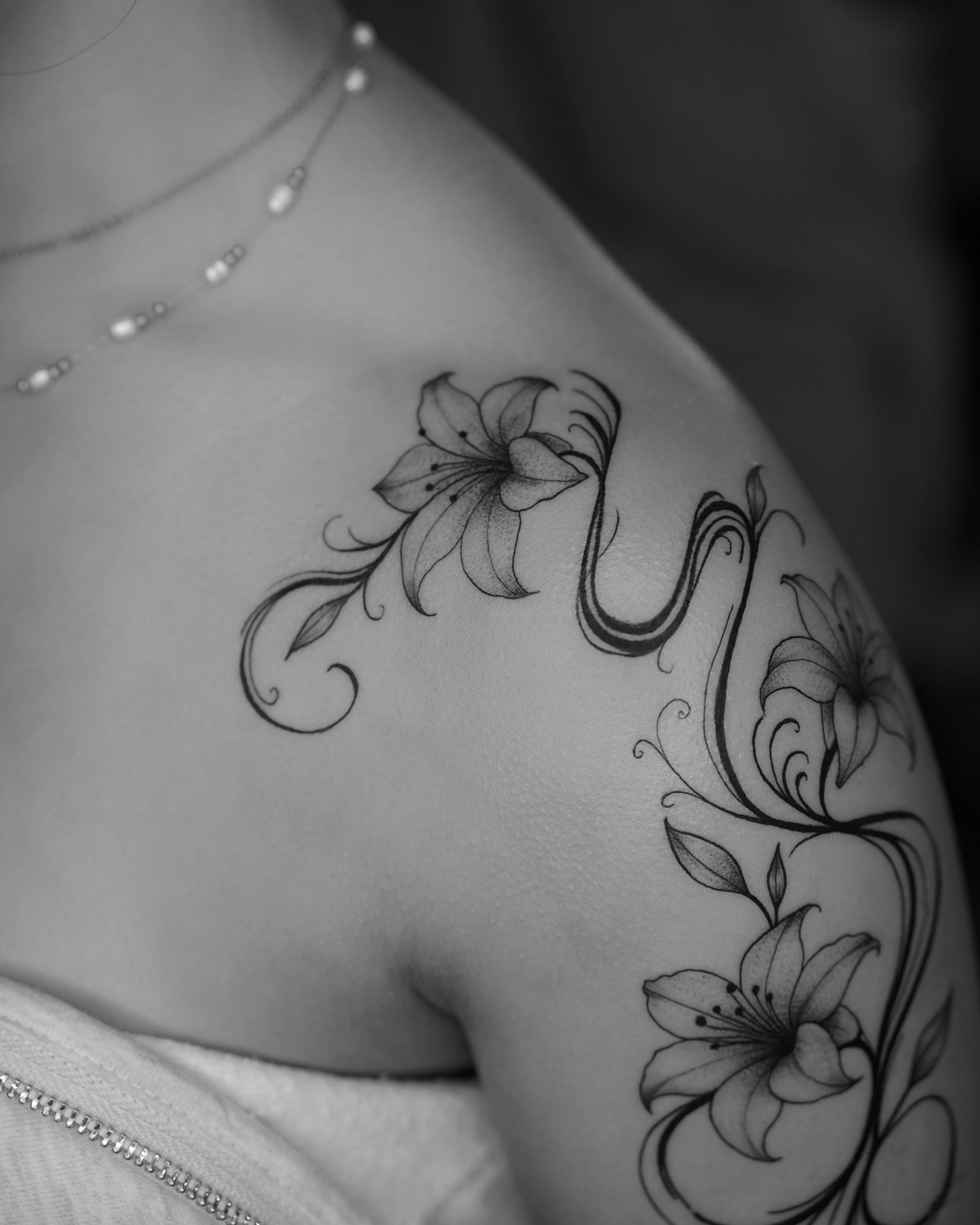
Floral designs are among the most reliable cover up tattoo styles in practice. Petals, leaves, stems and shadow clusters are naturally irregular, which means they can route around an old outline rather than fighting it head-on. A dense botanical arrangement. Roses with dark outer petals, overlapping leaves, deep stem shadows. Can absorb irregular shapes that would defeat a more rigid geometric approach.
The floral tattoo service at the studio covers everything from single botanical stems to full arrangements. For cover up work specifically, the artist tends toward compositions with deliberate dark zones rather than airy, open designs, because those shadows do the heavy lifting over old ink.
Geometric
Geometric tattoos with solid fills or dense linework can mask underlying outlines effectively, provided the original shape is compatible. A mandala, for instance, radiates outward from a central point, which makes it well-suited to covering circular or symmetrical original pieces. If the stencil for a mandala sits even 2mm off-centre, you'll see it every time you look at the piece. So the placement precision required here is high.
Geometric designs with open, lace-like linework are a different matter. Thin interlocking lines without fill won't hide much. It's the solid-fill and heavily shaded geometric work that performs in a cover up context.
Fineline and minimalism: when they work and when they don't
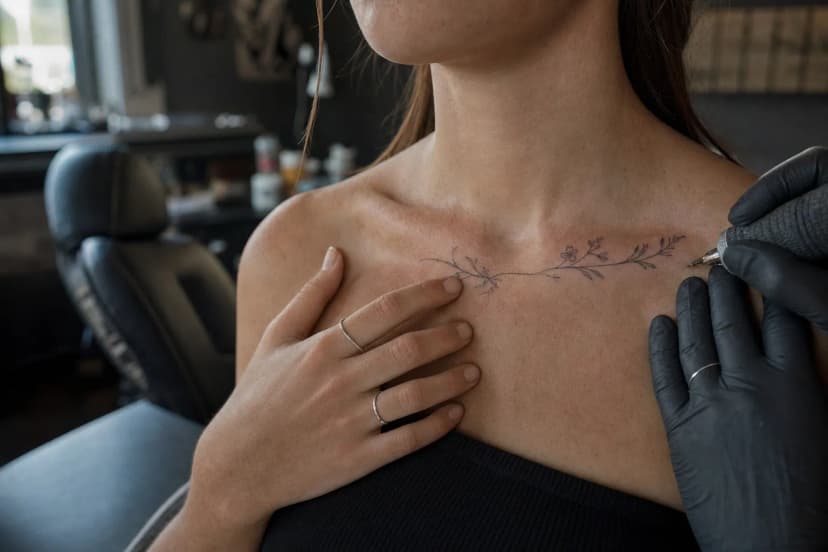
A fineline cover up tattoo is genuinely possible, but only under specific conditions. Fineline work uses very thin lines, often applied with a single needle, and those lines are semi-transparent by nature. Old dark ink bleeds through them visually, the way a dark t-shirt shows through a light fabric. Over a very faded, small mark. Something that's largely resolved to a pale grey. Fineline can work beautifully. Over anything with solid black fill or thick outlines, it will not hold up.
Minimalism faces the same constraint, compounded. Clean, simple designs with deliberate negative space (empty skin that forms part of the composition) depend on that skin looking clear. Existing ink underneath disrupts the whole premise. Minimalism is almost never the right tool for heavy cover ups. For lighter existing work, though, read about what minimalism and fineline can realistically do for smaller cover ups.
"If a style relies on the skin being a clean canvas, it's the wrong choice for a cover up. The canvas is never clean. The question is how well the design can work with what's already there."
How the Studio Approaches a Cover Up Consultation
The studio needs to see the original tattoo clearly before any conversation about design begins. A well-lit photo from multiple angles works if you're enquiring remotely, but an in-person assessment is better. The artist looks at tone (how dark is it?), saturation (how densely packed is the ink?), line weight (thick outlines or thin?), and how the piece has aged. All of that shapes what's possible.
Cover up tattoo consultation at this studio follows a specific order: assessment first, concept second, design third. The artist will not sketch a design over an existing piece without understanding the structure underneath. If a chosen style genuinely won't work over a specific original, the studio will say so. That's not a lost booking; it's a client who trusts the advice and comes back when the conditions are right.
Once a direction is agreed, the artist plans the new composition around contrast zones: areas of deep shadow and dense detail that will sit directly over the heaviest parts of the original. Shading direction matters too. Lines drawn perpendicular to an old outline will suppress it more effectively than lines running parallel to it.
Placement, Sizing and What to Bring to Your Appointment
Come prepared. Bring clear photos of the existing tattoo in natural light. Bring reference images of styles you respond to, but stay open to structural changes. Your references show the aesthetic you want, while the artist maps what the existing piece allows. These two inputs together produce the best outcome.
- Photos of the original tattoo from at least two angles, taken in daylight (not flash)
- Three to five reference images of the style or subject you're considering
- Any previous laser session records, if applicable
- A realistic sense of how much larger you're willing to go with the new piece
Placement affects how much the artist can do. Some body areas offer more skin tension and flatter surface area for dense shading work, which directly affects cover up quality.
| Placement | Cover Up Difficulty | Recommended Style |
|---|---|---|
| Upper arm / bicep | Low to moderate | Realism, floral, geometric |
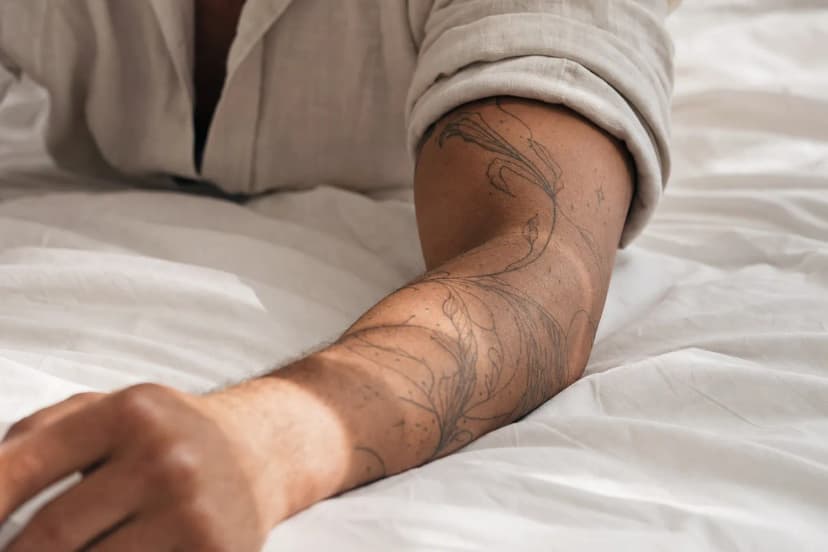
| Forearm (outer) | Moderate | Realism, floral, geometric with fill |
| Shoulder blade | Low (flat, large canvas) | Most styles, including denser floral |
| Ribs | Moderate to high (skin moves) | Floral, realism. Avoid thin geometric |
| Wrist / inner forearm | High (thin skin, high movement) | Requires careful style match; consult first |
| Calf / shin | Moderate | Realism, floral, bold geometric fills |
Lisbon's warm summers add one practical consideration. Sun exposure on freshly tattooed skin. Whether you're walking the Cais do Sodré waterfront or sitting in Príncipe Real. Accelerates ink breakdown in a healing tattoo. Cover up work carries more ink density than a standard piece, so keeping the area covered outdoors for at least four weeks after your session matters more than it might for a lighter tattoo.
Healing a Cover Up Tattoo: What's Different
Cover ups deposit fresh ink into skin that has already been worked. The dermis in that area has existing pigment particles, some scar tissue from the original session, and a memory of previous trauma. The healing process can feel more intense than a first tattoo in the same spot: more redness in the first few days, more pronounced peeling in week two.
Keeping the area moisturised is not optional. Dry skin forms scabs, and scabs can pull out the new ink sitting over old deposits. That's particularly damaging in a cover up because you need the fresh pigment to settle uniformly over uneven ground. A thin layer of appropriate aftercare cream, applied consistently, keeps the skin supple during that critical first fortnight.
- Wash gently with unscented soap twice daily for the first week
- Apply a thin layer of aftercare cream after each wash. Don't overload the skin
- Keep the tattoo out of direct sun for a minimum of four weeks
- Avoid submerging in pools, the sea or baths until fully healed (typically three to four weeks)
- If peeling is heavy, do not pick. Let skin shed on its own schedule
For a detailed look at healing a denser tattoo in Lisbon's climate, the studio's aftercare guide covers product choices and the specific considerations that apply here. You can also find general healing guidance from Healthline's tattoo healing overview.
One more note specific to cover ups: the artist may schedule a follow-up assessment once the piece is fully healed, usually at the eight to ten week mark. Old ink sometimes shows through in areas that looked solid right after the session. A small amount of finishing work at that stage, before it becomes a problem, is far easier than revisiting the whole piece later.
Frequently Asked Questions
Can a fineline tattoo cover an old tattoo?
Rarely on its own. Fineline work uses very thin, semi-transparent lines that old dark ink bleeds through visually. It can work over very faded, small marks, but for anything with solid black fill or thick outlines, a denser style like realism or floral will give far more reliable results. Always assess the original piece first.
How much bigger does a cover up tattoo need to be?
As a general rule, expect the finished piece to be at least 20 to 40 percent larger than the original. The new artwork needs enough surface area to surround the existing outline completely, and the shading or density at the edges must absorb those old lines into the composition rather than stopping level with them.
Do I need laser removal before a cover up?
Not always, but it helps significantly if the original is very dark or densely packed. Even a few laser sessions to fade existing ink opens up your cover up tattoo ideas considerably. The artist will tell you during consultation whether the piece as-is gives enough room to work with, or whether fading first is worth it.
What is the best style for covering a dark tattoo?
Realism, micro realism and dense floral designs are generally the most effective tattoo cover up styles because they use areas of deep shadow and clustered detail that visually absorb existing lines. Geometric styles with solid fills also perform well. The right choice always depends on the shape and tone of your original piece.
How long should I wait before covering an old tattoo?
If the original is fully healed. A minimum of eight to ten weeks for a fresh tattoo. You can consult straight away. Older, more faded tattoos are easier to cover. If you've had recent laser sessions, wait until any residual inflammation has fully settled before sitting for cover up work.
Can a cover up tattoo be done in one session?
It depends entirely on the size and complexity. A small, faded mark can often be covered in a single two to three hour session. A large, saturated piece may need two sessions, sometimes with a healed assessment in between to see where old ink is showing through before adding any finishing work to those areas.