The Tattoo You Have Is Part of the Design Now
Nobody books a cover-up feeling great about what's already on their skin. Maybe it was a rushed decision at eighteen, a name that no longer belongs there, or simply work that didn't age well. Whatever the reason, the impulse is understandable: make it disappear.
But a cover-up isn't erasure. It's a collaboration between old ink and new design. The tattoo underneath becomes a physical constraint, a shadow, sometimes even an asset. The most successful cover up tattoos don't fight what's there. They absorb it.
If you're sitting with a piece you've grown to dislike, the good news is that more options exist than most people realise. The bad news is that some of those options require honesty about what's actually achievable. This guide covers both.
What Makes a Tattoo Hard (or Easy) to Cover
Ink density and darkness
The single biggest factor is how much ink was pushed into your dermis. The layer of skin just beneath the surface where tattoo pigment permanently lives. A solid-fill black tattoo, heavily saturated, packed dense with multiple passes, holds a lot of pigment. Any new design placed over it has to contend with that darkness showing through lighter areas of the composition.
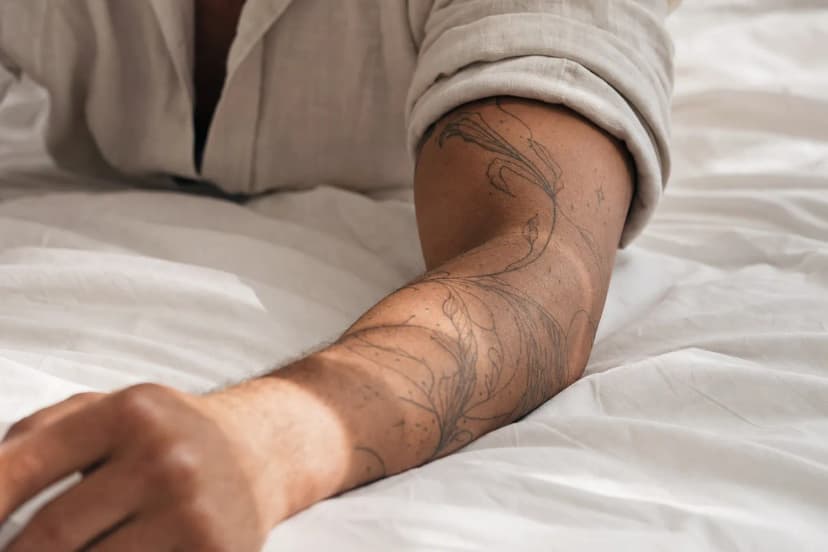
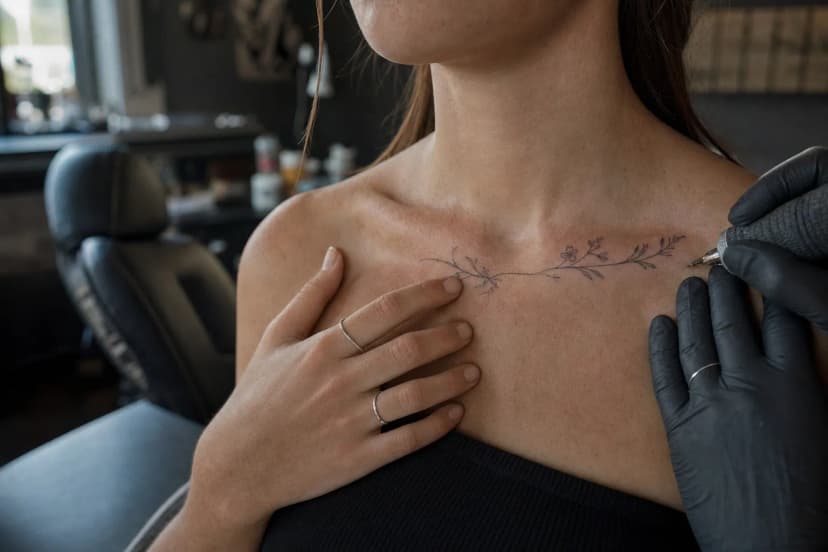
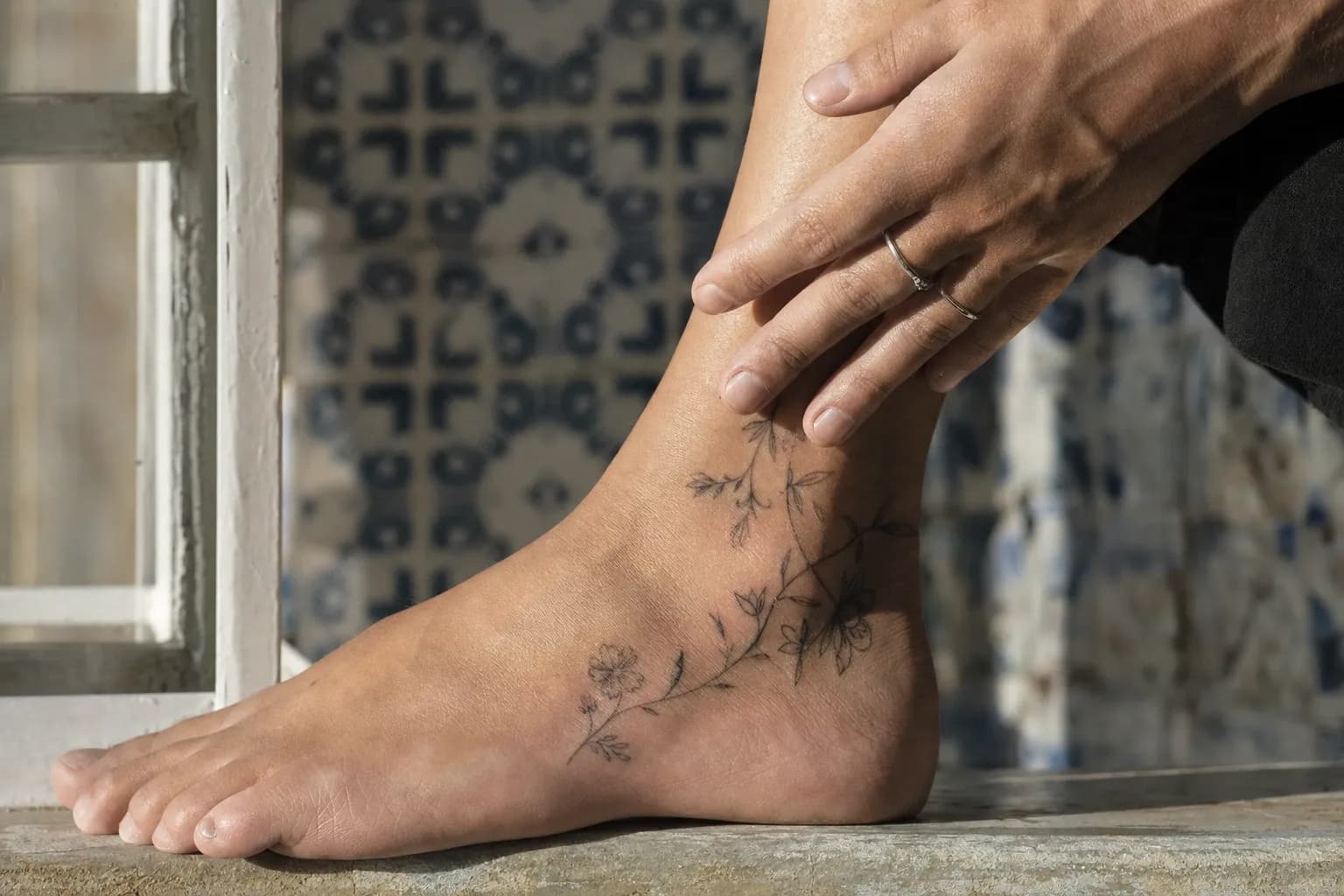
Thin, delicate linework. Especially older pieces that have softened over years. Sits much more gently in the dermis. Those are genuinely workable with finer approaches like fineline tattooing, where intricate detail can be woven around faded lines rather than fighting them head-on.
Size and placement
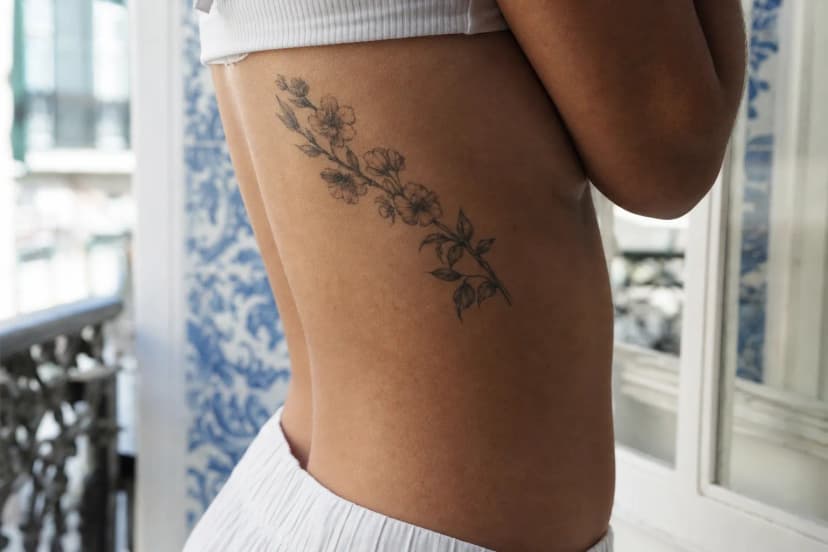
A tattoo on the shoulder blade gives an artist a generous canvas. One on the inside of a wrist or between fingers offers almost none. Ribs, chest, upper back and the outer forearm all allow compositional flexibility. The tighter the placement, the harder it is to design around the original's darkest points without the new piece looking forced.
Size matters too. A small tattoo that you want covered with something equally small is a genuinely difficult ask. The new design almost always needs to be larger than what it's replacing, which affects where it can go and how it integrates with surrounding skin.
Age and fading
Ink migrates slightly into the dermis over time. Fresh tattoos have crisp, hard edges. Older ones have edges that feather and soften as the pigment settles. That softening actually works in your favour. A ten-year-old outline tends to blend into a new composition more cleanly than a two-year-old one with sharp definition. Age is one of the few factors that genuinely helps rather than complicates a cover-up.
Which Styles Can Cover an Existing Tattoo
Fineline and minimalism
This surprises people, but what fineline and minimalism can actually do for small cover-ups is far more than most expect. On a light, faded piece, the artist can build an intricate composition that uses the old ink's position as a guide rather than a problem. Fine lines weave through faded areas. Negative space is placed where the old ink is lightest.
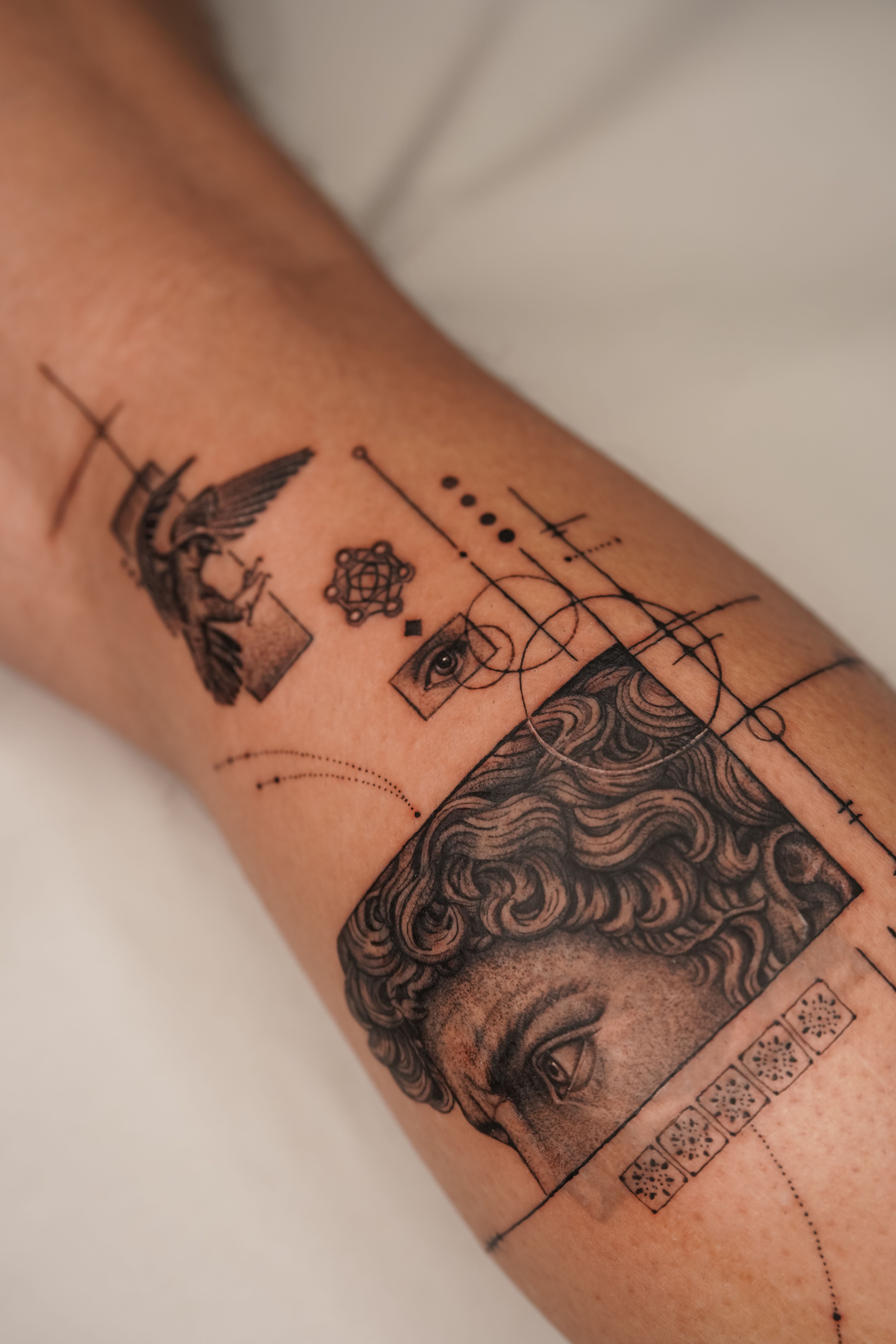
Minimalism works on a similar principle. Clean shapes, well-placed negative space and deliberate simplicity can frame an old tattoo out of the picture rather than simply painting over it. The key condition for both approaches: the original piece has to be reasonably faded or lightly inked to begin with.
Geometric and sacred geometry
Geometric designs have a structural quality that lends itself naturally to cover-up work. A mandala. A radially symmetrical pattern built from repeating geometric forms. Can be centred over an old tattoo and its dense linework radiates outward, taking up visual space that would otherwise let old ink bleed through. See our geometric tattoo service for the range of approaches available.
The azulejo tile tradition here in Lisbon, with its interlocking geometric motifs, speaks to the same principle: repetition and structure create a visual field strong enough to hold the eye. That same logic applies when a mandala sits over a faded piece on the upper back. For a deeper look at how this kind of precision gets planned, read what it takes to get geometric design right.
Realism and micro realism
A realistic composition works because shadows do the heavy lifting. In a black-and-grey portrait or nature scene, deep tonal shadows naturally occupy large areas of the design. The artist can position those shadows directly over the darkest points of the old piece, letting the original ink contribute to the tonal depth of the new one rather than fighting it.
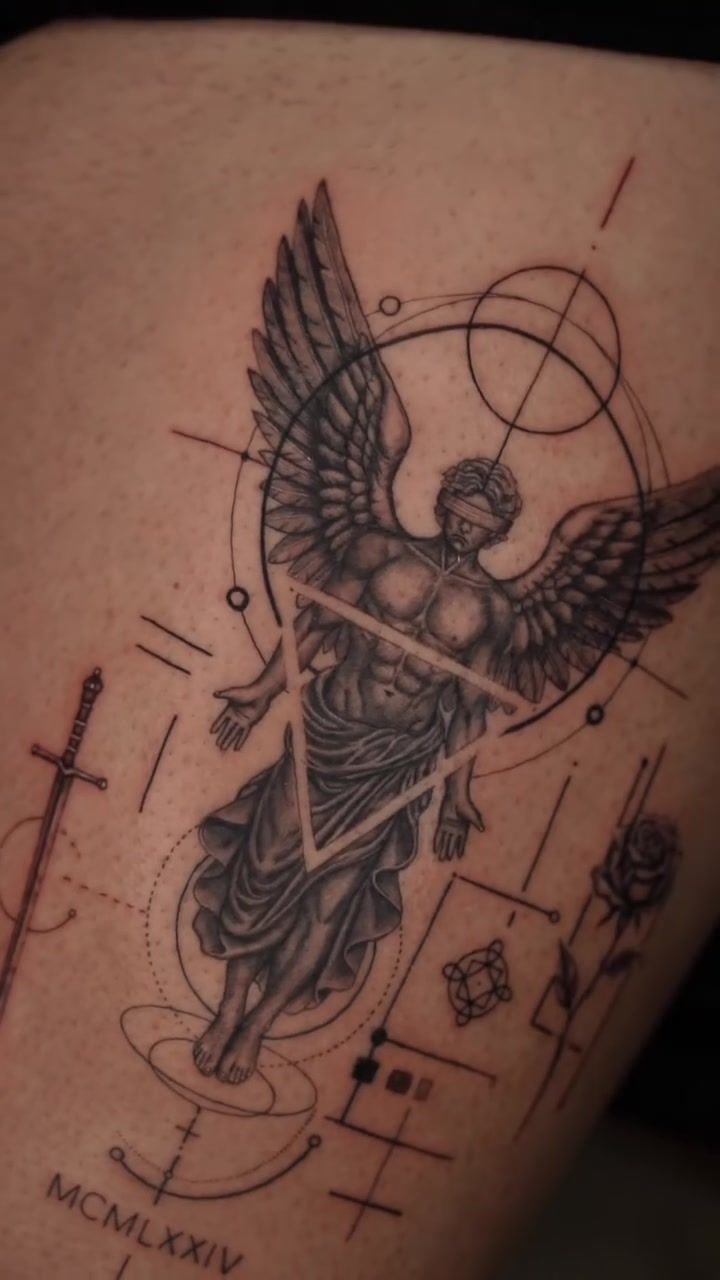
Micro realism packs that same tonal logic into a smaller surface area. It's a precise approach. Micro Realism Tattoos in Lisbon covers the technique in detail. And it can be especially effective when old linework needs to disappear into a compact but deeply detailed subject.
What doesn't work here
The studio works in fineline, minimalism, geometric, realism, micro realism, floral and lettering. Styles outside that range. Watercolour, neo-traditional, biomechanical. Aren't offered here, so they won't appear as options in a consultation. This keeps the conversation focused on techniques the artist genuinely executes at a high level, rather than promising approaches that aren't part of the practice.
And sometimes, no style will work cleanly without preparation. If the original ink is very heavy, very dark, or very large, the honest answer may be partial laser fading first. Not full removal. Just enough sessions to reduce density so the new design has a workable base.
How the Studio Approaches a Cover-Up Consultation
Before you sit down in the chair, you'll submit clear photos of the old tattoo. Natural daylight photographs, taken close enough to show the linework and saturation, give the artist a realistic read on what's there. Poor lighting hides problems; good lighting reveals them.
The in-person consultation then happens under proper studio lighting. The artist maps the darkest concentrations of ink in the original piece. Those are the fixed points the new composition has to account for. Everything else builds around them. The new design is shaped by those anchors from the beginning, not adjusted for them at the end.
"Cover-up design is never finalised until the stencil sits on your skin. If the stencil lands 2mm off-centre on a geometric piece, you'll see it for the rest of your life. We adjust on the body, not on paper."
This matters more for cover-ups than for fresh work. A stencil placed on unmarked skin can be repositioned easily. A stencil placed over an existing tattoo needs to align with specific dark areas. The artist checks that alignment before committing to a single line.
When the studio recommends laser fading before proceeding, that recommendation comes upfront. At the consultation, not after you've paid a deposit. It's a longer road, but one that leads to a cleaner result. Skipping that step to save time usually shows in the final piece.
Placement, Size and Session Planning
Cover up tattoos generally need to be 30 to 50 percent larger than the original. That extra surface area gives the composition room to breathe around the dark edges of the old piece, so the new design doesn't look cramped or forced. The exact percentage depends on how saturated the original ink is and which style covers it.
| Original Tattoo Size | Recommended Cover-Up Size | Estimated Session Length |
|---|---|---|
| Small (under 5cm) | 6-8cm minimum | 2-3 hours |
| Medium (5-10cm) | 8-15cm depending on ink density | 3-4 hours, sometimes split |
| Large (10cm+) | Significantly larger; assessed case by case | Multiple sessions of 3-4 hours each |
Session timing is worth thinking about if you're in Lisbon. Summers here are humid, and a fresh tattoo on a body that's sweating regularly faces a harder healing environment than one done in October or November. Sweat introduces moisture and bacteria to a wound that's still closing. For a cover-up, where the skin is being worked more heavily than usual, clean healing is especially important.
If you can plan your session for autumn or early winter, do it. And once you're healed, the aftercare guidance for healing in Lisbon covers exactly what to use and when, including how Lisbon's climate affects the process week by week.
What to bring to your consultation
- Clear photographs of the old tattoo taken in natural daylight, from multiple angles if it has depth or texture
- Reference images of styles or subjects you're drawn to. Even rough inspiration helps the artist understand your direction
- Honest notes on why the original tattoo isn't working for you. That context shapes the design conversation
- Any information about prior laser treatment, if relevant
What to expect from the process
- Submit photos and book a consultation
- In-person assessment under studio lighting; the artist maps old ink density
- Design direction agreed, including sizing and placement
- Stencil placed on skin and adjusted before any tattooing begins
- Session completed; aftercare plan discussed before you leave
- Follow-up review at full healing (6-8 weeks) to assess whether a touch-up is needed
Frequently Asked Questions
Can fineline really cover an old tattoo?
Yes, with conditions. Fineline works well over light, faded tattoos where the old ink has softened and lost its hard edges. The artist weaves intricate detail into the composition so the original lines disappear into the new design. Dense, dark tattoos are harder. They may need partial laser fading first to give fineline enough room to work cleanly.
Do I need laser removal before a cover-up?
Not always, but sometimes it genuinely helps. If the original tattoo is heavily saturated with black or dark ink, even a bold cover-up design can struggle to conceal it fully. A few laser sessions to fade, not fully remove, the old piece gives the new design a much cleaner base. The studio will tell you upfront if fading is worth pursuing before you commit.
How much bigger does a cover-up tattoo need to be?
As a general rule, a cover-up needs to be roughly 30 to 50 percent larger than the original. This gives the composition space to breathe around the darkest edges of the old piece. The exact size depends on how dark and saturated the original ink is, and which style is chosen for the new design.
How long does a cover-up tattoo session take?
It depends on size and complexity, but cover-up sessions often run longer than a comparable fresh tattoo. A small cover-up might take two to three hours. A larger piece covering significant old ink could require multiple sessions of three to four hours each, with proper healing time between them.
Will the old tattoo show through the cover-up over time?
If the cover-up is designed well and heals properly, the original should not be visible. Very dark ink can occasionally ghost through lighter areas of a new design as both pieces settle into the skin over years. Choosing a style and artist who plan for this from the start reduces that risk significantly.