You leave the studio with a wrapped arm, a little adrenaline still in your system, and a question you might not want to ask out loud: is this going to look right once it heals? The answer depends less on the tattooing itself and more on what happens over the next eight weeks. Understanding the tattoo healing stages gives you a real map, not just a list of vague warnings.
The First 24 Hours: Your Skin Has Just Been Through Something
A tattoo is a controlled wound. Thousands of needle punctures push pigment past the epidermis (the outer skin layer) and into the dermis, the second, deeper layer where ink will live permanently. Your body's first response is exactly what you'd expect from any wound: inflammation.
Redness, mild swelling, heat, and a slow weep of plasma mixed with ink are all normal in the first hours. The skin is doing its job. Don't panic when you see ink on your wrapping; that's excess pigment and fluid, not your tattoo leaving your body.
Wrap type matters here. Standard cling film is breathable only in the loosest sense and should come off within two to four hours. Second-skin film, the thin adhesive medical-grade wrap many studios now use, can stay on for 24 to 72 hours and consistently reduces surface scabbing in those first 72 hours because it keeps the area moist and protected without suffocating the skin. The studio will tell you which was applied and exactly when to remove it.
For the first 24 hours: keep the wrap on, keep the area dry, and resist every urge to press, poke or inspect it.
Days 2 to 4: Inflammation Does Its Job
Your immune system has identified a large zone of disrupted tissue and sent white blood cells to manage it. That's why the area still feels warm, tight and tender. This is not a sign that something went wrong. It's your body correctly identifying that something happened.
Plasma dries into a thin surface layer over the ink. This will eventually flake off on its own. The itching that starts around day two or three is a direct result of that layer forming and tightening. Scratching is the single biggest mistake at this stage; fingernails carry bacteria and can lift still-fragile ink with them.
If you're in Lisbon between June and September, the Atlantic humidity slows the surface from drying and can prolong this phase slightly. In the drier winter months, the skin tends to tighten and itch sooner. Neither is a problem; just adjust how often you apply aftercare product, and keep the area out of direct sunlight either way.
Days 5 to 14: The Peeling Stage
This is the stage that worries people most, and it doesn't need to. The skin sheds a thin outer layer over the new ink, exactly like peeling after sunburn. It looks messy. The tattoo looks dull. That's temporary.
Why the colours look faded. And why that's fine
That dead skin sitting on the surface acts like a frosted screen over the ink beneath it. The tattoo will appear greyed-out, washed-out, or patchy. Once the layer sheds naturally, contrast and clarity return. Picking at peeling skin pulls ink out with it and creates pale patches that are difficult to correct.
Fineline tattoos and micro-realism work are especially prone to looking patchy at this point. The lines are thinner, the detail is finer, and uneven peeling shows up more obviously. It evens out. But it's a reason these styles demand careful aftercare during this window more than any other.
What peeling should look like vs. What needs attention
Light, dry flaking is normal. Thick scabs forming over large areas are not. A tattoo that oozes anything yellow or green, smells unusual, or becomes more inflamed rather than less after day five warrants attention from a medical professional, not a wait-and-see approach.
For product guidance during this stage, see our notes on what to look for in an aftercare cream. The short version: fragrance-free, alcohol-free, and applied in a thin layer.
Weeks 3 to 4: The Surface Looks Healed, But It Isn't
By week three, the epidermis has regenerated. The tattoo looks done. People stop treating it carefully, and that's when avoidable damage happens.
The dermis beneath is still rebuilding. The ink is still settling into its final position in that deeper layer. Soaking, prolonged sun exposure, and abrasion all disrupt that process, even when the surface appears fine. Lisbon summers make this particularly relevant: the Tagus waterfront, the beaches at Caparica, the outdoor pools in Ajuda all call you outside, but a healing tattoo doesn't belong in seawater or under direct August sun.
Cover the tattooed area with loose clothing or apply SPF 50+ sunscreen whenever it's exposed. Keep this up for at least four full weeks. The UV intensity along the Lisbon waterfront, especially near Cais do Sodré and out toward Belém, is strong enough to fade fresh ink noticeably in a single afternoon.
Weeks 5 to 8: The Deep Heal
This is the quiet phase. Nothing dramatic happens on the surface. But underneath, the ink is fully embedding into the dermis and the tissue is stabilising around it. Fine lines sharpen. Contrast returns fully. The piece starts to look the way it was designed to look.
Larger pieces with heavy shading, like realism portraits or geometric sleeves, can take three to four months before the deeper tissue is completely settled. The surface is fine long before that; it's the underlying layers that need the extra time. For a detailed look at exactly what the body is doing during that longer arc, our week-by-week healing guide goes deeper into the biology.
Touch-up conversations belong here, after full healing, not before. Assessing a tattoo at week two is like judging a painting while it's still wet.
How Style Affects Healing Time
Not every tattoo heals on the same schedule. Style determines how many needle passes the skin takes, how deep the shading goes, and how fragile the detail is during the peeling stage. Here's how the studio's main styles compare:
| Style | Surface heal (epidermis) | Full settle (dermis) | Touch-up likelihood |
|---|---|---|---|
| Fineline | 7-10 days | 4-6 weeks | Low to moderate |
| Minimalism | 7-10 days | 4-6 weeks | Low |
| Micro-realism | 10-14 days | 6-8 weeks | Moderate |
| Realism | 14-21 days | 8-12 weeks | Low to moderate |
| Geometric | 10-14 days | 6-10 weeks | Low |
| Floral | 10-14 days | 6-8 weeks | Low to moderate |
| Lettering | 7-10 days | 4-6 weeks | Low |
Fineline heals quickly on the surface, but that speed works against you if aftercare is skipped. The lines are thin enough that a single scratched patch or a day of over-moisturising can compromise the result. Realism and geometric pieces with dense shading take longer to settle because the dermis has absorbed far more ink across more passes.
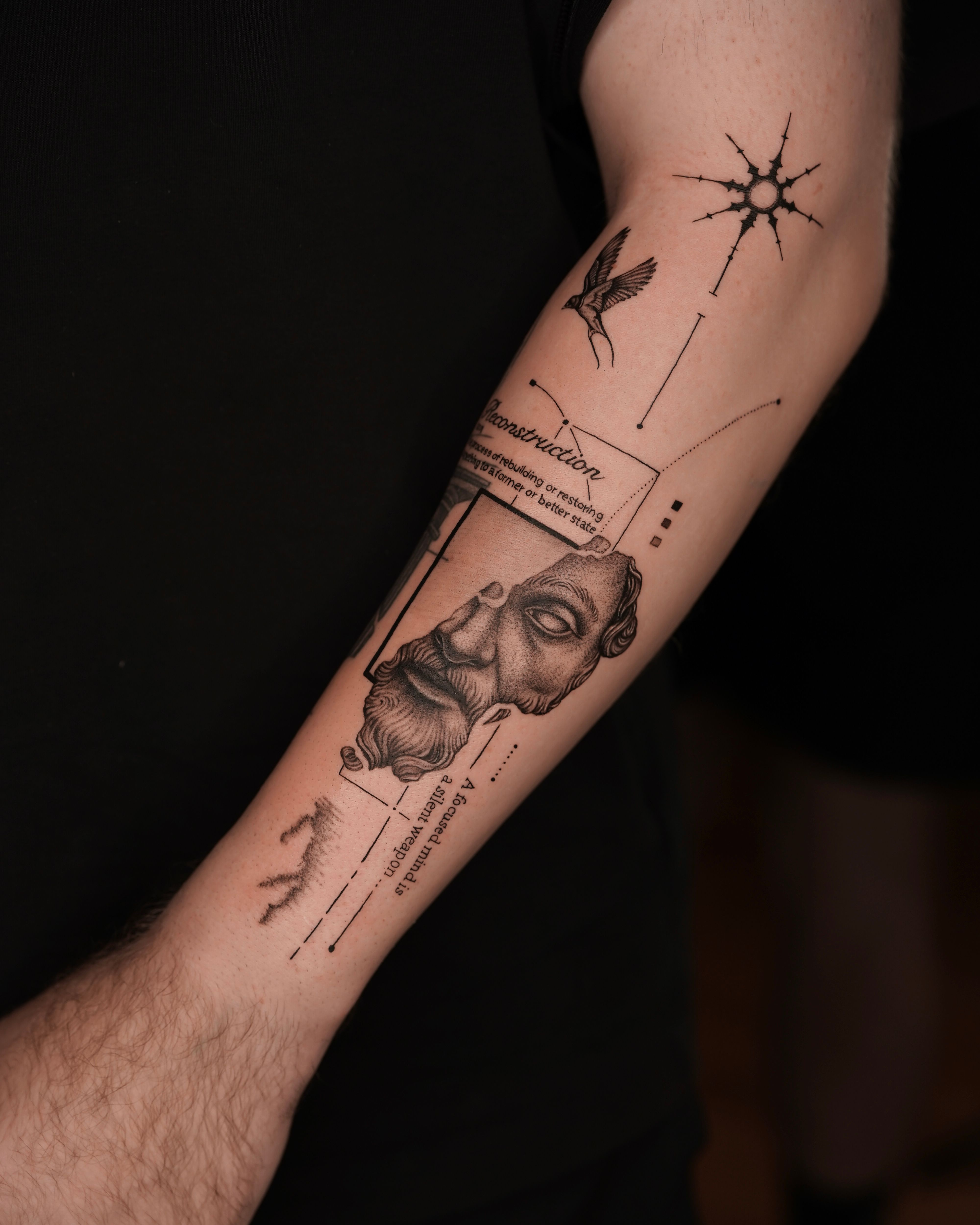
Micro-realism sits in its own category for aftercare sensitivity. The detail in these pieces is packed into a small area, and the peeling stage is particularly unforgiving. One patch of lifted skin during shedding can break a line or soften a highlight that took considerable skill to place. The studio goes into this in more detail on the micro-realism in Lisbon page, but the principle is simple: be patient and hands-off.
What the Studio Sees Most Often Go Wrong
Most healing problems aren't random. They follow predictable patterns, and the studio sees the same mistakes repeatedly across consultations.
- Too much moisturiser, applied too soon. A thick layer of cream applied every few hours suffocates the skin, traps bacteria against the wound, and creates the warm, damp environment that slows healing and increases infection risk. A thin coat, two or three times a day, is enough.
- Wrong product. Alcohol-based creams, perfumed lotions, or anything with synthetic fragrance all irritate healing tissue. Even some popular skin creams that work fine on untattooed skin can cause reactions on fresh puncture sites.
- Re-wrapping with non-breathable cling film after 24 hours. Cling film traps moisture and heat. After the initial wrap comes off, the skin needs air.
- Ocean or river exposure before four weeks. Lisbon's Atlantic beaches and the Tagus are not sterile environments. Salt, bacteria, sand abrasion and sun combine in ways that are genuinely damaging to healing tattoo skin. This applies to the Cais do Sodré waterfront and Belém riverbank too, not just the open coast.
- Picking, peeling, or scratching. The most predictable cause of patchy, faded results. The skin will shed on its own schedule; forcing it costs ink.
"The most common thing we see isn't neglect, it's well-intentioned over-care. People apply cream every hour because they want it to heal fast. What the skin actually needs is air, time, and to be left alone between thin applications."
For more on the aftercare products the studio recommends and why, the guide on what to look for in an aftercare cream covers the specifics in plain terms.
A Practical Healing Checklist
Before you sit for your session, have these ready at home: a fragrance-free aftercare cream (not petroleum jelly), clean paper towels for patting the area dry, and loose clothing that won't press against the tattoo site. Placement matters here too; a piece on the inner arm sits differently against clothing than one on the outer forearm. Our article on how placement affects the healing process breaks that down in detail.
- Hours 1-24: Keep the wrap on. No water on the tattoo. No pressing or inspecting.
- Day 1 (wrap removal): Wash gently with clean hands and fragrance-free soap. Pat dry. Apply a thin layer of aftercare cream.
- Days 2-4: Wash twice daily. Apply cream sparingly two to three times a day. Do not scratch. Wear loose fabric over the area.
- Days 5-14 (peeling): Let the skin shed on its own. No picking. Continue cream. Stay out of direct sun and away from pools, sea and saunas.
- Weeks 3-4: Surface looks healed. Continue SPF 50+ on any exposed area. Still no soaking or prolonged sun.
- Weeks 5-8: Full settle underway. SPF on tattooed skin whenever outdoors. Check in with the studio if anything looks uneven once fully healed.
Contact the studio if you notice uneven fading or areas that didn't heal cleanly, but only after the full eight weeks. Contact a medical professional promptly if you see spreading redness, thick discharge, a bad smell, or any sign of fever. Those are infection markers, and they fall outside the studio's lane.
Frequently Asked Questions
How long does a tattoo take to fully heal?
The surface skin heals in roughly two to four weeks. The dermis, where the ink actually lives, takes six to eight weeks to fully settle. Larger or more heavily shaded pieces, like realism portraits or geometric sleeves, can take three to four months before the tissue beneath is completely stable. Surface healing and deep healing are two separate things.
Is it normal for a tattoo to look faded while it's healing?
Yes, and it's one of the most common concerns the studio hears. During the peeling stage, roughly days five to fourteen, a layer of dead skin sits over the ink and makes colours look dull or washed out. Once that layer sheds naturally, contrast and clarity return. Picking at the peeling skin can pull ink out and leave pale patches that are difficult to correct later.
What does an infected tattoo look like vs. Normal healing?
Normal healing includes redness, mild swelling, heat, itching and light flaking. Infection typically shows as redness spreading beyond the tattoo edge, thick yellow or green discharge, an unusual smell, or fever. If you notice any of those signs, contact a medical professional promptly. Don't wait it out, and don't rely on more aftercare cream to fix it.
Can I go to the beach while my tattoo is healing?
Not within the first four weeks. Saltwater, sand and sun are a difficult combination for healing skin. Lisbon's Atlantic coast is beautiful, but seawater carries bacteria and the sun degrades fresh ink quickly, especially at the UV intensity levels along the Estoril and Caparica coastline. After full healing, apply SPF 50+ to tattooed skin whenever it's exposed outdoors.
Does the style of tattoo affect how long it takes to heal?
It does. Fineline pieces tend to heal on the surface faster than most. Realism and large geometric pieces involve more needle passes and heavier shading, so the dermis takes longer to settle. Micro-realism tattoos are the most sensitive to aftercare mistakes during the tattoo peeling stage because the fine detail is fragile and uneven shedding shows immediately in the finished result.
When should I moisturise a new tattoo, and how often?
Start applying a thin, fragrance-free aftercare cream around 24 hours after getting tattooed, once the initial wrap comes off. Apply sparingly two to three times a day. Over-moisturising is a frequent mistake in the tattoo aftercare Lisbon climate, especially in summer when humidity already slows drying. If the skin looks shiny and wet between applications, you're using too much. Air is part of the healing process.