The Question Nobody Asks Until It's Too Late
Most people spend weeks choosing a design. They save references, refine ideas, maybe sketch something rough in a notebook. Then they sit down in the chair and someone asks: where do you want it? Suddenly there's a pause. The question hadn't really been part of the plan.
Tattoo placement meaning is both a practical concern and a personal one. The location changes how the piece reads on your body, who gets to see it, and how well the design holds up over years. Getting that decision right matters. Getting it wrong is harder to fix than most people expect.
Where Placement Meaning Actually Comes From
Cultural roots. What different traditions have said
Body location has carried deliberate meaning across cultures for a long time. Roman legionaries marked ranks on their skin in specific spots. Ancient Greek athletes bore symbols on their arms as public declarations. Polynesian traditions mapped cosmological meaning onto specific body zones, with upper body placements carrying different weight than lower ones.
These weren't arbitrary choices. The location was part of the message.
Personal meaning vs. Received symbolism
Contemporary tattooing has largely moved away from fixed cultural codes. A piece on the chest doesn't automatically mean the same thing to every person who wears it. What matters now is the logic you bring to the decision yourself.
That said, in fineline and minimalist work especially, placement tends to carry more narrative weight than in bolder, denser styles. A single fine line phrase on the inner wrist reads completely differently on the back of the neck. Same words, different emotional register entirely. Tattoo placement significance, in this sense, is personal rather than universal. Don't let anyone tell you there's one correct answer.
A Practical Map: What Each Body Zone Tends to Communicate
Visible placements: hands, neck, forearms
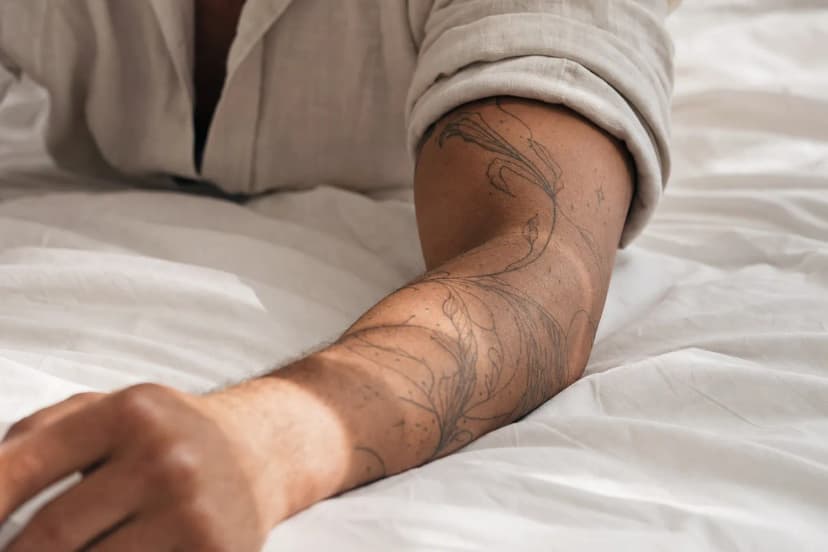
These zones face the world every time you leave the house. A tattoo here is a public statement, whether you intend it as one or not. Forearm pieces in particular get constant light and attention. Great for expressive work, but Lisbon's sun from April through September means SPF becomes a regular habit if you want the detail to last.
Hands and fingers are high-movement, high-friction zones. Fine lines placed there blur faster than almost anywhere else. The studio generally steers clients away from finger placement for detailed fineline work for exactly this reason.
Semi-private placements: ribs, chest, shoulder, upper back
These zones are visible only when you choose to reveal them. People often bring their most personal subjects here: grief, love, turning points. The emotional charge tends to be higher, and the privacy of the location reflects that.
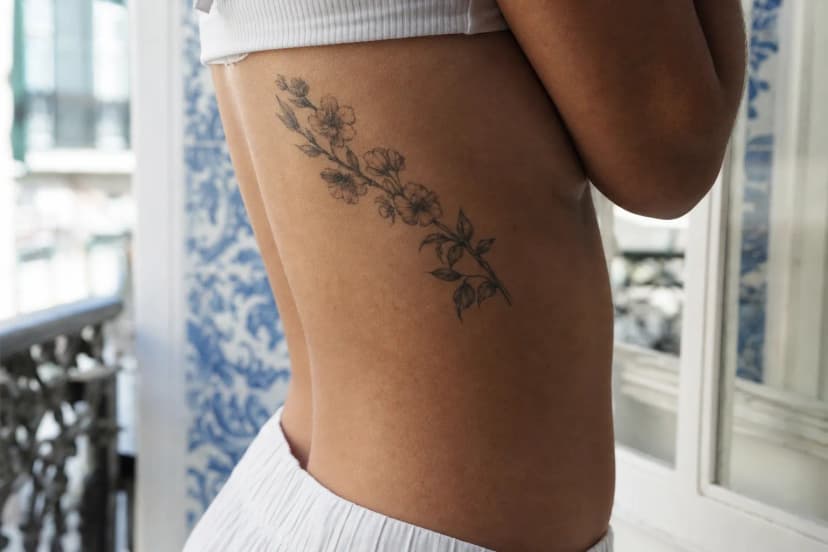
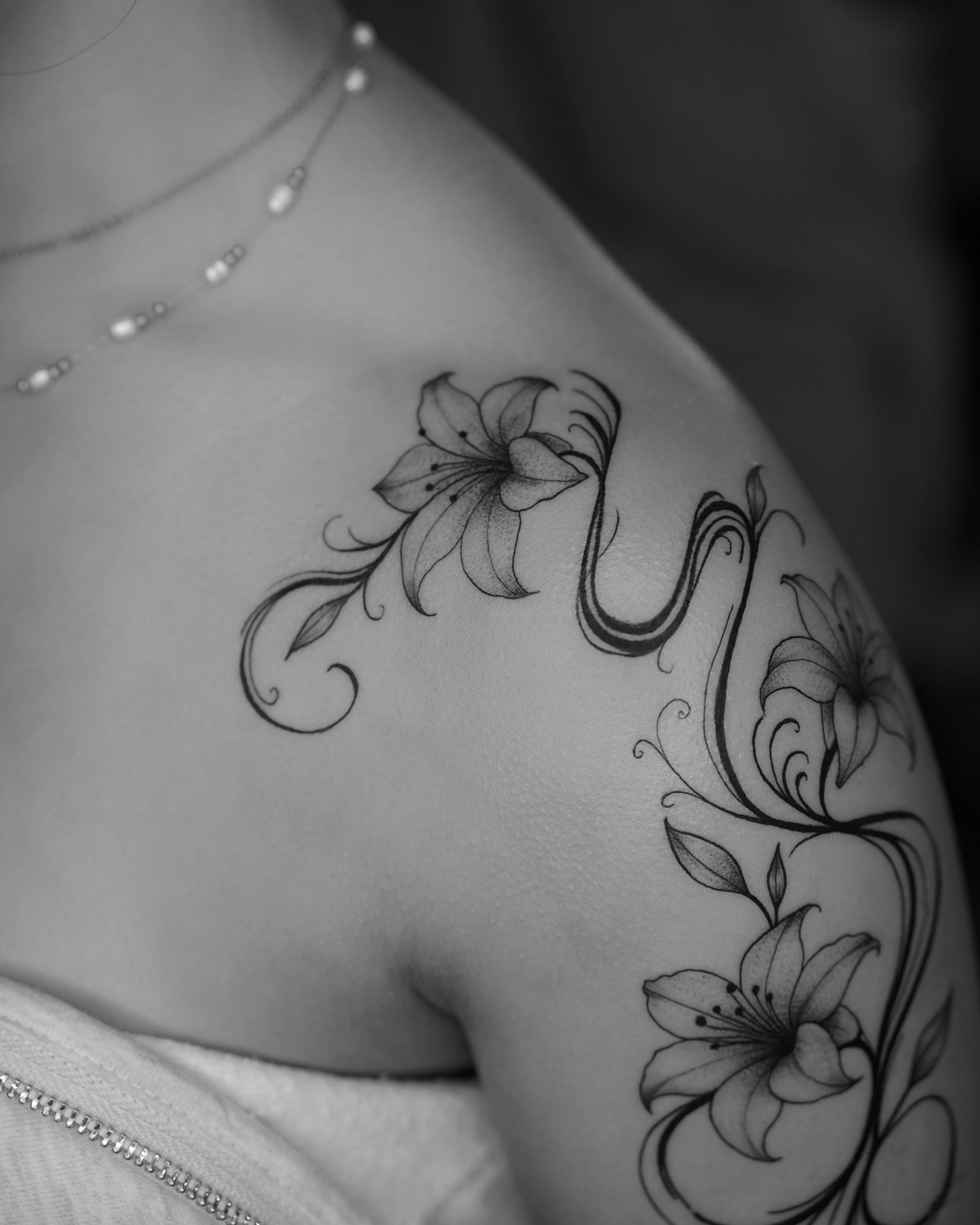
Rib pieces are worth thinking about carefully. Skin over the ribs moves with every breath, which extends healing time. In a humid Lisbon August, that movement combined with sweat under clothing can slow the process further. The shoulder blade and upper back offer a flatter, more stable canvas. Well suited to larger floral compositions or detailed fineline pieces where geometry needs room to breathe.
Hidden or intimate placements: inner arm, behind the ear, hip, ankle
These are personal reminders more than public displays. Behind the ear, the inner wrist, the ankle. You see them in certain moments, often alone. That intimacy is part of the point. Clients frequently describe choosing these spots for words or symbols they want to carry privately, without broadcasting them.
The inner wrist is a good spot for small fineline tattoo work: the skin is relatively smooth, the area stays out of direct sun for most of the day, and fine lines hold cleanly there when aftercare is consistent.
| Body Zone | Visibility | Common Symbolic Register | Healing Notes |
|---|---|---|---|
| Forearm | High | Expressive, outward-facing, statement-making | Heals well; fades faster with sun exposure |
| Inner wrist | Medium | Visible but intimate; suits scripts and small symbols | Stable skin; holds fine lines well |
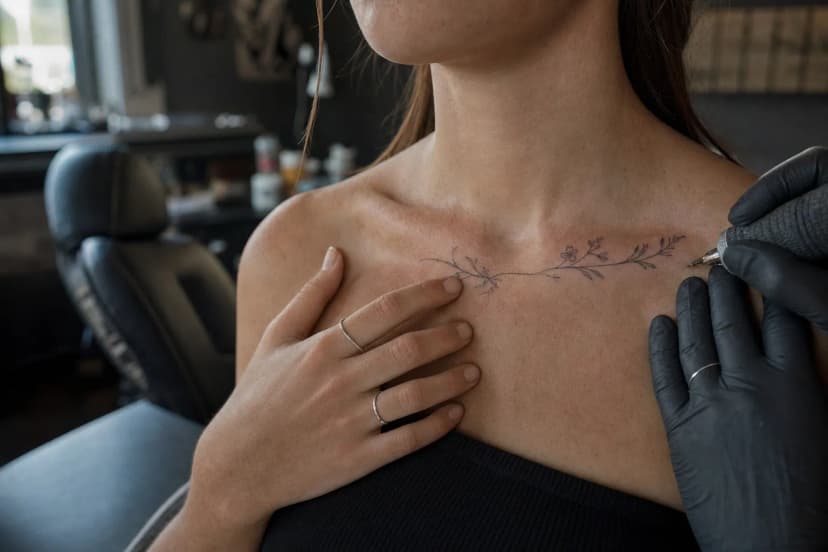
| Chest | Low-medium | Close to the heart; emotionally significant subjects | Moderate healing; clothing friction can irritate |
| Ribs | Low | Private, personal, often emotionally charged | Slower healing due to skin movement and summer sweat |
| Shoulder blade / upper back | Low-medium | Semi-private canvas; suits larger compositions | Stable; heals consistently across seasons |
| Behind the ear | Low | Discreet personal reminder | Small area; heals quickly but needs careful cleaning |
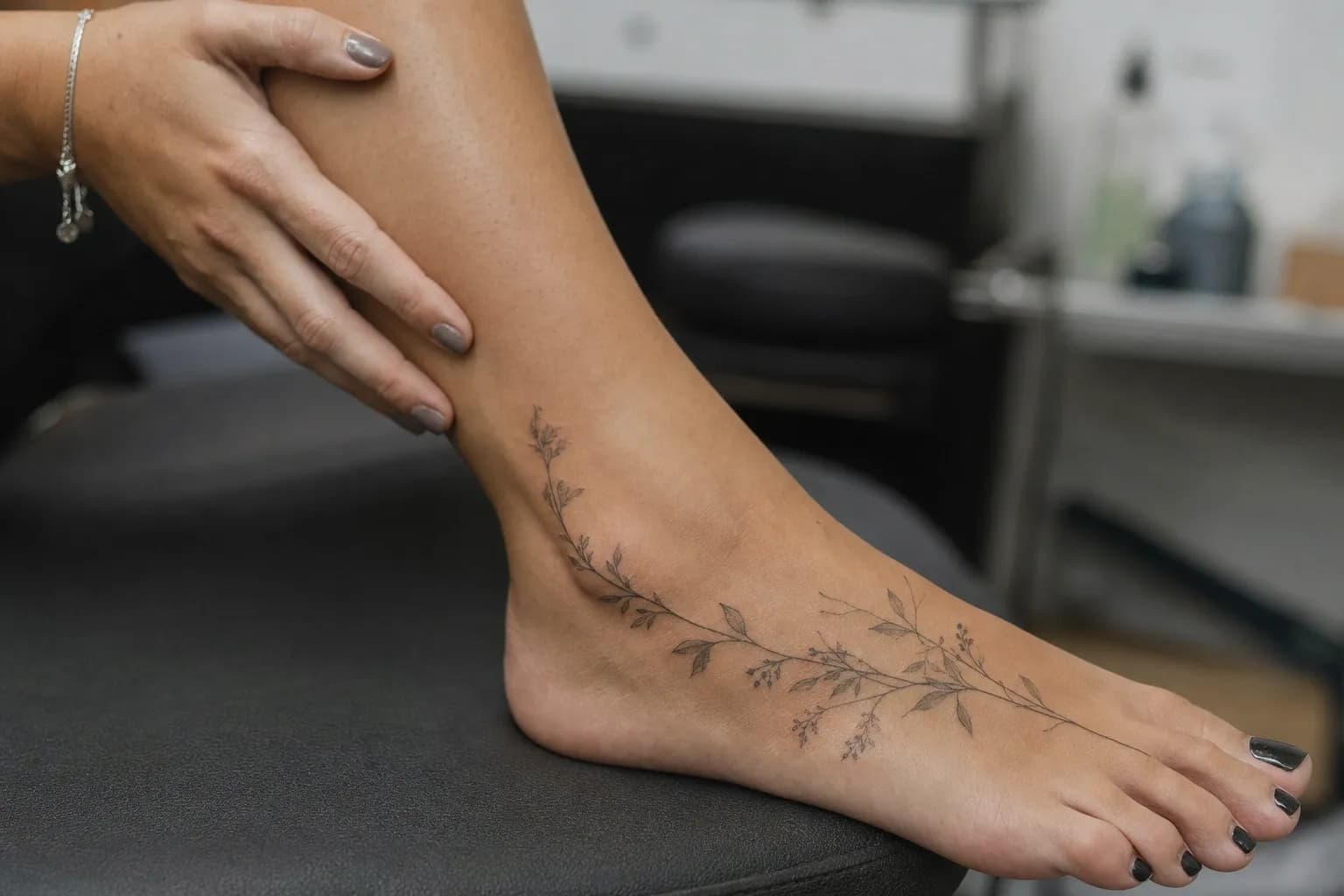
| Ankle | Low-medium | Subtle, often minimal or symbolic | Footwear friction; keep covered shoes off during early healing |
| Hand / fingers | High | Bold public declaration | High fade risk; not recommended for fine detail |
How Placement Shapes the Design Itself
A design that looks perfect on paper can fall apart on skin if the body's contours weren't part of the planning. The body curves. Paper doesn't. A circular mandala placed on a flat outer forearm reads differently when it wraps around the rounder surface of the bicep. The circle distorts, the symmetry shifts.
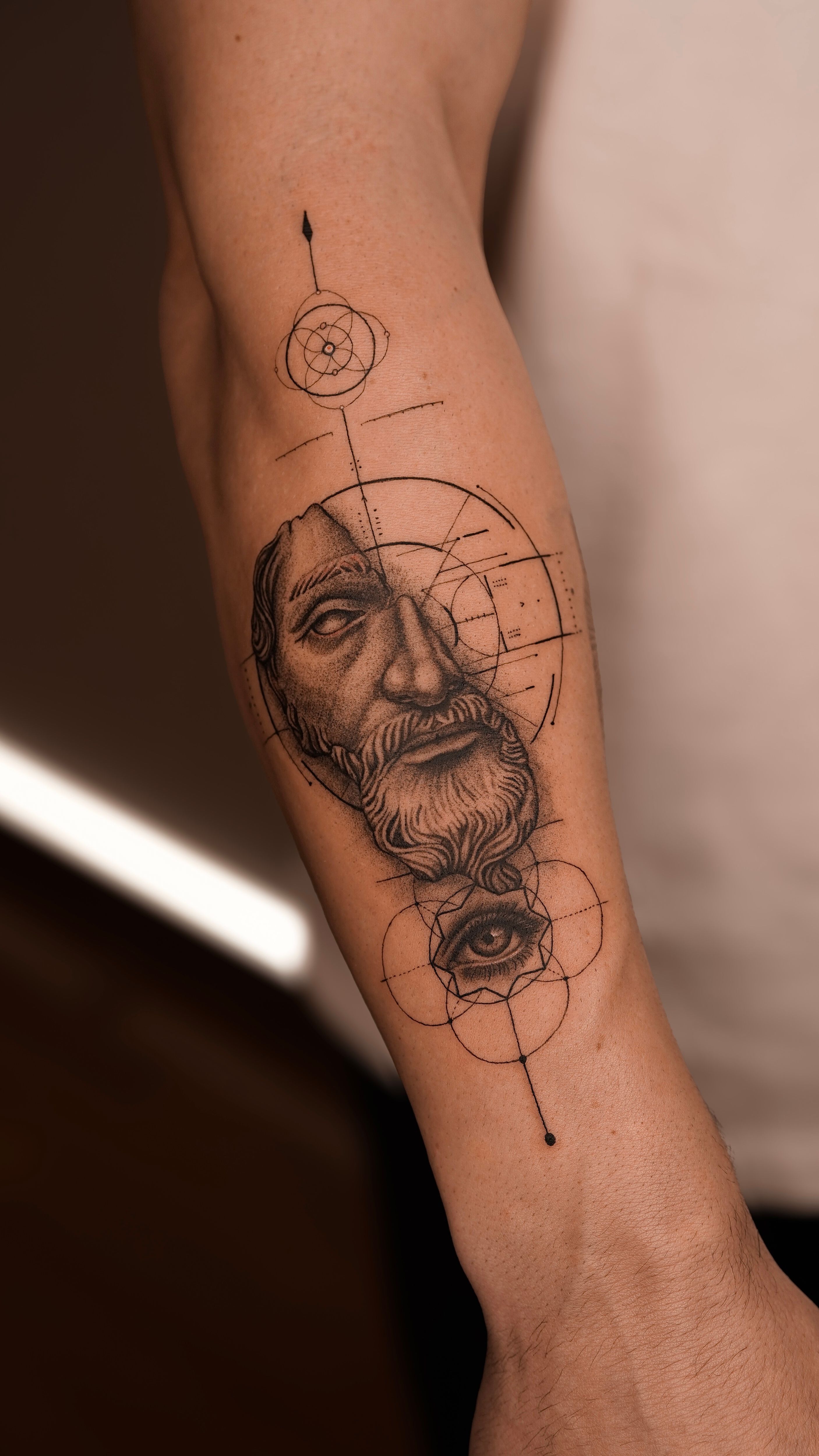
Stencil accuracy matters more than most clients realise. If the stencil sits 2mm off-centre on a mandala, you'll see it every time you look at the piece. The artist checks stencil placement against the body's natural axis before a single line is drawn. For geometric and fineline work especially, that check is non-negotiable.
Fine lines placed on high-movement zones. The inner elbow crease, the back of the knee, finger joints. Blur faster than lines on stable skin. The design might look crisp on the day and lose definition within two years. Understanding how geometric design and placement work together is part of getting this right before you commit. The best design in the world underperforms when placed in the wrong spot for its style.
How the Studio Approaches Placement in the Consultation
Before any sketch begins, the studio asks two things: what do you want this piece to say, and who do you want to say it to. Those two questions almost always point toward a placement. The design follows the placement. Doing it the other way around causes problems.
"Placement isn't an afterthought. If we don't know where the piece is going, we can't know how big it should be, how the lines need to flow, or how intimate the subject matter should feel. The conversation about location happens first, every time."
Clients come to the studio from across Lisbon. From Príncipe Real and Cais do Sodré on the west side, from Alfama climbing up toward the castle. Whatever neighbourhood someone travels from, the consultation conversation is the same. Size, visibility, lifestyle, and personal meaning all feed into where the piece lands.
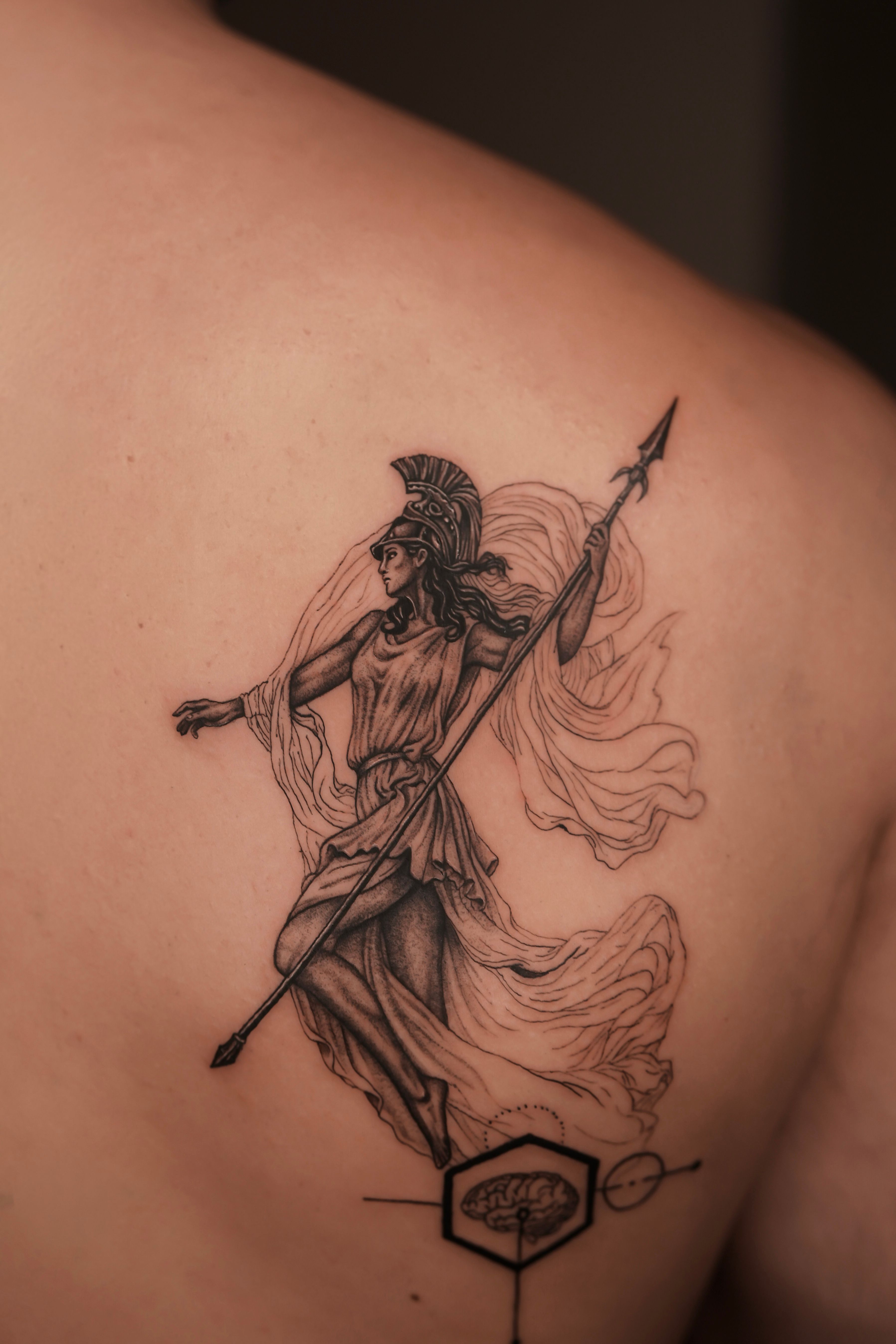
For smaller pieces, the placement conversation is just as important. If you're considering a compact design, the guide on placement ideas for small tattoos covers the specific considerations in more detail. The shoulder blade and collarbone, for instance, handle small fineline pieces very differently than the inner wrist does.
Practical Guidance: Choosing Your Placement Before You Book
Working through your placement decision before the consultation saves time and leads to better results. Here's a logical order to think through it.
- Decide on visibility first. Do you want this piece visible daily, or private to you and a few people? That narrows the body map significantly.
- Consider size. Small designs need stable, relatively flat skin. Larger compositions can use contour to their advantage, but need enough surface area to breathe.
- Match style to zone. Fineline suits the wrist, inner arm, and back. Realism needs larger, flatter areas. Micro realism packs detail into tight spaces like the inner wrist or behind the ear.
- Factor in your lifestyle. A forearm piece on someone who surfs every weekend in Cascais will fade faster than the same piece on someone who works indoors. A rib piece on a long-distance swimmer needs more considered aftercare.
- Think about what the spot means to you personally. Where on your body do you feel the subject belongs? That instinct is usually worth listening to.
Beyond those steps, a few other considerations are worth keeping in mind:
- Skin elasticity changes with age. Zones that stretch more dramatically over time. Stomach, inner thigh. Can distort detailed work.
- Natural light hits placements differently. A piece on the outer forearm catches direct sunlight; the same design on the inner arm sits mostly in shade.
- Clothing coverage matters for healing. A rib piece covered by a tight waistband during Lisbon's humid August needs careful daily attention. An outer arm piece in a short sleeve has it easier.
- Pain tolerance varies by zone. Bony areas and zones with thin skin generally register more sensation. This is worth factoring into a long session.
For a full picture of what healing actually involves after the needle is done, the guide on what actually happens during healing week by week is worth reading before you book. Healing difficulty varies by placement. Knowing what to expect makes the first two weeks less stressful.
| Style | Best Placements | Avoid |
|---|---|---|
| Fineline | Inner wrist, outer forearm, shoulder blade, collarbone, upper back | Fingers, inner elbow crease, back of knee |
| Micro Realism | Inner wrist, behind the ear, ankle, outer forearm | High-movement joints, fingers |
| Realism | Upper arm, thigh, chest, back | Small curved zones that distort the image |
| Geometric | Flat or gently curved zones: outer arm, back, sternum | Heavily curved surfaces that distort symmetry |
| Floral | Shoulder, ribs, thigh, upper back | Finger joints, high-friction zones |
| Lettering | Forearm, collarbone, ribs, inner arm | Curved surfaces that warp letter spacing |
Frequently Asked Questions
Does tattoo placement change the meaning of the design?
It can, yes. A skull on the back of the hand reads as a public statement; the same skull on the inner forearm feels like a private reminder. Placement shapes who sees the piece, how often you see it yourself, and what emotional register the design occupies. Design and location work together, not separately.
Which tattoo placement hurts the least?
The outer forearm and outer upper arm are generally considered among the more manageable zones. Thicker skin, fewer nerve clusters close to the surface. Bony areas like ribs, spine, and ankles register more sensation. Pain tolerance varies significantly between people, so treat any list like this as a rough guide rather than a guarantee.
What placement works best for small fineline tattoos?
Inner wrist, outer forearm, behind the ear, collarbone, and ankle all suit small fineline work well. These areas have relatively stable, smooth skin that holds fine lines cleanly. High-movement zones like fingers and the inside of the elbow tend to blur delicate lines faster, so the studio usually steers away from them for fine detail work.
How does Lisbon's climate affect healing for different placements?
Lisbon's humid summers mean sweat accumulates faster under covered placements like ribs and chest, which can extend healing. Wrist and outer arm pieces get direct sun from April onward, so SPF protection becomes essential. Mild winters are the easiest season for healing almost any placement, with lower risk from heat and persistent sweat.
Should I choose placement or design first?
Placement first, almost always. The body's contours determine how large the design can be, how it flows, and how fine the line work can realistically go. A design built around the wrong placement often needs resizing or simplification on the day. Knowing the spot lets the artist sketch something that genuinely fits the surface.