The Short Answer (and Why It's More Complicated Than Yes or No)
The question comes up in almost every consultation: do micro realism tattoos last? The honest answer is yes. But longevity isn't automatic. It depends on where the tattoo sits on your body, how accurately the ink was placed in the skin, and what you do in the weeks after you leave the studio.
Fine linework and tiny photorealistic detail behave very differently in skin than the bold, saturated lines you'd find in traditional styles. There's less margin for error at this scale. A 2mm shift in needle depth can mean the difference between a piece that stays crisp for a decade and one that softens within two years.
Set realistic expectations before you book. These are not set-and-forget pieces. They reward good planning and attentive aftercare, and the artists who do them well will tell you that upfront.
What Micro Realism Actually Is (and Why Longevity Is Baked Into the Style)
How the style works technically
Our micro realism tattoos pack photorealistic imagery. Faces, animals, botanicals, objects. Into a footprint that might be no larger than a coin. The artist uses fine needles, often single-needle or tight groupings of three, to build tonal gradients without the wide strokes traditional shading relies on.
The ink needs to land in the dermis, the skin layer roughly 1.5 to 2mm below the surface. Above it, ink sits in the epidermis and sheds with dead skin cells. Below it, ink disperses and blurs. The dermis is the permanent address. Every pass of the needle either plants ink there precisely or it doesn't.
Why the detail density matters
Overworked skin is the enemy of fine detail. Running the needle over the same area too many times causes trauma, and traumatised skin heals with scar tissue that distorts the image. But underworked lines. Where the artist moves too quickly. Fade within months because the ink never fully saturated the dermis.
This is why experienced execution matters so much at this scale. Take a look at this hummingbird forearm piece to see how fine tonal work holds across a small surface area when placed correctly. The feather gradients are built from dozens of individual passes, each at consistent depth.
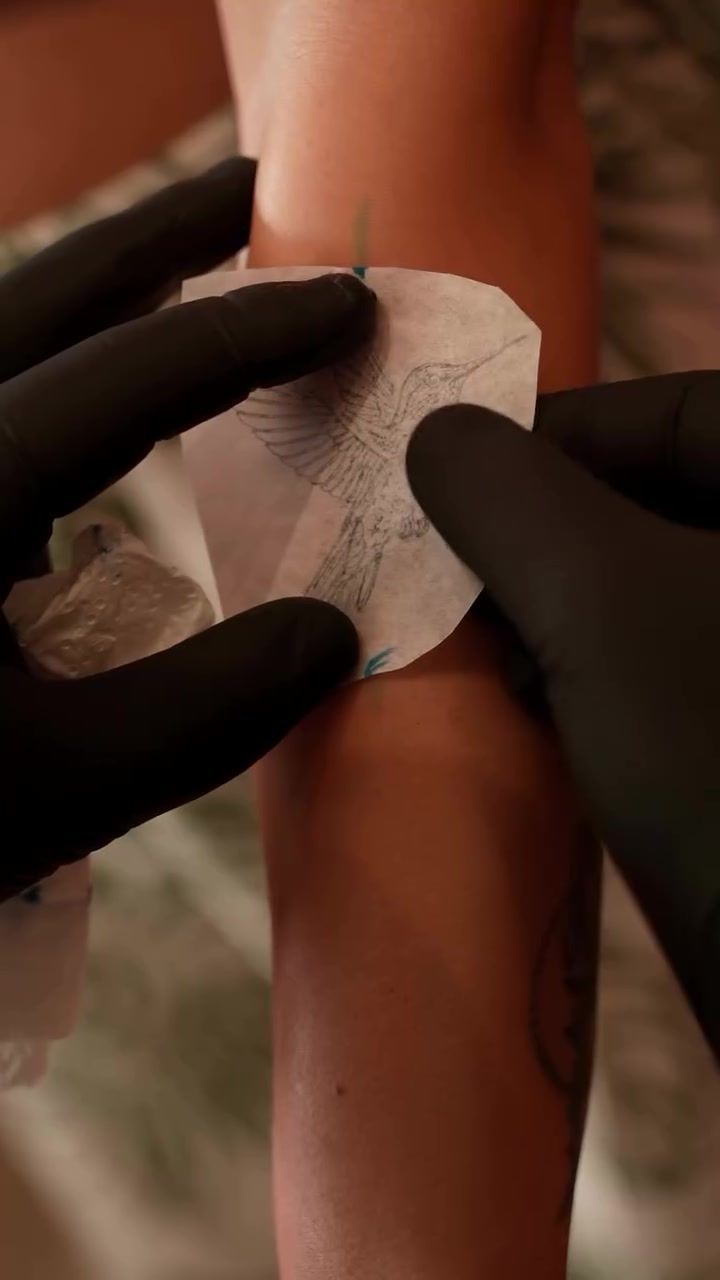
The style demands technical consistency that very few artists can maintain across a full session. When it's done right, the results hold. When it isn't, no amount of aftercare will save the piece.
What Actually Makes Micro Realism Fade (and What Doesn't)
Placement: the single biggest variable
Friction is the main reason detail degrades. Skin that moves constantly. The inner elbow, fingers, palms, feet. Flexes and rubs daily. That mechanical action gradually pushes ink molecules apart. A piece that looks pristine on the upper arm after five years might look like a soft watermark in the same timeframe on the inner wrist.
Read more about how placement affects the long-term result before you commit to a spot. The article covers friction zones, sun exposure, and the logic behind placement decisions in detail.
Sun exposure in Lisbon
Lisbon's Atlantic sun is stronger than most clients expect, particularly from June through September. UV radiation breaks down pigment molecules in healed tattoos, and fine detail. Which relies on subtle tonal contrast. Suffers first. Dark, saturated areas resist fading better than the soft mid-tones that define micro realism shading.
A piece on the outer forearm left unprotected through a Lisbon summer will look noticeably softer by autumn. SPF 50 applied every morning is not optional for exposed placements. It's what separates a piece that ages well from one that needs a refresh every two years.
Skin type and texture
Dry or mature skin holds ink differently than oily or younger skin. Very dry skin can cause ink to settle unevenly during healing, and skin with more texture makes fine lines appear slightly less crisp once healed. None of this is a reason to avoid the style. It is a reason to discuss your skin at consultation so the artist can adjust the design accordingly.
The artist's technique
Needle depth consistency, ink saturation per pass, and correct pigment choices for the subject all determine what a piece looks like in ten years. The common myth is that micro realism always fades badly. Well-executed pieces on stable placements age gracefully. The fading reputation comes from work done at incorrect depth or with pigments not suited to fine detail work.
How the Studio Approaches Micro Realism Longevity
Design choices that build in longevity
Spacing between elements is a decision made at the design stage, not an afterthought. Ink spreads slightly as it settles into the dermis over the first six to eight weeks. If two fine details are too close together at stencil stage, they'll merge once healed. The artist builds in breathing room so the piece reads cleanly in year five, not just on day one.
Minimum size per subject type is another consideration. A portrait needs more surface area than a geometric motif because the facial features require distinct tonal zones to stay readable. Compressing a face into too small a space leaves no room for the contrast that makes it legible. This is why the studio sometimes advises sizing an idea up by 15 to 20 percent before work begins.
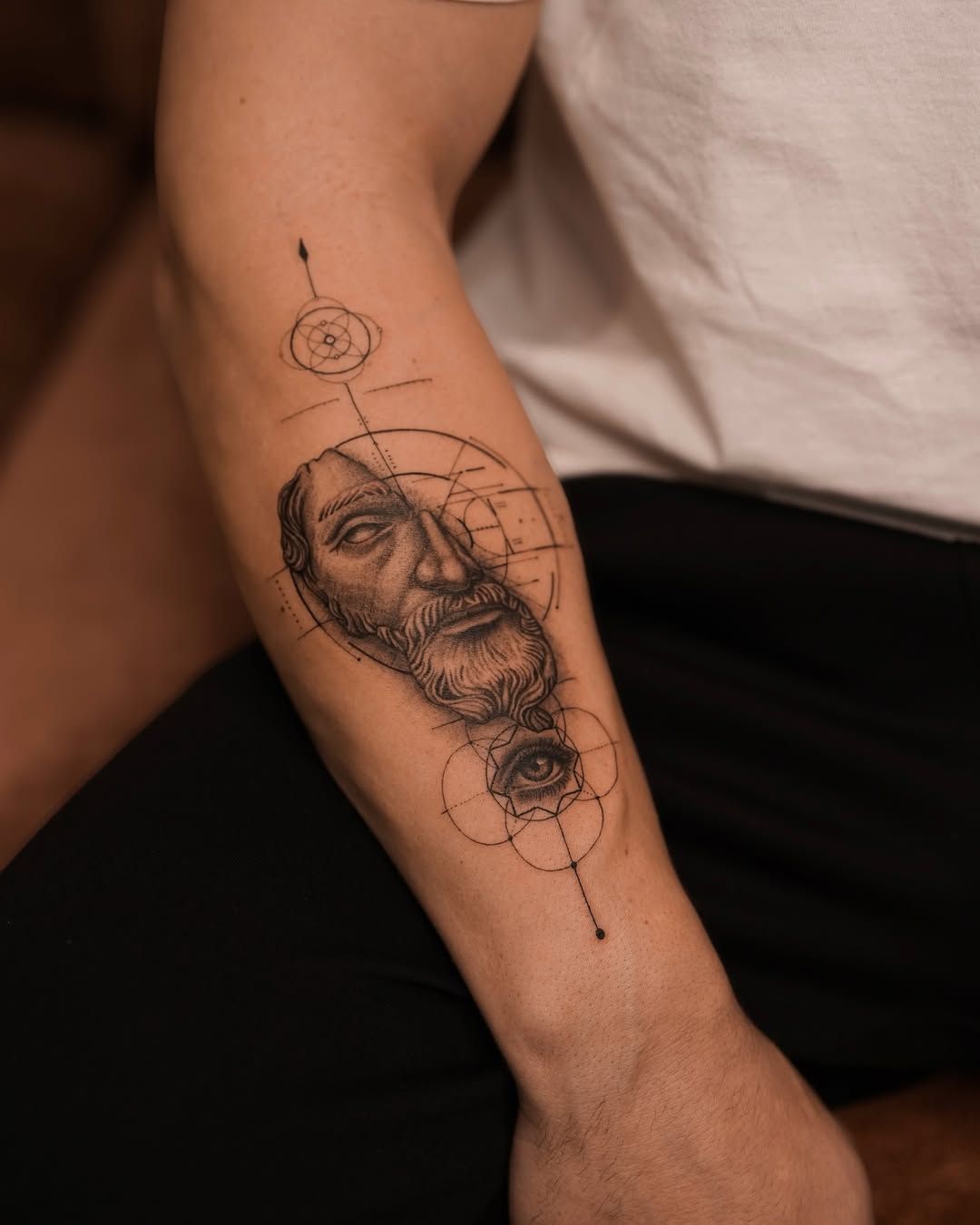
"Every design decision I make at the sketch stage is partly about how the piece will look in ten years. Spacing, contrast, placement. These aren't aesthetic choices in isolation. They're structural ones."
What happens in the consultation
The artist will ask where you're placing the piece, look at your skin tone and texture, and assess the reference you've brought. If your idea needs to be repositioned or slightly enlarged to hold up well, you'll hear that honestly. Some placements simply work better for micro realism longevity than others, and the studio would rather tell you that before you sit down.
For a broader sense of what the studio produces at this scale, explore our guide to micro realism tattoos in Lisbon, which covers style variations and how to evaluate an artist's portfolio before booking.
Aftercare Realities: What the First 8 Weeks Determine
Most preventable fading happens in the first three weeks. The skin is healing its surface layers while the ink below is stabilising. Picking at peeling skin, soaking the tattoo in water, or letting it dry out completely all disrupt the healing dermis and can pull ink out or cause uneven settling.
The studio recommends a wet healing approach for the first five days: a thin layer of fragrance-free cream applied two to three times daily, with the tattoo gently washed with clean hands morning and night. After day five, keep the area moisturised but let it breathe. Lisbon's summer humidity can slow surface peeling slightly, which is actually useful. Slower peeling means less mechanical disruption to the healing ink below.
Sun avoidance is critical for the first four weeks at minimum. After that, SPF 50 on any exposed placement becomes a permanent habit rather than a temporary precaution. Our day-by-day aftercare guide covers the full healing window with specific instructions for each stage.
Touch-ups are part of the process, not a sign that something went wrong. A small session at six to eight weeks post-healing, once the skin has fully stabilised, is standard for this style. It lets the artist sharpen any areas where ink settled unevenly. Pieces on high-friction placements like hands or inner elbows may need attention sooner, and more regularly over time.
Size, Placement and Expected Longevity: A Comparison
The table below gives a realistic picture of how different placements perform for detailed, fine-line work. Friction level is the primary driver of how quickly fine details soften. Sun exposure and skin stretch are secondary factors that compound over years.
| Placement | Friction Level | Expected Longevity | Typical Touch-Up Frequency |
|---|---|---|---|
| Upper arm | Low | 8 to 12 years before noticeable softening | Once after initial healing; optional after that |
| Outer forearm | Low to medium | 6 to 10 years with SPF discipline | Once after healing; every 5 to 7 years |
| Thigh | Low | 8 to 12 years | Once after healing; infrequent thereafter |
| Rib | Low to medium | 6 to 10 years | Once after healing; occasional |
| Inner wrist | Medium to high | 3 to 6 years before significant softening | Every 3 to 4 years |
| Fingers and hands | Very high | 1 to 3 years before visible fading | Annually or more frequently |
These ranges assume correct technique, proper aftercare, and reasonable sun protection. Skin type and individual healing response will shift any estimate up or down. Use the table as orientation, not a guarantee.
- Upper arm and thigh offer the most stable canvases for fine detail work
- Outer forearm is a good compromise between visibility and longevity
- Inner wrist and hands are high-maintenance placements that require realistic expectations going in
- Rib pieces age well if the client maintains a stable weight over time
If you're deciding between placements, these considerations pair well with our article on placement ideas for smaller tattoos, which goes into visibility, practicality, and skin stability across different body areas.
- Choose placement before finalising design size. Some ideas need more surface area than your preferred spot allows
- Discuss your skin type at consultation so the artist can adjust pigment density and spacing
- Commit to SPF 50 on any exposed placement from the moment the tattoo is healed
- Book a follow-up check at six to eight weeks post-healing so small corrections can be made before ink fully sets
Frequently Asked Questions
How long do micro realism tattoos last before fading?
A well-executed piece on a stable placement like the upper arm or thigh holds its detail for many years with minimal visible softening. Exact timelines vary by skin type, placement friction, and sun exposure, but five to ten years of strong clarity is realistic for work done correctly with proper aftercare and SPF discipline.
Do micro realism tattoos need touch-ups?
Most do, eventually. Fine detail and subtle shading settle into the dermis over six to eight weeks after the initial healing, and a small touch-up session at that point is common. Pieces on high-friction areas like hands or inner elbows may need attention sooner. Think of it as part of the process, not a sign anything went wrong.
What placements hold micro realism detail the longest?
Upper arm, outer forearm, thigh, and rib are the most stable canvases for photorealistic fine work. These areas have consistent skin texture, low daily friction, and relatively even sun exposure. Fingers, palms, inner wrists, and feet are the hardest placements for retaining fine detail over time and require more frequent maintenance.
Does Lisbon's climate affect how micro realism tattoos age?
Yes, specifically the UV load. Lisbon's summers are intense, and unprotected sun exposure on a healed tattoo accelerates pigment breakdown. Fine tonal detail suffers first because it relies on subtle contrast. Keeping the tattoo covered or using SPF 50 consistently through the summer months makes a measurable difference to how the detail holds long term.
Can micro realism tattoos be retouched years later?
Yes. A skilled artist can refresh contrast, sharpen softened lines, and re-saturate mid-tones in an aged piece. Returning to the original artist is the best approach where possible, since matching the original pigment density and needle technique is far easier when the artist already knows the work firsthand.