Placement Is Half the Design
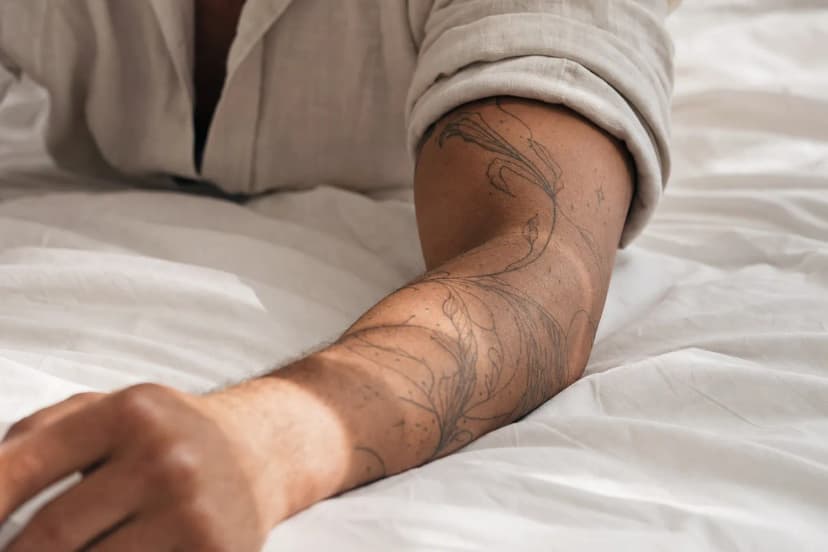
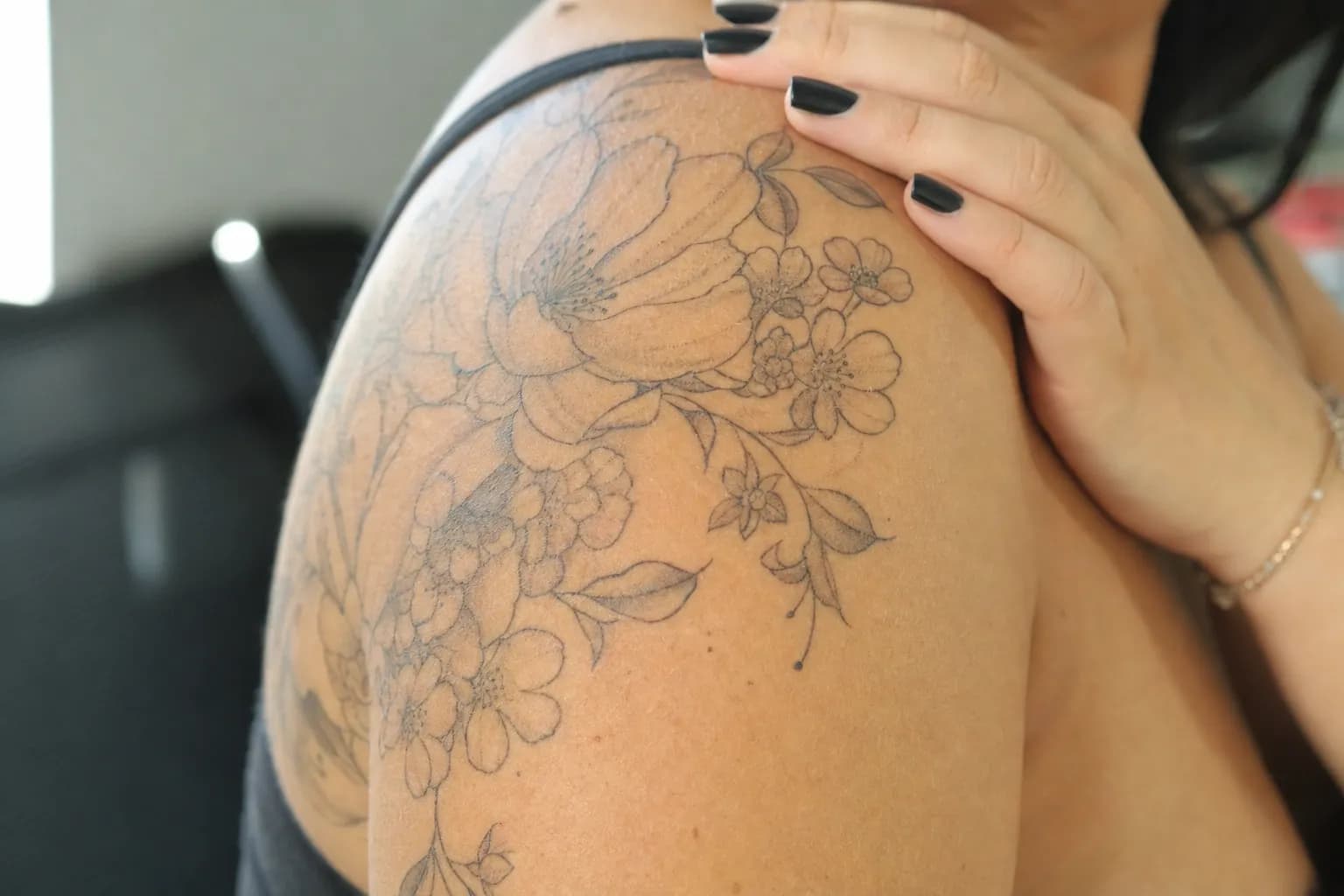
Take the same botanical sprig. Delicate stems, three blossoms, fine shading. And place it on the shoulder cap versus the inner forearm. It reads as two completely different tattoos. The shoulder version wraps with the muscle beneath it, shifts as you move, catches light differently. The forearm version sits flat, faces outward, invites reading like text. Neither is wrong. But neither is interchangeable.
Placement isn't something you decide after the design is finished. It's part of the design itself. The studio's floral tattoo service treats placement as the first conversation, not the last detail.
That's what most people don't hear before they sit down: the spot you choose will shape the composition, the line weight the artist uses, the size the piece needs to be, and how it ages over the next twenty years.
How Body Contour Shapes the Composition
Curved surfaces and wraparound designs
Rounded surfaces give botanical pieces room to breathe and move. The shoulder cap, the calf, the outer upper arm. These areas have natural curvature that a skilled artist works with rather than against. A floral design mapped onto a shoulder can arc gently over the deltoid, following the body's own geometry. That feels organic. It looks like it grew there.
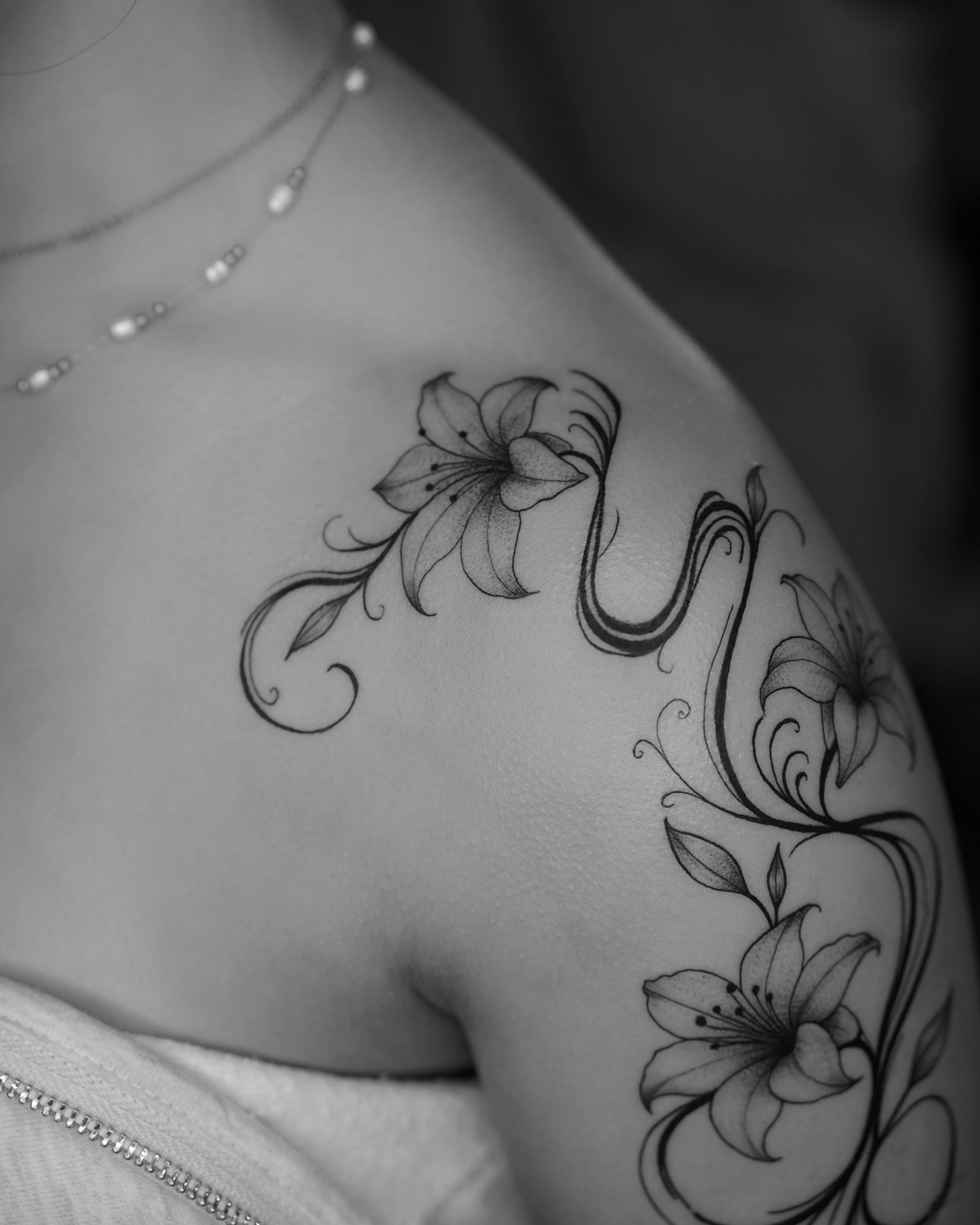
During consultation, the studio maps the composition directly onto your body in a standing pose before a single stencil is printed. The artist checks how the design flows when your arm is at rest, raised, and angled. That check prevents awkward compositions that looked fine on paper but tilt oddly once you're upright.
Flat surfaces and symmetry
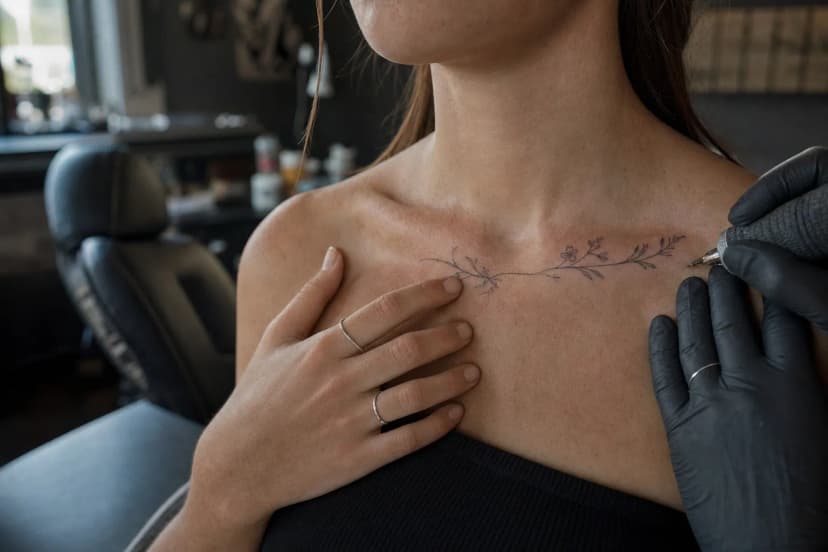
Flat areas reward different approaches. The inner forearm and sternum, for example, offer clean negative space. A straight vertical stem looks intentional there. Symmetrical arrangements. Two mirrored branches meeting at a central bloom. Read clearly because the surface doesn't distort the geometry.
But flat doesn't mean forgiving. If the stencil sits 2mm off-centre on a symmetrical floral piece, you'll see it every time you look in the mirror. The studio uses a spirit level reference on the sternum for exactly that reason.
Skin Movement and Why It Matters
High-movement zones
The inner elbow, back of the knee, and inner wrist flex constantly throughout the day. Every bend compresses the skin; every extension pulls it taut again. For a fineline botanical tattoo. Where the entire effect depends on a 0.3mm line staying crisp. That repeated stress matters over time.
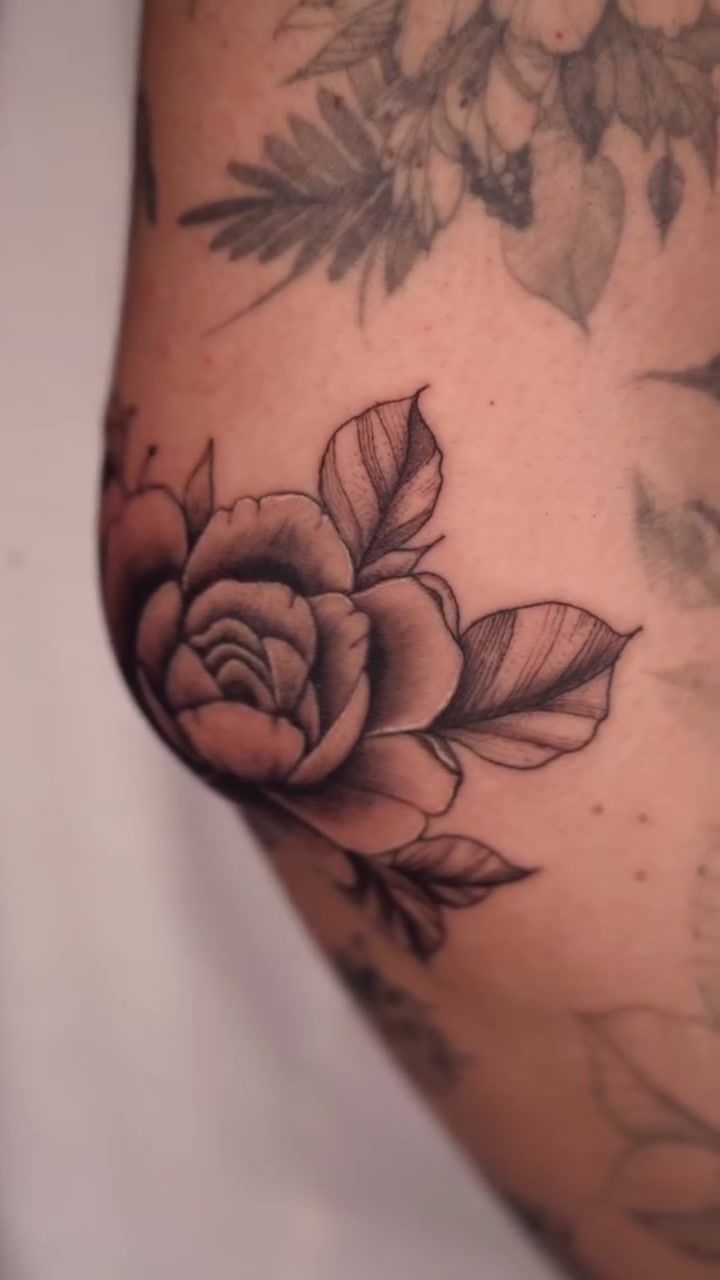
That doesn't make high-movement zones off-limits. It means the artist designs differently for them. The rose on the elbow. A floral sleeve in progress is a good illustration: the studio placed the focal bloom where it sits most stably on the bone, and kept finer surrounding detail away from the deepest fold of the joint. Thoughtful placement within the zone preserves the piece far longer than avoiding the zone entirely.
Low-movement zones
The outer forearm, upper back, and thigh move far less through daily life. Skin in these areas stays relatively consistent, which preserves fineline detail better over years. For anyone asking about the best placement for a botanical tattoo with intricate linework, these zones are genuinely the most reliable choices.
The thigh in particular offers a large, relatively stable canvas. It allows generous sizing, which means the artist can include fine botanical detail. Small leaf veining, delicate petal gradients. Without compressing everything into a space that's too tight to survive healing.
| Body Zone | Movement Level | Fineline Suitability | Key Healing Note |
|---|---|---|---|
| Shoulder cap | Low-medium | Excellent | Curved surface; shirts can rub in the first week |
| Outer forearm | Low | Excellent | Sun-exposed; SPF discipline is essential |
| Inner forearm | Medium | Good | Sweat accumulates in warm weather; keep clean |
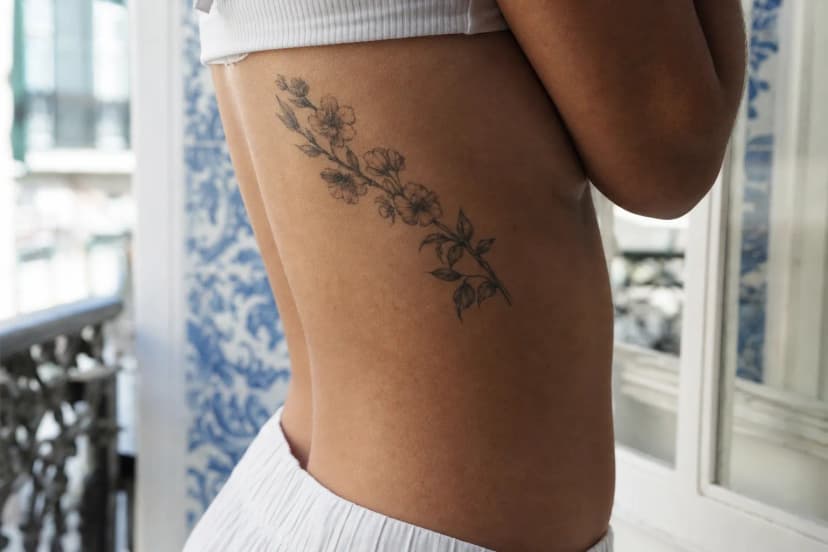
| Ribcage | Low-medium | Good | Bra straps and waistbands cause friction |
| Upper back | Low | Excellent | Hard to care for solo; clothing rubs during healing |
| Thigh | Low | Excellent | Large stable canvas; leg friction from trousers |
| Inner wrist | High | Moderate | Constant flex; fine lines fade faster |
| Back of knee | Very high | Low for fineline | Heavy flexion compresses ink repeatedly |
| Calf | Medium | Good | Rounded surface; good for wraparound florals |
Sizing the Piece to the Space
People underestimate how much size matters for botanical tattoos. A delicate three-petal wildflower needs at least 4 to 5 centimetres of uninterrupted skin to hold its fine linework after healing. Below that threshold, the lines risk merging as the ink settles into the dermis during the first six to eight weeks. The result looks muddy rather than precise.
The studio won't scale a complex botanical down past the point where the detail survives healing. That's not an aesthetic preference. It's a craft standard. For a more detailed breakdown of minimum measurements, the guide on what size is a micro tattoo gives specific numbers worth reading before you decide on a size.
Negative space is part of the composition too. A dense arrangement crammed into a small area loses the airy quality that makes botanical fineline work feel alive. The studio deliberately leaves breathing room between stems and petals, treating the unmarked skin as an active design element rather than leftover space.
How Placement Interacts with Healing in Lisbon
Lisbon gets over 290 days of sunshine per year. That's a real variable when you're planning where to put a tattoo. Sun exposure is one of the fastest ways to degrade fineline ink, and an outer forearm or shoulder piece in a city this sunny needs consistent SPF from the moment the skin has closed over. Typically around week three. The full picture of what UV does to ink is worth reading in the studio's guide on what the sun actually does to your ink.
The humid summer months add another layer of complication. Placements under clothing bands. Waistbands, bra straps, the cuff of a tight sleeve. Trap sweat against fresh ink. That friction and moisture slows healing and can lift ink from the surface before it's fully settled. If your chosen placement sits in one of those zones, timing your session for October through March is genuinely worth considering.
Friction from clothing on the ribcage or inner arm in warm Lisbon summers is a common healing complication the studio flags during consultation. Good tattoo aftercare tips can mitigate some of it, but placement that avoids the worst friction zones is always easier to heal cleanly.
What the Studio Looks at During Consultation
The artist positions you in natural standing and resting poses before confirming stencil placement. Not just standing straight. Also the casual lean, the arm-at-side posture, the seated position if that's how you'll spend most of your day. A floral piece on the outer thigh that looks centred when you're standing rigid can drift noticeably when you're sitting at a desk for eight hours.
Stencil accuracy at this stage isn't a formality. If the stencil sits 2 to 3mm off on a symmetrical botanical arrangement. Two branches meeting at a central bloom. You'll notice that asymmetry every single day. The studio takes the time to get this right before the needle touches skin, repositioning and reviewing until the placement feels correct from every angle you'll actually see it.
"Placement is a conversation between the design and the body. We're not putting a sticker on a flat surface. We're working with muscle, curve and movement. Getting that relationship right before we start is half the work."
The studio also discusses long-term aging at specific placements. Skin on the hands and inner wrists thins and shifts more visibly over decades than skin on the upper back or outer arm. For clients choosing minimalist tattoo location ideas with longevity in mind, understanding how placement interacts with aging skin is part of making a decision you won't second-guess fifteen years from now.
Placement Quick-Reference Table
The table in the skin movement section above covers the main zones. Here's a quick summary of what the studio prioritises when assessing any placement for a floral or botanical fineline piece:
- Stability of the skin surface: low-movement zones preserve fine botanical lines for longer.
- Clothing friction during healing: waistbands, bra straps and tight cuffs are the main offenders in Lisbon's warm climate.
- Sun exposure: outer forearm and shoulder placements require long-term SPF commitment in a city with this much UV.
- Minimum size for the detail level: the artist confirms whether the design can hold its detail at the requested scale before agreeing on placement.
- Anatomical flow: how the composition reads in natural resting and movement positions, not just in a forced pose.
Placement decisions for floral tattoos also interact with style. If you're exploring a wider range of tattoo placement ideas for women. Including options beyond florals. The studio's work across geometric, lettering and micro-realism styles each has its own placement logic. The same principles around movement, sizing and healing apply, but the design language shifts.
Before your session, it helps to gather reference images and note two or three placement options rather than arriving with one fixed idea. That gives the artist room to suggest refinements without feeling like they're overriding your vision.
- Gather reference images of floral designs you're drawn to, noting the placement in each one.
- Identify two or three placement options on your own body. Don't lock in one before the consultation.
- Wear or bring clothing that gives easy access to your preferred zone (a loose top for shoulder work, shorts for thigh pieces).
- Ask the artist to show you the stencil in a mirror before they begin. Confirm the placement from your own perspective, not just theirs.
- If your chosen spot sits under clothing bands, consider booking your session for the cooler months (October to March) to ease the healing process.
Frequently Asked Questions
What is the best placement for a floral tattoo?
The shoulder, outer forearm, upper back, and thigh are the most reliable spots for floral tattoos. These areas have low skin movement, hold fine botanical detail well, and give the composition room to breathe. Curved surfaces like the shoulder cap let wraparound designs flow naturally with the body's shape.
Does tattoo placement affect how long it lasts?
Yes, significantly. High-movement areas like the inner elbow, back of the knee, and inner wrist flex constantly, which stresses fine lines and causes earlier fading. Areas with less daily movement and less sun exposure tend to preserve fineline and floral detail for longer, especially when you stay consistent with SPF.
How do I know if my chosen spot is big enough for the design I want?
For a fineline floral piece with meaningful detail, you need at least 5 to 6 centimetres of uninterrupted skin. Smaller than that and the fine botanical lines risk merging as they heal and settle into the dermis. Your artist will confirm this at the stencil stage of your consultation, before anything is committed to skin.
Should I plan placement before or during my consultation?
Bring two or three ideas to the consultation rather than one fixed decision. The artist will assess your anatomy, the design's proportions, and how it will read in both resting and natural movement positions. That conversation almost always refines your original instinct. Sometimes by just a few centimetres, sometimes more significantly.
Does placement affect healing time for fineline floral tattoos?
It does. Lisbon's warm, humid summers make placements under waistbands, bra straps, or tight sleeves harder to heal cleanly, because friction and trapped sweat irritate fresh ink. Exposed areas need rigorous sun protection from week one. Timing your session for cooler months helps if your chosen placement sits under clothing or in a high-friction zone.