Why Healing Hits Geometric Work Differently
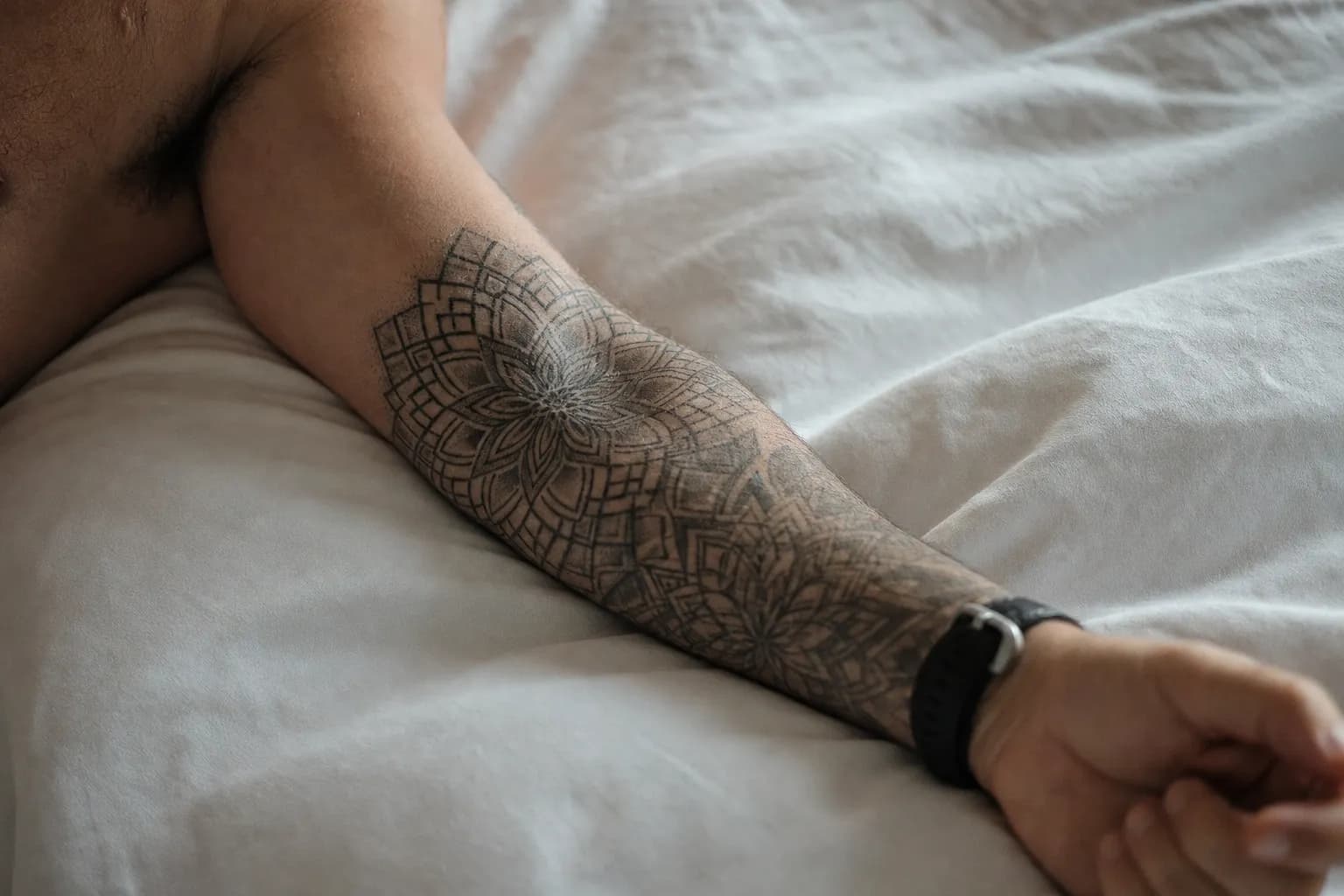
Organic tattoos forgive a lot. A botanical rose with soft petals and loose linework can absorb minor healing variation and still read beautifully. Geometric work cannot. A 1mm line shift in a mandala is visible every time you look at it, and a patchy section of negative space in a sacred geometry pattern stands out the way a crooked tile stands out in an otherwise immaculate mosaic.
That's why understanding what a geometric tattoo looks like once fully healed matters before you sit in the chair, not after. Hard edges, parallel lines and precisely measured negative space all respond to the healing process in specific, predictable ways. Setting realistic expectations now means you won't panic at week two.
The tattoo will look overworked and dull before it settles. That's not a warning sign. It's just skin doing its job.
Week-by-Week: What Your Skin Is Actually Doing
Days 1-3: Swelling, Redness and the Milky Film
In the first 24 hours, the skin weeps plasma, a clear or pale yellowish fluid that's part of the body's standard wound response. Keep the area wrapped in a breathable film and resist the urge to peek constantly. Swelling is normal at this stage, and it will make the lines look slightly thicker or less defined than they actually are.
Wash the piece gently with unscented soap twice a day. Pat it dry with a clean paper towel. Never rub. For a more detailed breakdown of what's happening beneath the surface during these first days, the guide on what your skin does day by day after a tattoo covers the biology clearly.
Days 4-7: Peeling Begins. Don't Touch It
By day four, the outer layer of skin begins to flake. Ink particles sit in these flakes. That's expected. You'll see what looks like coloured skin lifting away, and the temptation to help it along is real. Don't. Pulling peeling skin off early can drag ink from the dermis (the deeper skin layer where ink lives permanently) before it's anchored properly.
This is especially relevant on geometric pieces with fine linework. Thin lines, produced with 0.18-0.35mm needle groupings (the finer end of standard tattooing equipment), have less ink mass than bold lines. They're more susceptible to any interference during the peeling phase.
Weeks 2-3: The Dull Grey Phase
This is the phase that worries most people. The tattoo looks cloudy, washed out, sometimes almost grey. The lines seem soft. The contrast has dropped. People search "geometric tattoo line sharpness after healing" and land here, half-convinced something went wrong.
Nothing went wrong. What you're seeing is the regenerating epidermis, the top layer of skin, closing over the ink. It's temporarily opaque, like frosted glass sitting over the design. Once that new skin matures and becomes transparent, usually by week three to four, the lines sharpen back up. The ink was always there.
Weeks 4-8: The Tattoo Settles Into the Dermis
Surface healing is largely complete by week four. But full dermal settlement takes longer. The ink is still migrating fractionally, finding its final position in the dermis. For fineline geometric work, this process can run to week eight or beyond. Judge nothing before the eight-week mark.
This distinction matters: surface healing (2-4 weeks) and full dermal settlement (6-8 weeks) are two separate milestones. The first tells you the skin is closed. The second tells you the tattoo is finished becoming itself.
What Geometric Lines Actually Do When They Heal
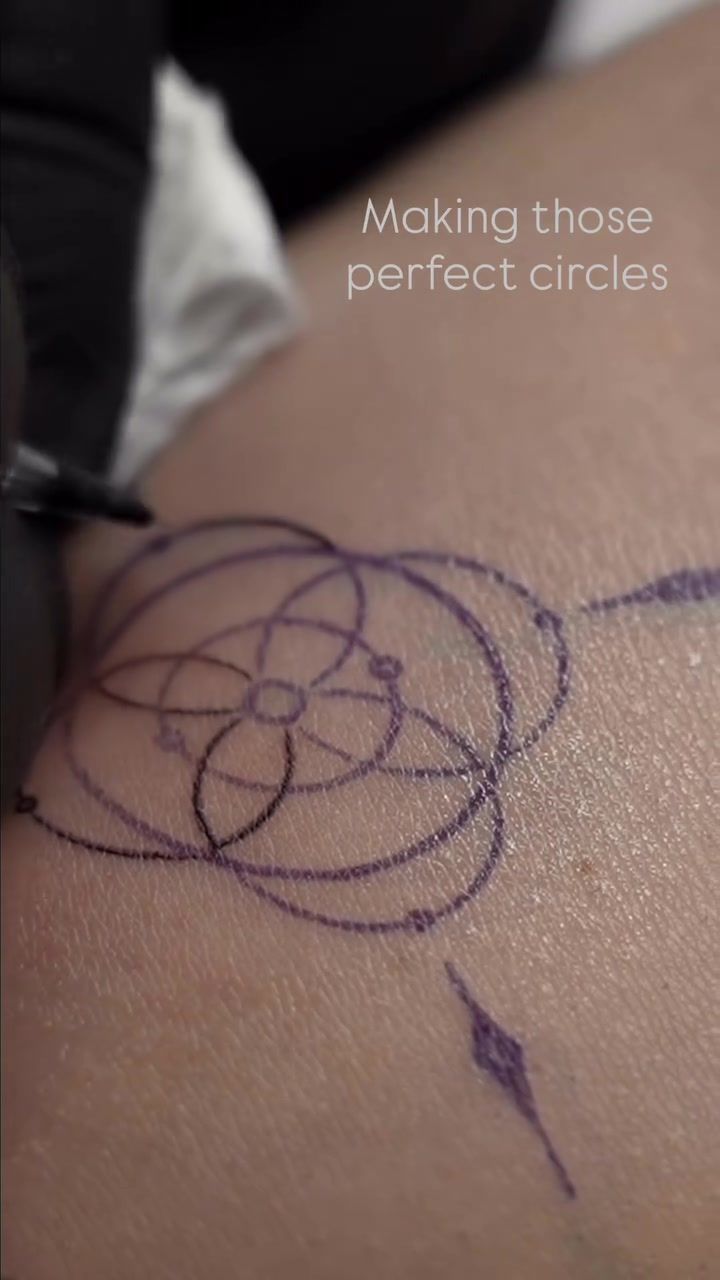
Fine lines produced with narrow needle groupings appear slightly thinner or softer once healed than they do fresh from the machine. This is normal. Ink spreads marginally in the dermis as it settles. On a bold traditional tattoo, that spread is unnoticeable. On a 0.18mm fineline mandala, it can reduce perceived sharpness by a visible degree.
Solid fill sections, like the dark triangles in sacred geometry or shaded gradient zones in a mandala, typically lighten by around 10-20% after healing. Experienced artists account for this at the application stage, going slightly denser than the finished result needs to be. It's a calibration built into the process, not a defect to fix later.
"Negative space is doing as much work as the ink. If that clear skin gets patchy during healing, the whole design reads differently. So protecting it matters just as much as protecting the lines."
Symmetry is permanent if stencil placement was accurate. Healing does not shift ink laterally. What can look like asymmetry in weeks one and two is almost always swelling or uneven peeling creating inconsistent contrast across the piece. It resolves as the skin calms. If it doesn't resolve by week eight, a touch-up conversation is the right next step, not a cause for alarm.
Aftercare That Actually Protects Geometric Precision
The geometric tattoo healing process asks more of the client than people expect. The studio can deliver perfect stencil placement and flawless linework. What happens in the first two weeks after you walk out is largely up to you.
- Hours 0-48: Keep the piece covered with a breathable second-skin film. This prevents airborne contamination and stops clothing from dragging across fresh lines.
- Washing: Unscented soap, twice daily. Use your fingertips, not a cloth. Pat dry with a clean paper towel. Never rub.
- Moisturising: A thin, fragrance-free layer two to three times a day. Enough to stop the skin cracking, not so much that the piece stays wet. Over-moisturising is a common mistake on geometric work. It can blur fine lines during the peeling phase.
- Sun exposure: UV breaks down ink contrast faster than almost anything else. Geometric pieces with strong black linework are particularly vulnerable because the contrast between ink and skin is the entire design. Stay out of direct sun for the first month, minimum.
- Lisbon summers: The city's humidity, especially in July and August, means fresh tattoos can stay moist between washes longer than in drier climates. Keep the piece dry between cleaning sessions. Avoid beach days for the first four weeks, and skip sunscreen on the piece until the surface skin has fully closed, typically around day five to seven.
For a full day-by-day protocol, the studio's full aftercare instructions cover every phase from wrap removal to long-term ink care.
How the Studio Designs Geometric Tattoos to Heal Well
A healed geometric tattoo is only as good as the decisions made before the machine touches skin. The studio's approach to what it really takes to design geometric work correctly starts with stencil precision. If the stencil sits 2mm off-centre on a mandala, you'll see it every time you look at the piece. Every time, forever. That's not fixable with a touch-up.
Line weight choices at the design stage account for post-healing softening. A line that looks too heavy fresh might be exactly right at eight weeks. The studio calibrates this deliberately, building the finished result backwards from the healed state rather than the fresh application.
Placement decisions factor in skin stretch, daily friction and long-term sun exposure. The inner forearm heals differently from the sternum. The sternum heals differently from the ribs. Every placement zone has specific variables, and geometric work amplifies them because the style has no visual noise to absorb inconsistency.
Touch-up reviews are part of the geometric workflow, not an afterthought. The studio schedules a review once the tattoo has fully settled, typically at the eight-to-ten-week mark, to assess line integrity and address anything that needs reinforcing. Booking that review with the same artist matters because matching line weight and ink density on geometric work requires the same needle configuration used originally.
Placement, Size and Healing: A Quick Reference
How long does a geometric tattoo take to heal varies by placement as much as by size. Some zones of the body heal cleanly and quickly. Others fight the process at every stage. Here's a practical reference for the placements the studio sees most often.
| Placement Zone | Healing Difficulty | Sun Exposure Risk | Minimum Gap Before Touch-Up |
|---|---|---|---|
| Outer forearm | Low | High (daily exposure) | 8-10 weeks |
| Inner forearm | Low | Low to moderate | 8 weeks |
| Sternum | Moderate | Low (usually covered) | 10 weeks |
| Ribs | High (skin movement, friction) | Low | 10-12 weeks |
| Inner arm / bicep | Low to moderate | Moderate | 8-10 weeks |
| Hands / fingers | Very high (constant friction) | High | 12+ weeks |
| Feet / ankles | Very high (friction, footwear) | Moderate | 12+ weeks |
Hands and feet heal hard regardless of style. But for geometric work specifically, the constant micro-movement and friction in these zones can affect ink retention in fine lines more noticeably than in bolder styles. The studio discusses this during consultation, and placement alternatives are always worth exploring if longevity is a priority.
Size also shapes the geometric tattoo healing process in a practical way. A 4cm mandala on the inner wrist involves far less surface trauma than a 20cm geometric sleeve panel. Larger pieces mean longer initial healing windows and a higher chance of uneven peeling across different sections of the design.
- Small geometric pieces (under 5cm): surface-healed in roughly 2-3 weeks, full settlement by week 6-8.
- Medium pieces (5-15cm): expect surface healing to run 3-4 weeks, with full settlement at 8 weeks or beyond.
- Large panels or sleeves: individual sections may heal at different rates; the studio stages large geometric work across multiple sessions precisely to manage this.
For more on how placement intersects with design decisions across all tattoo styles, the studio's guide on geometric tattoos in Lisbon covers the full picture.
Frequently Asked Questions
How long does a geometric tattoo take to fully heal?
The surface skin heals in 2-4 weeks, but the ink fully settles into the dermis over 6-8 weeks. Fineline geometric work with very thin lines can take slightly longer to feel locked in. Avoid sun exposure and heavy moisturisers during this window, and resist judging the finished result before the 8-week mark.
Why do my geometric lines look blurry after healing?
During weeks 2-3, the regenerating epidermis sits on top of the ink layer and creates a milky, dulled appearance. This is not ink loss. Once that new skin matures and becomes transparent, the lines sharpen back up. Geometric tattoo line sharpness after healing is typically fully restored by week four. If blurring persists past 8 weeks, a touch-up consultation is the right next step.
Will the symmetry of my mandala shift as it heals?
No. If the stencil was placed accurately and the skin was properly prepared, symmetry is set at application. Healing doesn't move ink laterally. What can look like asymmetry in the first two weeks is usually swelling or peeling skin creating uneven visual contrast. A healed mandala tattoo reads as the stencil intended once the skin has fully settled.
Can I get a touch-up on a geometric tattoo?
Yes. The studio schedules touch-up reviews once the tattoo is fully healed, typically after 8-10 weeks. Matching line weight and ink density on geometric work requires the same needle configuration used originally, so booking touch-ups with the original artist is strongly recommended. Most well-healed geometric pieces need minimal or no touch-up work at all.
How does Lisbon's climate affect geometric tattoo healing?
Lisbon's humid summers mean fresh tattoos can stay slightly moist between washes, which slows the surface drying phase. Keep the piece dry between cleaning sessions, avoid beach days for the first month, and apply sunscreen only once the surface skin is fully closed, typically after day 5-7. Lisbon's UV index peaks between June and August, making shade genuinely important for fresh geometric aftercare.