Why Fine Line Work Is Harder Than It Looks
Pick up any fineline piece and hold it at arm's length. The lines are thin enough to look drawn rather than tattooed. That's exactly the effect. And it's exactly where the difficulty begins.
With bold styles, a skilled artist can redistribute line weight, thicken a stroke, or layer over a minor imperfection without any visible trace. Fineline offers no such buffer. A 0.5mm deviation on a portrait eye changes the whole expression. A slightly uneven curve on a botanical stem looks wavered, not organic. Every mark is permanent and fully visible.
That's not a reason to avoid the style. It's a reason to choose your artist carefully. The margin for error is essentially zero.
What Fine Line Actually Means (And What It Doesn't)
Single-needle vs. Tight-grouping needles
The term "fineline" gets used loosely, so it's worth being precise. A 1RL needle (one round liner) is a single needle soldered to a bar. It makes the finest possible mark on skin, around 0.1-0.2mm wide. A 3RL groups three needles in a tight cluster, which allows slightly faster coverage while still producing a clean, delicate line roughly 0.3-0.4mm wide.
Neither is inherently superior. The choice depends on the design. A minimalist fineline tattoo in Lisbon with just two or three botanical lines might call for a 1RL throughout. A portrait with subtle shadow gradients often benefits from switching between the two mid-session.
Where the style works best
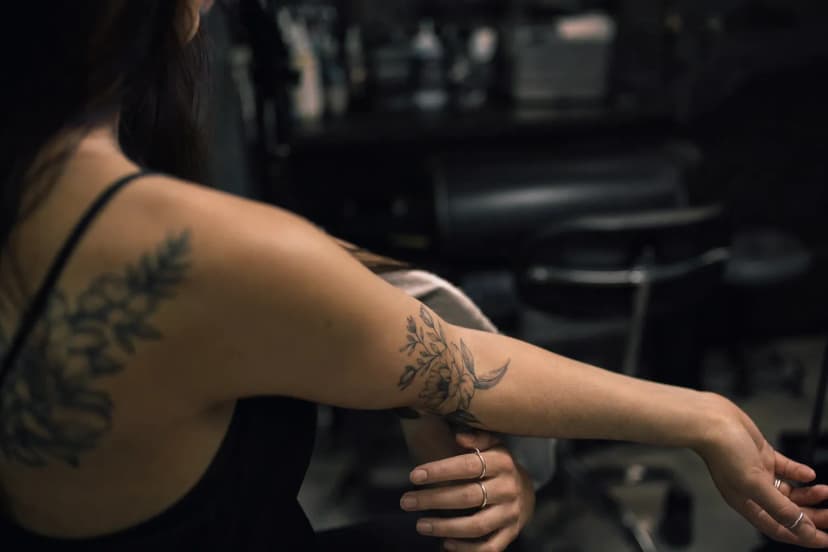
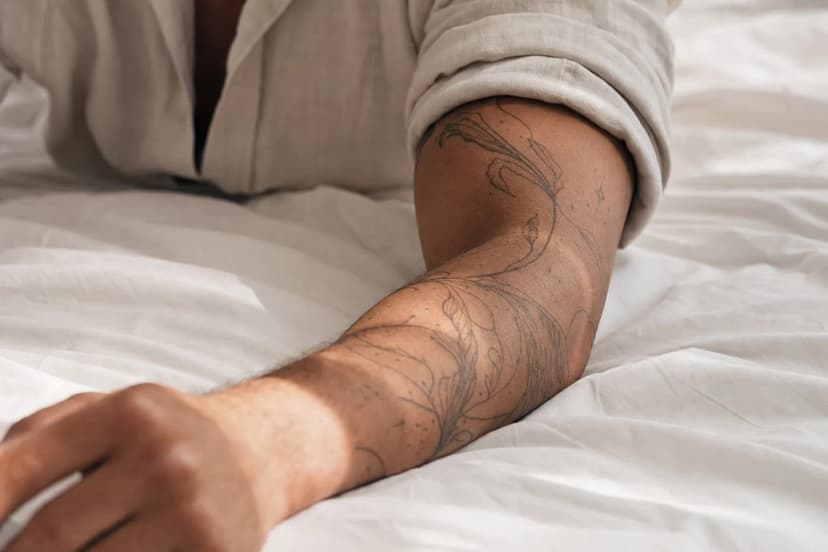
Fineline isn't simply "small tattooing". It's a different technique with different structural rules. It suits portraits, botanicals, lettering, sacred geometry, and micro realism particularly well, because all of those rely on nuance over mass.
One persistent myth is that fineline fades faster than bolder work. It doesn't, not inherently. The real variable is aftercare and placement. A single-needle tattoo in Lisbon placed on the upper arm and healed properly can stay crisp for a decade. The same piece on an inner finger will look worn within a year, regardless of the artist's skill. Placement is the deciding factor, not the style itself.
For a deeper look at what what fine line work actually demands in Lisbon, the studio has covered that in detail separately.
How the Studio Approaches Fine Line Work in Lisbon
The consultation process
Every booking begins with a consultation. You bring reference images. The artist assesses your skin tone, the placement you have in mind, and the complexity of the design. These aren't formalities. They directly shape what the final piece can be.
Skin tone affects ink visibility in fineline more than in bold styles. Lighter values can disappear against deeper skin if the saturation isn't calibrated correctly. The studio maps this during the consultation, not mid-session.
Design and stencil placement
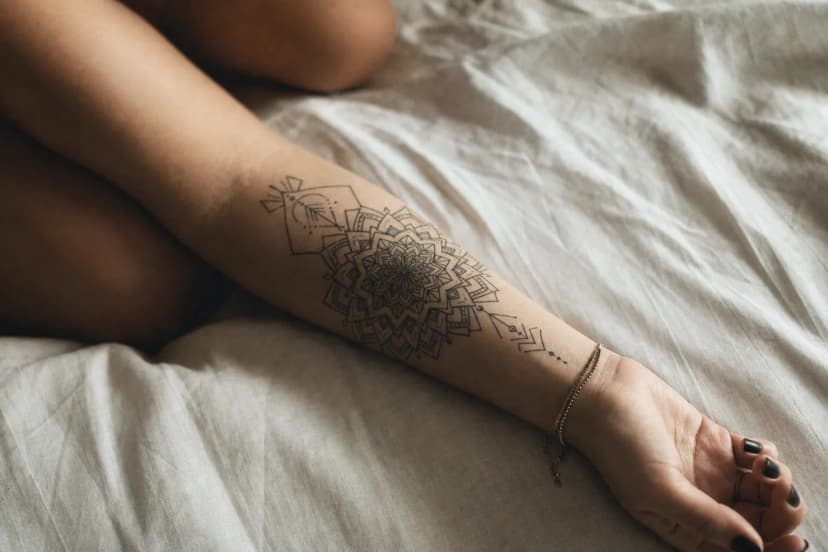
Once the design is finalised, a stencil is printed and placed on the skin before any needle touches you. For symmetric work, this step demands particular care. If the stencil sits 2mm off-centre on a mandala, you'll see it every time you look at the piece. The artist checks placement from multiple angles, standing back to assess the full composition before starting.
"Fineline is about restraint. The instinct is always to add more, but the pieces that hold their power long-term are the ones where every mark earns its place."
Layering light and shadow in fineline requires a controlled hand. Pack ink too densely and you muddy the contrast that makes the detail readable. Work too lightly and the piece loses depth at healing. The artist builds tone in passes, checking the result under studio lighting between each stage.
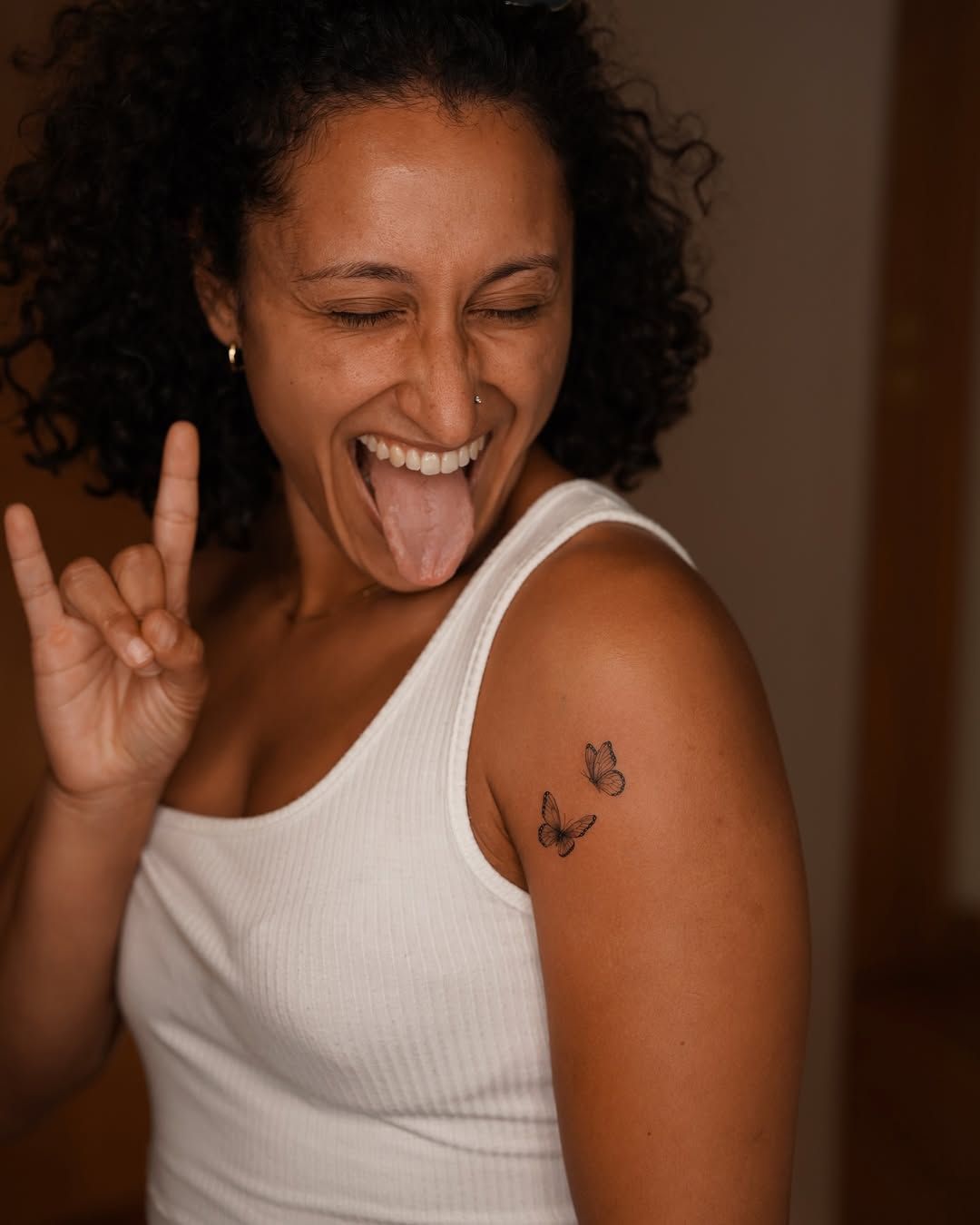
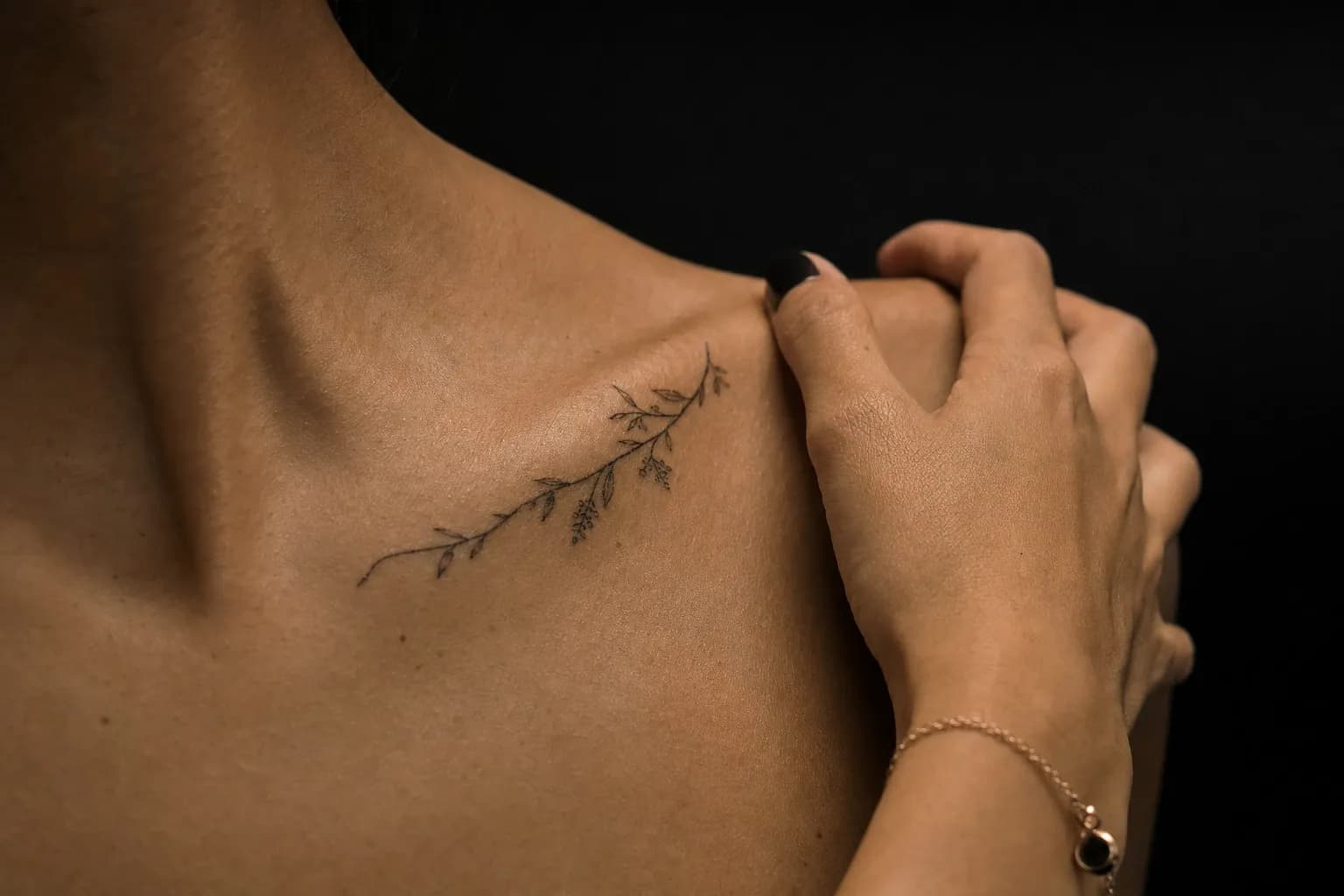
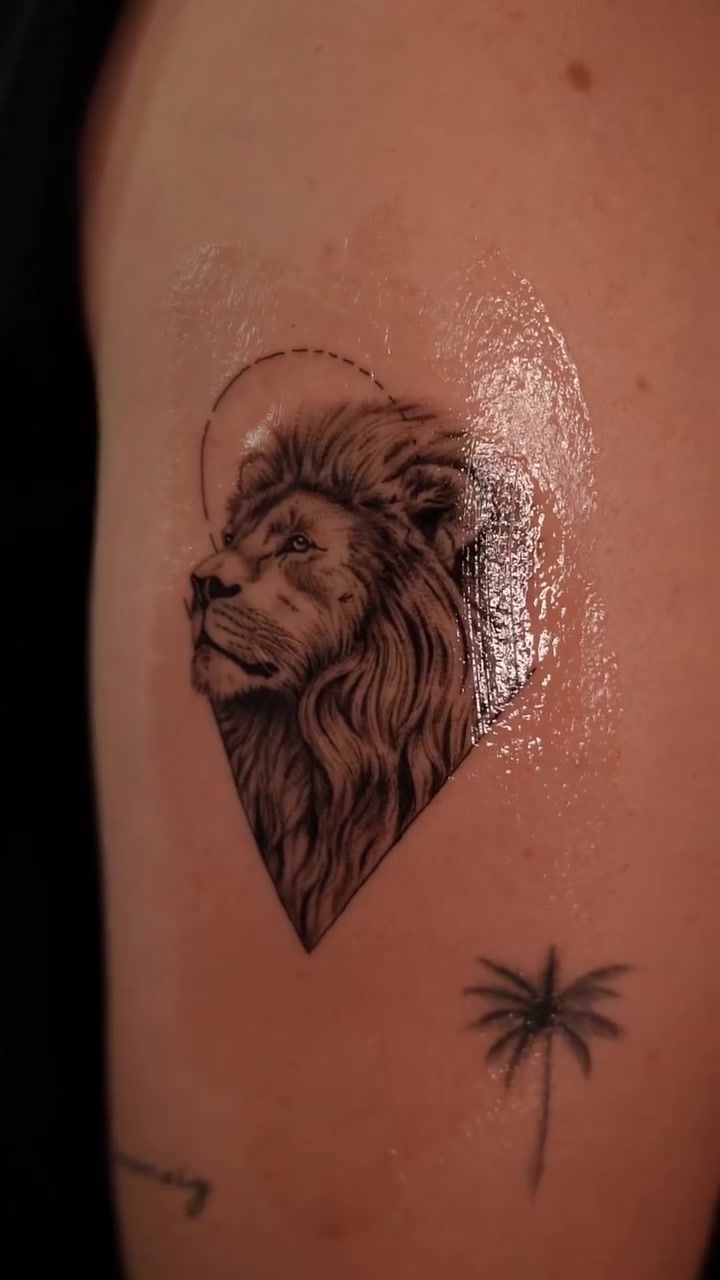
The range this technique can cover is wider than most people expect. At one end, you have the kind of work seen in the lion portrait in diamond on the upper arm: a photorealistic face framed inside geometric linework, two styles occupying the same piece without conflict. At the other end, a single botanical stem on the collarbone. The technique scales.
Styles That Sit Within the Fine Line Family
At this studio, fineline tattooing at the studio is the technical foundation underneath several distinct visual styles. Minimalism uses it to strip a design to its barest form. Micro realism uses it to pack photographic detail into a small footprint. The geometric tattoo service uses it to hold the mathematical precision that makes patterns satisfying. Floral and lettering both depend on it for the kind of clean, confident line that distinguishes considered work from rushed work.
Each sub-style makes different demands. A geometric composition is unforgiving about symmetry. A floral piece asks for organic variation within controlled structure. Micro realism needs tonal range in a very small space. Understanding which style fits your idea helps the consultation move faster.
The table below gives a practical sense of how these styles compare as sessions.
| Style | Typical session length | Complexity level | Key healing consideration |
|---|---|---|---|
| Minimalism | 1-2 hours | Low to medium | Simple pieces heal quickly; avoid sun on linework |
| Geometric | 2-4 hours | Medium to high | Dense linework needs full 6-8 weeks to settle |
| Floral | 2-3 hours | Medium | Shaded petals need moisture-balanced aftercare |
| Micro realism | 2-4 hours | High | Tonal detail vulnerable to sun fading |
| Lettering | 1-2 hours | Medium | Spacing holds well; avoid stretching placement early |
For a closer look at the precision demands of patterns and mandalas, the guide on how geometric precision works in Lisbon covers the specifics in full.
Healing Fine Line Tattoos in Lisbon's Climate
Lisbon summers are warm and humid. July and August regularly push into the mid-30s, and the air off the Tejo carries more moisture than the Atlantic breeze further up the coast. That combination matters for a fresh tattoo.
Bold, heavily saturated work is relatively resilient to sweat during early healing. A delicate tattoo artist in Portugal will tell you that fineline, with its finer ink deposits, is more sensitive to prolonged moisture exposure in those first two weeks. Sweat sitting against fresh linework for hours at a stretch can affect how the ink settles. Loose, breathable clothing over the placement makes a real difference.
- Keep the tattooed area out of direct sun for at least four weeks. Lisbon's light is intense even in early autumn.
- Avoid the Tejo riverfront for the first two weeks if your tattoo is on an exposed area. Wind-carried dust and UV reflection off the water are both irritants.
- Apply a fragrance-free, thin moisturiser twice daily. Nothing occlusive or heavy.
- Wash the area once in the morning with mild, unscented soap. Pat dry immediately.
The surface of a tattoo typically closes within two weeks. The ink continues settling into the dermis (the second layer of skin, roughly 1-2mm below the surface) over six to eight weeks after that. What you see at two weeks is not what you'll have at eight. Fineline pieces in particular can look slightly hazy at the two-week mark, then sharpen up considerably as the skin completes its repair.
NHS guidance on tattoo aftercare outlines the general principles well, and they apply just as much to precision work as to any other style.
Mild Lisbon winters, by contrast, are easier on fresh tattoos. Lower UV exposure, cooler temperatures, and less sweating all create better conditions for healing. If you have flexibility in when you book, autumn through spring sits comfortably outside the peak healing challenges.
Practical Guide: Sizing, Placement, and What to Bring
Size and placement aren't aesthetic choices alone. They directly determine whether a fineline piece holds its detail over time.
As a general rule, experienced fineline artists work down to roughly 2-3cm for designs with meaningful detail. Below that, lines risk bleeding into each other over years as the skin naturally ages and shifts. A simple geometric shape or a single letter can go smaller. A portrait or a floral cluster cannot, not if you want it to remain legible at sixty.
- Upper arm and outer forearm. Consistent muscle mass, low friction, good sun avoidance. Among the best placements for longevity.
- Upper back and shoulder blade. Large flat canvas, low movement. Ideal for larger compositions or sleeve starting points.
- Thigh. Generous space, low friction, easy to keep covered. Works well for mid-scale pieces.
- Ribs. Excellent for botanical or lettering pieces. More sensation during the session, but the skin holds ink well.
- Inner wrist and hands. High friction, constant movement. Fineline here will require touch-ups more frequently. Worth discussing honestly at consultation.
Getting to the studio from central Lisbon is straightforward. The Príncipe Real and Cais do Sodré areas connect directly to the broader metro network, and most of Lisbon's central neighbourhoods are within a short Uber or bus ride of the studio.
For session preparation, keep it simple:
- Eat a proper meal about two hours before your appointment. Blood sugar stability matters for how you hold up over a long session.
- Moisturise the placement area for two or three days beforehand, but apply nothing on the day itself.
- Wear clothing that gives comfortable, easy access to the area being tattooed.
- Bring your reference images. Screenshots, prints, a folder on your phone, all useful.
- Avoid alcohol for 24 hours before the session. It thins the blood, which affects how cleanly the skin accepts ink.
Session lengths vary by the complexity of the work. Small minimalist fineline tattoo work typically runs one to two hours. Larger detailed compositions, portrait work, or multi-element pieces generally need three to four hours. The studio won't rush a piece to fit a shorter window. If a design needs more time, that gets discussed before you sit down.
For more on sizing and style choices before you book, the guide to tiny tattoos in Lisbon covers the practical considerations in useful detail. And if you're still comparing styles, the overview of small tattoos in Lisbon lays out how technique shifts with scale.
Precision tattoo work in Lisbon demands a particular kind of patience, from both the artist and the client. The best results come from a clear brief, a considered placement, and aftercare that actually gets followed. Healthline's tattoo aftercare guide covers the fundamentals clearly if you want a reference to return to post-session.
Frequently Asked Questions
Does fine line fade faster than other tattoo styles?
Not inherently. Fineline tattoos can fade faster only when placed in high-friction areas or healed poorly. With correct aftercare and sensible placement, a precision fineline piece holds for years. The artist's needle depth and ink saturation during the session matter just as much as what you do afterwards.
How small can a fine line tattoo actually be?
Most experienced artists work down to around 2-3cm for pieces with meaningful detail. Below that, lines can bleed into each other as skin ages. The right minimum depends on design complexity. A simple shape can go smaller than a portrait or floral arrangement. The studio will advise you directly at consultation.
How many sessions does a fine line tattoo take?
Most small-to-medium pieces are completed in a single session of one to three hours. Larger works, sleeve segments, detailed back pieces, or complex geometric compositions, are usually split across two or more sessions to let the skin recover between areas of dense linework. The studio plans this before you sit down.
What should I avoid before a fine line session in Lisbon?
Avoid alcohol for 24 hours before your appointment. It thins the blood and disrupts how skin accepts ink. Eat properly two hours beforehand. Moisturise the area for a few days prior, but apply nothing on the day itself. In Lisbon's summer heat, wear loose clothing to the studio and keep the area cool.
Can fine line work include colour?
Yes. Single-needle and tight-grouping techniques work with colour as well as black and grey. Colour fineline tends to use softer, diluted tones rather than saturated fills. It requires the same placement and aftercare care as monochrome work, with particular attention to sun protection, since UV exposure fades coloured ink faster than black pigment.