The paradox of going small
Picture a tattoo the size of a two-euro coin. One shaky line and the whole thing is off. There's no surrounding detail to draw the eye away, no shading to soften an imprecise edge. Every millimetre sits fully exposed.
That's the central paradox of tiny tattoo work. Clients often assume smaller means easier. Artists know the opposite is true. A large back piece gives a practitioner room to breathe, to adjust, to blend. A 3cm wrist piece gives none of that. The technical margin collapses almost entirely.
This article explains what actually separates crisp small work from a grey blur five years from now, and what you should know before booking a minimalist tattoo at this scale.
What counts as a tiny tattoo
Size ranges and what fits where
In practical terms, a tiny tattoo sits somewhere between 2cm and 6cm at its longest dimension. Below 2cm, internal detail becomes extremely difficult to hold long-term. Above 6cm, most artists would consider the piece small rather than tiny. A meaningful difference when it comes to composition and needle strategy.
The 2-to-6cm window covers a lot of ground. A delicate sprig of rosemary. A single geometric shape. A short word in fine script. A small portrait of a face.
Styles that work at small scale
Not every style survives the compression. The ones that do share a common trait: they rely on line clarity rather than broad ink coverage.
- Minimalism. Single-element shapes, negative space, clean outlines. The style was practically designed for this scale.
- Fineline. Hair-thin lines that create detail without requiring bulk. Works beautifully under 5cm when executed precisely.
- Micro realism. Photographic-quality imagery packed into a small footprint. Technically the most demanding option at this size.
- Simple geometric. Triangles, circles, small mandalas. Holds well provided lines don't sit too close together.
Styles that struggle at this scale include anything requiring large ink blocks, heavy black shading, or complex colour gradients. The ink has nowhere to breathe and tends to bleed into surrounding skin over time, leaving a muddy smear where clean lines once were.
Lisbon's client base for small work skews two ways. Tourists want a travel memento. Something personal, discreet, connected to a specific moment in this city. Locals, particularly those in professional environments, want something they can cover with a sleeve or tuck behind an ear. Both groups benefit from the same approach: simple concept, clean execution, smart placement.
Why tiny tattoos are technically demanding
Line weight and needle choice
Standard tattoo needles come in configurations measured by how many individual needle tips are grouped together. A single needle (1RL. Round liner, one point) deposits the thinnest possible line. A 3RL groups three needles into a tight cluster, allowing slightly more ink flow and a marginally bolder mark.
For fineline tattoos at tiny scale, most experienced artists work with a single needle or 3RL depending on the design. Single-needle work produces the finest lines but demands an exceptionally steady hand and precise machine speed. Too slow, and the needle deposits too much ink in one spot. Too fast, and the line becomes inconsistent.
Ink saturation at small scale
This is where many tiny tattoos fail over time. Fine lines placed too close together. Within about 1.5mm of each other. Will gradually merge as the ink spreads slightly in the dermis (the deeper skin layer where tattoo pigment lives). After three to five years, what looked like two distinct lines becomes a single grey band.
The studio deliberately spaces elements in tiny compositions to account for this spread. A design that looks slightly airy on paper often looks perfect on healed skin, and perfect five years later.
The stencil problem
A stencil is the temporary transfer applied to the skin before tattooing begins. The artist's roadmap. If a stencil sits 1mm off-centre on a tiny mandala, you'll see that asymmetry every single time you look at the piece. On a large design, 1mm is invisible. On a 4cm geometric, it's the whole story.
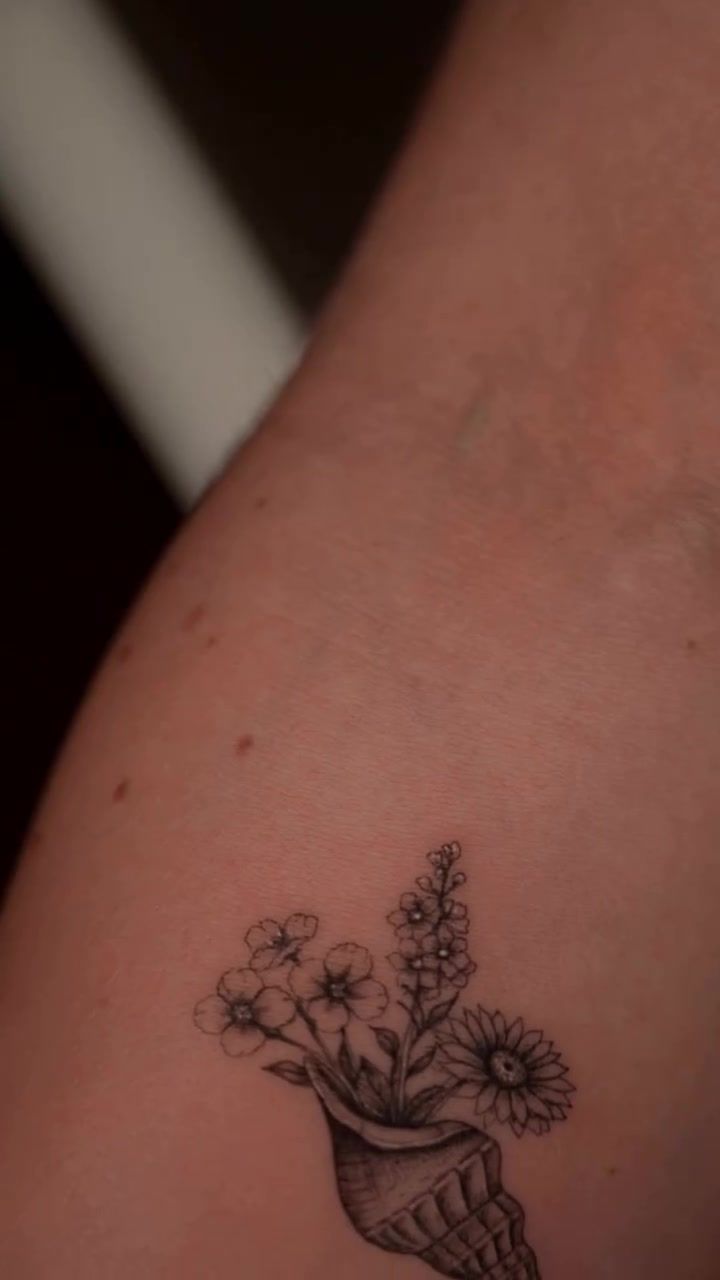
"Rushing a small tattoo is the one mistake that costs you everything. You can't blend your way out of a shaky line at this scale. The work either holds or it doesn't, and that's decided in the first pass."
That discipline is why the studio treats a 3cm piece with the same consultation rigour as a half-sleeve. The size doesn't reduce the responsibility. It concentrates it.
How the studio approaches tiny tattoo design
The consultation
Flash tattoos. Pre-drawn designs available for anyone to choose. Have their place. But even for a 3cm piece, a custom sketch usually produces better results. A custom drawing is sized and composed specifically for your skin, your placement, and the proportions of your body.
The studio also considers how a design will age. Elements that look charming at 2cm in a reference image are sometimes too complex to hold at that size on skin. That conversation happens at consultation, not after the needle touches you.
For clients curious about what great lettering actually requires at small scale, the same principles apply. Script at tiny dimensions demands particularly careful spacing between letters and strokes.
Designing for longevity
Two portfolio pieces illustrate this approach clearly. The Lisbon passport stamp tattoo works because the concept is conceptually tight. A single, recognisable motif with just enough detail to read clearly, and nothing fighting for space.
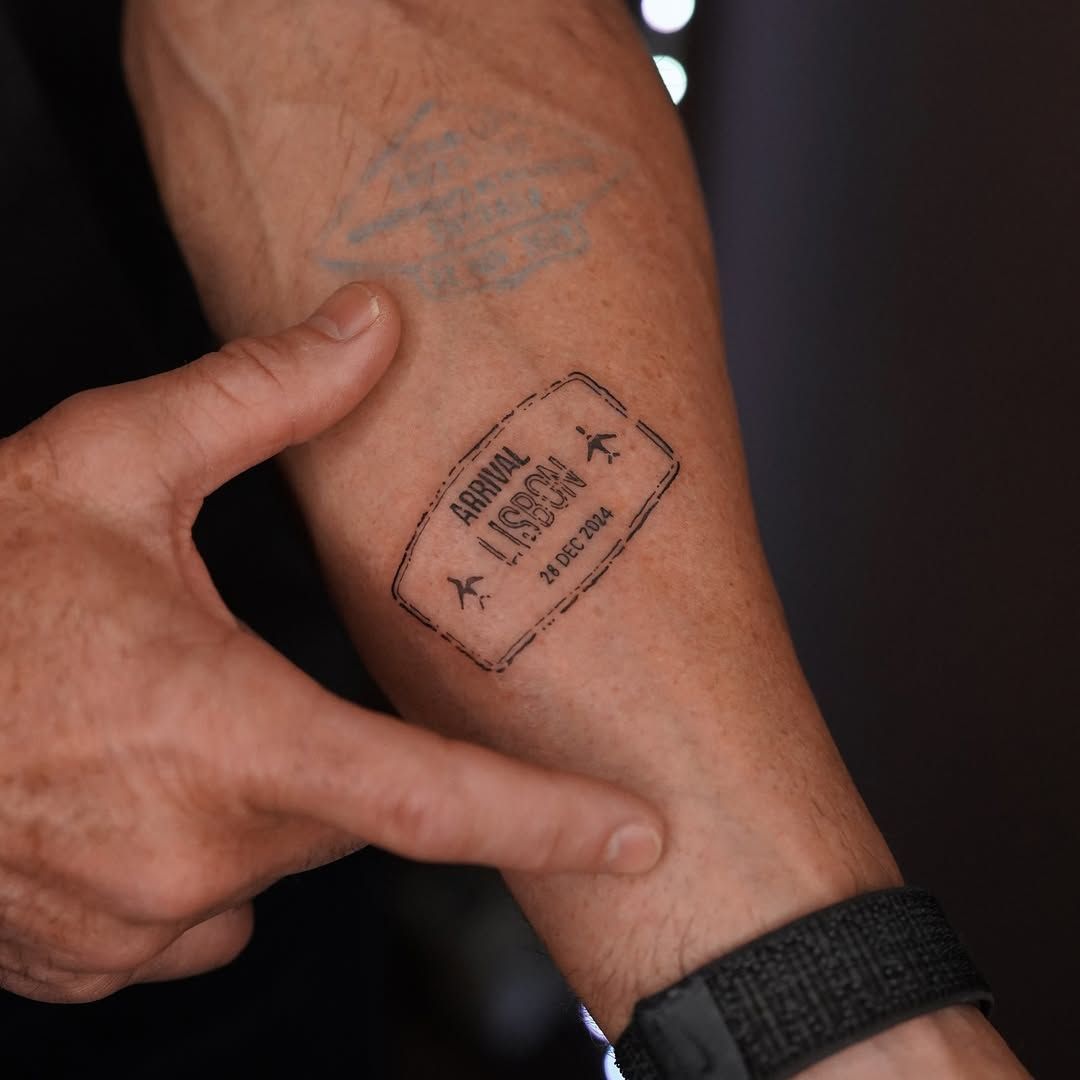
The loading bar piece takes a different route: a conceptual image built from geometry and text, stripped to its absolute minimum. Both succeed because the designer resisted the temptation to add more. Restraint is a skill.
If a client arrives wanting ten small elements crammed into a 4cm space, the studio will say so honestly. That conversation isn't a rejection. It's the kind of guidance that protects the work for the next decade.
Placement: where tiny tattoos thrive and where they fade
Placement affects longevity more than almost any other variable. Skin that experiences constant friction, flexion, or moisture cycles is hard on fine ink. Skin that sits relatively still and dry gives the pigment its best chance.
| Placement | Longevity outlook | Initial healing window | Notes |
|---|---|---|---|
| Inner wrist | Good | 2 to 3 weeks | Avoid watches and tight cuffs during healing |
| Upper arm (away from elbow) | Excellent | 2 weeks | Low friction, easy to keep clean |
| Collarbone | Very good | 2 to 3 weeks | Bra straps can cause friction. Consider clothing before booking |
| Behind the ear | Good | 2 to 3 weeks | Hair and earrings need to stay clear for the first two weeks |
| Ankle | Moderate to good | 3 weeks | Sock friction is real. Crew socks out, loose fitting footwear in |
| Fingers | Poor | 3 to 4 weeks (if it holds) | High cell-turnover, constant flex. Ink falls out faster regardless of skill |
| Palm / side of hand | Very poor | Unpredictable | Skin regenerates too rapidly; touch-ups often required within months |
A Lisbon-specific note: the city's summers pull people toward Cascais, Comporta, and the esplanadas along the Tejo. Salt water, sand, and sun are genuinely damaging to a fresh tiny tattoo. If you're planning a beach week in July, book your appointment for September or schedule it at least four weeks before any coastal trip.
Lisbon's mild winters. Think grey skies over Alfama, cool air in Príncipe Real, very little direct UV. Are genuinely good healing conditions. Less sweat, lower UV exposure, and the long sleeves that naturally protect a new piece.
Healing a tiny tattoo in Lisbon
Tiny tattoos close faster than larger pieces. The surface area is smaller, the trauma to the skin is more localised, and the body patches it up relatively quickly. But there's a catch: the pigment layer in fine minimalist work sits shallower in the dermis than in bolder styles. That makes it more vulnerable to UV during the first weeks.
Lisbon's UV index runs high from May through September. Consistently reaching 7 to 9 on clear days, occasionally peaking above 10 in July and August. That's not abstract. It means a fresh tattoo left unprotected on a sunny afternoon along the Cais do Sodré waterfront will fade faster than the same tattoo healed in January.
A sensible aftercare routine for a tiny tattoo in this climate looks like this:
- Days 1 to 5: Keep the second-skin film (a thin, breathable medical-grade bandage applied at the studio) intact. Don't lift the edges. Let it do its job.
- Days 5 to 14: Once the film comes off, apply a small amount of unscented moisturiser. Something without fragrance, alcohol, or active ingredients. Twice daily. Morning and evening works well.
- Weeks 2 to 6: The surface looks healed but the deeper layers are still settling. Apply SPF 50 any time the tattoo is exposed to sun. This isn't optional if you want the lines to stay sharp.
- No swimming in the Tejo, the Atlantic, or any pool for at least three weeks. Chlorine and salt water both draw pigment out of fresh skin.
NHS guidance on tattoo aftercare aligns with this approach: keep the area clean, moisturised, and away from direct sun until fully healed. For Lisbon summers, that last point deserves particular attention.
One more thing worth noting: tiny tattoos can look a little patchy in the first two to four weeks as the top layer of skin sheds. That's normal. The final result only becomes visible once the skin has completed its natural healing cycle, which typically takes six to eight weeks for the deeper dermis to settle fully.
Frequently Asked Questions
How small can a tattoo actually be before it loses detail?
Most experienced artists set a practical lower limit of around 1.5 to 2 centimetres for anything with internal detail. Below that, individual lines sit so close together that they merge into a grey patch within a few years. Simple single-element shapes, a small dot, or a single unbroken line can go smaller without that risk.
How long does a tiny tattoo session take in Lisbon?
A straightforward tiny tattoo. One to three elements, no shading. Typically takes between 30 minutes and one hour, including stencil placement and setup. More intricate micro realism or a multi-element composition at small scale can run to two hours. The studio gives a realistic time estimate at consultation, before any commitment is made.
Will my tiny tattoo still look good in ten years?
It depends on placement, aftercare, and sun exposure. Well-placed fineline or minimalist work on low-friction skin, protected consistently with SPF after the healing period, holds for a decade or more. High-movement areas like fingers or the outer wrist tend to fade and soften faster, regardless of the artist's technical level.
Can I get a tiny tattoo on my finger or hand?
Technically yes, but finger and palm tattoos fade faster than almost any other placement. The skin there regenerates quickly and the hands flex constantly. This studio will have an honest conversation about whether finger placement is the right choice for the specific design you have in mind. Not to turn down the work, but to protect the result.
Do tiny tattoos hurt less than larger ones?
Session length is shorter, so cumulative discomfort is lower. But the sensation per minute varies entirely by placement, not size. A tiny tattoo behind the ear or along a rib will feel sharper than a larger piece on the outer forearm. The area matters far more than how big the design actually is.