Why Geometry and Skin Work So Well Together
Walk through Alfama on any afternoon and you'll see geometry everywhere. The azulejo tiles that cover church facades and stairwell walls are built from the same logic that makes geometric tattoos so compelling: repeated shapes, deliberate proportion, and a reverence for symmetry. Geometry doesn't age the way trends do. A well-placed mandala on the forearm holds its presence decades later in a way that fashion-driven styles rarely manage.
But here's what most people don't realise before they start researching: the phrase "geometric tattoo" covers an enormous range of styles. A mandala and a Metatron's Cube are worlds apart in technique, session length and what they demand from both the artist and the skin. Knowing which category you're actually drawn to changes the conversation at consultation entirely.
This guide breaks down every major type of geometric tattoo, what makes each one distinct, and how to choose the right one for your body and your vision.
The Main Types of Geometric Tattoos
Sacred Geometry
Sacred geometry refers to a specific set of forms that appear repeatedly in nature and classical mathematics: the Flower of Life, Metatron's Cube, the Vesica Piscis, and the Platonic solids (tetrahedron, cube, octahedron, and so on). These aren't decorative choices in the casual sense. Each shape carries proportional relationships derived from mathematical constants, and that precision is the whole point.
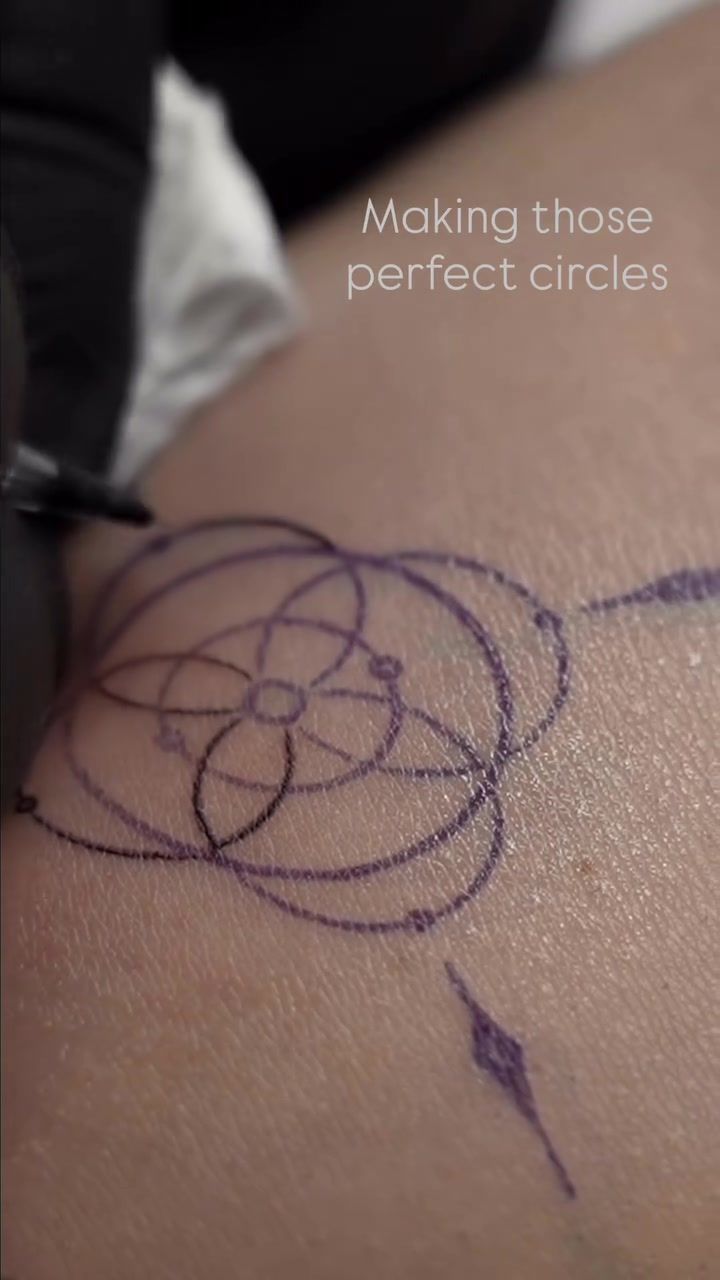
The challenge is that these designs are unforgiving. A Flower of Life is built from overlapping circles of identical radius. If any single circle drifts by even a millimetre, the interference pattern breaks and the error radiates outward across the whole composition. Sacred geometry is where stencil accuracy stops being a craft preference and becomes a technical requirement.
Placement matters enormously here. Flat surfaces, the sternum, upper back, or outer forearm, give the artist a stable canvas. Curved surfaces introduce distortion that can warp the proportional logic the design depends on.
Mandalas
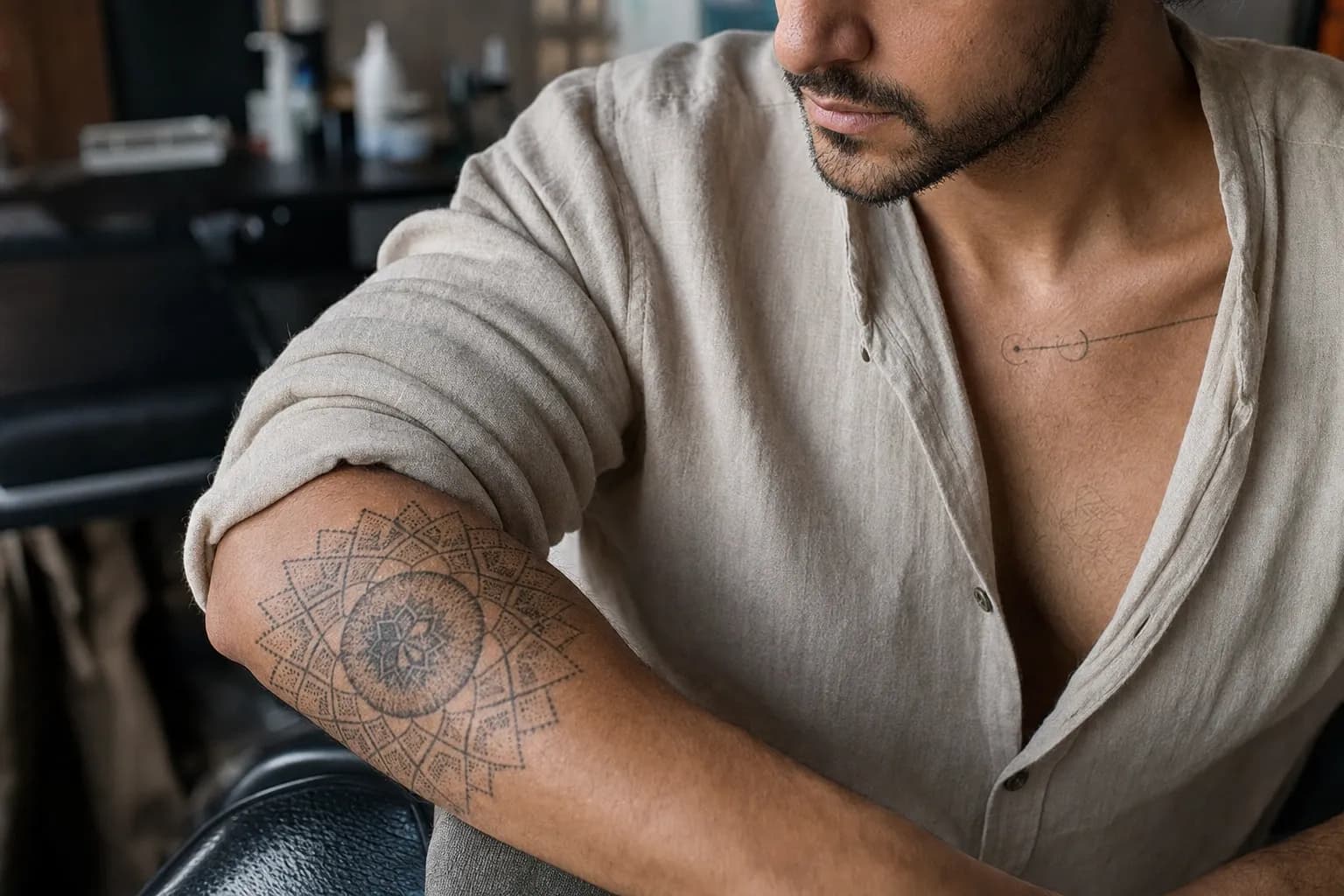
The mandala tattoo has roots in Hindu and Buddhist ritual art, where radially symmetrical diagrams were used as meditation objects and cosmological maps. As a tattoo, the form translates beautifully because radial symmetry works with the body's own bilateral structure.
Technically, a mandala is built outward from a single centre point. Every ring, petal and geometric division has to relate back to that axis. If the stencil sits 2mm off-centre, you'll see it every time you look at the piece, because the eye reads rotational symmetry automatically and catches asymmetry just as fast. This is one reason the consultation process matters so much for mandala work specifically.
Mandalas scale well. A small mandala fits a wrist or ankle in a 90-minute session. A full back or chest mandala can take three sessions or more. The style also pairs naturally with fineline technique, allowing the inner rings to carry extraordinary delicacy without losing structural clarity at the outer edges.
Linework and Wireframe
Linework geometric tattoos use clean, unshaded outlines to suggest three-dimensional forms on a two-dimensional surface. Think of a cube rendered in single-weight lines, or an icosahedron (a 20-faced polyhedron) floating on the forearm with no fill, no shadow, just edges. The wireframe aesthetic comes from architectural and engineering drawing, and it reads as contemporary and minimal.
When combined with a geometric fineline tattoo approach, the outlines can be extraordinarily thin, almost engraved in quality. The risk with very fine linework is that it requires confident, consistent needle pressure throughout. Hesitation shows as wobble in the line, and with geometric forms there's no surrounding texture to absorb the imperfection.
This style heals relatively cleanly. There's no heavy saturation for the skin to work through. But fine lines do benefit from diligent aftercare in the first week, particularly in warm conditions.
Dotwork
Dotwork is a stippling technique (stippling means building up tone through individual dots rather than continuous lines or solid fills). The artist places hundreds or thousands of tiny dots across the skin to create gradients, shadow and texture. Dense clusters of dots read as dark; widely spaced dots read as light grey. The effect can be soft and almost photographic, or bold and graphic depending on dot size and spacing.
It's intensive work. Because the needle revisits the same area many times to build up density, dotwork sessions can feel longer and the skin takes more initial trauma than equivalent linework. A dotwork geometric tattoo on the sternum, roughly hand-sized, typically runs two to three hours. Complex shading across a larger piece can require a follow-up session.
Healing for dotwork is slightly more involved than for linework. The extra needle passes mean more initial redness and tenderness. Plan your booking so you're not in a Lisbon August heatwave on day three of healing, when humidity and sweat are at their peak.
Geometric Portraits and Hybrid Styles
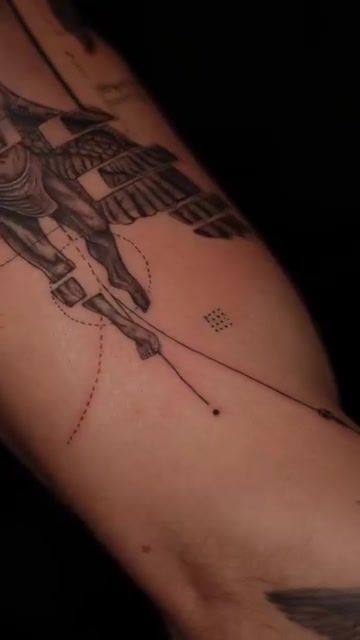
One of the most interesting developments in contemporary geometric tattoo work is the hybrid style: a photorealistic or micro-realist subject placed inside, behind, or breaking through a geometric frame. A portrait emerging from a shattered polygon. A classical figure like Icarus dissolving into triangular facets as he falls.
This is technically demanding on both sides of the equation. The geometric elements need the same precision as any standalone linework piece. The realistic subject needs all the skill that micro-realism demands. Where the two meet, the lines have to be deliberate, not accidental. See how this integration works in the Icarus in Geometric Architecture portfolio piece, where classical mythology and geometric structure sit in genuine tension with each other.
A Quick Comparison: Style vs What to Expect
Every geometric sub-style has different demands on your time, your skin and your artist. This table gives you realistic numbers to work with before you book.
| Style | Typical session length (palm-sized piece) | Complexity level | Best placements | Healing characteristics |
|---|---|---|---|---|
| Sacred Geometry | 2-4 hours | Very high | Sternum, upper back, forearm | Moderate; linework heals cleanly if aftercare is followed |
| Mandala | 90 min (small) to 3+ hours (large) | High | Upper back, knee, shoulder, thigh | Moderate; watch symmetry during peeling phase |
| Linework / Wireframe | 60-90 min | Medium | Forearm, calf, ribcage (with design adjustment) | Generally smooth; fine lines can soften if sun-exposed early |
| Dotwork | 2-3 hours | High | Sternum, upper arm, thigh | More tender initially; avoid heat and humidity in first week |
| Hybrid (Geometric + Realism) | 3-5 hours (often split across sessions) | Very high | Forearm, thigh, upper back | Varied; realism areas may take longer to settle fully |
How the Studio Approaches Geometric Work
Stencil Precision and the Consultation Process
The stencil is not a suggestion. It's the structural blueprint, and on a geometric tattoo, any deviation from that blueprint compounds as the design grows outward. The studio treats stencil placement as its own deliberate step, separate from the tattooing itself.
Curved surfaces like the shoulder, elbow ditch, or outer knee all require the stencil to be adjusted before transfer. A flat template pressed onto a curved surface distorts, just like peeling a paper map off a globe. That distortion has to be compensated for in the design, not corrected after the ink is down. This is exactly the kind of detail worth discussing at consultation, and why arriving with reference images and an open conversation about placement is more useful than arriving with a fixed idea of "I want it here, this size, exactly."
"If the stencil sits 2mm off-centre on a mandala, you'll see it every time you look at the piece. No amount of great shading or delicate linework compensates for a broken axis."
Style Combinations the Studio Specialises In
The studio's geometric work rarely exists in isolation. The strongest pieces in the portfolio combine geometric structure with other disciplines: fineline for delicacy, micro-realism for figurative depth, or Greek mythology subjects for symbolic weight. Explore the studio's geometric tattoo service to get a sense of the full range available.
One combination that's particularly resonant in a Lisbon context is azulejo-inspired geometric work. The traditional Portuguese tile patterns, with their interlocking stars, tessellating borders and Moorish geometric heritage, translate directly into tattoo form. The the Azulejo-inspired geometric piece in the portfolio shows how those tile proportions sit on skin with exactly the same architectural quality they carry on the walls of Príncipe Real or Lapa.
The Nordic Compass and Ravens forearm piece shows how a sacred geometry symbol (the Vegvisir compass) can anchor a larger composition that pulls together mythological imagery and precise linework without any element overwhelming the others. Geometry as structure, not decoration.
For a deeper look at what the design process involves from the first sketch to final placement, read what it really takes to execute geometric tattoo design.
Placement, Size and What Actually Holds Up
Flat, stable surfaces give geometric tattoos the best long-term result. The upper back, sternum, outer forearm and thigh all offer consistent skin texture and minimal distortion from daily movement. Highly symmetrical designs need a centre point that doesn't shift when you move, which is why a mandala centred on a joint like the elbow requires deliberate design adaptation rather than a direct stencil transfer.
There are also minimum size thresholds worth understanding before you decide on scale. Dotwork needs enough real estate for the gradient to read clearly; compress a dotwork shading field into an area smaller than a 50-cent coin and the dots merge into a muddy fill rather than a controlled gradient. Sacred geometry has its own threshold: Metatron's Cube at 3cm across loses the inner linework detail to healing blur within a year. A forearm-width version at 12cm or larger holds every intersection legibly for decades.
Skin movement zones, the inner elbow, the back of the knee, the sides of the torso, flex and stretch constantly. A geometric tattoo that sits across one of these zones will experience more distortion during healing and over time. That doesn't make these placements impossible, but the design needs to account for it. Radial designs that tighten toward a centre point handle flex better than those built from long straight lines that read as bent when the joint moves.
One practical note for anyone booking during Lisbon's summer: July and August bring high humidity, and a fresh geometric tattoo under a second-skin wrap in 32-degree heat needs checking more often than you'd need to in winter. The wrap can lift at the edges with sweat. Follow your aftercare instructions precisely, and read up on what a healed geometric tattoo actually looks like week by week so you know what's normal and what isn't.
Practical Checklist Before You Book
Getting to your consultation prepared makes a real difference. Here's the sequence that tends to produce the best outcomes for geometric work specifically.
- Research the sub-style you want. Decide whether you're drawn to sacred geometry, mandalas, dotwork, linework or a hybrid. Use this guide and the portfolio to narrow it down before you reach out.
- Gather reference images. Aim for 5 to 10 images that show the quality of line, level of detail and general aesthetic you want. These don't have to be geometric tattoos; architectural drawings and geometric art prints are equally useful references.
- Think about placement early. Consider whether your preferred placement is flat or curved, and whether it's a high-movement zone. Bring that question to the consultation.
- Avoid tanning the area beforehand. Sunburned or heavily tanned skin behaves differently under the needle and during healing. Keep the area out of direct sun for at least two weeks before your session.
- Book your consultation. Geometric work is design-intensive. The consultation is where placement, size, style and design logic all get worked out properly.
- Plan your aftercare before the day. Have your aftercare supplies ready at home. Know what to expect in the first 72 hours so you're not scrambling.
If you're also considering a smaller geometric piece as a starting point, the guide on placement ideas for small tattoos covers which spots genuinely work for detailed miniature work and which ones compromise the design.
- Aftercare creams formulated for tattoos reduce scabbing and keep lines clean during the peeling phase. Check the studio's guidance before buying anything.
- Stay out of swimming pools, saunas and the sea for at least three weeks after a geometric piece. Chlorine and salt water both affect how linework settles.
- If your piece includes dotwork, expect the area to feel slightly raised for up to two weeks as the skin processes the extra needle passes.
Frequently Asked Questions
What is the most popular type of geometric tattoo?
Mandalas and sacred geometry designs consistently rank among the most requested geometric styles. Mandalas suit a wide range of placements, from the upper back to the knee, while sacred geometry pieces like the Flower of Life appeal to clients drawn to symbolic meaning. Hybrid geometric styles that blend figurative subjects with geometric framing are also increasingly common.
How long does a geometric tattoo take to heal?
Surface healing typically wraps up in two to three weeks, but the deeper layers of skin take six to eight weeks to fully settle. Dotwork pieces can feel tender a little longer because the stippling technique involves more needle passes over the same area. Proper aftercare in the first week makes the biggest difference to how clean the healed lines look.
Can geometric tattoos be combined with other styles?
Geometric work pairs naturally with fineline, micro-realism and lettering. A common approach is placing a photorealistic subject, a portrait, an animal or a classical figure, inside a geometric frame or breaking it apart with clean linework. The key is finding an artist who can hold precision across both styles, since sloppy lines destroy the illusion where the two styles meet.
Do geometric tattoos age well?
Clean linework in geometric tattoos holds well compared to styles with heavy shading or colour, provided the lines were laid down accurately and the skin was cared for properly during healing. Very fine dotwork can soften slightly over years. Keeping the tattoo out of prolonged sun exposure, especially during Lisbon's intense summer months, significantly extends its sharpness and legibility.
What placement works best for geometric tattoos?
Flat, stable surfaces give geometric tattoos the best long-term result. The upper back, sternum, forearm and thigh all offer consistent skin texture and minimal distortion. Highly symmetrical designs like mandalas need a centre point that doesn't shift with movement, so curved joints like elbows and knees require careful design adaptation rather than a direct transfer of a flat template.