Why Fine Line Tattoos Demand More From the Artist
Most tattoo styles leave the artist somewhere to hide. A bold black line, slightly wobbly at one edge, reads as intentional. A thick traditional rose forgives a lot. Fine line work forgives nothing. Every millimetre is exposed.
If you're searching for a tattoo artist in Lisbon for fine line work specifically, that distinction matters before you even look at a single portfolio image.
The single-needle difference
Fineline tattooing uses either a single needle or a tight 3RL configuration. A 3RL (three-round liner) groups three needles into a very small cluster, allowing slightly smoother lines on larger pieces while still preserving that hair-thin quality. A single needle is exactly what it sounds like: one point, one pass.
Compare that to a bold traditional piece, which might use a 7 or 9-round shader to pack in colour fast. The larger the needle grouping, the more room you have to distribute small inconsistencies across the stroke. With a single needle, your hand pressure either holds or it doesn't.
Where fineline fails without skill
Three things go wrong when technique isn't there: blowouts, migration, and fading. A blowout happens when the needle goes too deep, pushing ink into the layer below the dermis where it spreads and blurs. In bold work, this can look like a slightly soft edge. In fineline, it turns a crisp line into a smudge within weeks.
Migration is subtler. Lines placed at an inconsistent depth shift position slightly as the skin heals. On a portrait or botanical element, this changes the whole reading of the piece.
Lisbon summers are worth a brief mention here. High humidity in July and August slows surface healing on any fresh tattoo, but fineline is particularly sensitive because the lines are so fine that any disruption to the healing surface has a proportionally larger visual effect. A piece done in October, with milder temperatures and lower UV, will often settle more cleanly than the same piece done mid-summer without careful aftercare.
What Quality Fineline Work Actually Looks Like
Fresh fineline looks sharp on almost everyone's work. The real test is healed photos. If an artist's portfolio shows only fresh pieces, ask directly for healed images before you commit.
Line consistency over the full piece
Quality fineline holds its weight from the first stroke to the last. On a back piece that takes four hours, the lines completed at hour three should look identical to those from hour one. Hand pressure drifts when an artist fatigues. You'll see it as a slight thickening toward the end of long strokes, or an inconsistency in spacing across repeating elements.
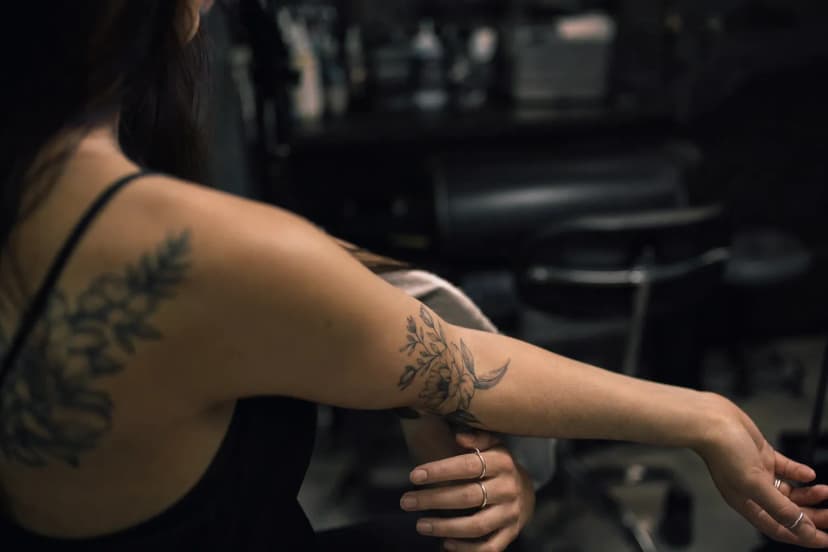
Look at the Athena back tattoo in the studio's portfolio. The linework across the full span of the back holds consistent weight. That's not an accident. It requires sustained technical control across a long session.
Depth without heavy shading
Good fineline creates the illusion of volume without relying on heavy grey wash or solid black fills. Negative space does most of the work. The skin itself becomes part of the composition, with lines suggesting form rather than filling it in. This is harder than it looks. Knowing exactly where to stop drawing is a skill that takes years to develop.
Fineline meets micro realism
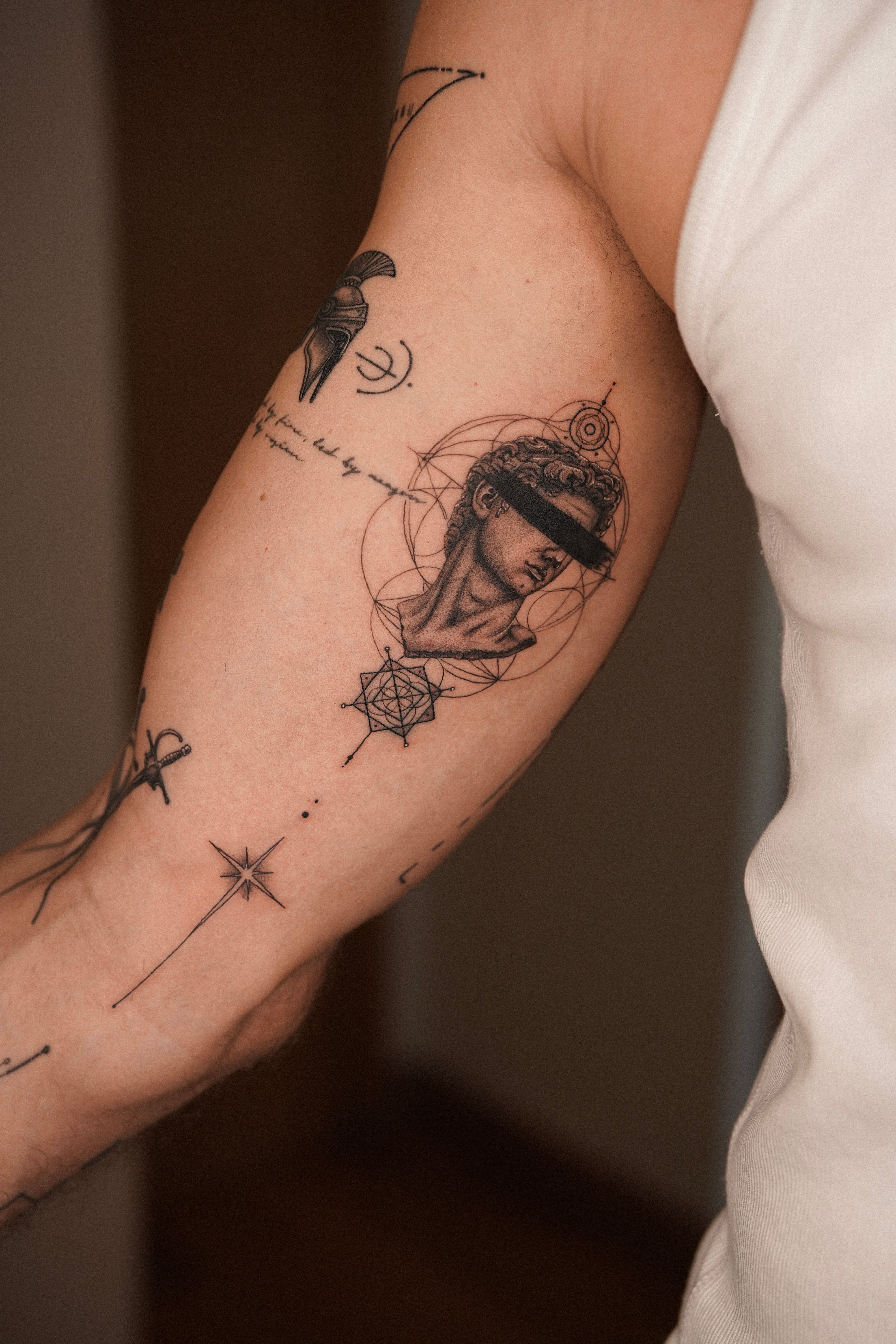
Some of the most compelling work happening in contemporary fineline sits at the edge of how micro realism works within a fineline frame. A feather rendered with photographic accuracy but contained within a hairline border. A face with tonal depth but no heavy shading, just carefully placed lines that trick the eye into seeing three dimensions.
This kind of hybrid work demands fluency in two separate disciplines at once. The artist has to map out tonal values the way a portrait painter would, then execute them with a tool that allows almost no correction.
How the Studio Approaches Fineline Work in Lisbon
This is a precision tattoo studio in Lisbon. Every piece here starts from a custom design. There are no flash sheets. No pre-drawn options you pick off a wall.
The consultation process
Before anything goes on skin, the studio works through your concept, your placement, and the realistic scale required to execute it well. This conversation matters more in fineline than in almost any other style, because what you want and what will actually hold at a given size are sometimes different things.
A portrait element needs roughly 4cm of space minimum to retain its detail once healed. Below that threshold, features merge. You might see a clear face fresh off the machine; six months later, it reads as a blur. The consultation is where this gets addressed honestly, not after the fact.
Design to stencil to skin
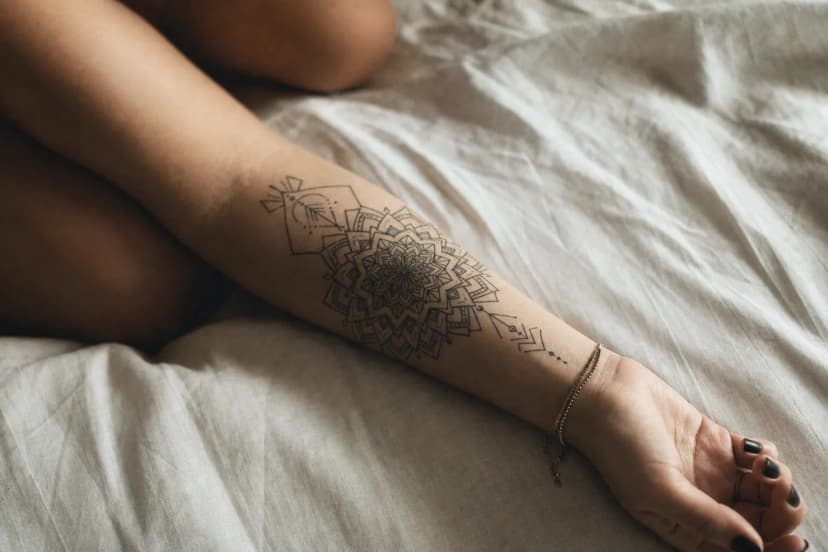
The stencil is not a formality. If a stencil sits 2mm off-centre on a symmetrical fineline mandala, you'll see it every time you look at the piece for the rest of your life. The artist takes time placing the stencil, checks it from multiple angles, and adjusts before the first needle touches skin.
"The stencil is where the piece is either won or lost. By the time the machine starts, every decision about placement, scale, and proportion should already be settled."
Style combinations the studio offers
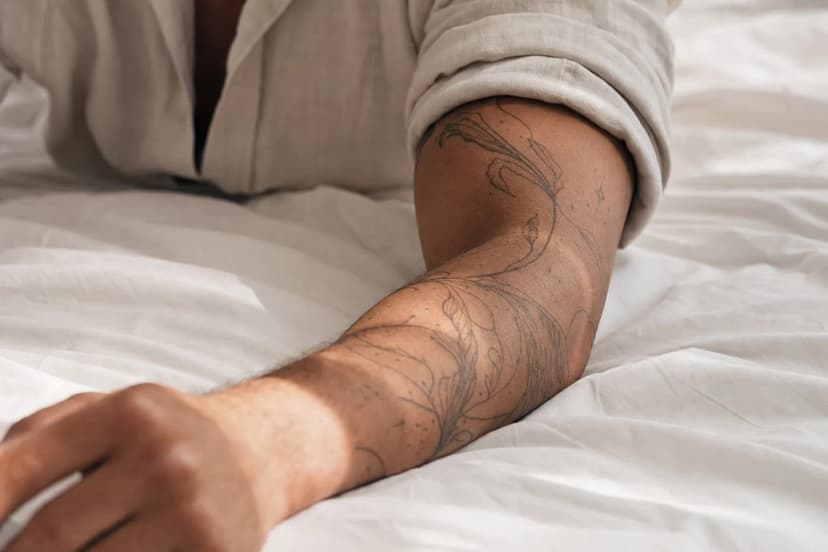
Fineline pairs naturally with several other styles offered here. Fineline tattooing at the studio often combines with geometric precision, minimalist restraint, or botanical detail. A geometric frame around a micro realism portrait. A single-needle wildflower rendered with the accuracy of a botanical illustration. These combinations work because the underlying discipline is the same: control, patience, and economy of line.
If you want to understand what separates good artists from technically excellent ones before you book, the guide on what to look for before you book a fine line artist is worth reading first.
Placement and Sizing: What Works for Fine Line Tattoos
Where you put a delicate tattoo in Lisbon matters as much as what the tattoo is. Placement affects how long the piece holds, how the design flows with the body, and how comfortable the session feels.
Best placements for longevity
The inner arm, sternum, shoulder blade, and rib cage hold fineline work well across most skin types. These areas don't see the constant friction that hands and feet do, and they're easier to protect from sun exposure during healing.
Hands, fingers, and feet are another matter. The skin regenerates faster in these high-friction zones, and ink migrates more readily. This is true regardless of which artist does the work. An honest studio will tell you that a finger tattoo may need a touch-up within a year, or may fade significantly within two. It's not a failure of technique; it's anatomy.
Size decisions and what they mean for detail
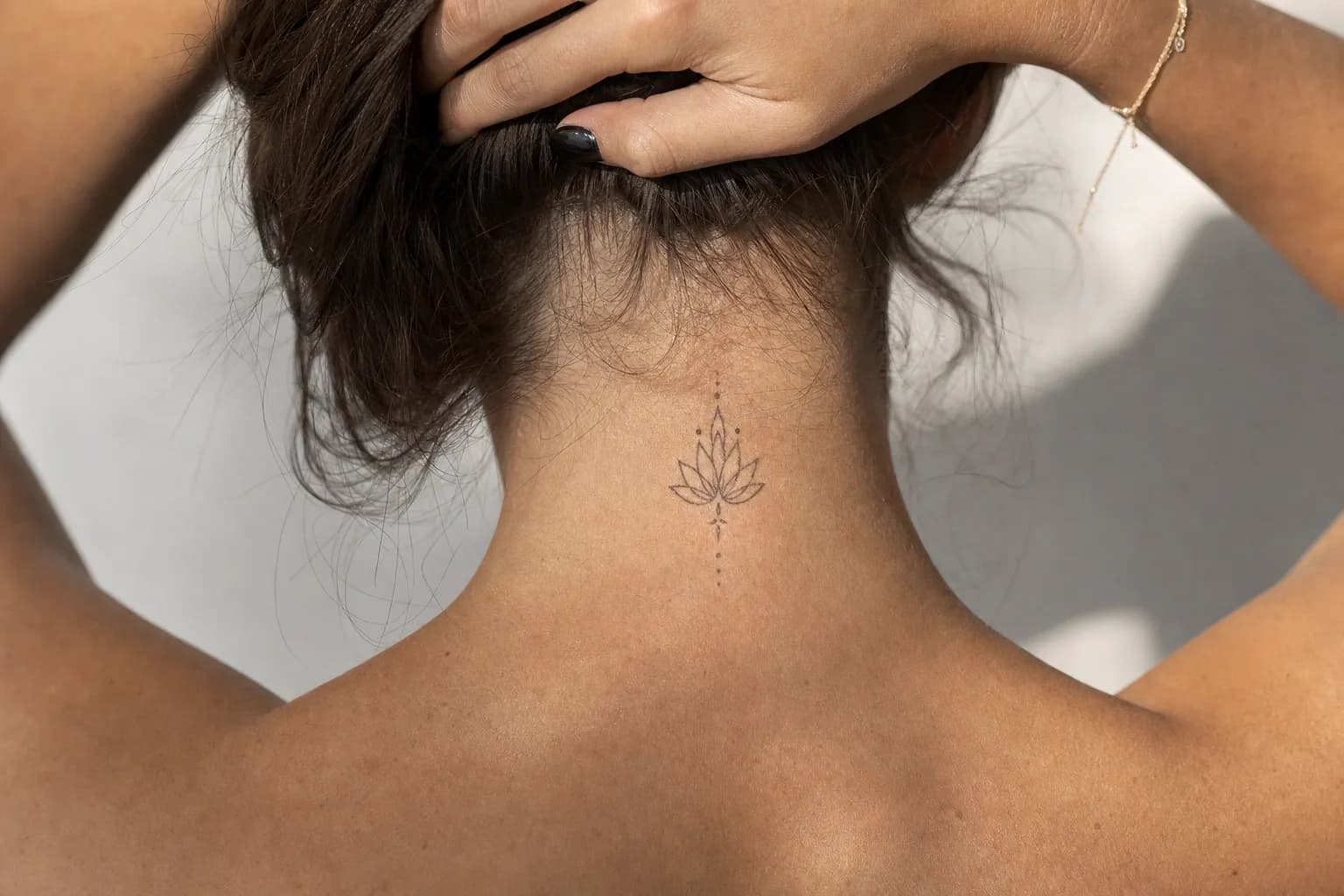
The minimum viable size for a fineline piece with meaningful detail is around 4cm in its longest dimension. Portrait elements, floral compositions with multiple species, and geometric frames all need space to breathe. Compressing too much detail into too small an area produces something that reads as a smudge once healed, even if it looked precise when fresh.
For more on how size and placement interact across different styles, the placement guide for smaller tattoos covers this in depth.
| Placement Zone | Longevity Outlook | Typical Session Length | Notes |
|---|---|---|---|
| Inner arm / forearm | Very good | 1-3 hours | Stable skin, easy to protect from sun |
| Shoulder blade / upper back | Excellent | 2-5 hours | Low friction, holds detail well long-term |
| Sternum / ribcage | Very good | 2-4 hours | Sensitive area; detail holds if sized correctly |
| Outer thigh | Good | 2-4 hours | More UV exposure risk in summer; cover up |
| Wrist / inner wrist | Moderate | 1-2 hours | Some migration over time; depends on skin type |
| Hands / fingers / feet | Lower | 1-2 hours | High friction zones; touch-ups likely within 1-2 years |
Preparing for a Fineline Session in Lisbon
Preparation affects the quality of the session more than most clients expect. It also affects how the skin accepts ink, which matters especially for work this precise.
What to bring and do beforehand
- Eat a proper meal two to three hours before your session. Low blood sugar makes the experience harder and can cause lightheadedness mid-session.
- Sleep well the night before. Fatigued skin is more reactive and can affect how ink settles.
- Drink water consistently in the 24 hours leading up. Well-hydrated skin takes ink more evenly.
- Wear loose clothing over the placement area. A tight sleeve over a fresh forearm piece creates unnecessary friction.
- Avoid alcohol for at least 24 hours beforehand. It thins the blood and can cause excess bleeding, which disrupts fineline precision.
- Moisturise the area daily in the week before your session, but arrive with clean, unlotion skin on the day.
Aftercare in Lisbon's climate
Lisbon's summer sun is intense. UV exposure is the leading cause of premature fading in fineline work, and a fresh piece is far more vulnerable than a healed one. Keep the area covered with loose clothing when outdoors for the first three weeks. If you can't avoid direct sun, postpone sun exposure entirely rather than relying on sunscreen over a fresh tattoo.
For day-to-day aftercare, the basics are straightforward:
- Wash the area gently with a fragrance-free soap twice daily for the first two weeks.
- Apply a thin layer of unscented balm (a pea-sized amount is enough. More clogs the skin) after each wash.
- Avoid swimming in the ocean or pools for three full weeks. Saltwater and chlorine both interfere with healing, and Lisbon's Atlantic coastline is tempting but damaging for fresh ink.
- Don't pick at any flaking. The surface will peel naturally in the first week; leave it alone.
- Once fully healed (around six to eight weeks), use SPF 50 on the area whenever it's exposed to sun. This is the single most effective long-term protection for any fineline piece.
The surface skin closes within ten to fourteen days. Full dermal settlement, where the ink settles into its permanent position in the dermis, takes six to eight weeks. During that window the lines may look slightly softer or uneven. This is normal. Judge the piece at the eight-week mark, not at day five.
Frequently Asked Questions
How long does a fine line tattoo take to heal?
The surface skin closes within ten to fourteen days. Full dermal settlement takes six to eight weeks. During that window the lines may look slightly faded or uneven. This is normal. Avoid sun, saltwater, and friction on the area until fully healed, and follow the aftercare guidance your artist provides at the end of the session.
Does fine line tattooing hurt more than other styles?
Pain depends far more on placement than on style. A single-needle pass can feel lighter than a bold shader on the same spot. That said, fineline pieces often require longer, more sustained concentration from the artist, so sessions can run longer for complex pieces, which increases cumulative discomfort regardless of technique.
How do I know if a fineline tattoo artist in Lisbon is actually skilled?
Look at healed work in their portfolio, not just fresh pieces. Fresh fineline looks sharp on almost anyone. Healed fineline reveals whether lines stayed crisp, whether shading settled evenly, and whether spacing held. Ask specifically to see healed photos. An artist confident in their work will have them without hesitation.
Can fine line tattoos be combined with geometric or floral elements?
Yes, and it's one of the most rewarding combinations in contemporary tattooing. Geometric framing around a botanical subject, or micro realism details worked into a fineline composition, can produce layered, visually rich pieces. The key is that the artist is fluent in both styles, not just one.
How does Lisbon's climate affect fine line tattoo healing?
Lisbon summers are hot and sunny, which is the main concern. UV exposure is the leading cause of premature fading in fineline work. Fresh tattoos should be kept covered outdoors. Humidity in summer can also slow surface healing slightly. Winter sessions, with milder temperatures and less direct sun, are often easier for aftercare management.