Most people searching for a realism tattoo artist near them make the same mistake: they judge a portfolio by its freshest, sharpest, most beautifully lit photo. That image tells you almost nothing. What you need to see is how the piece looks six months later, under bathroom lighting, on living skin that moves and sweats and sits in the Lisbon sun. That's the real test of a photorealistic tattoo.
Realism is the style least forgiving of shortcuts. There are no bold outlines to anchor a composition when the detail fades. The illusion either holds or it collapses. Understanding why takes a few minutes. Making the right choice before you book could save you years of regret.
Why Realism Is the Most Technically Demanding Style to Get Right
What makes a tattoo genuinely photorealistic
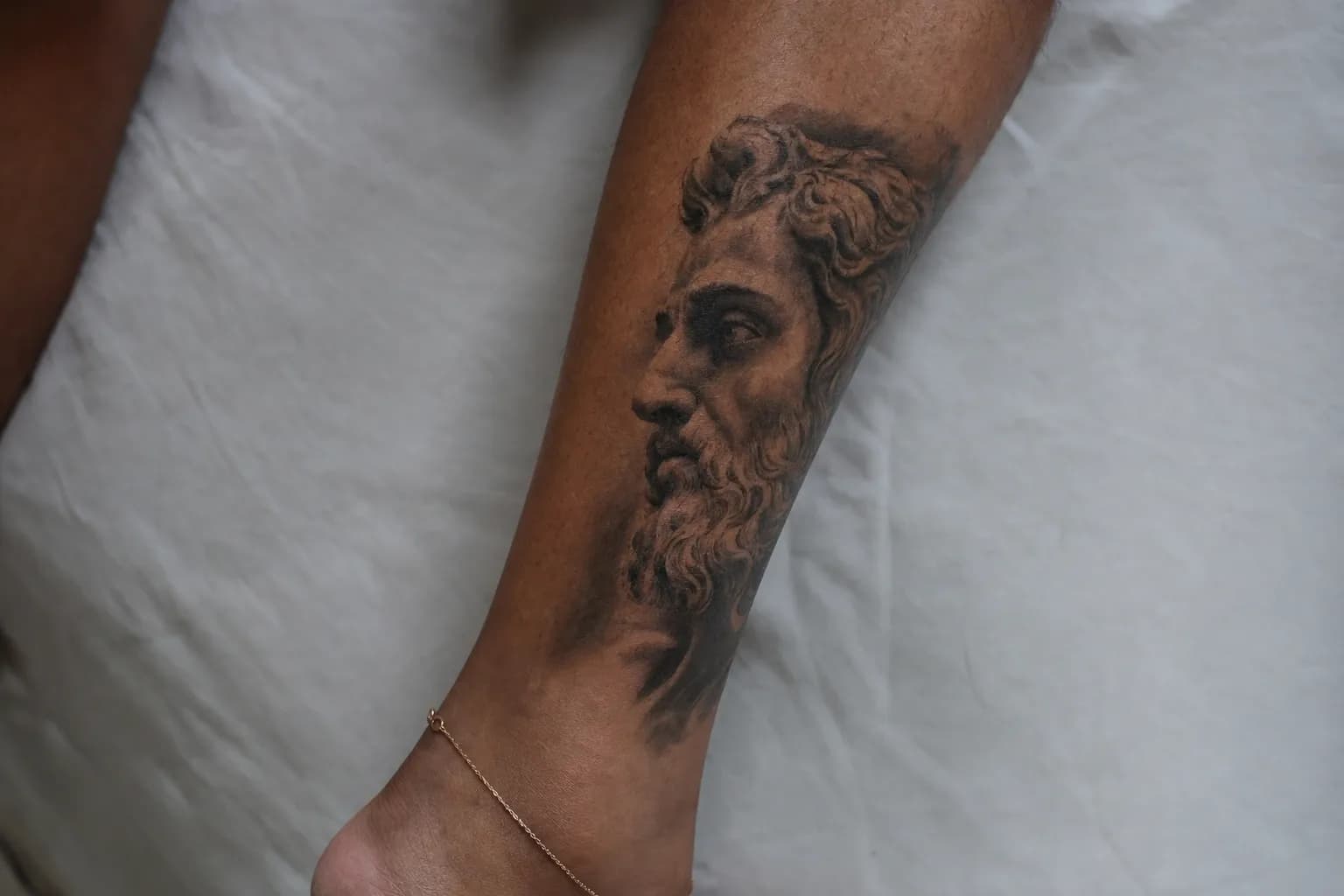
Realism works through value mapping. That means building a full tonal range from near-black darks through mid-grey transitions to bright highlights, without a single outline holding the shapes together. In most other styles, a bold line defines the edge of a rose or a geometric form. In realism, the edge exists only because one tone ends and another begins. Move that boundary by a millimetre and the shape reads wrong.
Skin texture, needle angle, and ink saturation all interact differently than they do in fineline or geometric work. A 5RL needle (a round liner with five points) builds soft tonal gradients when worked slowly across the skin. The same needle dragged too fast deposits ink unevenly, leaving streaks in what should be smooth shadow. Contrast is built layer by layer. Rushing any one of those layers produces flat, lifeless results that no amount of touch-up can fully correct.
Black and grey versus colour realism: which holds up better
Colour realism can be stunning fresh off the needle. On Lisbon's sun-exposed skin, though, the coloured pigments in mid-tones tend to shift and soften faster than black and grey values do. The Portuguese light is genuinely beautiful, but UV radiation is a real factor for anyone who spends time outdoors in Alfama or along the waterfront near Cais do Sodré.
Black and grey realism tattoos in Lisbon age more gracefully for most clients. The tonal contrast between carbon-based black ink and the skin's natural warmth holds longer than saturated colour pigments. That doesn't make colour realism a bad choice. It means you need a longer conversation about placement, sun protection, and realistic expectations.
| Approach | Typical session length | Longevity in sun-exposed skin | Best placement |
|---|---|---|---|
| Black and grey realism | 3-6 hours per session | Strong; carbon ink holds contrast well | Thigh, back, upper arm |
| Colour realism | 4-8 hours per session | Moderate; mid-tone colours shift with UV | Covered placements preferred |
| Realism with fineline detail | 3-7 hours per session | Strong where shielded from friction | Back, ribs, thigh |
How to Actually Evaluate a Realism Artist's Portfolio
What healed work reveals that fresh photos hide
Fresh ink looks sharper than it will settle. The first day after a session, ink sits at the surface of the skin, edges crisp, contrast punchy. Over the following six to eight weeks, the pigment migrates into the dermis (the deeper, thicker layer of skin below the surface epidermis). What looks razor-sharp at 24 hours can soften noticeably by week ten.
Any experienced realism tattoo artist near you in Lisbon should be able to show you healed photos alongside fresh ones. If a portfolio only ever shows day-one shots under ring-light photography, treat that as a warning. The work that truly impresses is the piece that still reads as photorealistic three years later.
When you're evaluating a realistic portrait tattoo, look directly at the eyes. The tiny white catch-light (the small bright reflection that makes an eye look alive) is the hardest detail to place accurately. If it's even slightly misplaced or muddy, the whole illusion collapses. Eyes that read as genuine in a portrait tattoo confirm that the artist understands value control at its most precise. For more on what to look for specifically in portrait work, read our guide on what to look for in a realistic portrait tattoo artist in Lisbon.
Red flags hiding in plain sight
Consistent quality across ten different subjects matters far more than one exceptional showpiece. Any artist can produce a single outstanding piece on a perfect client, in a perfect placement, under optimal conditions. What you need to see is quality held steady across different skin tones, different subject matter, and different body areas.
- Portfolios showing only one angle or one lighting condition for each piece
- No healed examples anywhere in the gallery
- Portraits where the mid-tone shadows look grey-flat rather than dimensional
- Highlights that appear chalky rather than luminous
- Heavy use of filters or post-processing that obscures line quality
"The portfolio tells you what the artist is capable of on a good day. The healed photos tell you what you'll actually live with."
How the Studio Approaches Realism Work
The consultation and reference process
The studio's approach to realism begins before any design is sketched. Reference images are curated together with the client rather than simply handed over and copied. A photograph that moves you emotionally may not translate well to skin. The lighting in the original image, the level of contrast, the amount of fine detail: all of these affect what's achievable.
During consultation, the artist evaluates your skin tone in natural light, not filtered smartphone photos. Skin behaves differently under different lighting conditions, and what photographs beautifully may need adjustment for the specific warmth or depth of your complexion. This matters for realism tattoo work more than almost any other style.
Needle gauge and machine settings are adjusted per skin type and placement. A softer area like the inner upper arm accepts ink differently than the outer thigh, which has firmer, more resilient tissue. Knowing which configuration to use for each zone is the kind of knowledge that only comes from practising realism specifically, not just tattooing generally.
Session structure for large versus small realism pieces
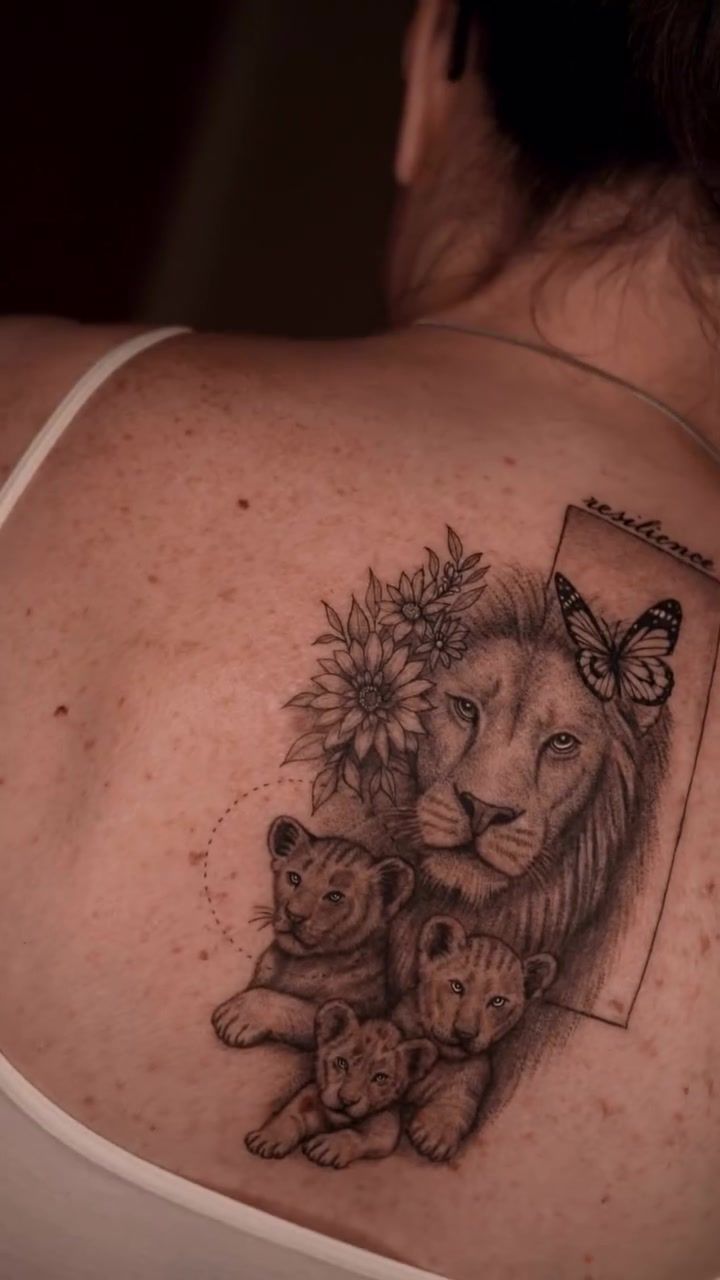
A palm-sized realism piece might complete in a single four-to-five-hour session. Larger work, a full portrait sleeve or a detailed back piece, is split across multiple sittings. The studio typically spaces these six to eight weeks apart. That gap isn't arbitrary. It allows the ink to fully settle into the dermis and the skin to return to its natural state before the next layer of saturation goes in.
Rushing sessions compresses those settling periods and produces flat, muddy mid-tones that no touch-up can fully rescue. Fineline detail elements are often woven into realism compositions to add depth, particularly for background textures and shadow edges. You can see how that combination works in practice by exploring what realism tattoos in Lisbon actually require.
Placement, Sizing, and What Affects Longevity
Which body areas hold realism detail best
Flat, low-movement areas preserve fine tonal gradients longest. The outer thigh, upper back, and upper arm are consistently the strongest placements for photorealistic tattoo work. These areas flex less during daily movement, so the ink stays where it was placed rather than gradually shifting with repeated skin stretching.
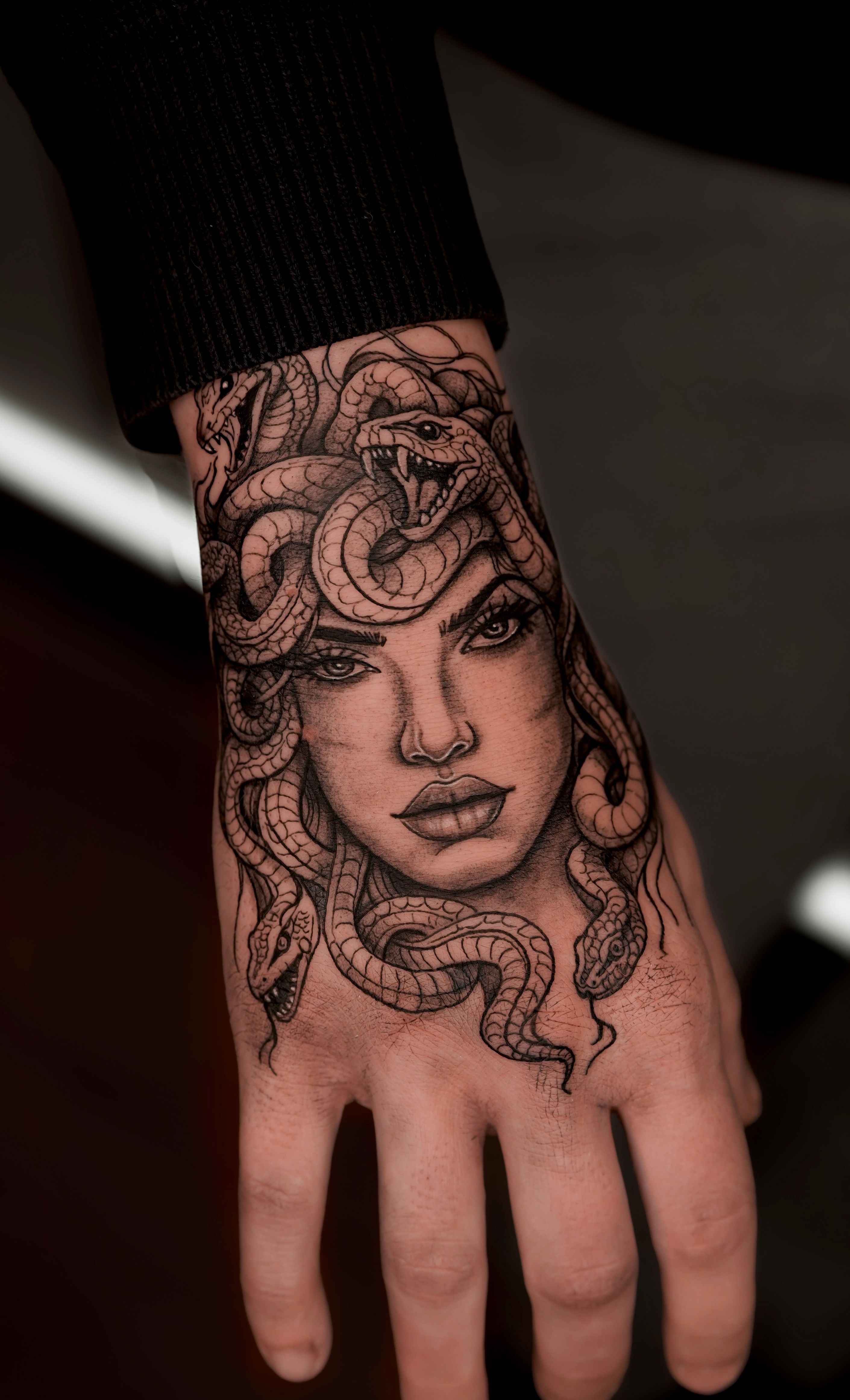
Hands and fingers are a different story. The black and grey Medusa hand piece in the portfolio demonstrates that beautiful realism on hands is achievable. But it requires the client to understand that friction from daily use will wear the finest details faster than on protected placements. Touch-ups become part of the long-term plan.
How Lisbon's climate factors into healing
Lisbon's humid summers help prevent the skin from drying out too aggressively during the first healing week. That's genuinely useful. But the heat also encourages sweating, which can loosen the thin layer of fluid and early scabbing that protects fresh ink during the first four days.
Sun exposure is the bigger concern. The UV index near Bairro Alto, Príncipe Real, or the coastal areas around Cascais regularly climbs high enough to accelerate fading in realism's grey mid-tones, which are the most vulnerable part of the tonal range. Keep fresh work covered for the first four weeks minimum, and apply a broad-spectrum SPF 50 after the piece is fully healed.
- Avoid direct sun on fresh work for at least four weeks
- Use a thin layer of fragrance-free moisturiser twice daily during the peeling phase
- Skip tight clothing that rubs the tattooed area, especially on summer cobblestone walks through Alfama
- Apply SPF 50 consistently once healed, particularly on visible placements like forearms and hands
- Stay out of the sea and public pools for a minimum of three weeks
What to Bring to Your Consultation
Arriving well-prepared makes a real difference to the quality of a realism consultation. The more information you bring, the better the artist can plan the design around your specific skin and placement.
- High-resolution reference images, ideally the original file or at least 300dpi quality. Low-resolution screenshots obscure the detail the artist needs to evaluate.
- A clear sense of placement and rough size in centimetres. "Something on my arm" is a starting point; "roughly 12cm tall on the outer upper arm" is something the artist can work with directly.
- Photos of your skin tone in natural daylight, unfiltered. Edited photos misrepresent the warmth and depth of your complexion, both of which affect how the artist maps tonal values.
- An honest account of how your skin heals. If you tend toward raised scarring or have any keloid history, say so before the session, not after.
If you're considering a smaller-scale piece, it's worth reading about how micro realism differs from standard realism before your consultation. The distinction affects which reference images are actually usable at a small scale. Finding the best realism tattoo artist in Lisbon for your specific concept starts with that kind of informed conversation. A realism tattoo studio built around these styles will welcome the preparation rather than find it unnecessary.
Frequently Asked Questions
How long does a realism tattoo take to complete?
A palm-sized realism piece typically takes one four-to-six-hour session. Full portrait sleeves or back pieces are split across multiple sittings, often four to eight sessions spaced six to eight weeks apart. Rushing saturation layers produces flat, muddy results, so pacing the work protects the final quality.
Does realism work well on darker skin tones?
Yes, but the approach shifts. On deeper skin tones, the artist leans on contrast between dark and light values rather than relying on the white highlights that anchor lighter-skin realism. An experienced realism artist adapts their tonal strategy to your specific skin. It is not a one-size template, and the consultation is where that adaptation gets mapped out properly.
How do I care for a realism tattoo during Lisbon's hot summers?
Keep the piece out of direct sun for the first four weeks minimum. Lisbon's humidity helps prevent over-drying, but sweat can loosen early scabbing. Use a thin layer of fragrance-free moisturiser twice daily, avoid the beach and public pools, and skip Alfama's cobblestone walks in tight clothing that rubs the freshly tattooed area.
Can a small realism tattoo hold as much detail as a large one?
Not equally. Micro realism compresses the detail into a smaller canvas, which demands finer needles and tighter tonal control. Some elements that read clearly at 15cm simply disappear at 5cm. A good consultation will tell you exactly what is achievable at your chosen size before any needle touches skin, which is why arriving with clear sizing expectations matters.
What's the difference between realism and micro realism?
Realism pieces are typically hand-sized or larger, giving the artist room to build full tonal ranges and fine textures across a generous canvas. Micro realism fits a similarly photorealistic image into a much smaller space, often under 6cm, using ultra-fine needles and tighter ink placement. The intent is the same; the technical constraints are significantly tighter and less forgiving of any variation.