What You're Really Searching For
When someone types "realism tattoos near me" into a search bar, they're not just looking for the closest studio with a machine. They want proof of skill. Realism is one of the most technically demanding tattoo styles in existence, and the gap between an artist who lists it as a service and one who can genuinely deliver it is wide.
Proximity matters, of course. But proximity to the wrong skill set is worse than traveling across Lisbon to find the right one. This guide will show you how to judge photorealistic work honestly, what the process actually involves, and what clients here should know before they book.
What Realism Tattoos Actually Are
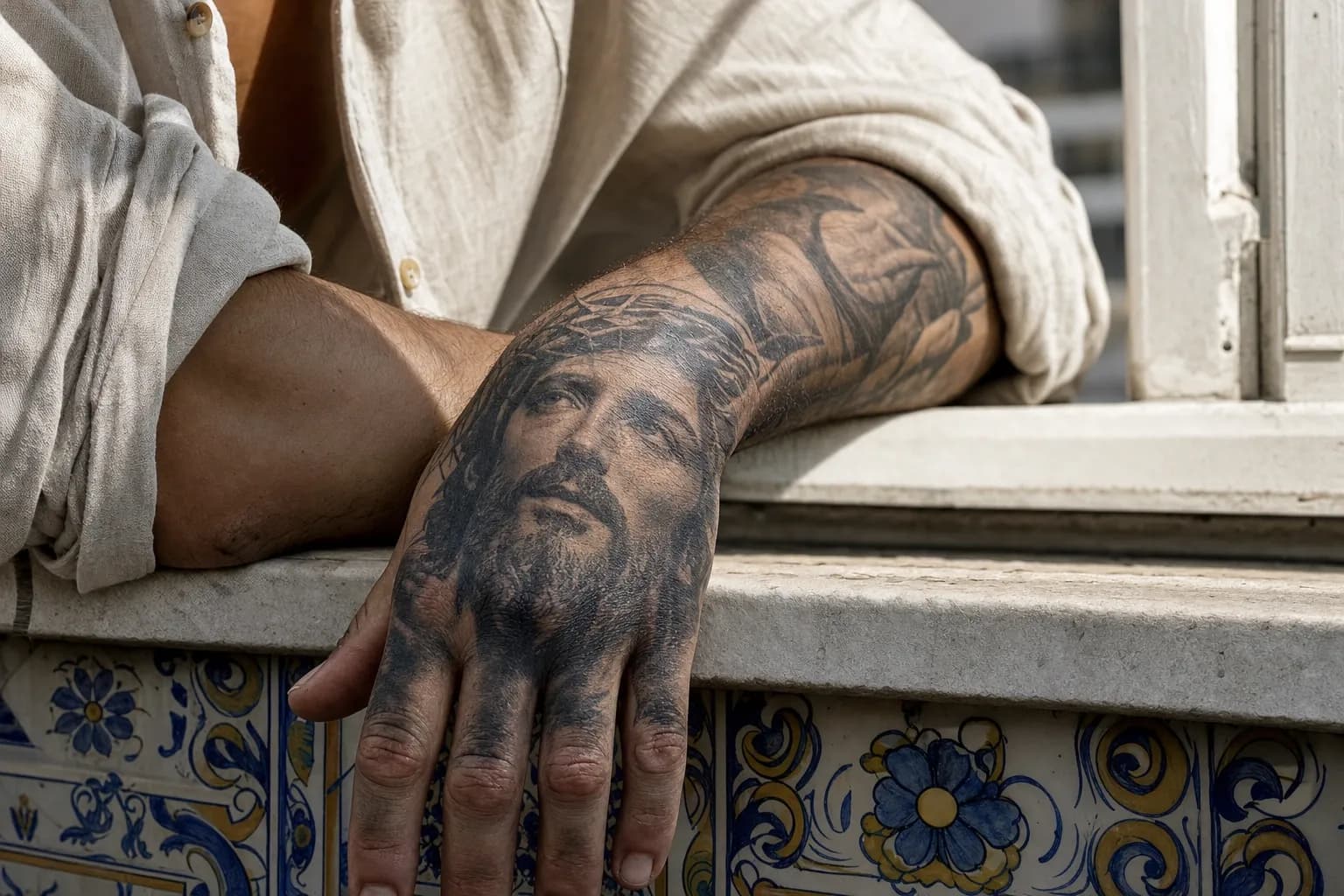
Realism in tattooing means one specific thing: replicating three-dimensional light, shadow, and texture on a two-dimensional surface. The goal is an image that reads like a photograph embedded in skin. Portraits, nature studies, classical sculpture references, emotionally charged scenes from a person's life. These are the subjects that draw people to the style.
Photorealistic tattooing emerged seriously in the 1990s, when needle technology and ink formulation improved enough to allow genuine tonal range. Before that, the subtlety of gradient shading that realism requires simply wasn't achievable consistently. Today, in the hands of a specialist, the results can be extraordinary.
Black and Grey vs. Colour Realism
The two main branches work differently at a technical level. Monochromatic realism (working only in black, grey tones, and skin) uses ink dilution to build tonal range. Colour realism layers pigment to achieve warmth, depth, and optical mixing. Different needle groupings suit each approach, and most artists lean strongly toward one or the other. The studio works primarily in the monochromatic range, where the control of shadow and gradient is at its most precise.
Micro Realism: the Same Challenge, Smaller Canvas
Some clients want the photorealistic effect at a small scale. That's where micro realism comes in. Every technical demand of full-scale realism applies, and then the artist must compress it into a piece that might be 4-6 centimetres across. There's no margin for error. The studio takes this subspecialty seriously, and you can see what that looks like in the Creation of Adam micro realism arm tattoo.
The Craft Behind a Photorealistic Tattoo
Understanding how a realism tattoo is built helps you judge whether an artist is actually equipped to make one. It also explains why the process feels different from simpler styles.
Why the Reference Image Matters So Much
A realism piece is only as strong as the reference it's built from. A flat, evenly lit photograph gives the artist almost no tonal contrast to translate into skin. Strong directional light. Shadow falling clearly on one side of a face, for example. Is the raw material the artist works with. Bring the highest resolution version you have. Then bring a backup.
Needle Groupings and Ink Dilution
Two tools define realism shading: magnum needles and diluted ink. Curved magnums (sometimes called soft-edge magnums) are fan-shaped groupings of 7 to 15 needles curved slightly at the tips. They allow the artist to deposit ink in smooth, blended passes rather than hard lines. Stacked magnums are a tighter, flatter variant used for packing denser mid-tones. Neither substitutes for the other.
Ink dilution builds the tonal range. The artist mixes undiluted black ink with distilled water or witch hazel at varying ratios to create a palette of greys. From near-transparent washes for the lightest values to full-strength black for the deepest shadows. Witch hazel thins the mix slightly differently than distilled water, producing a marginally slower ink flow that some artists prefer for very fine tonal work. The result, when done correctly, is a smooth gradient with no visible banding (those tell-tale stripes of flat tone that signal poor technique).
Stencil Precision and Skin Mapping
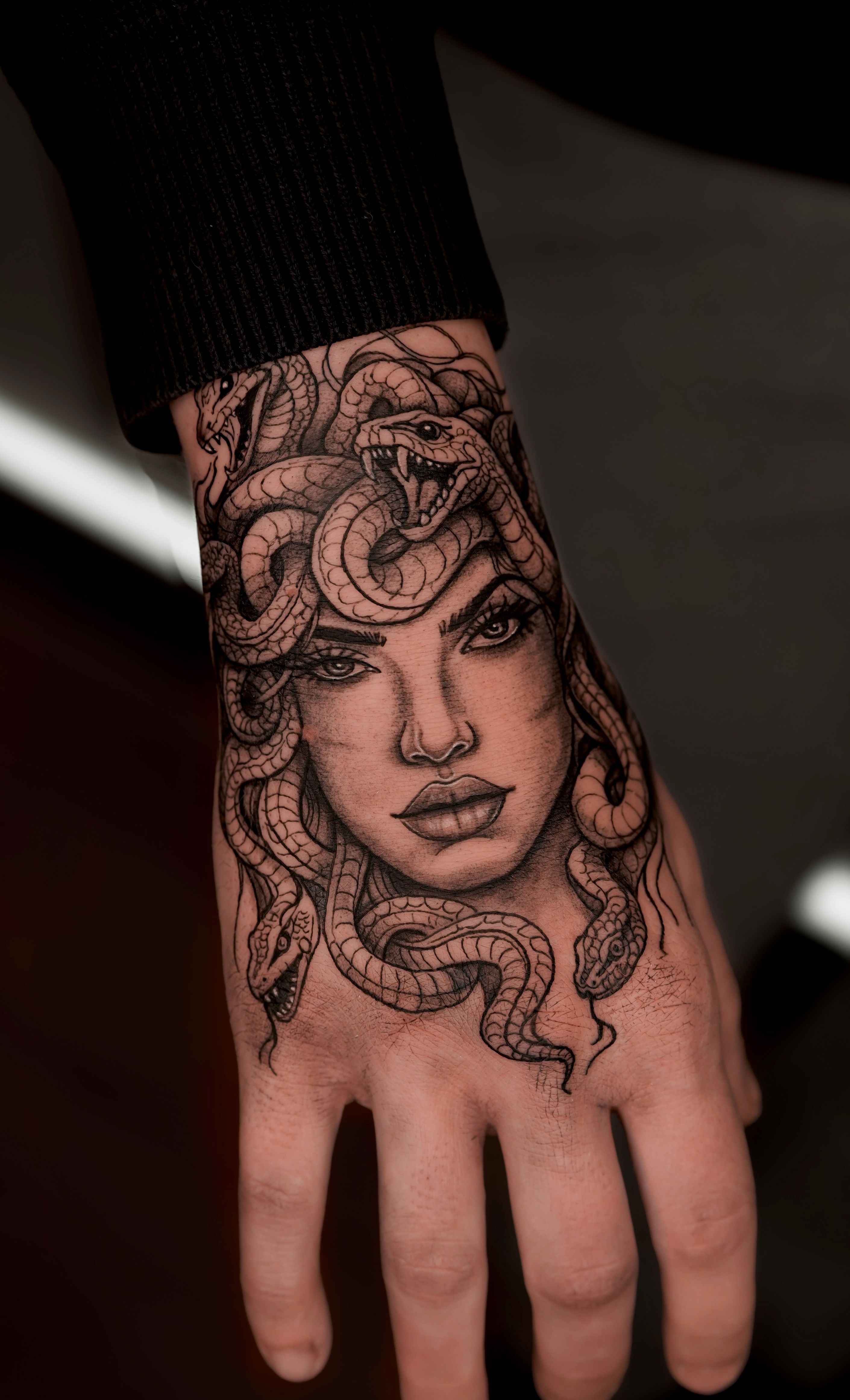
If a stencil sits 2mm off-centre on a portrait's eye placement, you'll see it every time you look at the finished piece. Stencil placement in realism is not a quick step. The artist maps the design against the natural contours of the placement area before a single needle touches skin. A back offers a relatively flat, stable canvas. A hand does not. Knuckle movement, skin tension, and natural wrinkling all affect how the image settles long-term.
Healing adds another layer of complexity. Realism tattoos peel in visible layers during the first two weeks, and the mid-tones often look patchy and uneven before the skin fully settles. That's not a sign something went wrong. The dermis takes 6 to 8 weeks to stabilise, and only at that point does the finished result become readable. Healed work is the only honest measure of quality.
How the Studio Approaches Realism in Lisbon
The studio's realism tattoo service is built around specialisation, not generalism. The artist does not take commissions in tribal, watercolour, or traditional styles. That's a deliberate choice. Depth in a narrow range produces better results than breadth across many.
The Consultation Process
Every realism project begins with a conversation about reference images, placement, skin type, and lifestyle. Sun exposure matters more than most clients realise. Lisbon's summers are intense, particularly along the Tagus waterfront and out at Cascais. UV exposure in the first four weeks after a session can seriously damage healing ink. Clients who spend time outdoors in July and August need a realistic aftercare plan, not just good intentions.
Skin tone also shapes how a piece reads at a distance. Lighter skin holds certain tonal separations more easily; darker skin tones require adjustments in value contrast to maintain the illusion of depth. The studio discusses this during consultation, not after the fact.
Combining Realism with Geometry or Fineline
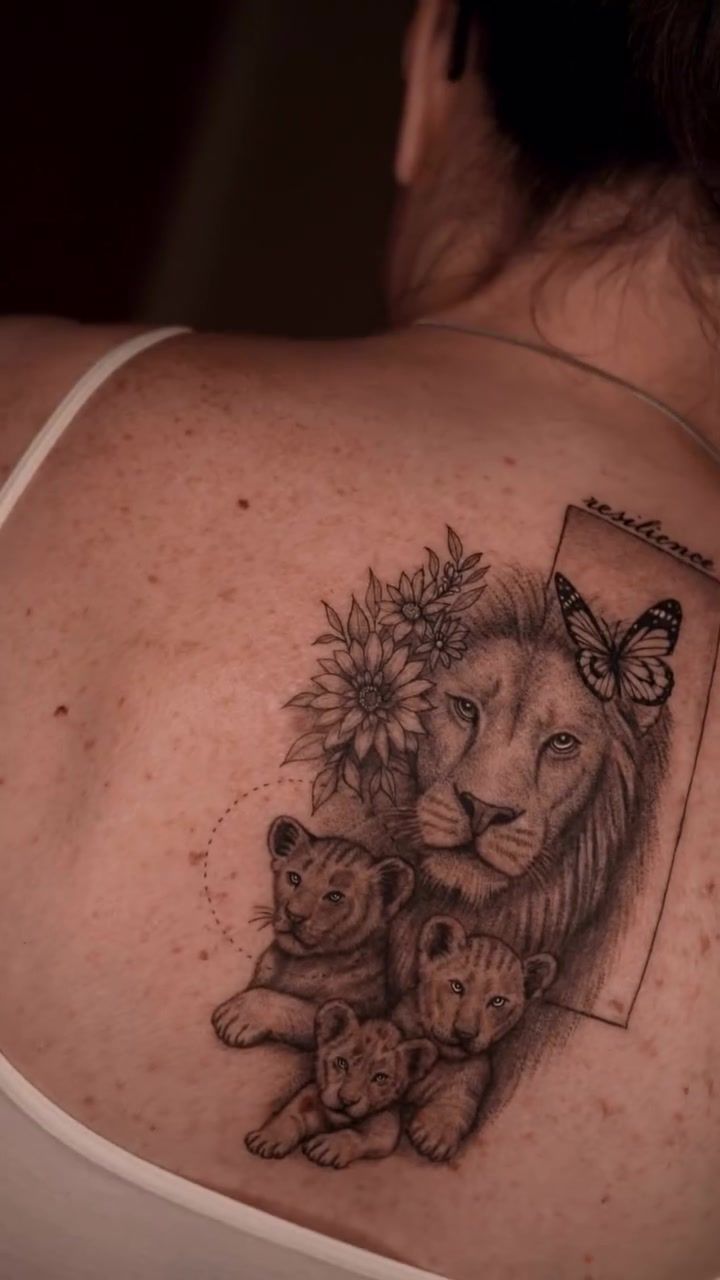
Some of the studio's most considered work sits at the intersection of styles. A geometric frame around a photorealistic subject, or fine line botanical details surrounding an animal study, creates strong compositional structure that a floating realism subject can sometimes lack. The key is designing both elements together from the beginning. The angel and geometry memorial thigh piece shows what that integration looks like when it's planned correctly.
"Realism is a style that exposes every shortcut. The skin will show exactly what you put in. And exactly what you left out."
Placement, Sizing and Session Planning
Size is not just an aesthetic choice in realism. It's a technical one. Portrait faces need at least 8 to 10 centimetres in their longest dimension to hold shadow gradients. Below that threshold, features compress as the skin settles and the likeness becomes unreliable. Nature scenes and animal subjects can sometimes work at slightly smaller scales, but the studio will advise the minimum viable size during consultation based on your specific design.
Before booking, think through the placement and time commitment:
- Back and torso pieces offer the flattest, most stable canvas for large-scale realism work
- Upper arms and thighs are strong secondary options. Enough surface area for mid-sized portraits
- Hands, feet, and necks are high-movement areas where realism detail degrades faster with wear
- Sun-exposed areas. Shoulders, forearms, shins. Require diligent SPF protection post-healing to preserve fine tonal gradients
| Body Area | Recommended Minimum Size | Typical Session Length | Multi-Session Note |
|---|---|---|---|
| Full back | N/A (large format by nature) | 4-6 hours per session | 4-8 sessions, 6-8 weeks between each |
| Sleeve (arm) | N/A (large format by nature) | 4-5 hours per session | 3-6 sessions depending on complexity |
| Thigh | 10cm minimum for portrait work | 2-4 hours | 1-2 sessions for mid-sized pieces |
| Upper arm | 8-10cm for portrait faces | 2-3 hours | 1-2 sessions typically |
| Hand | 5-7cm practical maximum | 1.5-2.5 hours | Touch-up session likely after healing |
For your session, bring the following:
- High-resolution reference photos. The higher the file size, the better the tonal detail the artist can extract
- Well-rested skin. Avoid sunburn, and don't moisturise heavily on the morning of the session
- A meal before you arrive. Longer sessions are physically demanding
- Something to occupy your attention during the session if you know you find stillness difficult
Aftercare in Lisbon's summer months deserves specific mention. High ambient humidity slows the surface dry-down that helps a healing tattoo lock in cleanly. Some clients do well with a light, breathable wrap for the first 24 hours; others heal better with dry healing from the start. The studio will recommend an approach based on placement, skin type, and the time of year.
How to Judge Realism Tattoo Quality Before You Book
Fresh tattoos always look sharper than healed ones. The ink is sitting just under the surface, the skin is slightly raised, and the contrast is at its maximum. Healed work is where the truth is. Ask any artist you're considering to show you photographs of work that has fully settled. At least six to eight weeks post-session.
When you look at healed realism, check for these specific things:
- Gradient smoothness: visible banding (flat stripes of tone with no transition) signals poor magnum technique
- Likeness from distance: a portrait should hold the subject's recognisability from one metre away, not just in a close-up macro shot
- Edge control: the transition from dark shadow to mid-tone to highlight should feel gradual, not stepped
- Consistency across the whole piece: one well-shaded section surrounded by flat areas suggests the artist struggled for control
Also pay attention to what the artist's portfolio is actually full of. A gallery heavy with traditional or neo-traditional work is not evidence of realism capability, even if a few realism pieces appear. The styles use entirely different tools, techniques, and visual logic. Specialisation matters. You can see how the studio approaches craft specificity across different styles in the lettering guide, which applies the same principle to typography work.
A realism tattoo artist in Lisbon worth booking will show you healed portfolio work without hesitation. They'll discuss your reference material critically, tell you honestly if your idea won't scale down to your preferred size, and turn away commissions that don't suit their skill set. That last point is particularly important. Saying no to the wrong projects is what keeps the right ones strong.
Frequently Asked Questions
How big does a realism tattoo need to be to hold its detail?
For portrait faces, aim for at least 8 to 10 centimetres in the longest dimension. Below that, shadow gradients compress and facial features blur as the skin settles. Nature scenes and animal pieces can work slightly smaller, but the studio will advise the minimum viable size during consultation based on your specific design.
How many sessions does a realism back piece take?
A full back piece in realism style typically requires four to eight sessions of four to six hours each, with a healing gap of six to eight weeks between them. The exact number depends on complexity, the amount of shading required, and how your skin responds. Rushing sessions damages the integrity of the gradients.
Does Lisbon's climate affect how a realism tattoo heals?
Yes, noticeably. Lisbon's humid summers slow the surface drying that helps a tattoo lock in. Sun exposure on the Tagus waterfront or out at Cascais is also a real risk in the first four weeks. Clients booking summer sessions should plan to keep the piece covered and out of direct sun while the skin fully closes.
Can realism be combined with geometric or fineline elements?
Absolutely, and it's one of the more interesting directions the studio explores. A geometric frame around a photorealistic portrait, or fineline botanical details surrounding a realistic animal study, can give a piece strong compositional structure. The key is designing both elements together from the start rather than adding one as an afterthought.
How do I choose a good reference image for a portrait tattoo?
High resolution and strong directional lighting are the two non-negotiables. A photo taken in flat, even light gives the artist almost no tonal contrast to work with. Ideally, bring a photo where shadow falls clearly on one side of the subject's face. Multiple angles help too. The better the reference, the stronger the likeness.