Why Portrait Tattoos Demand a Different Kind of Research
A landscape tattoo can shift slightly from the design and still read beautifully. A portrait cannot. When the subject is a recognisable face. A grandmother, a child, a cultural icon. Every proportion matters. If the nose sits two millimetres too wide, you'll see it every single time.
Most tattoo regret centres on portrait work placed with the wrong artist. The style leaves no room for vagueness. That's why searching for realistic portrait tattoo artists near me deserves more than a quick scroll through Instagram and a price comparison.
Think of this search as a craft evaluation. You're looking for evidence of specific technical skill, not just a pleasant aesthetic. The rest of this guide walks you through exactly what that evidence looks like.
What Photorealistic Portrait Tattooing Actually Is
The techniques involved: tonal mapping, gradient shading, skin-tone layering
Tonal mapping is the core skill in portrait realism. It means reading the values of light and shadow in a reference photograph and translating them directly into needle pressure and ink density on skin. Where the reference shows a deep shadow under a cheekbone, the artist packs pigment heavier. Where light catches the brow, the needle barely grazes the skin, leaving the dermis lighter.
Gradient shading connects those tonal zones without hard edges. On paper, blending is straightforward. On skin, the artist works against a surface that bleeds, swells, and absorbs ink unpredictably. Getting a smooth gradient across a jaw or temple takes years of repetition to control reliably.
Skin-tone layering comes last. Even in black and grey work, the artist builds multiple diluted washes of ink rather than laying down a single flat black. Each pass adds depth. The result, when done correctly, reads as three-dimensional rather than flat.
Black and grey vs colour realism. And why black and grey dominates portrait work
Colour portrait work is technically demanding in a different way. It requires precise colour theory knowledge, and pigments fade at different rates on different skin tones. A warm ochre that reads correctly on fair skin can look muddy on deeper tones within a few years.
Black and grey realism is more forgiving of Lisbon's humid summer healing conditions. Diluted ink settles into the dermis with less risk of the colour shift that affects pigmented work. It also ages more gracefully across a wider range of skin tones. Most experienced portrait artists working today default to black and grey for exactly these reasons.
For smaller pieces, there's also the micro realism service, which uses finer needles and a tighter tonal range to compress portrait detail into a smaller canvas. It's a genuinely different technique, not just a scaled-down version of full realism.
How to Evaluate a Portrait Artist's Portfolio Before You Book
Portrait tattoo quality has three visible markers. Learn to spot them and you'll make a far better decision about who to trust with your piece.
The skin texture test
Look closely at the skin on the tattooed subject. Not the client's skin, but the depicted face. Do you see believable pores? Hair strands that read individually rather than as a solid mass? A catch-light (the small bright reflection) in the eye that makes it look wet and alive? These three elements are where portrait realism either convinces or fails completely.
Rendered individual hair strands require a steady hand and a needle configuration that deposits ink in fine, controlled lines. The catch-light in an eye is tiny. Often just a few millimetres of preserved skin tone with ink packed tightly around it. If an artist consistently nails these, the technical foundation is solid.
Checking healed work, not just fresh shots
Fresh tattoo photographs always look sharper than the healed result. The skin is slightly raised and reflective, and the ink sits close to the surface. Six to eight weeks later, as the tattoo settles into the dermis, some definition softens. That softening is normal. But with weaker technique, fine detail disappears and tonal gradients muddy.
Ask specifically for healed examples before you commit. Ideally, photographs taken six months or more after the session. An artist who resists this request, or who simply doesn't have healed examples to share, is telling you something important.
Consistency across different faces and skin tones
One strong portrait in a portfolio could be a fortunate combination of reference quality, placement, and skin type. Consistent strong portraits across different subjects, different placements, and different skin tones confirm that the skill is repeatable. An artist who only posts one or two portrait examples may be experimenting with the style rather than specialising in it.
For a deeper look at what separates strong portfolio work from surface-level impressiveness, the guide on what to look for in a portrait tattoo artist in Lisbon covers the evaluation process in more detail.
How the Studio Approaches Portrait Work in Lisbon
The studio's approach to realism tattooing at the studio starts well before anyone picks up a needle. Portrait work, more than any other style, lives or dies on the preparation that happens first.
The consultation: starting from your reference image
Every portrait project begins with a consultation focused on your reference photographs. The artist evaluates the quality of light and shadow information in the image, discusses how the subject's features will translate to skin at the chosen scale, and considers your skin tone's effect on tonal contrast. This conversation shapes the entire design approach before a single line is sketched.
Reference quality matters enormously. A low-resolution phone photograph taken in dim light gives the artist almost nothing to map from. High-resolution images in natural light give maximum tonal data, which translates directly to depth and believability in the finished piece.
Stencil placement and why it matters more for portraits than any other style
The stencil is the transfer that marks the design onto skin before tattooing begins. For geometric work or florals, minor placement variance is forgivable. For a portrait, it is not. If the stencil sits two millimetres off-centre on a symmetrical face, you'll read that asymmetry every time you look at the piece.
The studio takes stencil placement seriously on every piece, but especially on portraits. Time spent repositioning before the first line is always time well spent.
Session length and what to realistically expect
A palm-sized portrait typically needs a three to four hour session to reach a finished state. That window allows for the slow, deliberate layering that builds tonal depth. Rushing this stage produces flat results.
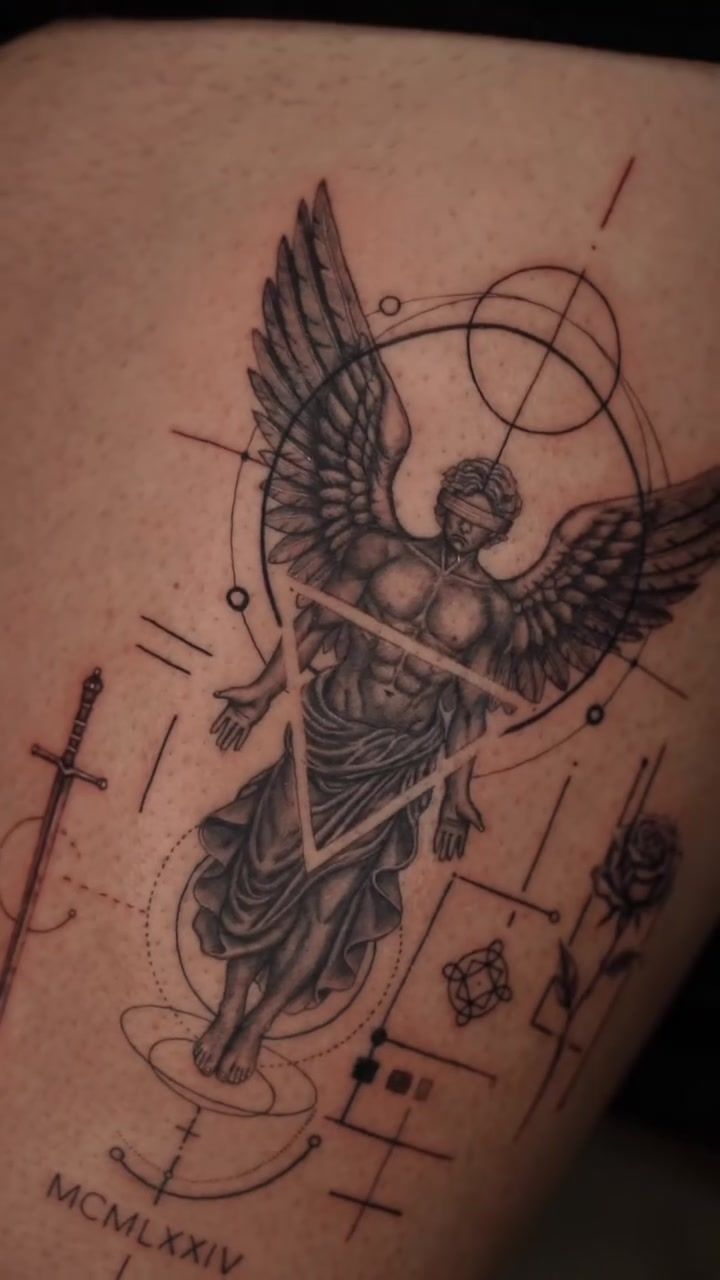
Larger compositions, like back panels or sleeve elements incorporating a portrait, are broken into multiple sessions spaced six to eight weeks apart. That spacing lets each area heal fully before the artist works adjacent to it. It's a slower process, but the healed result is worth the patience. For a sense of how large-scale multi-session realism is structured, the full back piece project in the portfolio documents exactly that process from concept through the first session lines.
"The reference photograph is half the tattoo. Bring me something with real light and shadow in it, and I have everything I need to build depth. Bring me a filtered social media image and we're both working with one hand behind our backs."
Placement, Size, and Healing in Lisbon's Climate
Which placements work best for portrait tattoos
Flatter, lower-movement areas give portrait detail the best chance of holding long-term. The thigh, upper arm, chest, and back are the most forgiving placements. Skin in these areas moves less during daily life and presents a relatively even surface for tonal gradients.
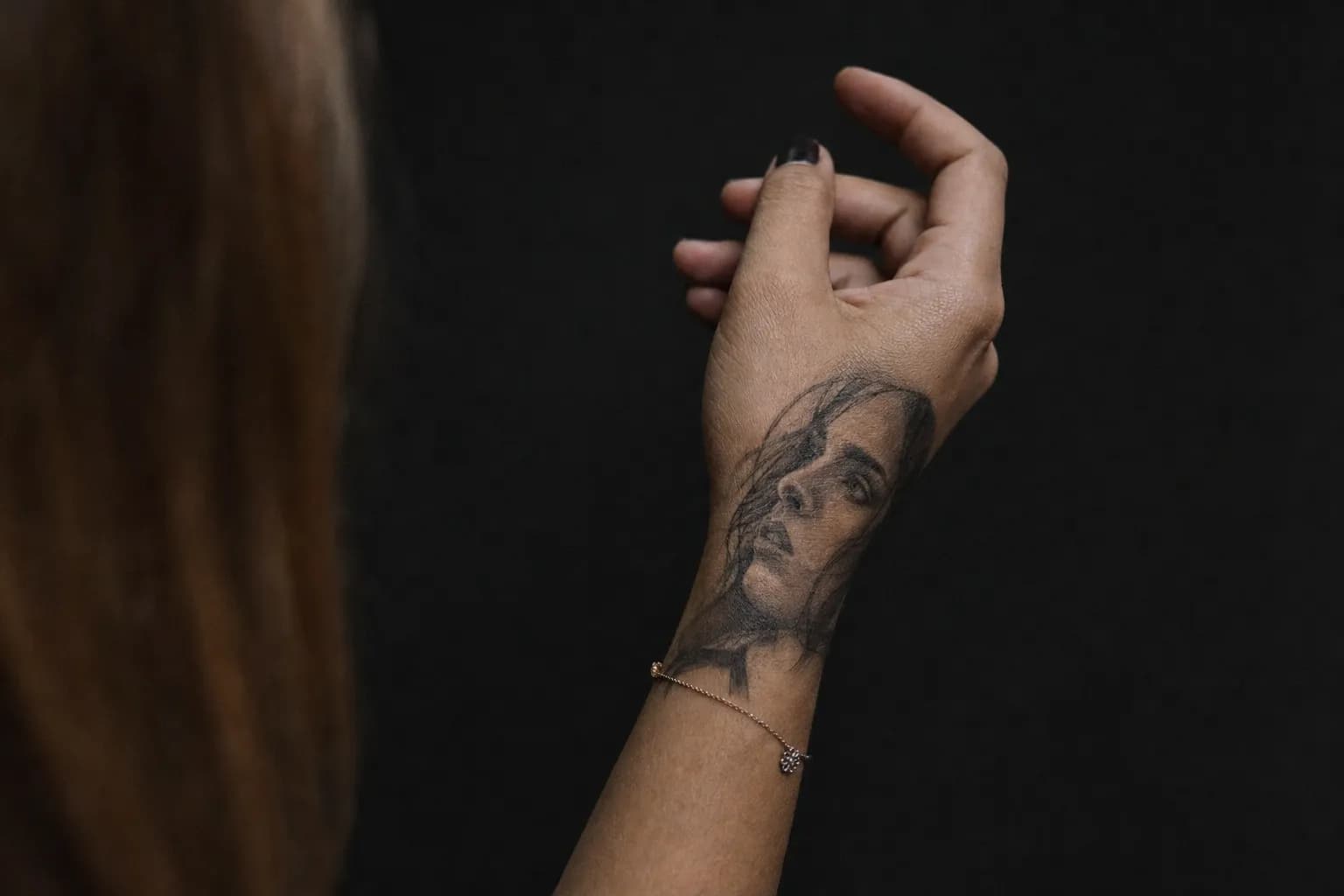
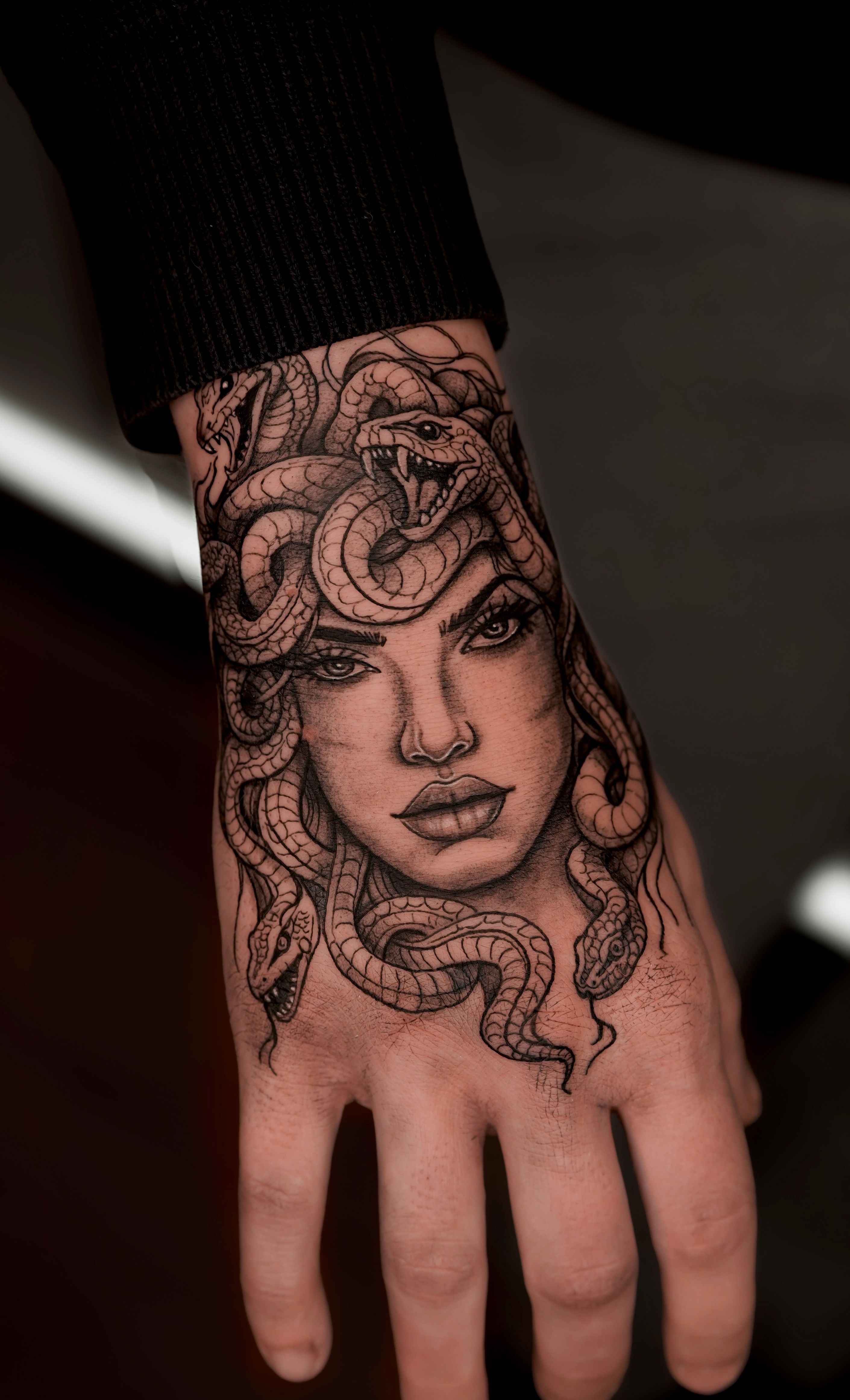
Hands and necks are higher-risk for portraits specifically. Skin in both areas moves constantly, ink migration is faster, and the surface contours make stencil alignment more difficult. This doesn't mean it can't be done. this black and grey Medusa hand piece is evidence that a skilled photorealistic tattoo artist in Lisbon can produce detailed work even on a demanding placement. But it does mean the artist needs to account for those challenges in the design from the start.
Healing considerations in Lisbon's humid summers
Lisbon's July and August humidity slows surface healing compared to the drier winter months. The skin stays slightly more hydrated, which is good for ink retention but can extend the period when the tattoo is vulnerable to friction and sun damage.
A breathable wrap is better than heavy occlusive dressings in warm weather. Occlusive film traps moisture against the skin, which can cause ink to lift in humid conditions. Keep the piece out of direct sunlight for at least four weeks. Lisbon's sun is strong from March onward, not just midsummer. And avoid the sea or a pool for the first three weeks. Salt water and chlorine both affect a healing surface significantly.
| Placement | Typical surface healing window | Key aftercare note |
|---|---|---|
| Thigh | 2 to 3 weeks | Watch for clothing friction; loose trousers help |
| Upper arm | 2 to 3 weeks | Avoid tight sleeves; sun exposure is the main risk |
| Back / shoulder | 3 to 4 weeks | Sleeping position matters; avoid lying directly on fresh work |
| Chest | 2 to 3 weeks | Bra or tight sports tops can cause friction. Plan accordingly |
| Hand | 3 to 5 weeks | High-movement area; moisturise more frequently, avoid harsh soaps |
| Neck | 3 to 4 weeks | Collar friction and sun exposure are the two main concerns |
Practical Steps: From Finding an Artist to Sitting in the Chair
The process of finding realistic portrait tattoo artists near you in Lisbon becomes much clearer when you break it into concrete steps. Here's the sequence that gives you the best result.
- Gather three to five high-resolution reference images in natural light, ideally showing your subject from slightly different angles.
- Review the artist's portfolio specifically for portrait work. Not just realism in general. Check for rendered hair, skin texture, and catch-lights in eyes.
- Ask the artist directly for healed examples of portrait pieces, ideally photographed six months or more after the session.
- Book a consultation before a tattoo session. A serious artist will require this for portrait work anyway.
- Confirm the artist specialises in realism specifically. An artist who advertises all styles rarely has the depth of repetition that portrait realism demands.
- Agree on scale, placement, and reference selection at the consultation before any deposit changes hands.
Understanding what elite photorealistic work actually requires at a technical level will help you ask better questions during that consultation and recognise genuine expertise when you see it.
What to bring to your consultation
- Your reference photographs, printed or on a tablet screen at full resolution (not a small phone screen)
- A clear sense of the placement you want, and whether you're open to suggestions
- Questions about healed work, session length, and the artist's specific experience with your subject type (person, animal, cultural figure)
- Realistic expectations about size. Ask the artist directly what minimum scale they recommend for the detail you want to preserve
- Openness to the artist's honest assessment of your reference quality
Portrait tattoo quality in Lisbon varies widely across studios. The difference between a piece that reads as a recognisable, emotionally resonant image and one that simply doesn't look like the subject comes down entirely to the depth of the artist's specialisation in this style. At a realism tattoo studio in Lisbon focused on this work, that specialisation is built into every stage of the process, from the consultation conversation through to the healed result.
Frequently Asked Questions
How do I know if a portrait tattoo artist is actually good?
Look for rendered skin texture, believable individual hair strands, and a catch-light in the eye of the subject. These three elements are where portrait work either convinces or fails. Then ask specifically for healed examples, not just fresh shots. A portfolio full of only recently completed work tells you very little about how the realism actually settles into skin over time.
How big does a portrait tattoo need to be to hold detail?
A recognisable single-subject portrait generally needs at least a palm-sized surface area to hold fine detail long-term. Smaller is possible in micro realism, but that requires an artist who genuinely specialises in the technique. Going too small with a standard realism approach means fine detail crowds together and blurs within a few years as the skin naturally shifts.
How long does a realistic portrait tattoo take to heal in Lisbon?
Surface skin closes in roughly two to three weeks. The ink fully settles into the dermis over six to eight weeks. In Lisbon's humid summer months, keep the piece out of direct sunlight and avoid the sea or pool for the first three weeks. A breathable wrap works better than heavy occlusive dressings in warm weather.
Can I get a small portrait tattoo in a micro realism style?
Yes, but only with an artist who genuinely specialises in micro realism. The technique uses finer needles, lighter passes, and a tighter tonal range than standard realism. The subject needs to be simple enough to read clearly at small scale. A full face with complex hair works better larger. A close-cropped eye or profile can read very well in a compact format.
What reference photos should I bring to a portrait tattoo consultation?
Bring three to five high-resolution images taken in natural light, showing the subject from slightly different angles where possible. Avoid heavily filtered or low-light phone photographs. The clearer the light and shadow information in your reference, the more the artist has to work with when building tonal depth and believable skin texture in the finished piece.