Why Small Tattoos Demand More, Not Less
There's a persistent assumption that small tattoos are the easier option. Book a quick appointment, sit for forty minutes, walk out. But ask any experienced artist and they'll tell you the opposite is true. Compressing a design into two or three centimetres of skin leaves no room for correction.
Fineline work uses a single-needle configuration (a 1RL needle, meaning one round liner) to draw lines as thin as a strand of hair. At small scale, a 2mm placement error on a symmetrical motif reads immediately. On a larger piece you'd never notice. On a 3cm mandala, you'll see it every single time.
Ink migration is also a real concern. That's the technical term for what happens when pigment spreads slightly through the dermis over time. Tightly spaced lines in a compact design blur faster than well-spaced lines in a larger one. The styles that handle this best. Minimalism, fineline, micro realism, and delicate floral. Do so precisely because they're built around restraint. Less ink, smarter spacing, longer-lasting results. If you're exploring why small work demands the most precision, that article goes deeper into the technical reasons.
The Styles That Work Best for Small Feminine Tattoos
Minimalism
Minimalism strips a motif to its essential shape. A single unbroken outline. A geometric form. One clean botanical element. The power comes from what's left out, not what's included. These designs read clearly at very small scale because there's nothing competing for attention.
For women considering minimalist tattoo ideas in Portugal, this style offers something rare: longevity without visual noise. A small minimalist piece placed on the inner wrist or collarbone can hold its clarity for a decade when it's executed properly. Browse the studio's minimalism tattoo service to see the range of approaches available.
Fineline
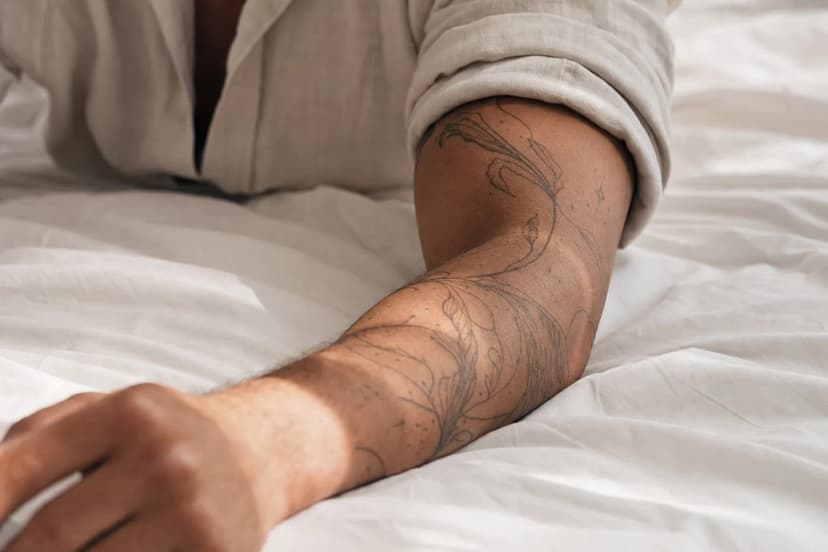
Fineline is built on single-needle precision. The lines are whisper-thin, the shading (when used) barely more than a suggestion. This is the style behind most of what people mean when they search for small feminine tattoos in Lisbon.
It rewards restraint in the design and absolute steadiness in the hand. One wobble in a 2cm piece shows. The studio's fineline work covers everything from delicate script to intricate micro-botanical compositions. If you're comparing studios, our guide on how to find a fine line tattoo artist explains exactly what to look for in a portfolio before you book.
Micro Realism
Micro realism packs photographic detail into a very small canvas. A 4cm piece can render a butterfly wing with visible vein structure, or a rose with layered petals and soft shadow. It requires a completely different needle strategy than fineline: multiple passes with varying needle sizes to build tonal depth.
Floral
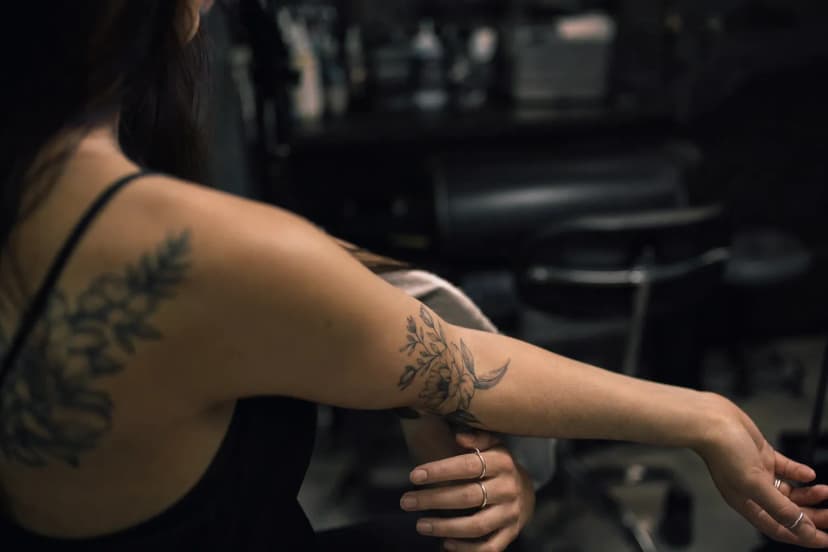
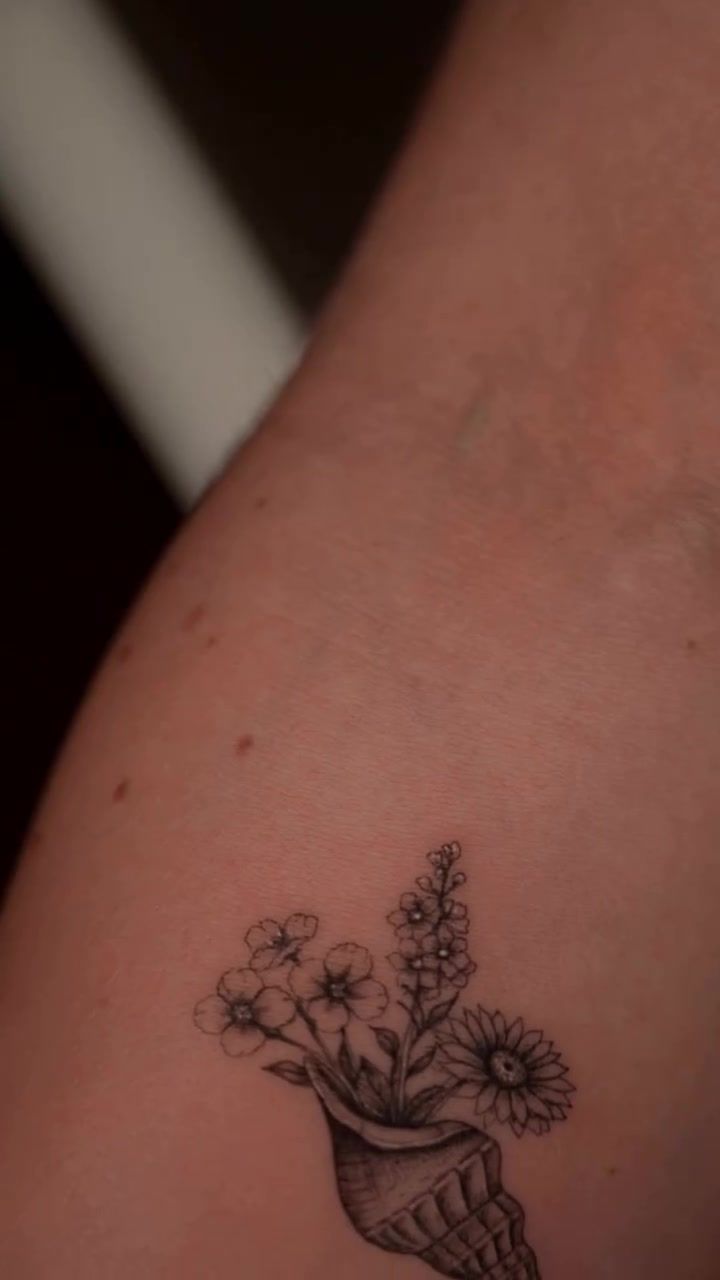
Botanical motifs follow the body's natural curves in a way few other design categories manage. A single stem along the collarbone. A small bloom behind the ear. Floral designs at small scale work best when the composition breathes. A loose arrangement rather than a dense cluster.
What not to expect: heavy black shading, complex tribal patterning, or watercolour wash effects. These approaches lose definition quickly when compressed below 5cm. They belong on larger canvases where the ink has room to do its job.
Design Ideas That Actually Hold Up Over Time
Concrete inspiration is more useful than a mood board full of vague references. Here are designs that work at small scale, age well, and translate naturally to the styles the studio specialises in.
- Passport stamp: A location stamp rendered in fine linework. The Lisbon passport stamp piece is a clean example. Minimal, readable, and meaningful without being sentimental.
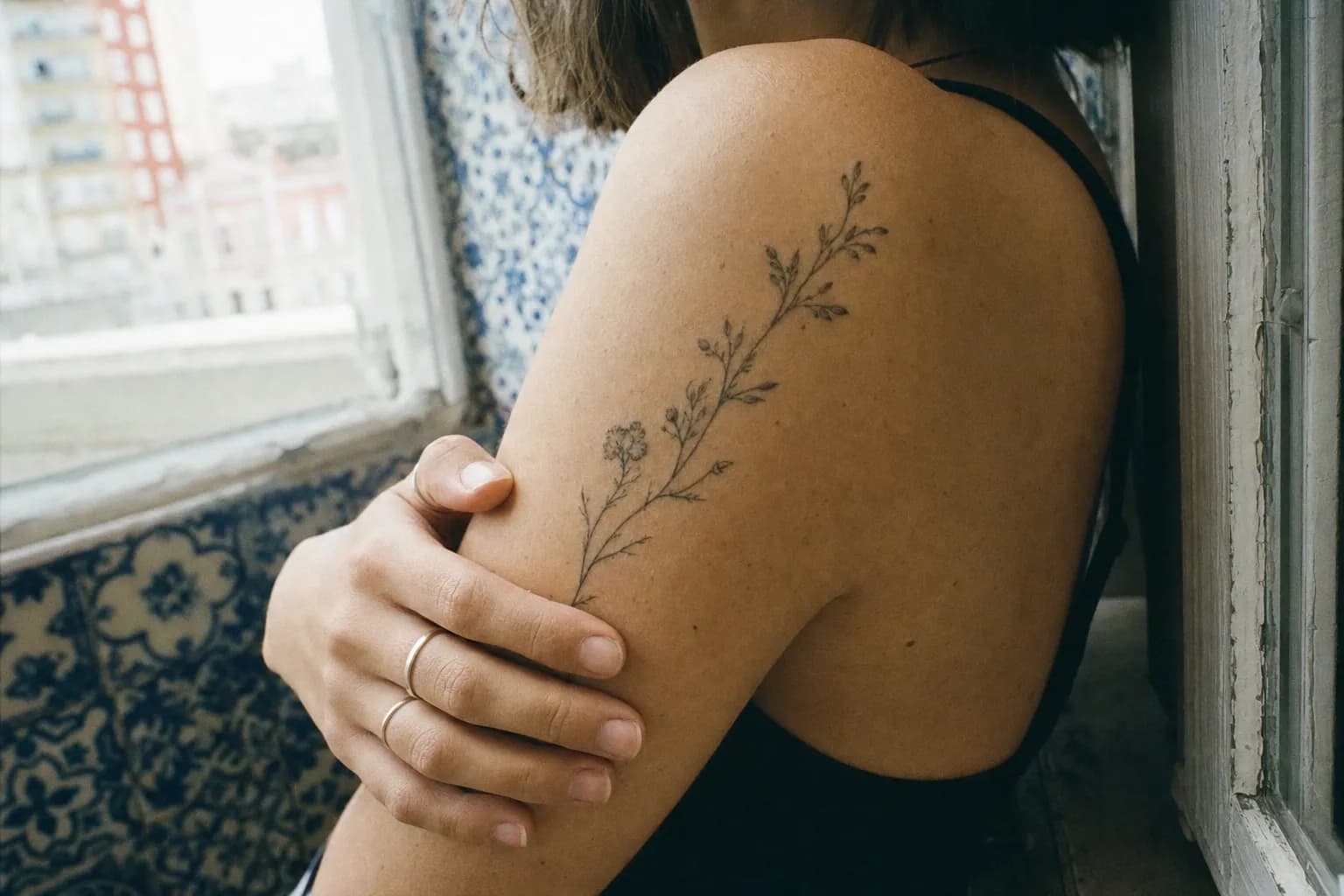
- Single botanical stem: One flower with its stem and a leaf or two. Simple enough to sit at 3-4cm without crowding.
- Celestial motif: A crescent moon, a small star cluster, or a sun with minimal rays. These read clearly even at 2cm.
- Short script phrase: Two to five words in an elegant hand-lettered style. Keep it short. Spacing between letters determines longevity.
- Conch shell or natural object: Ocean references are particularly resonant for anyone connecting to Lisbon's Atlantic identity.
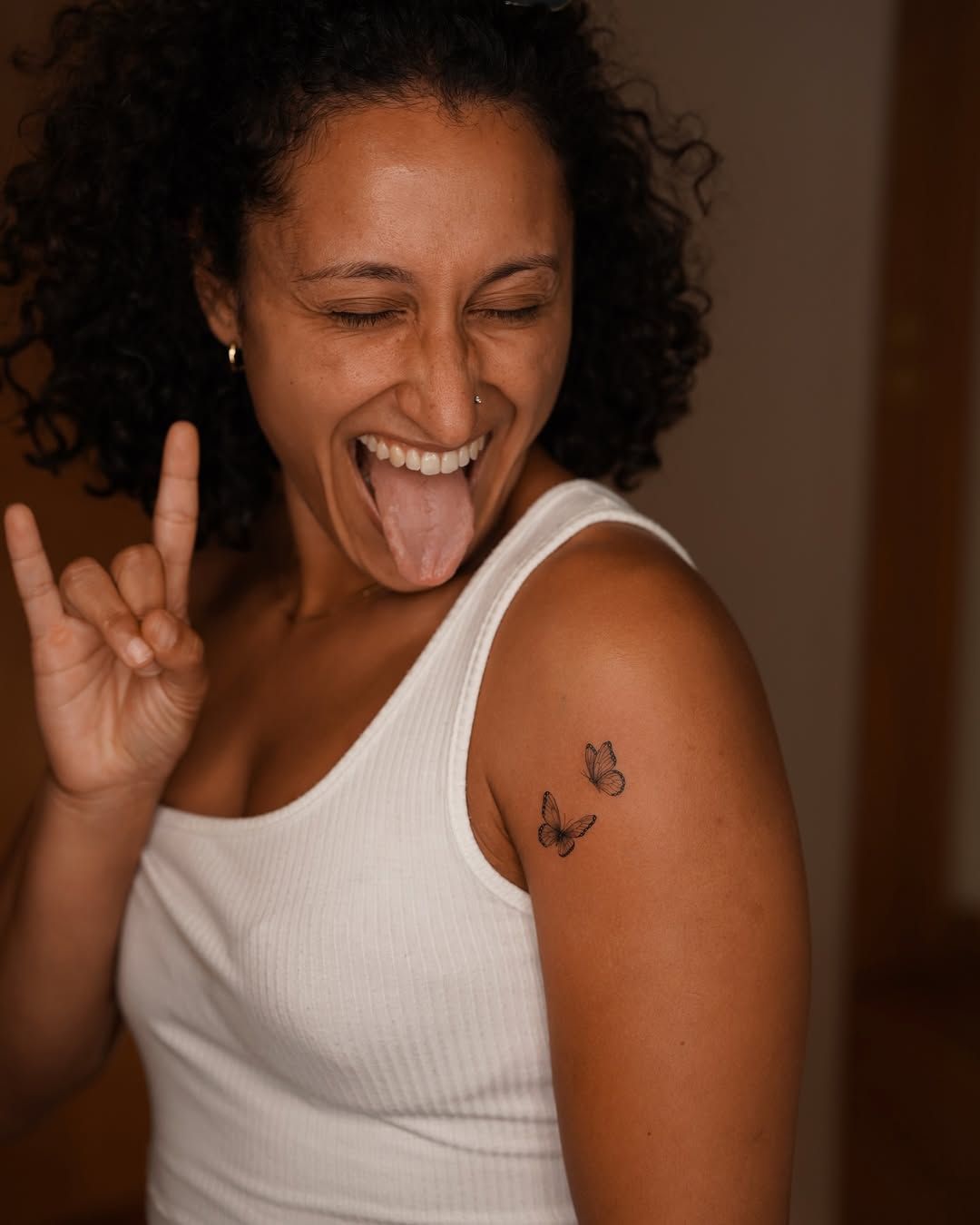
- Butterfly: A single butterfly in fineline or micro realism holds its structure beautifully on the shoulder or inner arm.
Lisbon offers its own visual language worth drawing on. The city's azulejo tile tradition. Geometric borders, repeated symmetrical forms, negative space used deliberately. Translates directly into small geometric or minimalist tattoo ideas. Alfama's rooftop silhouette, the curve of the Tagus, the Atlantic coastline running south toward Setúbal: these are all motifs that connect a piece to a place in a way that holds meaning long after a trip ends.
The reason simpler designs age better comes down to ink migration. When two fine lines sit very close together in a tiny motif, the pigment gradually spreads over years and those lines begin to merge. A single stem with generous spacing between its parts will remain crisp at year five. A dense miniature portrait, by contrast, may soften into something harder to read. Experienced tattoo artists generally recommend leaving at least 1.5mm between any two lines in a small piece to account for this.
Placement Guide: Where Small Tattoos Sit Best on the Body
Placement affects three things: how the tattoo looks immediately after healing, how it ages over years, and how comfortable the session is. For a comprehensive breakdown, the studio's placement guide for small tattoos covers each zone in detail.
| Placement | Longevity | Typical Session | Notes |
|---|---|---|---|
| Inner wrist | Good | 45-90 min | Visible, low-friction; sun exposure is the main risk |
| Collarbone | Very good | 1-2 hours | Flat surface, minimal movement; elegant for fine script or florals |
| Ankle | Moderate | 45-90 min | Some friction from footwear; heals well in open sandal season |
| Behind the ear | Good | 30-60 min | Small canvas suits micro motifs; hair contact during healing needs managing |
| Ribcage | Very good | 1.5-2 hours | Minimal friction, but clothing traps heat in Lisbon summers. Plan healing season carefully |
| Finger | Poor | 20-40 min | High skin cell turnover; fades fastest of any placement |
| Shoulder blade | Excellent | 1-2 hours | Large flat area; low movement, holds fineline detail very well |
Fingers and feet fade fastest because the skin in those areas regenerates more rapidly than elsewhere on the body. More frequent cell turnover means the ink loses definition sooner. This isn't a reason to avoid those placements, but it's worth knowing before you commit.
Lisbon's humid summers are worth factoring into your timing. A fresh ribcage tattoo under a tight waistband in August is asking for trouble. Sweat, friction, and heat all slow surface healing. The mild winters between November and February are genuinely the easiest season for healing, especially for placements that sit under clothing.
How the Studio Approaches Small Work in Lisbon
Every piece begins with a consultation. For small tattoos, this conversation is just as detailed as it would be for a sleeve. The artist reviews your reference images and distinguishes between what's inspirational and what's actually achievable at your chosen scale. Those are different conversations.
Reference images show a direction. They're not a template. If you bring in a photograph of a 6cm floral piece and want it at 3cm, the artist sketches a new composition that works at that size, borrowing the spirit of the reference rather than copying it line for line.
"A small tattoo has nowhere to hide. The stencil goes on, you look in the mirror, and if it's 2mm off-centre on a symmetric design, you'll see that for the rest of your life. We take as long as needed to get placement right before the needle touches skin."
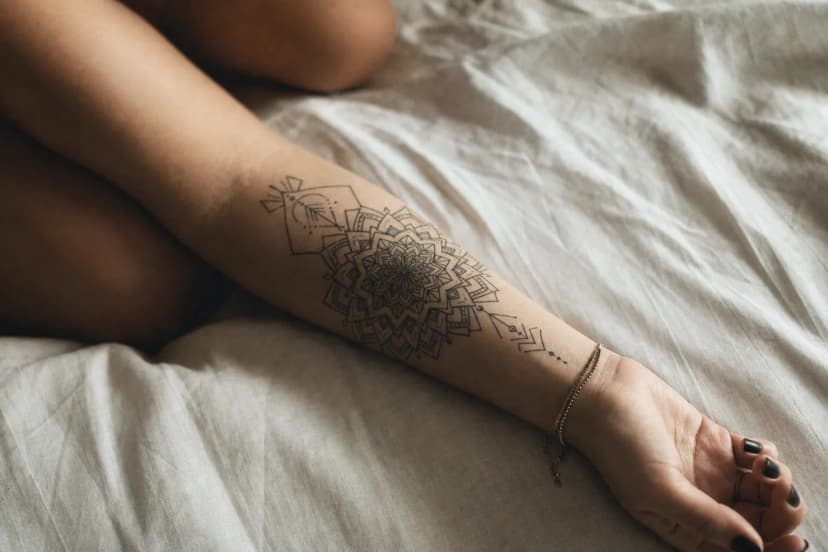
Stencil accuracy matters more at small scale than at any other. For a 3cm mandala or a small script phrase, the stencil is applied, checked against multiple angles and in natural light, and adjusted before anything is committed to skin. Sessions for small pieces typically run one to two hours, including setup and stencil time.
Aftercare in Lisbon's climate has one consistent note: keep fresh tattoos out of direct sun. The Atlantic light in this city is strong, even in spring and autumn. Sun on a healing tattoo fades pigment before it's had time to settle into the dermis. A light, breathable wrap for the first few days, followed by a fragrance-free moisturiser and SPF once healed, covers most of what you need.
What to Bring to Your Consultation
Coming prepared makes the conversation shorter and the outcome better. Here's what actually helps:
- Reference images: Bring 3-5 examples that capture the mood, style, or subject you have in mind. Screen grabs from Instagram, saved portfolio images, even a sketch on paper. All of it is useful.
- Healed examples you admire: Fresh tattoo photos look very different from healed ones. If you can find images of the same design six months after it was done, that gives a much more honest picture of how the style ages.
- Notes on placement preference: Think about visibility, how it interacts with clothing, and which side of the body feels right. Be open to the artist's input. Some placements genuinely work better than others for specific motifs.
- A clear sense of scale: Hold a coin or a business card against the area you're considering. That's roughly the canvas you're working with for a small piece.
The studio sits in central Lisbon, accessible from several metro lines without a long walk. Summer slots fill quickly. If you're visiting between June and September, book well in advance. A small minimalist or small fineline tattoo in Portugal typically fits into a single session, so a tourist visit is entirely workable as long as you plan the timing.
One practical note for visitors: ask the studio about aftercare products available locally before you leave. Portuguese pharmacies stock everything you need, and the artist can point you toward specific products before you fly home.
Frequently Asked Questions
How small can a tattoo realistically be in fineline style?
A skilled fineline artist can work comfortably at around 2-3 cm for most motifs. Below that, individual lines begin to merge as the skin heals. The minimum workable size depends on design complexity. A single botanical stem reads clearly at 2 cm, while a detailed composition with multiple elements needs more room to breathe.
Do small tattoos hurt less than large ones?
Session length is usually shorter for small pieces, which reduces cumulative discomfort. But the sensation depends far more on placement than on size. A small tattoo behind the ear or on the ribcage can feel more intense than a larger piece on the outer arm. Placement is a bigger variable than size when it comes to how a session feels.
How long does a small minimalist tattoo take to heal in Lisbon's climate?
Surface skin closes within two weeks for most people. The deeper dermis layer settles over 6-8 weeks. This is the general consensus among experienced tattoo artists. Lisbon's humid summers can slow surface healing slightly, so keep the area clean and out of direct Atlantic sun. Mild winters are generally easier on fresh tattoos than peak summer heat.
Can I get a small tattoo as a tourist visiting Lisbon?
Yes, many visitors book a small piece during a trip to Lisbon. Book your consultation well in advance. Summer slots fill quickly. A small minimalist or fineline piece typically fits into a single 1-2 hour session, and the studio can advise on aftercare products available locally before you fly home.
Will a tiny tattoo fade quickly?
Small tattoos fade faster in high-friction zones like fingers and feet, where skin regenerates quickly. On lower-movement areas such as the inner arm, collarbone, or shoulder blade, a well-executed fineline or minimalist piece holds its clarity for years with proper sun protection and moisturising during healing.
What is the minimum age to get a tattoo in Portugal?
In Portugal, you must be 18 or older to get a tattoo. No exceptions apply at this studio. If you are under 18, the studio cannot take your booking regardless of parental consent. This follows Portuguese law and standard professional practice across licensed studios in Lisbon.