What the Lisbon Tattoo Rock Fest Actually Is
Every year, Lisbon hosts one of Portugal's most significant tattoo gatherings: a multi-day event that combines live tattooing, music performances, trade exhibitors, and style competitions under one roof. Artists travel from across Europe and beyond to take part. The energy is real, and so is the noise.
If you're arriving in the city specifically for this tattoo festival in Portugal, it helps to know what you're walking into before you make any decisions about ink.
The format and what happens on the floor
The event typically occupies a large Lisbon venue over three or four days. Artists work at individual booths while judges move through the floor evaluating completed pieces across categories: realism, portrait, geometric, blackwork, and others. Music runs in parallel. The atmosphere sits somewhere between a gallery opening and a rock concert.
Competition pieces drive much of the activity. Artists often arrive with pre-booked clients whose designs have been planned specifically to perform well under judging criteria: bold lines, high contrast, strong visual impact at arm's length. That shapes the whole floor's energy.
Who attends and what styles dominate
The crowd is genuinely mixed. Seasoned collectors come to watch and compare. Curious first-timers wander the aisles. Photographers track award-worthy work. And plenty of people arrive hoping to book a slot on the spot.
Style range is broad, but competition logic tends to favour larger, bolder pieces. You'll see work from across the full spectrum at a Lisbon tattoo event like this, including styles the studio doesn't take on. That breadth is actually one of the event's strengths: it's a rare chance to see many directions side by side before committing to any one of them.
Getting Tattooed at a Convention vs. A Studio
The question most people arrive with isn't just "should I get tattooed here?" It's "will the result be as good as what I'd get in a studio?" The honest answer depends heavily on what you want.
What a convention setting changes about the process
Lighting on a convention floor is never as controlled as a dedicated studio setup. Temperature fluctuates with crowd density. The artist has been on their feet for hours, often tattooing back-to-back with minimal breaks. None of this means the work will be poor, but every one of those variables is a factor.
Consultation time compresses sharply. In a studio, the artist typically spends 30 to 45 minutes reviewing reference images, discussing placement, checking stencil position, and adjusting sizing before a needle touches skin. At a convention, that window might be ten minutes, sometimes less. If your design has specific details that matter to you, that compression is worth thinking about.
"A stencil that sits 2mm off-centre on a mandala is something you'll notice every single time you look at the piece. The convention floor isn't where you want to be rushing that decision."
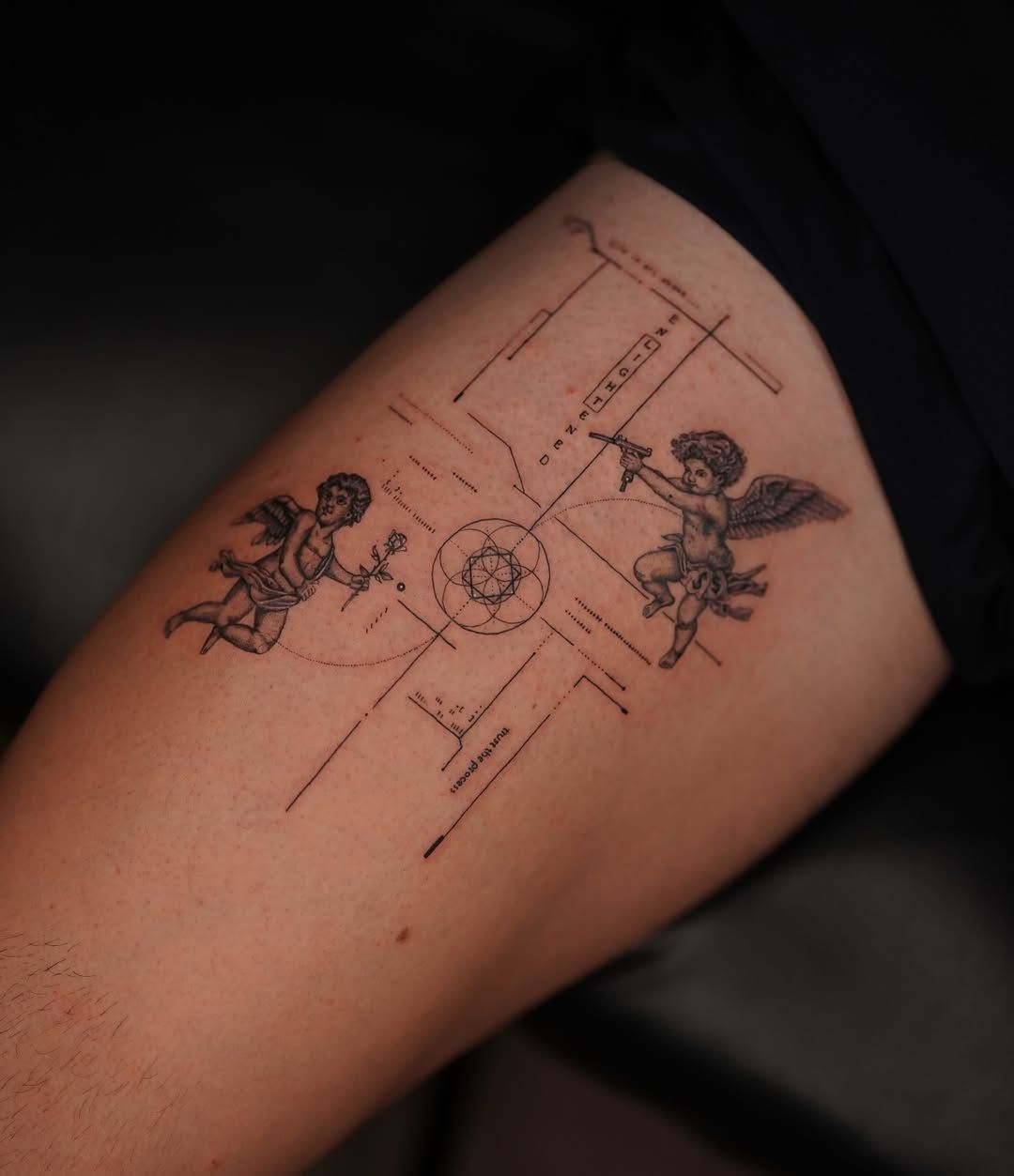
Ambient noise and vibration also matter for fineline tattooing and micro realism specifically. These styles use a single needle (or a very tight configuration) to build detail at a scale where any inconsistency in hand movement shows. Heat expands the skin slightly; crowd noise raises the artist's stress baseline; a bumped booth table mid-line is a real risk. Controlled studio conditions exist for a reason.
Styles that travel well to conventions and those that don't
Larger realism pieces and bold geometric work are more forgiving of convention conditions. The lines are wider, the contrast higher, and the design reads clearly even if executed under less-than-ideal circumstances. Getting a tattoo at a festival suits this kind of work far better than it suits anything intricate.
Fineline and micro realism are the most environment-sensitive styles. Both rely on needle consistency at a microscopic level. The table below lays out how common styles respond to convention conditions compared to a controlled studio session.
| Style | Environment sensitivity | Convention suitability | Recommended session length |
|---|---|---|---|
| Realism (large) | Low to moderate | Good for single-day pieces | 4-6 hours |
| Geometric / mandala | Moderate | Workable with an experienced artist | 2-5 hours |
| Lettering | Moderate | Short scripts can work well | 1-2 hours |
| Fineline | High | Risky without stable conditions | 1-3 hours in studio |
| Micro realism | Very high | Not recommended at conventions | 2-4 hours in studio |
| Floral (fine) | High | Detail loss risk in busy setting | 2-4 hours in studio |
If You Do Get Tattooed at the Festival
Plenty of people leave the event with work they love. The key is approaching it with realistic expectations and doing the groundwork before you arrive.
How to choose an artist on the floor
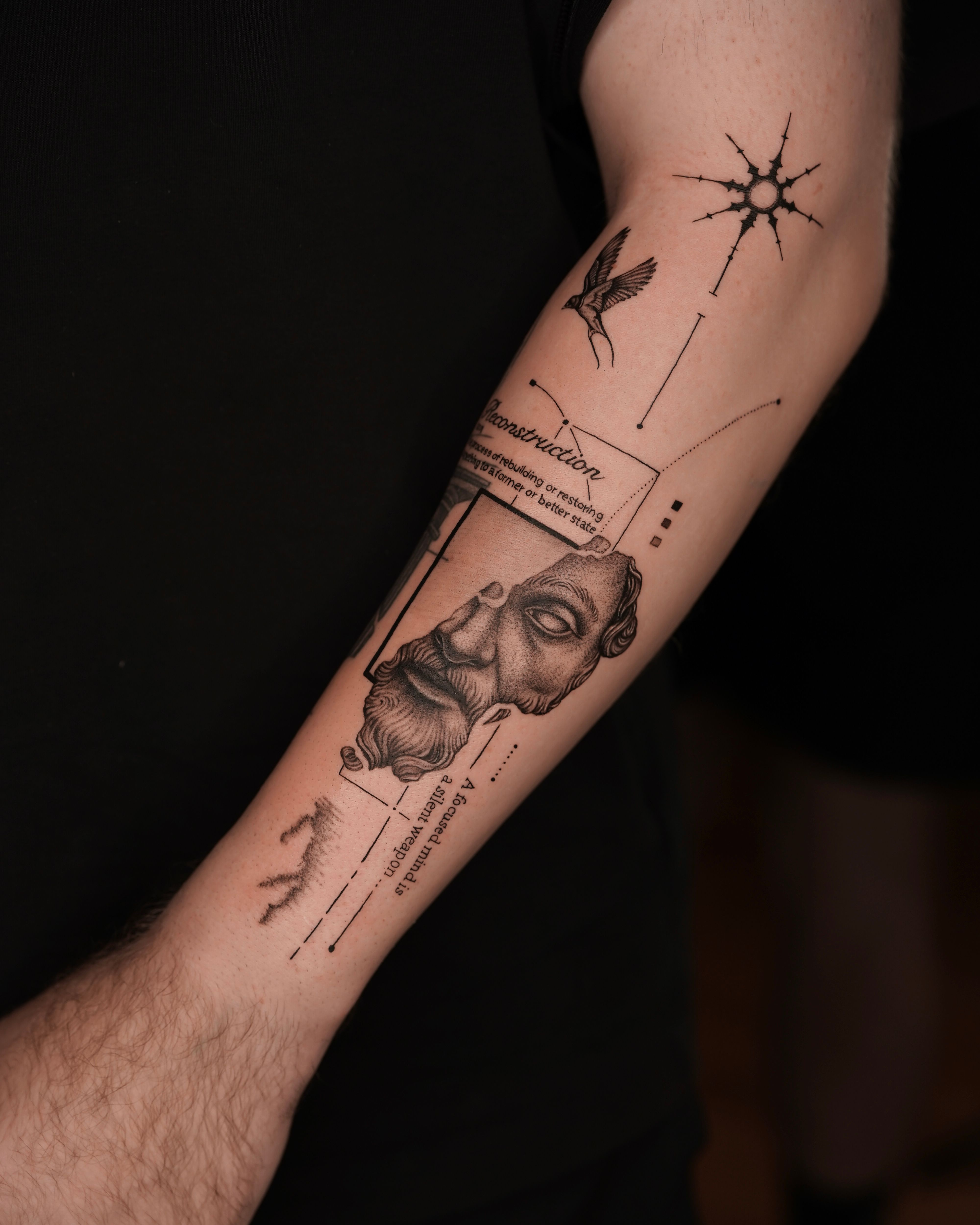
Research artists before the event, not while standing in front of their booth. Most participating artists publish their convention schedules and portfolios online in advance. Find someone whose healed work in your preferred style holds up over time, not just in fresh photos taken on the day.
- Look for healed photos in their portfolio, not just fresh shots
- Check that their style matches what you actually want, not just what looks striking in a convention setting
- DM or email to pre-book a slot; serious artists fill their convention days within hours of announcing attendance
- Ask about sizing upfront. Convention time slots are often shorter than studio sessions, so designs may need simplifying
- Never choose an artist based on booth decoration, awards display, or how loud their music is
What to bring and what to expect logistically
Arrive early. Walk-up capacity at any tattoo convention lisbon attendees find worthwhile is limited, and the best artists are booked by mid-morning on day one. If you haven't pre-booked, your options narrow fast.
- Bring valid photo ID. Portuguese law requires it for tattooing
- Eat a proper meal before you sit; blood sugar drops make sessions harder for everyone
- Wear clothing that gives easy access to your placement area without requiring a full change on the floor
- Bring a small bag with water, snacks, and a spare layer. Convention halls get cold in the air conditioning
- Have your reference images saved offline in case the venue Wi-Fi is unreliable
Keep expectations realistic on complexity. A three-hour convention slot is not the same as a three-hour studio session. Factor in setup time, the artist's natural fatigue, and the interruptions that happen on a busy floor.
Planning a Studio Session Around the Festival Visit
Many of the best outcomes from the Rock Fest don't happen on the convention floor at all. They happen in studios across Lisbon in the days surrounding the event.
Timing: before or after the event?
Booking after the festival often makes more sense. You spend the event absorbing styles, comparing quality, and arriving at a clearer idea of what you actually want. Then you book properly, with reference images and time to think. The studio's perspective is that someone who's just spent three days watching live tattooing tends to ask better questions and make sharper decisions.
If you're visiting Lisbon specifically for the festival, build in a day either side. Studios in Príncipe Real, Alfama, or Lapa offer something the convention floor can't: quiet. A focused two-hour session in a controlled environment with one artist, proper lighting, and a full stencil review will produce different results than a slot squeezed between competition judging rounds.
For anyone considering fine line tattoos in Lisbon, this matters especially. The style rewards patience at the planning stage.
Using the festival to explore styles, then committing in-studio
The studio pays close attention to what trends emerge from each year's convention circuit. Clients arrive inspired by pieces they saw on the floor: a particular geometric rendering, a micro realism portrait at a scale they hadn't considered, a lettering style that surprised them. That inspiration is genuinely useful when it arrives in a consultation with enough time to work with it properly.
Use the festival as research. Walk every aisle. Notice which pieces you keep returning to. Photograph what resonates. Then, when you sit down with an artist in a studio setting, you've already done half the work of identifying what you want. For anyone uncertain about where to start, what to know before booking a studio in Lisbon is a practical first read.
Healing After a Festival Tattoo in Lisbon
Healing starts the moment you leave the booth. And if that booth is in a Lisbon summer festival, the conditions you're walking back into are genuinely demanding.
The city's UV index from June through September is high. Direct sun on a fresh tattoo drives ink breakdown in the dermis (the second layer of skin, where the pigment lives) before the surface has even finished peeling. Covering the site immediately and consistently is not optional. For the full picture on what the sun actually does to fresh ink, it's worth reading before you attend the event.
- Keep the tattoo wrapped for the first two to four hours post-session, then switch to a breathable second-skin film if available
- Stay out of direct sunlight on the site for the rest of the festival. Loose clothing over the area works well
- Skip alcohol on the day you're tattooed; it thins the blood and slows initial healing
- Clean the piece gently morning and evening with fragrance-free soap
- Stay hydrated; Lisbon summer heat means you're sweating more than you realise, and dehydration affects skin recovery
- Apply a thin layer of unscented moisturiser two to three times daily once the wrap comes off
Walking a convention floor all day, standing in queues, and sleeping in festival accommodation all compound the challenge. The day-by-day healing guide covers exactly what your skin is doing in those first critical days, and what to watch for if something looks off.
One thing experienced artists consistently note: clients who attend multi-day events and get tattooed on day one face the hardest healing window. By day three you're tired, your sleep is disrupted, and you've been on your feet for hours. If you have a choice, book your festival slot for the last day of the event rather than the first.
Frequently Asked Questions
What is the Lisbon Tattoo Rock Fest?
The Lisbon Tattoo Rock Fest is an annual tattooing and music event held in Lisbon, Portugal, where artists from across Europe and beyond gather to tattoo live, compete in style categories, and exhibit their work. It runs across multiple days and draws both long-term collectors and people getting their first piece.
Is it a good idea to get a tattoo at a tattoo convention?
It depends on what you want. Larger, bolder pieces suit the convention environment reasonably well. Intricate styles like fineline or micro realism benefit from the controlled conditions of a dedicated studio session, where the artist has proper lighting, no crowd noise, and uninterrupted focus on your design.
How do I find a good tattoo artist at a Lisbon tattoo festival?
Research artists before the event, not on the day. Check their portfolio online, confirm they have experience in the style you want, and book a slot in advance where possible. Walk-up tattooing exists but serious artists fill their convention days quickly. Never choose based on booth design alone.
Should I book a Lisbon tattoo studio before or after the Rock Fest?
Either can work, but booking after often makes the most sense. Many people discover a style or concept at the event and want to plan properly afterwards. A post-festival studio session gives you time to research, consult, and arrive with a clear idea rather than making a rushed decision on the convention floor.
How do I care for a new tattoo while still attending a multi-day festival?
Keep the fresh tattoo wrapped for the first few hours, then switch to a breathable second-skin film if available. Avoid direct sun, stay hydrated, skip alcohol on the day you're tattooed, and clean the piece gently morning and evening. Lisbon's summer heat means sweat is a real factor; loose clothing over the site helps significantly.
What tattoo styles are typically shown at the Lisbon Tattoo Rock Fest?
The event covers a wide range, with competition categories including realism, geometric, and portrait work among others. You'll see styles the studio doesn't offer alongside those it does, including fineline and micro realism. It's a good opportunity to compare quality across styles before deciding which direction your own piece should take.