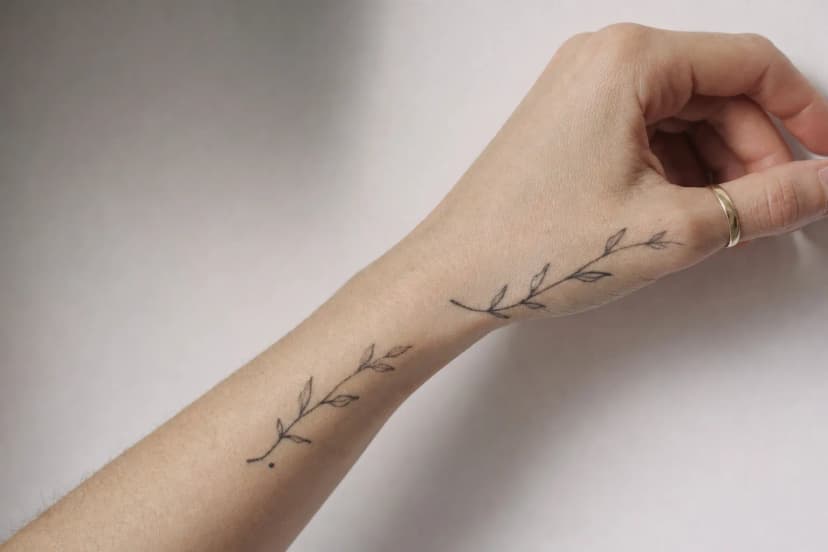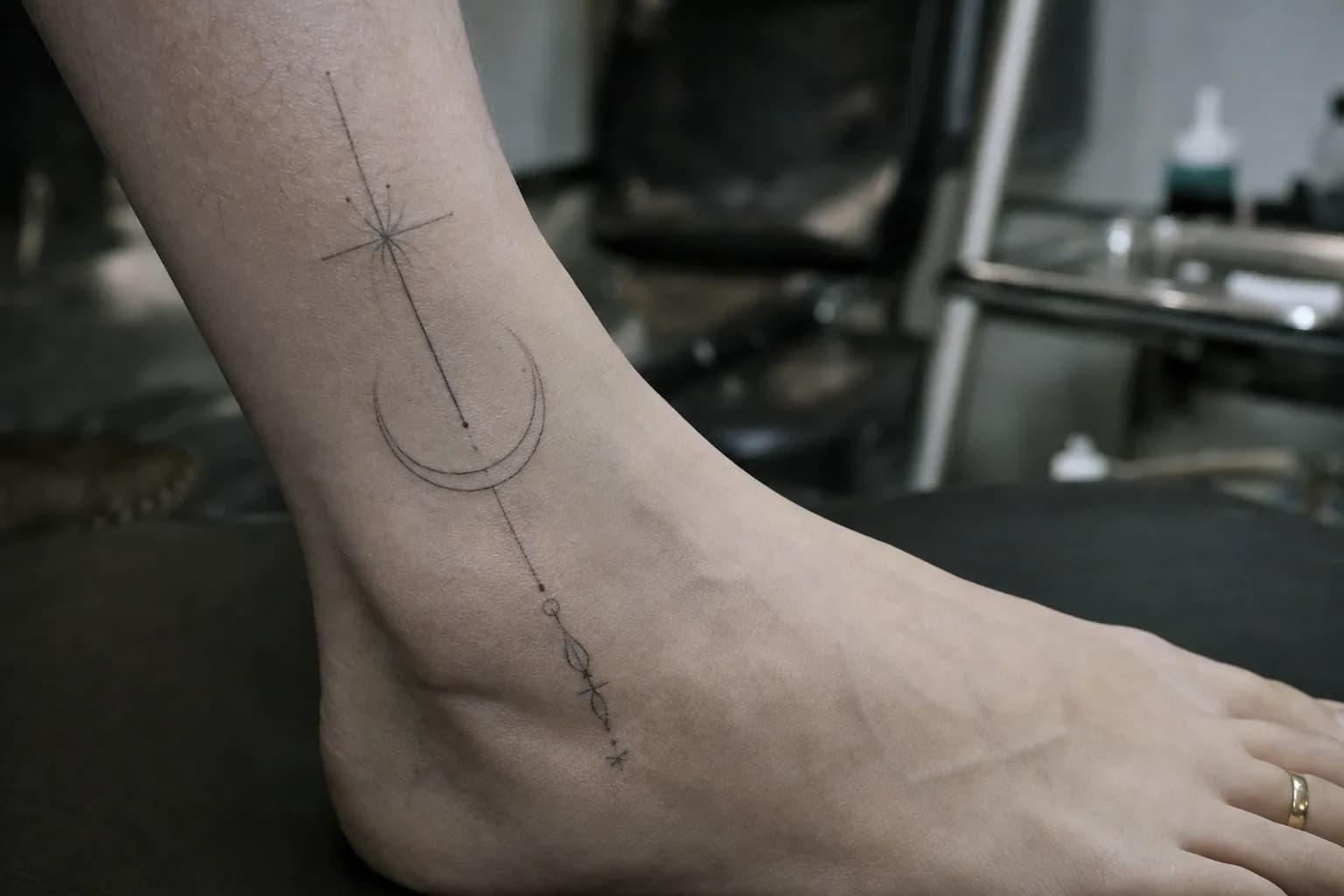
Why Portuguese Symbols and Small Tattoos Are a Natural Match
Portugal has always made things that reduce well. Azulejo tiles distil intricate Moorish geometry into repeating star units. The Galo de Barcelos is a single bold silhouette. The caravel is clean lines, wind, and direction. These images were designed to be read from a distance on a glazed wall or a flag, which means they carry their meaning without visual clutter. Exactly what you need in a small tattoo.
Small scale suits the subtlety of these symbols too. A small portuguese tattoo idea done well reads as a personal reference, not a souvenir you picked up at a gift shop on Rua Augusta. That distinction matters. Visitors staying in Bairro Alto, locals from Mouraria, expats who've made Príncipe Real home. They all want the same thing: something that carries real weight without announcing itself across the room.
That's where minimalist tattoo work earns its place. Stripping a symbol to its essential geometry isn't a shortcut; it's a discipline. The reduction is the craft.
The Symbols Worth Considering. And What They Actually Mean
Azulejo Tile Geometry
The azulejo tile is the most naturally tattooable symbol in Portuguese culture. Its geometry is already abstracted. Pull a single repeated unit. The eight-pointed star, or a border motif. And you have a shape that reads as both distinctly Portuguese and cleanly geometric. At 4 to 5 centimetres, one tile unit holds its lines beautifully. Try to compress a full grid into 3cm and you'll have a muddy square within a few years.
For anyone interested in the broader language of geometric pattern, the studio's guide to geometric tattoo meaning covers how shapes carry symbolic weight beyond their cultural origin.
The Galo de Barcelos (Rooster of Barcelos)
The Barcelos rooster is beloved, but it needs careful handling at small scale. The traditional version is dense with colour and internal pattern. In a small format, that detail blurs fast. A fineline stylised silhouette. Just the outline, a tail feather or two simplified. Holds far longer than a filled version packed with linework below 4cm. The symbol still reads. It just breathes.
The Caravela (Portuguese Caravel Ship)
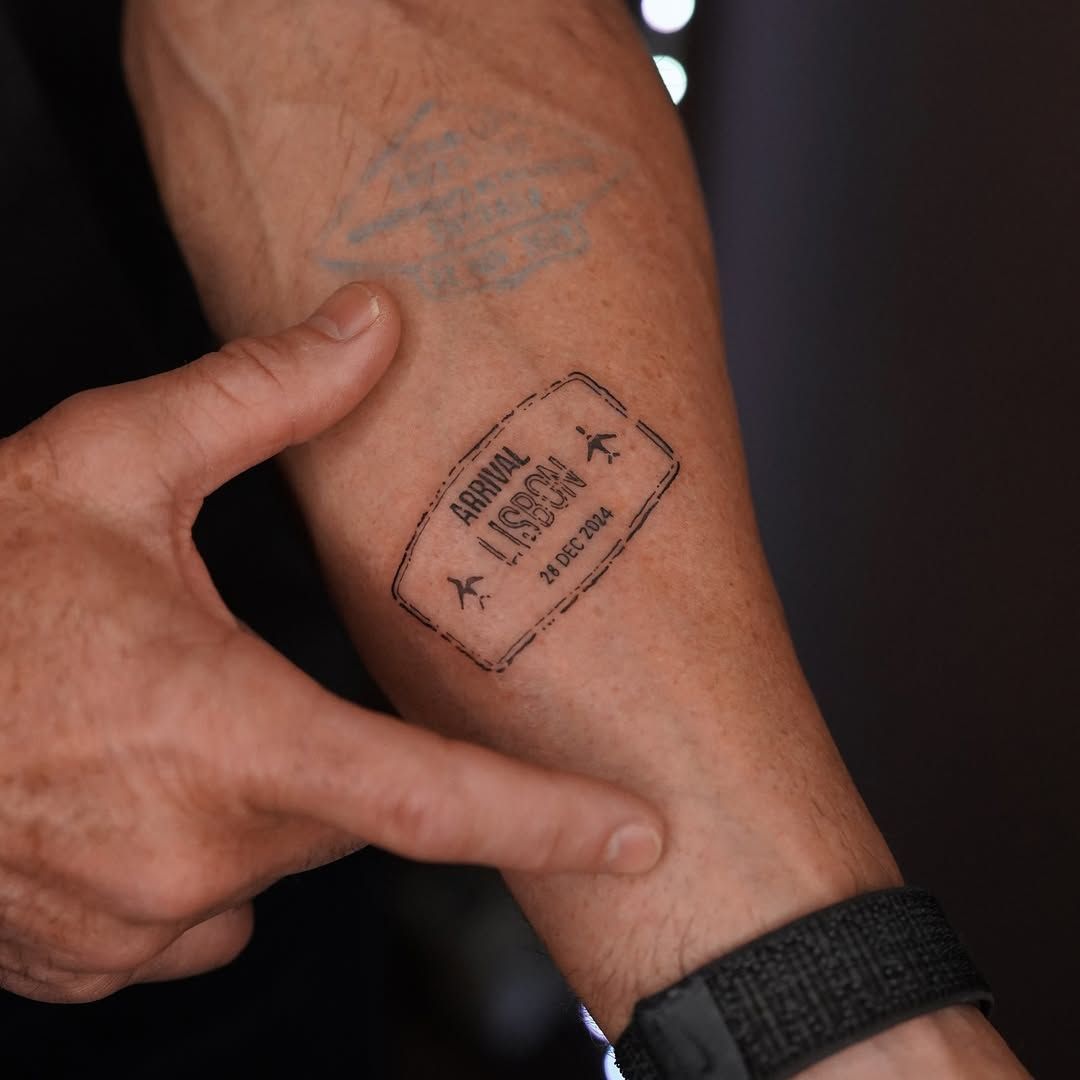
The caravel is a natural fit for expats and travellers. It carries the Age of Discovery without being heavy-handed, and its sail-and-hull shape simplifies into clean geometry at almost any size. The Lisbon Arrival Passport Stamp piece in the studio's portfolio shows how travel-and-place imagery can be handled with restraint. That same editorial sensibility applies here.
Fado Motifs: the Guitar, the Shawl, the Swallow
Fado carries saudade. That untranslatable Portuguese sense of longing for something you may never have had, or can never quite return to. Its visual motifs carry the same emotional charge. A Portuguese guitar outline at 3 to 4cm reads clearly. A swallow with simplified wing detail sits beautifully on a wrist or collarbone. The black shawl (the xaile worn by fadistas) is harder to abstract, but its curved fold works as a minimal stroke.
The Armillary Sphere and the Cross of the Order of Christ
The armillary sphere. The navigational globe that appears on the Portuguese flag. Is one of the most requested symbols in the studio, and one of the most misunderstood in terms of scale. Its concentric rings and bands need room to breathe. Below 4cm, the internal structure collapses. At 5 to 6cm it becomes one of the most striking lisbon tattoo symbols available, geometric and historically resonant in equal measure. The Cross of the Order of Christ is Manueline in origin, meaning it's highly ornamental. Simplification is the only path. Reduce it to the cross form itself, let the history do the rest.
Why Technique Matters More Than You Think at Small Scale
Fineline vs Minimalism: the Difference in Practice
These two terms get used interchangeably, but they describe different things. Fineline is a technique: working with a single needle or a very tight needle grouping to draw hair-width strokes with high precision. Minimalism is a compositional approach: stripping a design to its fewest necessary elements and letting negative space carry meaning. A minimalist portuguese tattoo might use fineline technique, but minimalism without fine lines is also possible. A bold single-stroke outline, for instance.
Knowing which one suits your symbol shapes the whole consultation. A swallow with feather texture is a fineline problem. A single azulejo star unit is a minimalism problem. The two often combine, but they start from different intentions.
What Happens to Small Tattoos Over Time
Ink doesn't stay exactly where the needle places it. Over months and years, pigment migrates slightly within the dermis (the layer of skin beneath the surface). In a large tattoo, that migration is imperceptible. In a 3cm design packed with internal detail, it means lines that were once 0.3mm apart begin to touch. The fine detail disappears first.
This isn't a flaw in the artist's work. It's biology. The way to work with it is to leave space between elements from the start. A symbol with room to breathe stays legible for a decade. A symbol filled to the edges of its border doesn't.
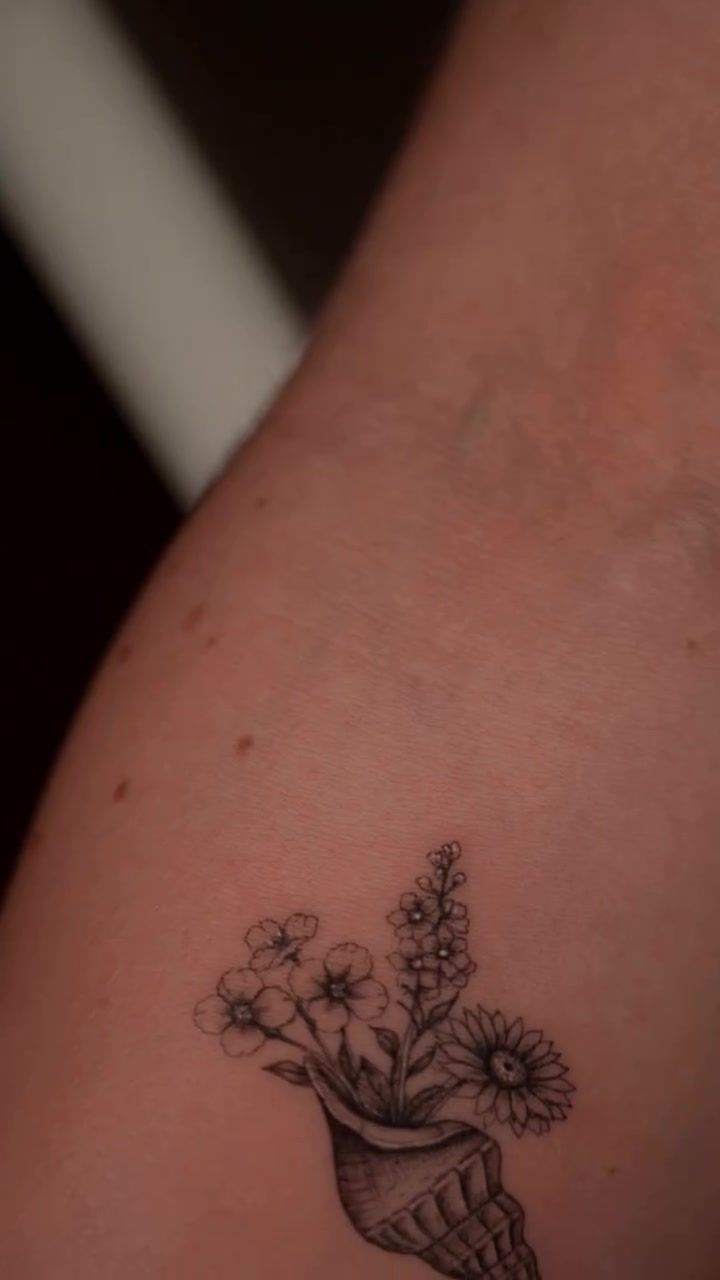
Placement affects this too. Inner wrist and finger skin flexes constantly, which accelerates migration. Outer forearm, upper back, and sternum hold cleaner for longer. If you're choosing between two spots, go with the one that moves less.
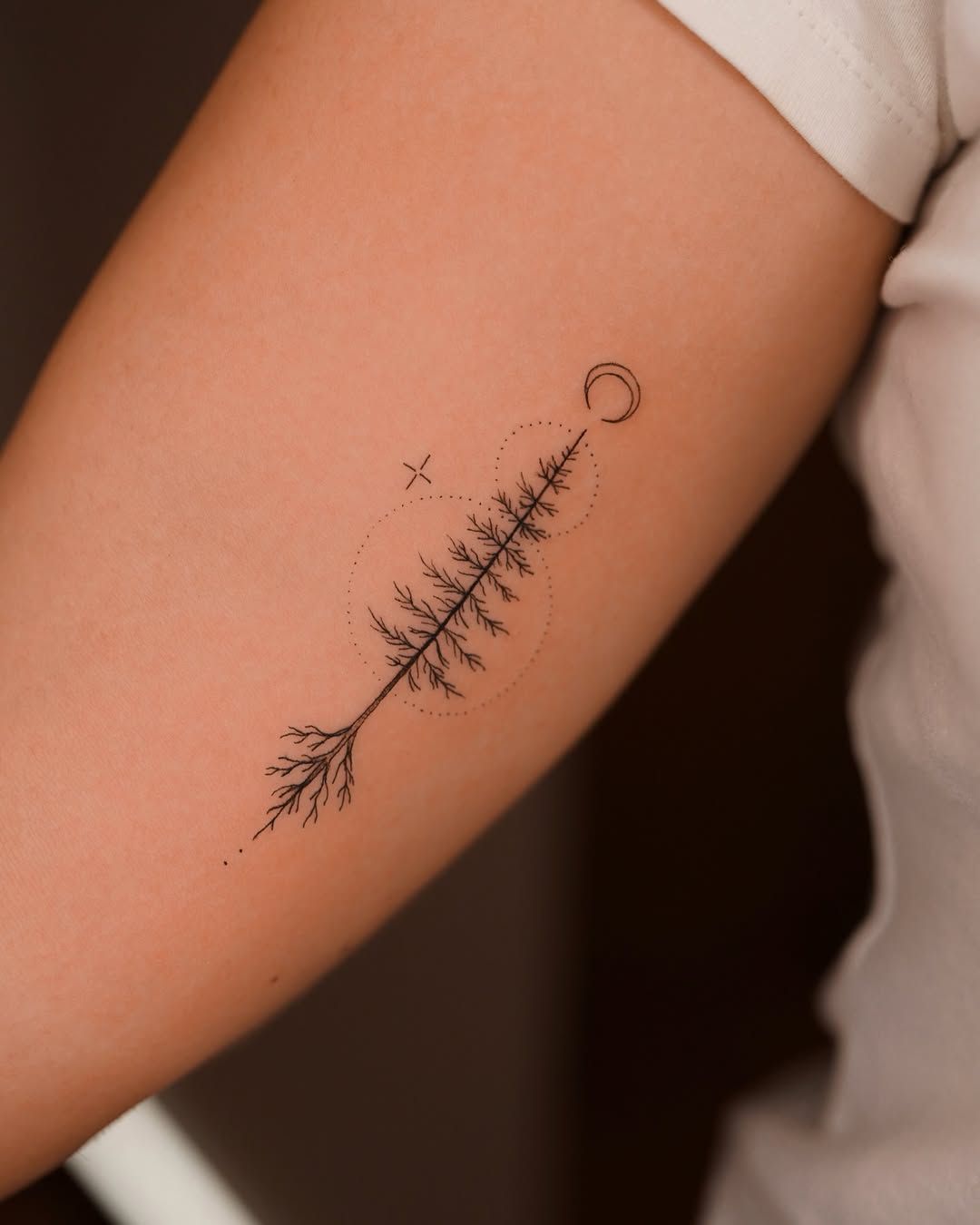
Lisbon's humid summers add another variable. Sweat in the first two weeks of healing can soften a fresh tattoo's surface and affect how ink settles. If you're booking in July or August, read the studio's aftercare guidance before you sit down. The Lisbon-specific notes on humidity and sun exposure are worth your attention.
"A symbol that tries to hold twelve lines in two centimetres will always betray you eventually. Give it room, and it'll still be readable when your grandchildren ask about it."
How the Studio Approaches a Portuguese Symbol Tattoo
Every consultation starts with meaning. Why this symbol? What connection does it carry for you personally? A caravel means something different to someone who sailed here from Brazil than it does to someone who grew up in Alfama watching container ships from the miradouro. That context shapes the design decisions that follow.
Once the symbol is identified, the artist sketches multiple reductions of it. Not one version. Several, at different sizes and levels of simplification. You see how much detail survives at your chosen scale before any commitment is made. This is where the craft lives. Reducing a Portuguese culture tattoo motif like the navigational sphere to its tattooable essence isn't a quick step. It might mean three or four rounds of refinement before the stencil gets cut.
The stencil check matters enormously. If an azulejo pattern sits 2mm off-centre on your skin before inking, the geometry reads wrong every time you look at it. The artist tests placement, checks alignment from multiple angles, and confirms it with you before touching the machine. That 10-minute step prevents years of regret.
Black and grey is almost always the right call for small portuguese symbols tattoos with longevity in mind. Colour at 3cm rarely ages as well. Pigments fade at different rates and the colour relationships shift over time. A black ink azulejo star at 4cm will look crisper in ten years than the same design in blue and white. Session time for a small symbol typically runs 45 to 90 minutes. There's no need to overblock your day.
Practical Guidance: Size, Placement and What to Bring
Most small symbolic tattoos need at least 2.5cm to retain legibility after healing. Some symbols demand more. The Barcelos rooster as a silhouette can work at 3cm. The navigational sphere with its ring structure needs a minimum of 4cm. Below that, the bands collapse into each other. A fado guitar outline can go as small as 2.5cm if the design is stripped right back. Know your floor before you walk in.
| Placement | Longevity | Visibility | Typical Pain Level |
|---|---|---|---|
| Outer forearm | High | Easy to show or cover | Low to moderate |
| Inner wrist | Moderate | Visible daily | Moderate |
| Upper back / shoulder blade | Very high | Concealable | Low |
| Sternum | High | Concealable | Moderate to high |
| Behind the ear | Moderate | Low unless hair is up | Moderate to high |
| Ankle / foot | Low to moderate | Seasonal | Moderate to high |
For a more detailed look at how placement affects both longevity and meaning, the studio's placement guide for small tattoos covers each body zone with specific notes. And if you're still working out what style suits your idea, the broader overview of small tattoos in Lisbon gives you the full picture of what's possible at this scale.
- Bring reference images. Even loose, imperfect ones help the artist understand your visual instincts
- Know your personal meaning before the consultation, not just the image you like
- Wear loose clothing that gives easy access to your chosen placement
- Eat before you arrive. A 90-minute session on an empty stomach is unnecessary discomfort
- Avoid booking in July or August if you plan to be at the beach in the two weeks following; Lisbon summer sun and salt water are the fastest ways to fade a fresh tattoo
One note for visitors specifically: if you're flying home within two weeks of your session, plan the timing carefully. The skin needs those two weeks of calm before it faces recycled cabin air, shifting pressure, and the sun of wherever you're landing. Booking a consultation before you arrive in Lisbon is always the smarter move.
What to Expect on the Day
- Consultation review: the artist walks through the final design and sizing with you before any ink is mixed
- Stencil placement: the design is applied to your skin in transfer ink and checked from multiple angles
- Confirmation: you approve the placement before the session begins
- Session: typically 45 to 90 minutes for a small symbolic piece
- Aftercare wrap and instructions: the studio covers the fresh tattoo and walks you through the first two weeks of care
Frequently Asked Questions
What Portuguese symbols work best as small tattoos?
Azulejo tile geometry, the swallow, a simplified caravel outline, and a single navigational sphere all reduce well to small scale. The Barcelos rooster works as a clean silhouette but loses internal detail below 4cm. The simpler the source shape, the sharper the piece stays after healing. Symbols already built around geometry or strong outline work are your best starting point.
Will a small Portuguese symbol tattoo fade quickly?
All small tattoos migrate slightly in the dermis over years, but placement and technique control how fast. Outer forearm and upper back hold longer than wrists or hands. A studio that avoids overloading a 3cm design with dense internal linework gives the piece its best chance of staying readable after a decade. Black ink also outlasts colour at this scale.
Is an azulejo tile pattern difficult to tattoo at small scale?
Yes, if you try to replicate the full geometric intricacy of a real tile. The key is reduction: pull one repeated unit. Often the eight-pointed star or the border motif. And let negative space carry the rest. At 4 to 5cm, a single tile unit reads clearly and ages far better than a compressed grid packed with lines.
Can I get a small Portuguese tattoo as a tourist visiting Lisbon?
Yes, but plan the timing carefully. You'll need at least two weeks post-session before flying or spending long days in the sun. Book a consultation before you arrive if possible. Lisbon's summer heat and beach trips in the first two weeks are the biggest healing risks for visitors. The studio can advise on timing during the initial conversation.
How do I choose between fineline and minimalism for a Portuguese symbol?
Fineline suits symbols with illustrative detail: a swallow with wing texture, a guitar with string lines. Minimalism suits clean geometric or typographic references: a single azulejo star, a passport-stamp-style caravel. The two approaches often combine naturally, using precise fine lines within a spare composition. The studio shows both options at consultation so you can compare before committing.