What You're Really Paying For
People look at a small minimalist tattoo and assume the price will be small too. That's a reasonable assumption. It's also usually wrong. Restraint is one of the hardest things to execute in tattooing, and the less ink on the skin, the more exposed every decision becomes.
Single-needle work, which forms the backbone of most minimalist tattoos, requires slower, more deliberate passes across the skin. A bold traditional outline can be pulled in a single confident stroke. A single-needle line on the inner wrist, at the same length, might take three careful passes to land cleanly without blowout (ink spreading beyond the intended line beneath the skin surface).
Time is the core unit of cost. Not ink quantity, not design complexity on paper. The artist's time, skill and needle control are what you're paying for. A 3cm geometric symbol can take a full hour when every micro-adjustment matters. A 6cm rough brushstroke outline in a bold style might take forty minutes. Size does not equal time.
"Clean negative space is harder than filled space. What you leave out has to be as precise as what you put in."
The Four Factors That Set the Price
Size and complexity
These two things are related, but they're not the same. A 4cm mandala-inspired geometric symbol with hairline-thin lines takes longer than a 6cm silhouette with loose, open edges. Complexity lives in the detail, not the dimensions. When you're asking about our minimalist tattoo service, the first question the studio will ask you isn't "how big". It's "what's in it".
The more elements packed into a small space, the slower the work. Overlapping lines, deliberate gaps and exact symmetry all demand time. A simple single-word script across the collarbone and a small fine-line floral with five botanicals can both be 5cm pieces. They won't take the same session length.
Placement on the body
Flat surfaces like the outer forearm or upper arm are the easiest to tattoo accurately. Curved or bony placements slow everything down. Ribs shift with breathing. Fingers have no padding and resist ink. The inner wrist curves in two directions at once, and the artist has to reposition their hand repeatedly to follow the contour without distorting the line.
Difficult placements take longer. They're also more likely to need a touch-up as they heal, which is worth factoring into your thinking from the start. Our placement guide for small tattoos goes deeper on which spots work best for fine-line minimalist work.
Session length
Most minimalist pieces fall in the one-to-two-hour window. Micro pieces under 3cm, even clean and simple ones, typically need a full hour to allow for stencil placement, skin prep, careful linework and final checks. Two-hour sessions cover most small-to-medium minimalist work up to around 8cm.
Anything more complex, or involving multiple separate elements in one visit, may push past two hours. The studio will tell you clearly at the consultation whether your piece fits in one session or needs two.
Custom design vs. Reference-adapted work
If you arrive with a clear reference image that needs minor adaptation, the design phase is short. If you want something entirely original, sketched from scratch around your idea, that design time adds to the overall work before the needle touches skin. Revisions, sizing adjustments and template refinements all take real time. Custom design is not a freebie sitting outside the pricing conversation.
Sizing Guide: What Fits Where and How Long It Takes
The table below gives you a working reference, not a guarantee. These are the ranges that cover most minimalist tattoo session lengths at the studio. Your specific piece may fall slightly outside them based on complexity and placement.
| Piece Size | Approximate Session Length | Typical Placements | Notes |
|---|---|---|---|
| Under 3cm (micro) | 45 min. 1 hour | Inner wrist, behind ear, finger, ankle | Single-needle linework still needs full prep time |
| 3-5cm (small) | 1. 1.5 hours | Forearm, collarbone, shoulder blade | Most common minimalism request range |
| 5-8cm (medium-small) | 1.5. 2 hours | Forearm, upper arm, sternum, calf | Multi-element designs may push to the upper end |
| 8-12cm (medium) | 2. 3 hours | Thigh, upper arm, shoulder, ribs | Geometric detail or botanicals at this scale take time |
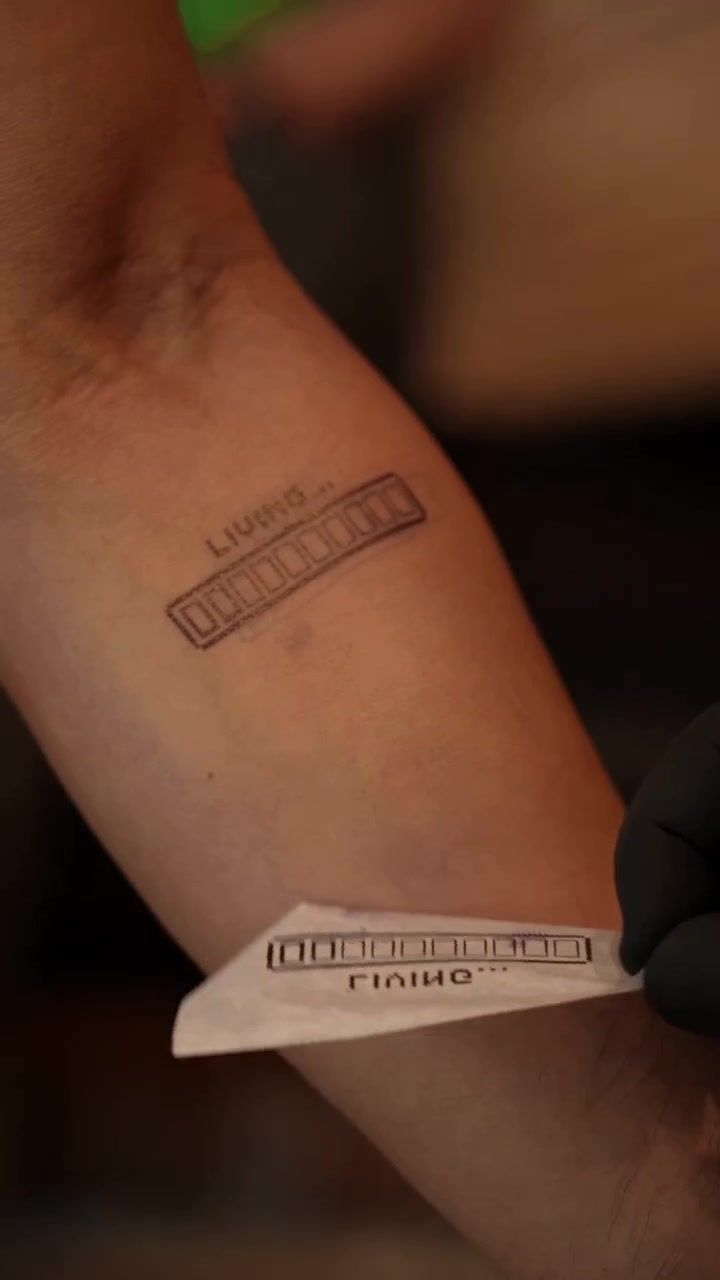
To anchor these ranges in real work: the Loading Bar minimalist piece is a compact, carefully considered design where every line carries weight. The precision of the negative space is what makes it work, and that precision takes time to place correctly on skin.
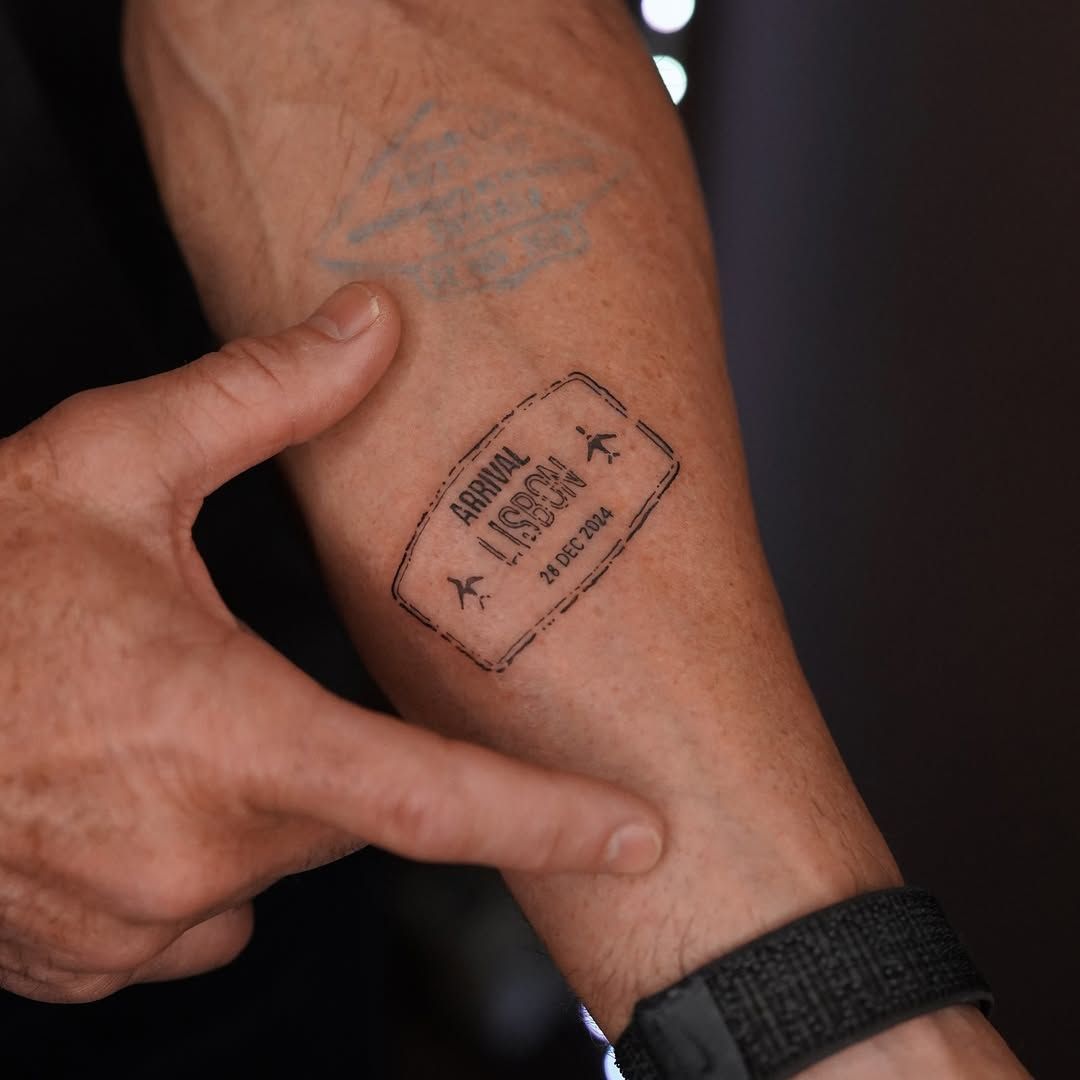
Similarly, the Lisbon passport stamp tattoo combines lettering and minimal graphic elements in a small footprint. It looks effortless. It wasn't. The circular alignment, the letter spacing and the fine border all had to sit perfectly, or the whole piece would read as off.
How This Studio Approaches Minimalist Work
The studio doesn't publish a price menu for minimalist tattoos. That's a deliberate choice. A 4cm piece quoted without knowing the design, the placement or the level of detail would be a guess, and guesses don't serve you well when you're making a permanent decision.
Every piece starts with a consultation. You share your idea, the studio understands what you actually want, and then a quote is given based on a real assessment. That conversation also lets the artist talk through line weight options, the role of negative space in your specific design and what will age well on the body part you've chosen.
Minimalist tattooing at this studio leans toward single-needle and fine-line techniques. Thinner lines mean smaller needles, slower movement and higher margin for error. The artist doesn't rush that process. You'll also find that the studio discusses long-term legibility at consultation. A fine-line minimalist tattoo on a finger, for instance, will fade faster than the same piece on a forearm, and that's a conversation worth having before you sit down. For context on what the style looks like across different subjects, the small and tiny tattoos in Lisbon guide covers a range of approaches worth reading beforehand.
Placement, Healing and Lisbon's Climate
Lisbon's humid summers are real. July and August bring warm, sticky air that sits differently on freshly tattooed skin. Exposed placements like inner wrists, ankles and hands take longer to dry-heal in that humidity, which can soften fine lines during the healing window if the aftercare isn't consistent.
Fineline minimalist tattoos heal differently from bold-line work. The lines are thinner, the ink deposit lighter. If the surface layer lifts unevenly during peeling (which is normal in humid conditions), you can lose definition in a way that a bolder tattoo wouldn't show. It doesn't mean avoid summer entirely. It means be more attentive to your aftercare routine. The aftercare guide for healing in Lisbon is worth reading before your appointment, particularly if you're planning a wrist or hand piece in warmer months.
If you have flexibility, booking wrist, finger or ankle placements in autumn or winter gives you cooler, less humid healing conditions and generally cleaner results for single needle minimalist tattoo work. October through February is genuinely a good window for exposed placements in this city.
What to Bring to Your Consultation
Three to five curated reference images is the right number. Not a Pinterest board of forty things you half-like. Pick the images that actually capture what you want, whether it's a specific line weight, a composition, a subject. The artist uses references to understand your taste, not to copy existing work.
- A clear idea of placement on your body (and ideally a sense of rough size. Use a coin or your hand as a reference point)
- Three to five reference images, chosen intentionally
- Questions about touch-up policy and healing expectations for your chosen placement
- An open mind about sizing. The artist may suggest going slightly larger to protect the linework's longevity
What doesn't help: arriving with a vague feeling and expecting the artist to generate the concept from scratch in the room. The studio can develop original ideas, but that conversation works best when you come with some direction, even a rough one. "Something botanical, minimal, on my forearm, around 5cm" is a starting point. "I'll know it when I see it" is not.
- Confirm your placement and preferred size range before the consultation
- Look through the studio's portfolio for pieces in a similar vein to what you want
- Write down any questions about touch-ups, healing or design revisions beforehand. It saves time in the room
- Arrive with clean, moisturised skin on the area you're planning to tattoo
If you're still working out where on your body a small minimalist piece might sit best, the placement guide for small tattoos covers the most common options with honest notes on how each heals and ages.
Frequently Asked Questions
Are minimalist tattoos cheaper than other styles?
Not necessarily. Minimalist tattoos use fewer elements, but the precision required for clean single-needle linework means the artist works slowly and carefully. A 3cm geometric symbol can take a full hour. Most studios, including this one, quote per piece after a consultation rather than charging less simply because the design looks simple on paper.
How long does a small minimalist tattoo take?
Most small minimalist tattoos take between one and two hours from stencil placement to wrap. Micro pieces under 3cm can still need a full hour for crisp linework and clean negative space. Placement matters too. Curved surfaces like the wrist or collarbone slow the process compared to a flat outer forearm.
Do minimalist tattoos need touch-ups, and does that cost extra?
Fine lines settle into the skin during healing, and occasionally a thin line softens more than expected. Touch-up policies vary, so ask during your consultation. In Lisbon's humid summers, exposed placements like wrists and ankles can heal less predictably, making a single touch-up session more likely for those spots. Factor that into your planning.
What size minimalist tattoo can I get in one session?
Most minimalist pieces up to around 8-10cm fit comfortably within a two-hour session. Anything involving multiple elements, intricate linework or a particularly difficult placement may need a second session. The artist will give you a clear estimate once they've seen your reference and confirmed the placement at consultation.
Is a wrist or finger minimalist tattoo more expensive?
The artist's time doesn't change per body part, but placement affects difficulty and longevity. Fingers and inner wrists are fiddly to tattoo and fade faster, which can mean a touch-up becomes part of the long-term cost. The studio will flag this during the consultation so you can make a genuinely informed decision.