What People Actually Mean When They Search 'Botanical Tattoos Near Me'
The difference between botanical and generic floral
Most people type "botanical tattoos near me" and mean something specific, even if they can't quite name it. They want petals that look like petals. Stems that taper correctly. A rose that reads as a rose, not a design loosely inspired by one.
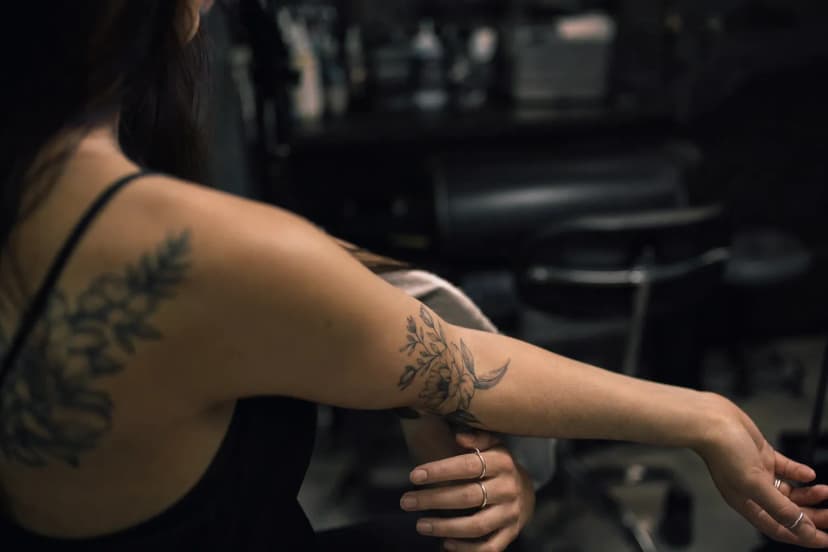
That's the distinction worth making upfront. A decorative floral tattoo prioritises pattern and style over accuracy. It can be beautiful. But a botanical tattoo draws directly from scientific illustration traditions: accurate petal structure, natural proportions, the way a leaf connects to a stem at the right angle. The reference material is different. The technique is different. And the artist you need is different too.
If you're in Lisbon and you've been scrolling through floral tattoo work trying to find the right match, knowing this distinction will save you a lot of misdirected enquiries.
Why style specificity matters before you book
Booking the wrong artist for botanical work is one of the most common disappointments in tattooing. Not because the artist lacks skill. Because botanical accuracy requires a very particular visual vocabulary: knowledge of plant anatomy, experience with hairline detail, and the patience to build tonal depth through shading rather than bold outlines.
When you approach a studio, bring the word "botanical" and a couple of reference images from actual botanical illustration. That framing changes the entire conversation.
The Craft Behind Botanical Work
Single-needle and fineline techniques in botanical tattooing
The hairline precision that botanical illustration demands translates to skin through single-needle and fineline technique. Single-needle work uses, literally, one needle tip rather than a grouped cluster. The lines it produces are finer than a human hair. That's what allows a petal edge to taper off naturally rather than ending in a uniform stroke.
A fine line floral tattoo built with this technique can carry the same quiet authority as a pencil drawing from a 19th-century herbarium. It reads differently from across the room than it does up close. Both readings matter.
If you want to understand what fineline technique actually requires before your consultation, that guide covers the mechanics in full.
How scale affects what's possible
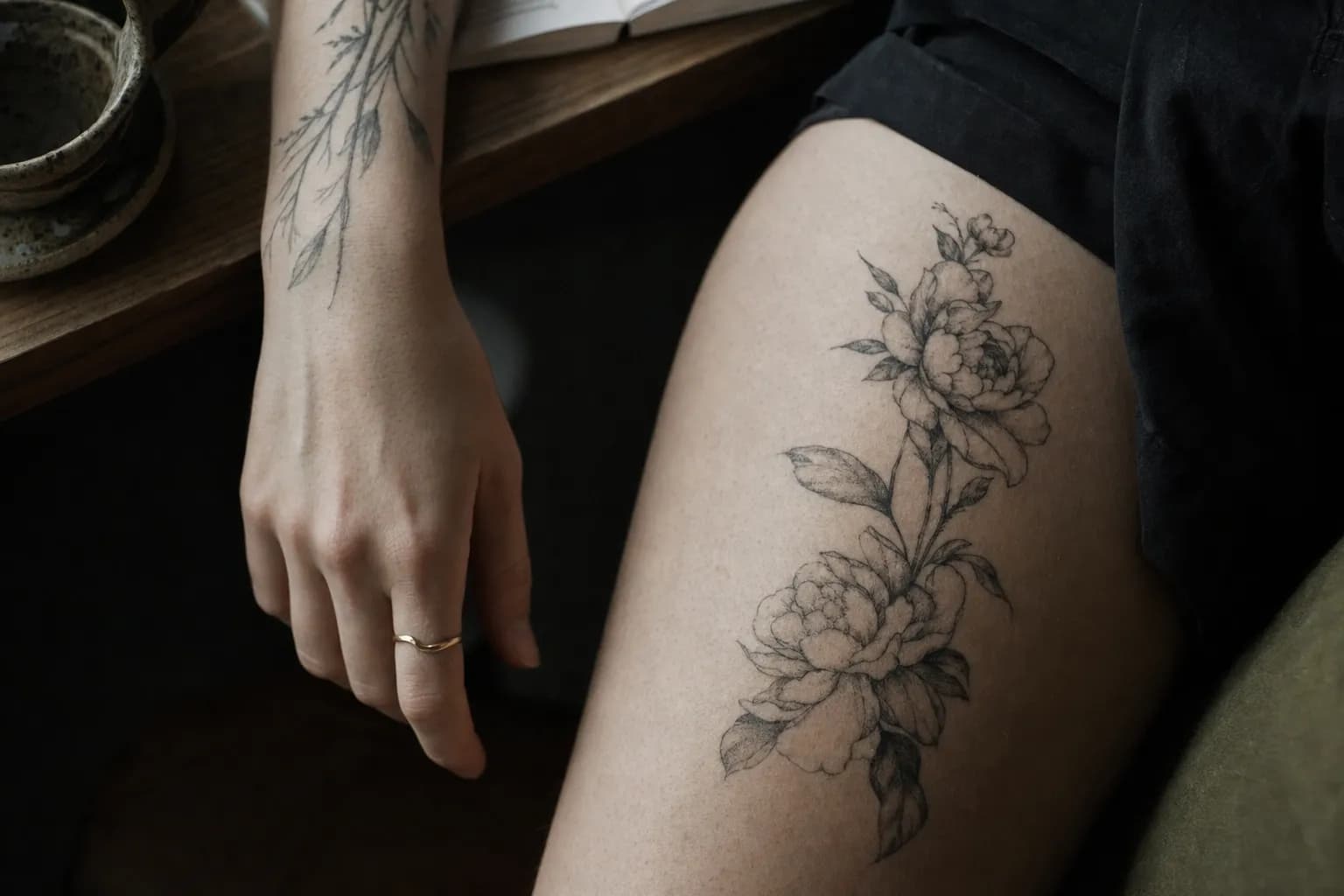
Scale is where botanical ambitions most often collide with reality. A peony on the forearm can carry full petal layering, visible stamen detail, and natural shadow. The same peony at 4cm on the wrist loses most of that. The lines sit too close together. As the skin settles over the first twelve months, fine detail in a cramped space tends to blur.
For work with layered petals and delicate stems, most experienced artists recommend a minimum of 6-8cm in at least one dimension. Flatter placement, like the forearm or the shoulder, also helps smaller pieces hold their resolution for longer.
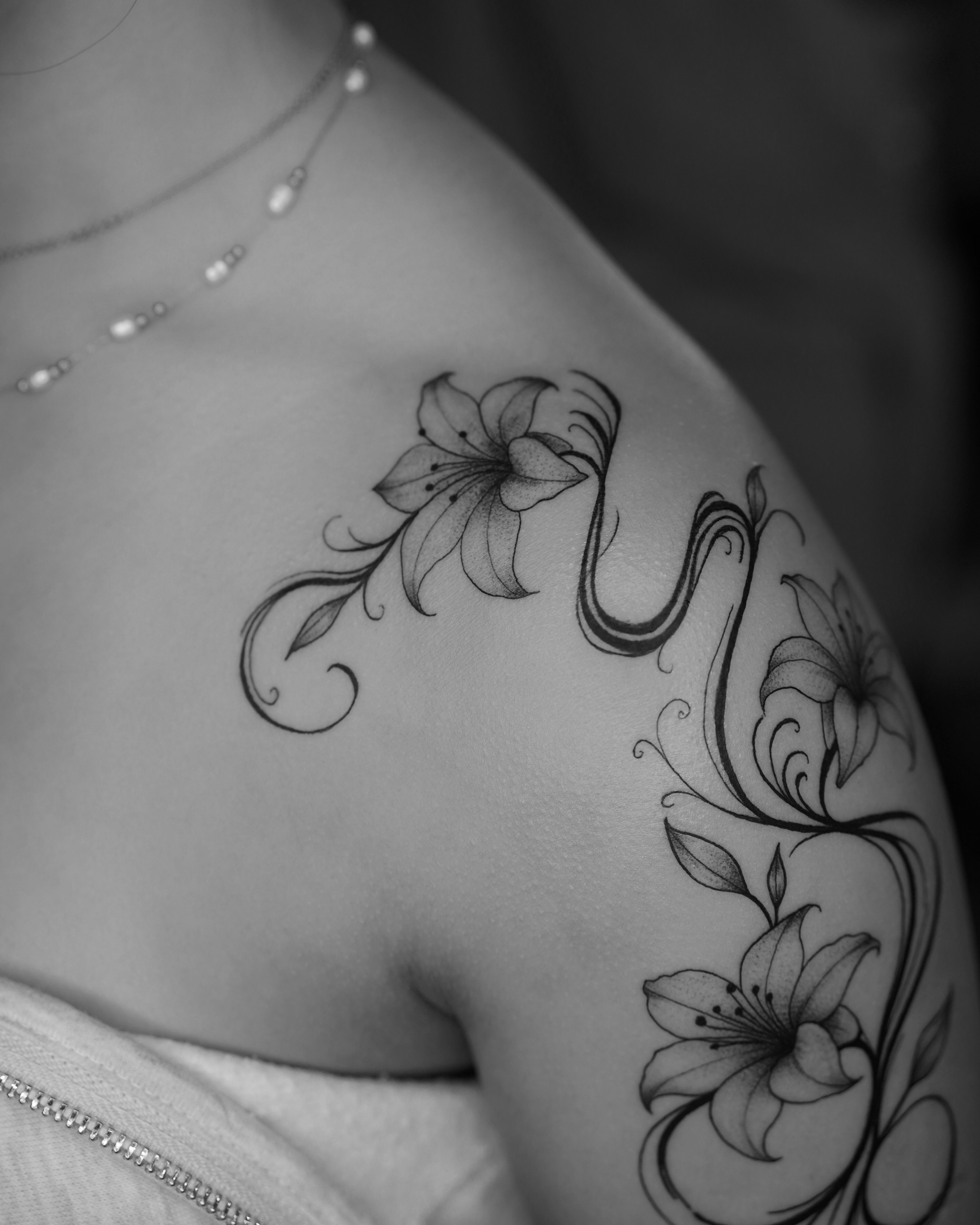
Black and grey vs. Colour in botanical pieces
Both approaches suit botanical work, but they age differently on skin. Monochrome shading creates tonal depth that mirrors graphite illustration. It holds contrast well over the years and suits clients who want a refined, almost archival quality.
Colour adds immediate vibrancy. A pink peony or a deep burgundy rose reads more naturalistically in full colour. But colour requires more diligent sun protection over time, especially in Portugal's summers, to prevent the pigments from fading unevenly.
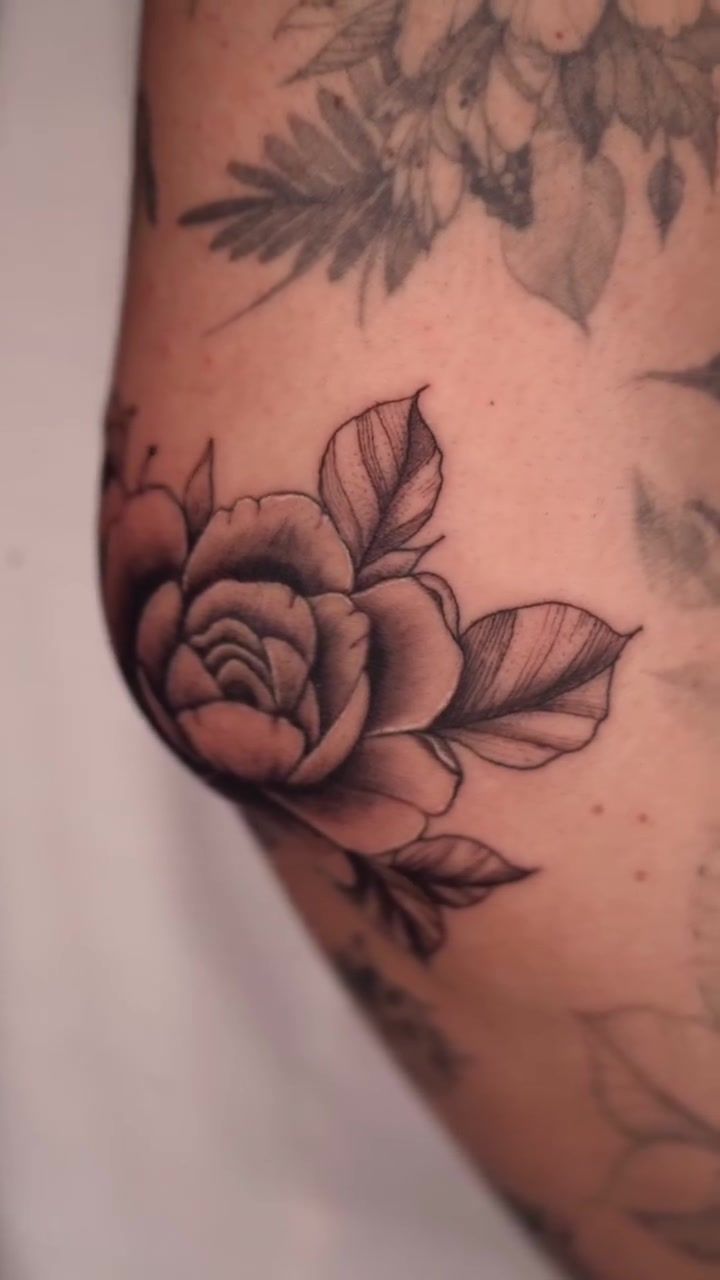
How the Studio Approaches Botanical Tattoos
From reference to custom design
References are welcome. Copying them is not how the studio works. The artist sketches original compositions informed by what you bring rather than lifted from it. There are practical reasons for this beyond artistic pride.
A botanical illustration from a book was designed for a flat page. Skin curves, compresses, and stretches. A composition mapped directly from a flat reference can look correct on paper and wrong on the body. Redrawing it for your specific placement solves that before the needle touches skin.
"The reference tells me what plant you love. The sketch tells me how to make it live on your body specifically."
Placement conversations and why they matter
Placement affects everything: how petals and stems flow with underlying muscle, whether a composition compresses when you move your arm, how visible the piece is to you daily. The ribcage is a popular placement for botanical work because the long vertical surface suits trailing stems. But it's also the most challenging to sit for. The forearm and shoulder offer more stable canvases and generally heal more evenly.
Read more about what floral work actually demands from an artist in terms of placement knowledge and technical preparation.
What the consultation actually involves
The consultation covers placement, sizing, tonal approach, and skin tone. Darker skin tones handle certain pigments differently, and the shading technique may need adjustment to ensure contrast reads clearly. None of this is a problem. It's just information the artist needs before sketching.
You'll leave the consultation with a clear picture of what the piece will look like and why each decision was made.
Placement, Sizing, and What to Expect in a Session
Best placements for botanical work
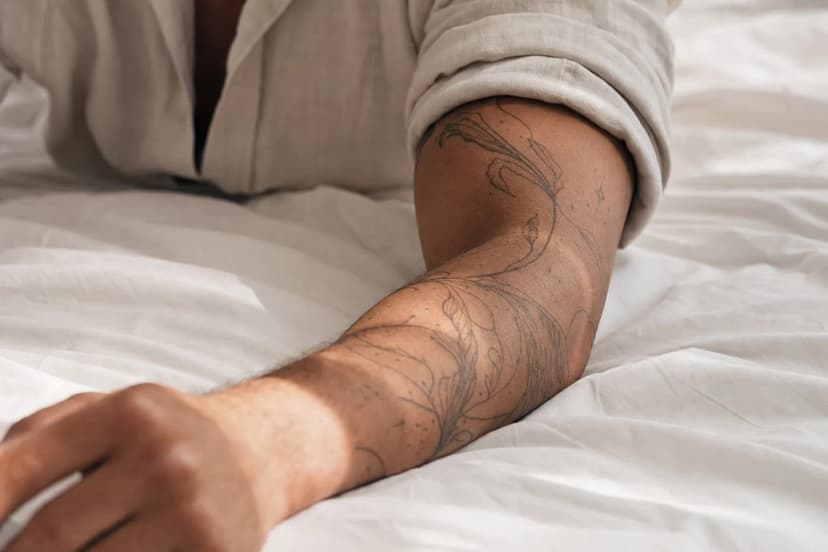
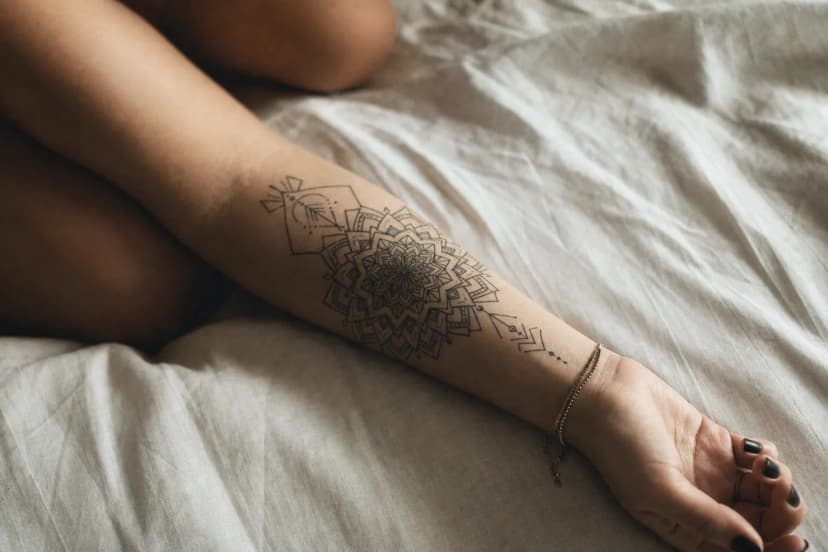
Different surfaces behave differently for fine linework. The outer forearm is flat, visible, and heals predictably. The shoulder wraps naturally and suits curved compositions. The thigh offers a generous canvas for larger pieces with room for negative space. The ribcage rewards patience during the session but produces some of the most striking results.
- Outer forearm: Flat surface, excellent linework retention, highly visible placement
- Shoulder: Curved canvas that suits compositions with flowing stems and layered petals
- Thigh: Large surface area, good for complex multi-stem pieces with room to breathe
- Ribcage: Dramatic placement, ideal for vertical botanical compositions, higher sensitivity during the session
- Inner arm: Softer skin, suits delicate botanical work but requires careful sun protection
Session length by piece size. A rough guide
Session time depends on complexity as much as size. A piece with dense petal layering and fine shading takes longer than a simpler outline of similar dimensions. This table gives a realistic starting point; the artist will confirm timing after reviewing the finalised design.
| Approximate size | Typical session length | Suited placements |
|---|---|---|
| 4-6 cm (small) | 1-1.5 hours | Wrist, ankle, behind ear |
| 8-12 cm (medium) | 2-3 hours | Forearm, shoulder, calf |
| 14-20 cm (large) | 3-5 hours | Thigh, ribcage, upper arm |
| Full sleeve or panel | Multiple sessions, 4-6 hours each | Arm, leg, back panel |
Bring reference images but stay open to compositional input. And wear, or bring, clothing that gives clean unobstructed access to the planned placement.
Healing Botanical Tattoos in Lisbon's Climate
Summer humidity and what it means for aftercare
Lisbon summers run warm and humid, particularly down near Cais do Sodré and the Tagus waterfront. That humidity matters when you're healing a tattoo. Sweat building under a protective wrap, especially on the ribcage or inner arm, creates a warm, moist environment where bacteria can thrive.
Fineline botanical work is also more sensitive to over-moisturising than bolder tattooed styles. The lines sit closer together and the skin needs to breathe during the healing phase. A thin layer of unscented aftercare cream, twice a day, is enough. More than that risks softening the skin surface and pulling pigment before it fully settles.
The first two weeks: what to avoid
The first two weeks set the tone for how the piece will look once healed. Missing one small detail here can mean a line that heals faded or a shaded area that patches unevenly.
- Keep the tattoo out of direct sunlight for at least four weeks. The Tagus riverfront and beaches near Belém are beautiful, but wait.
- No swimming. Ocean water, pool chlorine, and the Tagus all introduce bacteria and chemicals to an open wound.
- Don't re-wrap the piece after the initial healing wrap comes off, unless the artist specifically advises it for your placement.
- Pat the area dry after showering rather than rubbing. Friction on new linework lifts pigment.
- Apply a thin, unscented moisturiser twice daily. Bepanthen or a similar fragrance-free balm works well.
- If the piece is on your ribcage or inner arm, avoid heavy exercise that causes significant sweating for the first ten days.
For general guidance on tattoo healing, the NHS has a clear overview of what to watch for during the healing process.
For style-specific notes on how delicate botanical tattoo work heals compared to bolder styles, finding the best floral tattoo artist in Lisbon covers this in more depth.
Frequently Asked Questions
What is the difference between a botanical tattoo and a floral tattoo?
A floral tattoo prioritises decorative beauty: pattern, symmetry, and style. A botanical tattoo draws from scientific illustration traditions, aiming for accurate petal structure, natural proportions, and realistic plant anatomy. The distinction matters when briefing an artist, because the technique and reference material are quite different.
How big does a botanical tattoo need to be to hold detail?
For work with layered petals and delicate stems, most artists recommend a minimum of 6-8 cm in at least one dimension. Smaller than that, fine details can blur as the skin settles over the first year. Placement on flatter skin, like the forearm or shoulder, also helps smaller pieces hold their resolution longer.
How long does a botanical tattoo session take?
A single botanical piece roughly palm-sized typically takes two to three hours. A larger composition covering the shoulder or wrapping the forearm can run four to six hours across one or two sessions. The artist will give a realistic estimate during your consultation once the design and placement are confirmed.
Can I get a botanical tattoo in colour or is black and grey better?
Both work well but they age differently. Monochrome shading settles into the skin with a classic, graphite-illustration quality that holds contrast for years. Colour adds vibrancy but requires more careful sun protection over time. Your skin tone and the specific plants in the design are worth discussing with the artist before deciding.
How should I look after a botanical fine line tattoo in a hot Lisbon summer?
Keep the piece out of direct sunlight for at least four weeks. Avoid the beach, pool, and ocean until the skin is fully healed. Typically three to four weeks minimum. Lisbon's summer humidity means sweat can interfere with the healing wrap, so follow the studio's specific wrap-removal timing rather than generic online advice.
What should I bring to a botanical tattoo consultation in Lisbon?
A small folder of reference images. Botanical illustrations, photographs of specific plants, mood images for tone or style. Helps the artist understand your direction. Note the placement you have in mind and wear clothing that gives easy access to it. You don't need a finalised concept; the consultation is where the design takes shape.