Flowers seem simple. A petal, a stem, a little shading. But walk into any tattoo studio in Lisbon and you'll quickly find that floral work is one of the most technically demanding styles to do well. The difference between a botanical tattoo that ages gracefully and one that turns into a grey smudge by year four comes down to decisions most clients never see: needle gauge, line spacing, how the artist handles a curve at the shoulder cap versus a flat forearm.
If you've been searching for the best floral tattoo artist near you, this guide is worth reading before you book anything. We'll show you exactly what to look for, how the studio approaches botanical design, and what to expect from the process start to finish.
Why Floral Tattoos Demand a Specialist
The difference between a flower and a good floral tattoo
A floral tattoo sits at the intersection of three separate skills: line control, tonal shading, and spatial composition. You need all three working together. An artist who draws beautifully but applies ink inconsistently will produce work that looks stunning on paper and uneven on skin.
Thin petals rendered in fineline require genuine needle gauge discipline. A single-needle (or tight 3-round liner) moving at inconsistent hand speed will produce lines that vary in weight unintentionally. That variation compounds over time as the ink migrates slightly within the dermis (the deeper skin layer where tattoo pigment actually lives). What looked like a whisper-thin petal edge becomes a soft blur.
Composition matters just as much as execution. A bunch of flowers dropped onto a forearm without considering how the design moves with the body is a common mistake. Good floral work flows. It reads well from three metres away and holds up under close inspection.
Why so many floral tattoos fade or blur within years
The culprit is usually line spacing. When petals are drawn with lines packed too closely together, the ink spreads into neighbouring lines as the skin heals and ages. Within three to five years, those crisp edges clump together and lose definition. You can't fix this after the fact.
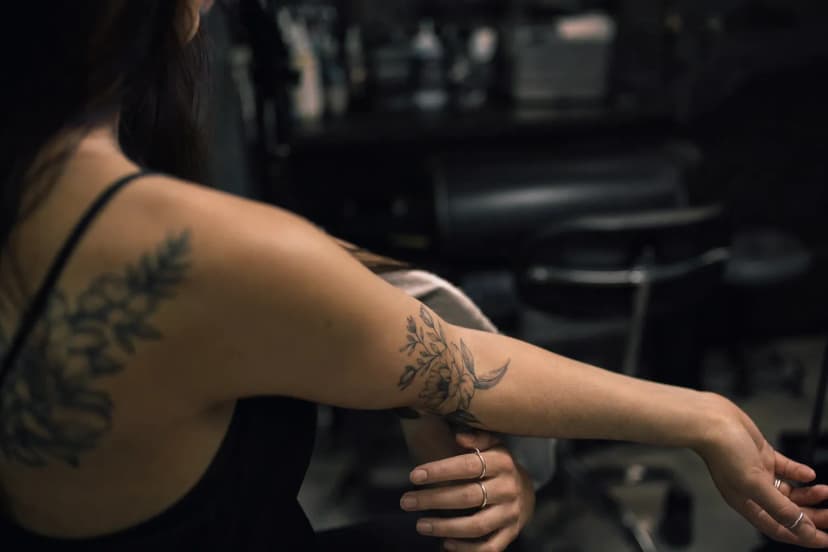
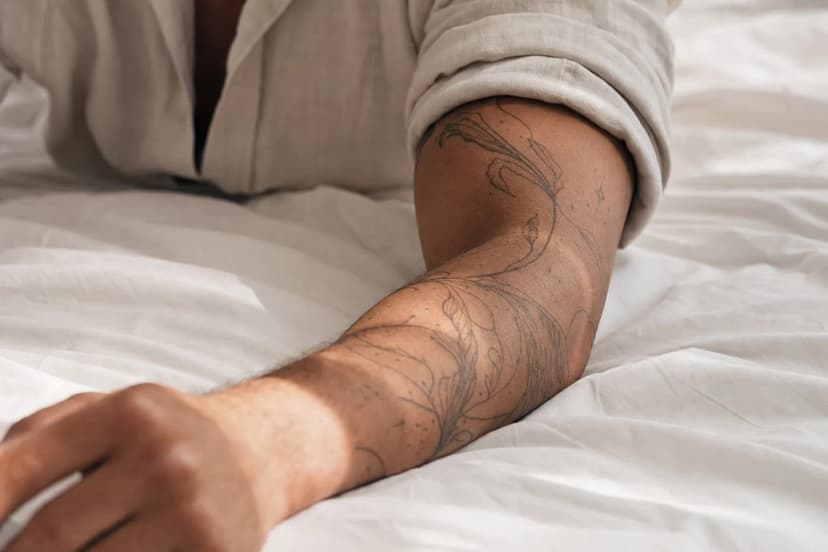
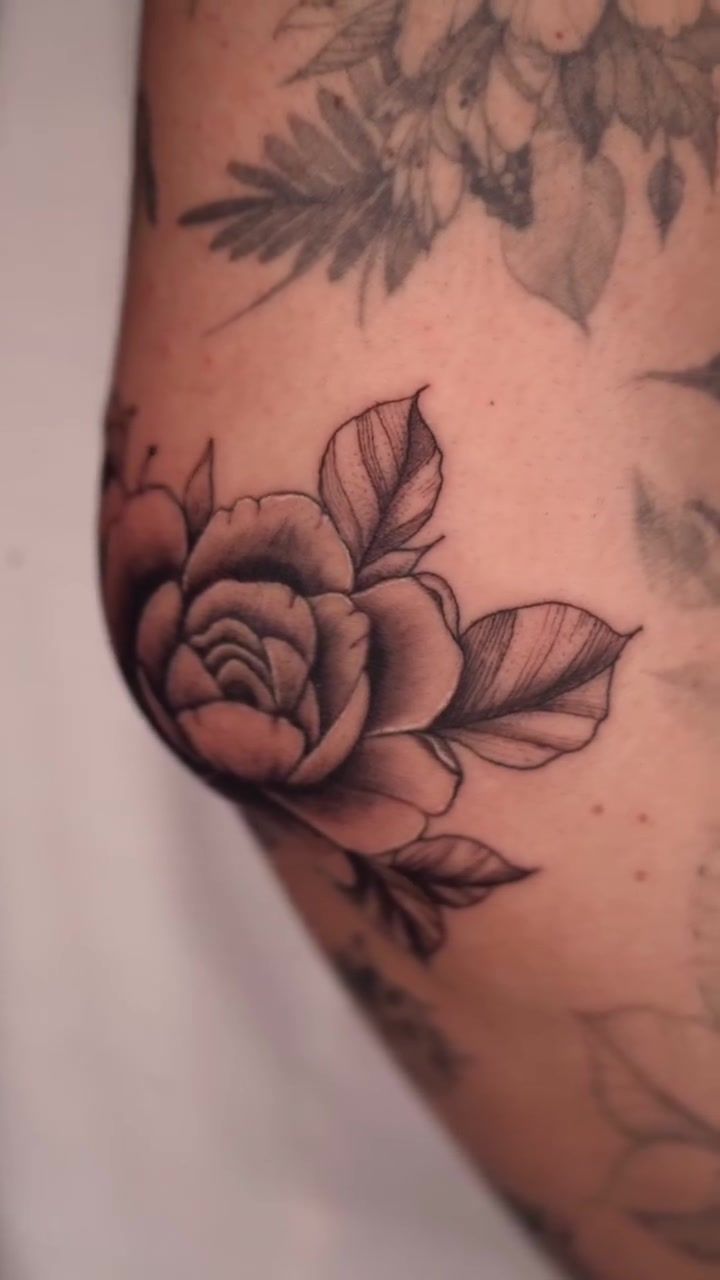
Take a piece like the rose on the elbow, part of a floral sleeve in progress in the studio's portfolio. The elbow is one of the hardest spots on the body for linework. Skin there creases and stretches constantly. Getting consistent, well-spaced lines on that surface requires both technical skill and an understanding of how the skin will behave over time. That's not beginner territory.
What Makes a Strong Floral Portfolio
Reading linework quality in photographs
Portfolio photos can flatter almost any piece. Fresh ink always looks sharper than it will in six months. So train your eye to look past the surface.
Check for consistent line weight. Lines that taper intentionally. Narrowing at the tip of a petal in a controlled way. Show skill. Lines that vary randomly show inconsistency. Look at how the artist handles petal gradients: the shift from deep shadow to pale highlight should feel smooth. Muddy mid-tones usually mean the artist overworked the area, depositing too much ink too fast.
If the studio shows healed examples, pay extra attention to those. A piece that looks clean after full healing is the real measure of quality.
Composition and placement across the body
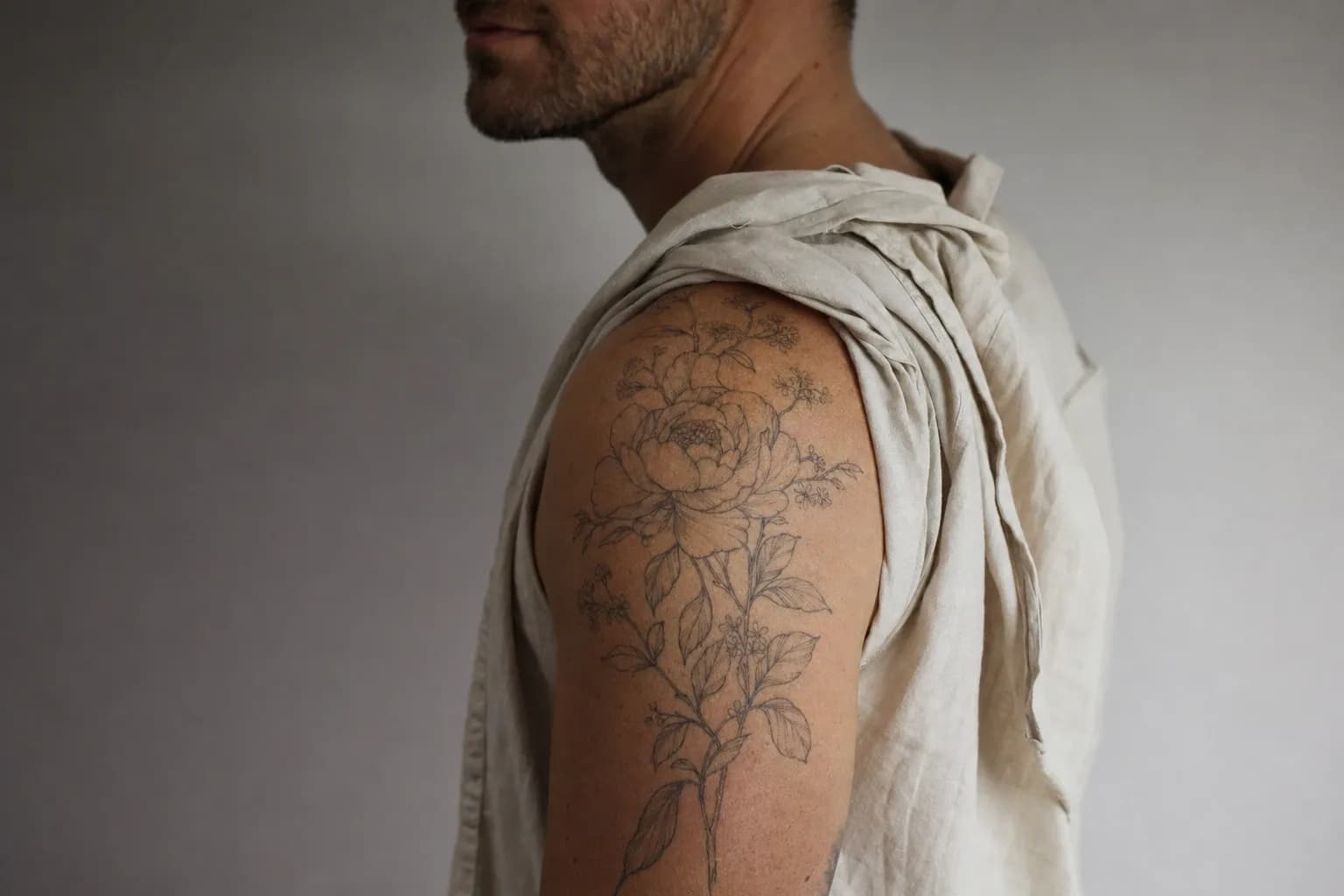
A strong portfolio shows work adapted to different body parts, not the same composition copy-pasted onto different clients. Shoulder caps curve in three dimensions. Forearms are flatter but taper. Ribs expand and contract with every breath. A skilled botanical tattoo artist in Lisbon will design for each of these differently.
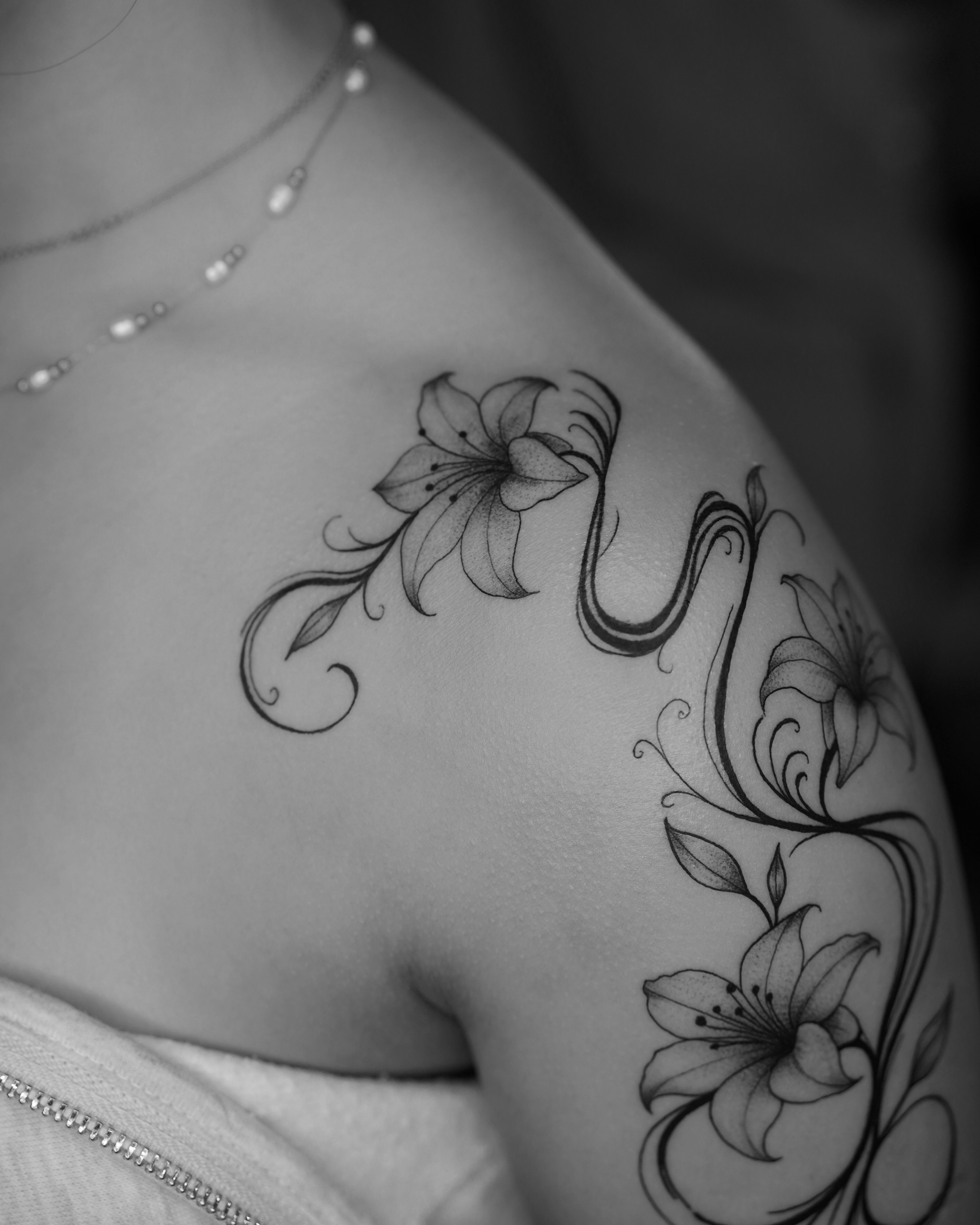
Notice in that shoulder piece how the composition respects the anatomy. The design doesn't fight the curve. It moves with it. That kind of spatial thinking is what separates considered floral work from a design simply placed on skin.
The Studio's Approach to Botanical Design
From first sketch to final stencil
Every piece starts with a consultation. The studio collects references from you, then builds a custom sketch from scratch. No templates, no recycled designs. Each flower tattoo design in Lisbon produced here is drawn for your specific anatomy and your specific brief.
Real botanical photography makes better reference than curated Pinterest boards. A photo of an actual peony in natural light shows how petals layer and catch shadow in a way that filtered Instagram images don't. Bring that kind of source material and the consultation becomes genuinely productive.
Stencil placement comes before any needle touches skin. The artist does a dry run on your body, repositioning until the design sits exactly right. If the stencil sits 2mm off-centre on a shoulder piece, you'll notice it every time you see it. That dry-run step is non-negotiable here.
Lisbon's natural light during daytime consultations also helps with tonal planning. The studio works in conditions where the artist can read how light falls across your skin's undertones, which matters when deciding how to balance warm and cool shading in a botanical piece.
Combining floral with other styles. Fineline, realism, lettering
Floral work doesn't have to stand alone. Some of the most considered pieces in the portfolio pair botanical elements with other styles. The studio's floral tattoo services frequently intersect with fineline tattoo work, since the two styles share the same demand for precision and restraint.
Lettering is a natural companion to botanical design. Look at the studio's script and floral hand tattoos to see how text and flowers can share the same space without competing. The key is designing both elements as a single composition, not two separate ideas that happen to sit near each other.
Floral and realism is another strong pairing. A hyper-realistic rose alongside a delicate fineline wildflower arrangement creates contrast that rewards attention. But it requires the artist to move between two very different technical modes within the same session, which is a skill in itself.
"A good floral tattoo earns its detail. Every line should be where it is because it needs to be there, not because more always looks like more."
Placement, Sizing, and Healing in Lisbon's Climate
Which body areas suit floral designs
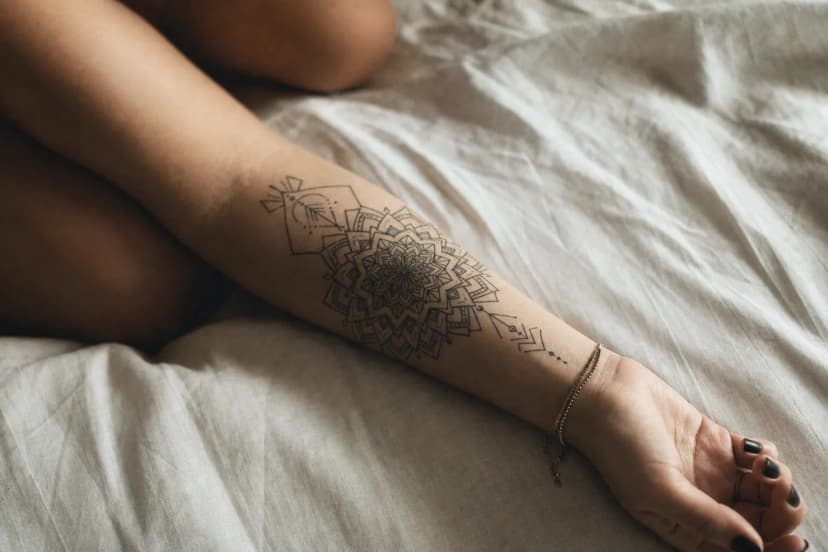
Different placements bring different challenges. The outer forearm is forgiving: relatively flat, easy for the artist to access, and straightforward to keep clean during healing. Shoulder caps offer more canvas but require compositional thinking in three dimensions. Thighs are popular for larger pieces because the skin is stable and the area heals reliably well.
Hands and fingers are a different conversation. The script and floral hand tattoos in the portfolio show what's possible, but hands fade faster than almost any other placement. Skin there regenerates quickly, and daily use means constant friction. Go in with realistic expectations if you want a fineline floral tattoo in Portugal on your hands.
| Placement | Typical Session Length | Key Healing Consideration |
|---|---|---|
| Outer forearm | 90 min. 2.5 hours | Easy to keep clean; avoid tight sleeves for 2 weeks |
| Shoulder cap | 2.5. 4 hours | Bra straps and bag straps can irritate; plan clothing |
| Thigh | 2. 4 hours | Clothing friction; loose trousers essential first week |
| Ribs | 2. 3.5 hours | Movement during healing; sleep position matters |
| Hand / fingers | 60. 90 min | High fade risk; touch-ups often needed at 3 months |
Healing considerations in Lisbon's humid summers
Lisbon runs warm and humid from June through September. Sweat is the enemy of a fresh tattoo. It introduces moisture and bacteria to skin that's essentially an open wound for the first few days. During summer, you'll need to clean a new floral tattoo more frequently and rewrap with breathable bandage if you're spending time outside.
Mild winters in Lisbon are genuinely good for healing larger pieces. Lower humidity, less sun exposure, and cooler temperatures mean the skin recovers with fewer complications. If you're planning a full floral sleeve or a detailed shoulder piece, booking between October and February is worth considering. The studio sees faster, cleaner heals on big botanical pieces during that window.
Sun is the other factor. UV light degrades ink, especially the fine grey tones that give shaded florals their depth. Keep fresh work out of direct sun for at least four weeks, and apply SPF 50 to healed tattoos whenever you're in the Lisbon summer light.
Practical Steps Before Booking Your Floral Tattoo
- Gather real botanical reference. Photographs of actual flowers in natural light beat filtered social media screenshots. Look for images that show shadow, texture, and how petals overlap realistically.
- Dress for your placement. Shoulder piece: wear or bring a strapless top. Forearm: short sleeves or loose long sleeves you can roll up. Ribs: a loose button-front shirt you can open easily.
- Moisturise your skin for two weeks before the session. Well-hydrated skin takes ink more evenly. Dry, flaky skin can cause uneven saturation.
- Avoid sunburn on the area. Burned skin cannot be tattooed safely. Give burnt skin at least three weeks to fully recover before your appointment.
- Come with a size in mind, but stay open. The artist will scale the design to suit your anatomy. A piece that looks right on a reference image at 8cm may need to be 11cm on your arm to preserve the linework detail.
- Think about long-term composition. Even if today's piece is standalone, consider where you might want to take it later. Building a sleeve or adding elements later is much easier when the first piece was designed with that in mind.
The same craft-first thinking that applies to botanical work applies across all styles. If you're curious how that approach works for text-based designs, the guide on what great lettering actually takes covers similar ground from a different angle.
- Send reference images before your consultation so the artist can prepare initial ideas.
- Confirm placement and approximate size during the consultation call.
- Book your session during a window when you can avoid sun exposure and heavy physical activity for the first two weeks.
- Arrive well rested, fed, and hydrated on the day of your appointment.
Frequently Asked Questions
How long does a floral tattoo session take?
It depends on size and complexity. A small single-flower piece on the wrist might take 90 minutes. A detailed floral shoulder cap with shading and multiple blooms usually runs three to four hours. Sleeves or larger compositions are split across multiple sessions so the skin can recover properly between rounds.
Do floral tattoos age well?
They can, but technique matters enormously. Lines spaced too closely blur together within a few years as the ink spreads slightly in the dermis. Well-executed fineline floral work with deliberate spacing and clean gradients holds its shape much longer. Placement also plays a role: hands and fingers fade faster than upper arms or thighs.
Can I combine flowers with another style like lettering or realism?
Yes, and it's a natural pairing when done with intention. Botanical frames around a script phrase, or a single hyper-realistic rose alongside a delicate fineline arrangement, are both approaches the studio works with regularly. The key is planning the composition as one unified piece, not two separate ideas placed side by side.
What's the best placement for a first floral tattoo?
The outer forearm and shoulder are both strong starting points. They offer relatively flat, stable skin, good visibility for the artist during work, and straightforward aftercare. They also heal well during Lisbon's mild winters. Ribs and hands are popular but carry additional complexity: better approached once you know how your skin takes ink.
How do I find the right floral tattoo artist in Lisbon?
Look beyond pretty photographs. Check that line weights are consistent, that petal gradients don't turn muddy, and that designs feel composed rather than crowded. Also look for healed examples, not just fresh work. Fresh tattoos always look sharper than they settle. A studio willing to show healed pieces stands behind its long-term results.