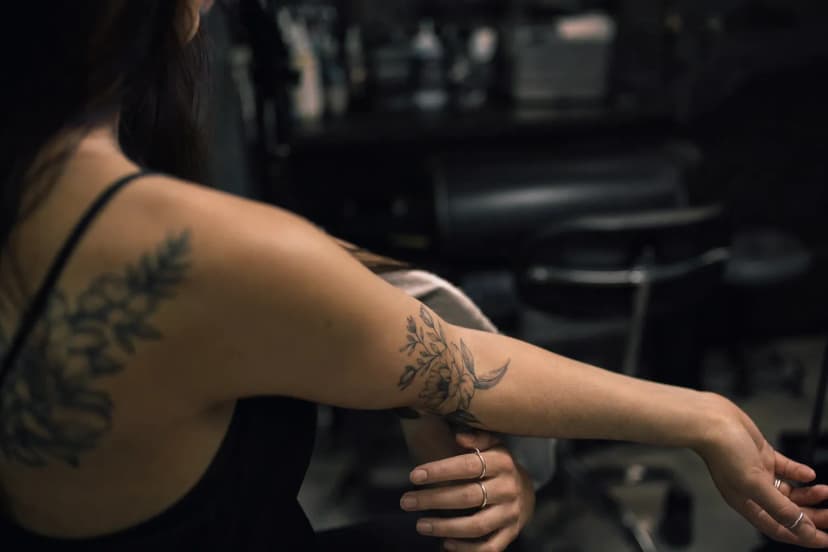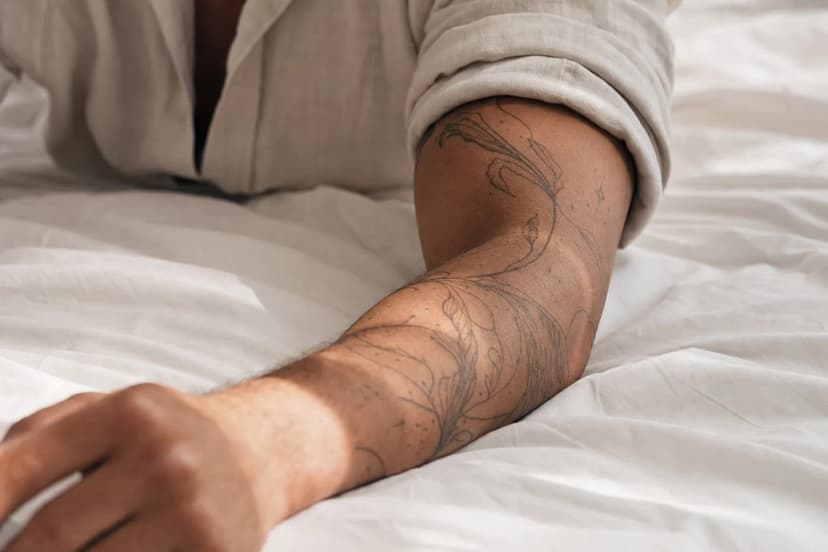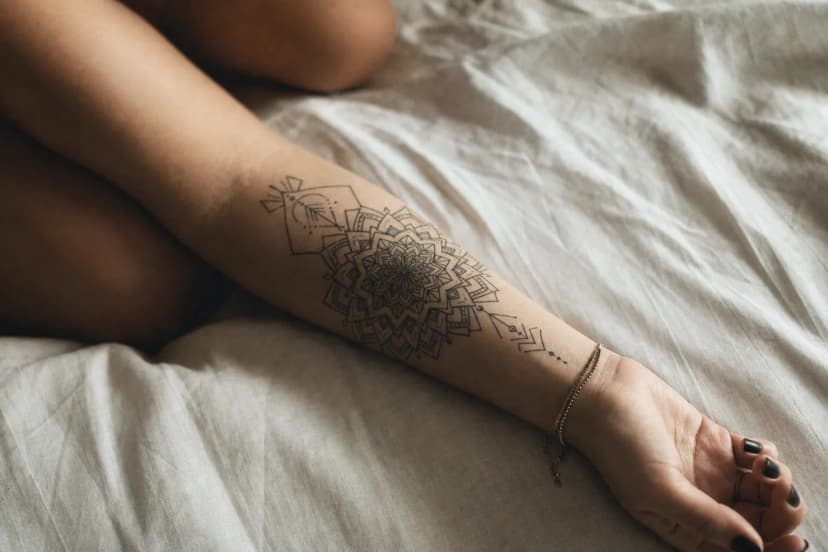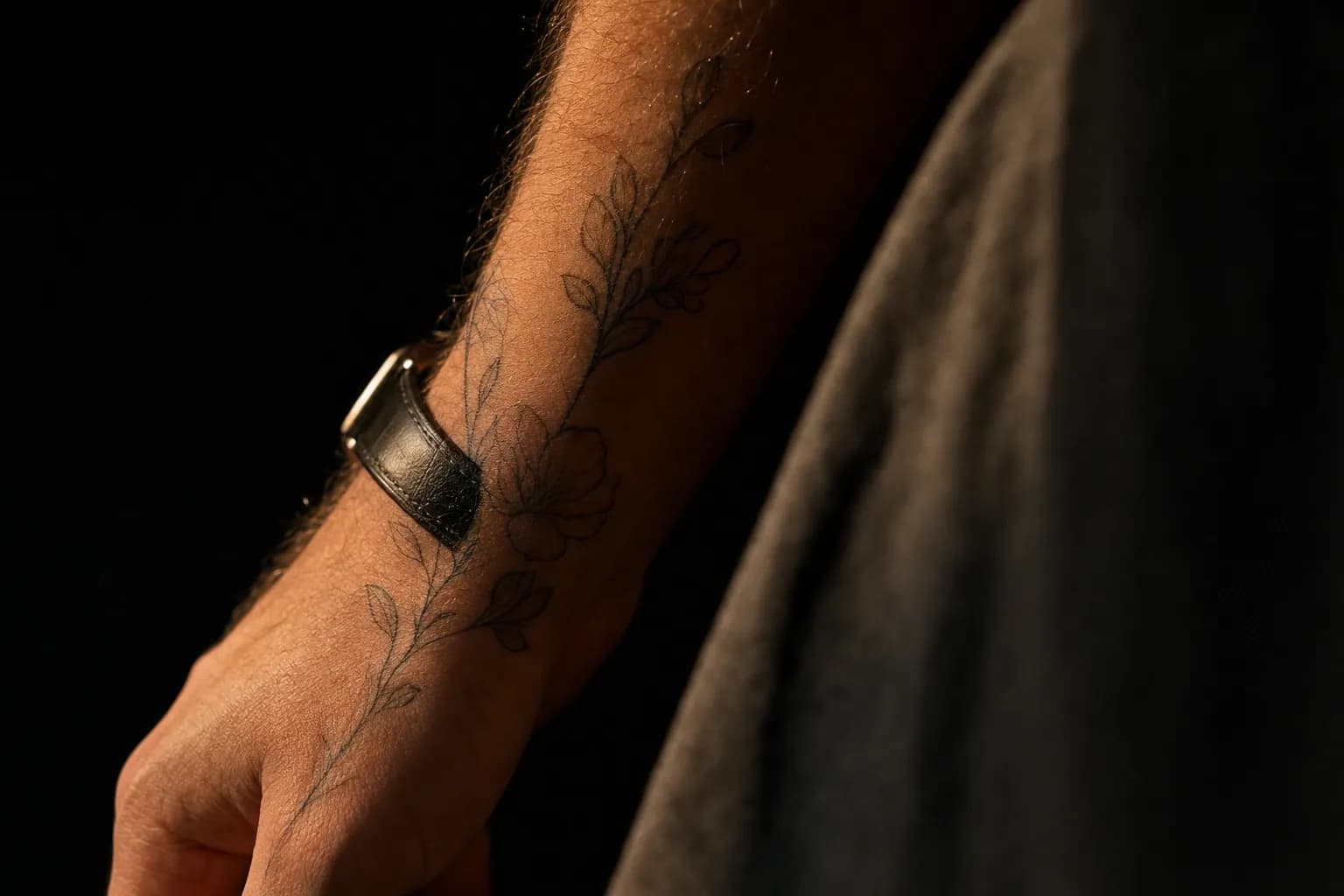
Why "Near Me" Is the Wrong Starting Point
When you search "botanical tattoo artists near me", you're really asking two separate questions. One is about geography. The other, the one that actually matters, is about skill.
Botanical work demands specific needle configurations, an understanding of ink dilution, and a feel for organic line weight that varies petal by petal. A studio five minutes from your flat that specialises in old-school American traditional won't serve you well here. A studio a metro ride away, one that has spent years refining this exact style, almost certainly will.
The real question is: who near you is genuinely accomplished at this? That's what the rest of this guide answers.
What Botanical Tattooing Actually Involves
The difference between "floral" and "botanical"
Floral is a broad category. Botanical is a specific approach within it. A floral tattoo might be a stylised rose with graphic outlines and flat fills. A botanical tattoo draws from something closer to scientific illustration: accurate leaf venation, realistic petal structure, the way a stem bends under its own weight.
It's the difference between a symbol of a flower and a record of one. That naturalistic precision is what gives the best delicate botanical tattoos their quiet authority.
Linework, shading, and negative space in plant-based designs
Good botanical work uses three tools in careful balance. Fine linework defines the edges of petals and stems. Controlled grey-wash shading (diluted ink built up in thin passes) creates depth and dimension inside those forms. And negative space, the uninked skin left deliberately bare, does as much compositional work as the ink itself.
Get that balance wrong and the piece either looks flat or muddy. Get it right and the design breathes. Our floral tattoo service is built around this balance, and the approach crosses directly into fineline tattooing at the needle level.
How to Read a Botanical Portfolio Like an Artist
Line consistency across petal edges
Open any portfolio and go straight to the thinnest lines. Do they hold their width from one end to the other, or do they wobble and swell? A consistent 0.3mm line across a full petal edge takes real needle control. Inconsistency here won't improve when it's on your skin.
Look at where petals overlap, too. The shadow line between them should be darker and slightly heavier than the outer edge. If both lines look identical, the work lacks tonal thinking.
Tonal range in shading
Petals should have internal gradients, not just outlined silhouettes. The lightest point in a petal should be noticeably lighter than the mid-tone, which should be noticeably lighter than the shadow. If the shading looks like one flat grey wash, the artist isn't controlling their dilution ratios carefully enough.
This tonal range is what separates a flat design from one that reads as three-dimensional. For a deeper look at what separates good work from exceptional work, see our guide on what quality botanical work actually looks like.
How healed work looks versus fresh
Fresh ink always looks sharper than healed ink. Always. The question is how much it softens. Ask any artist you're considering for healed photos, specifically of botanical and floral pieces. If they can't show you any, that's a meaningful gap in their portfolio record.
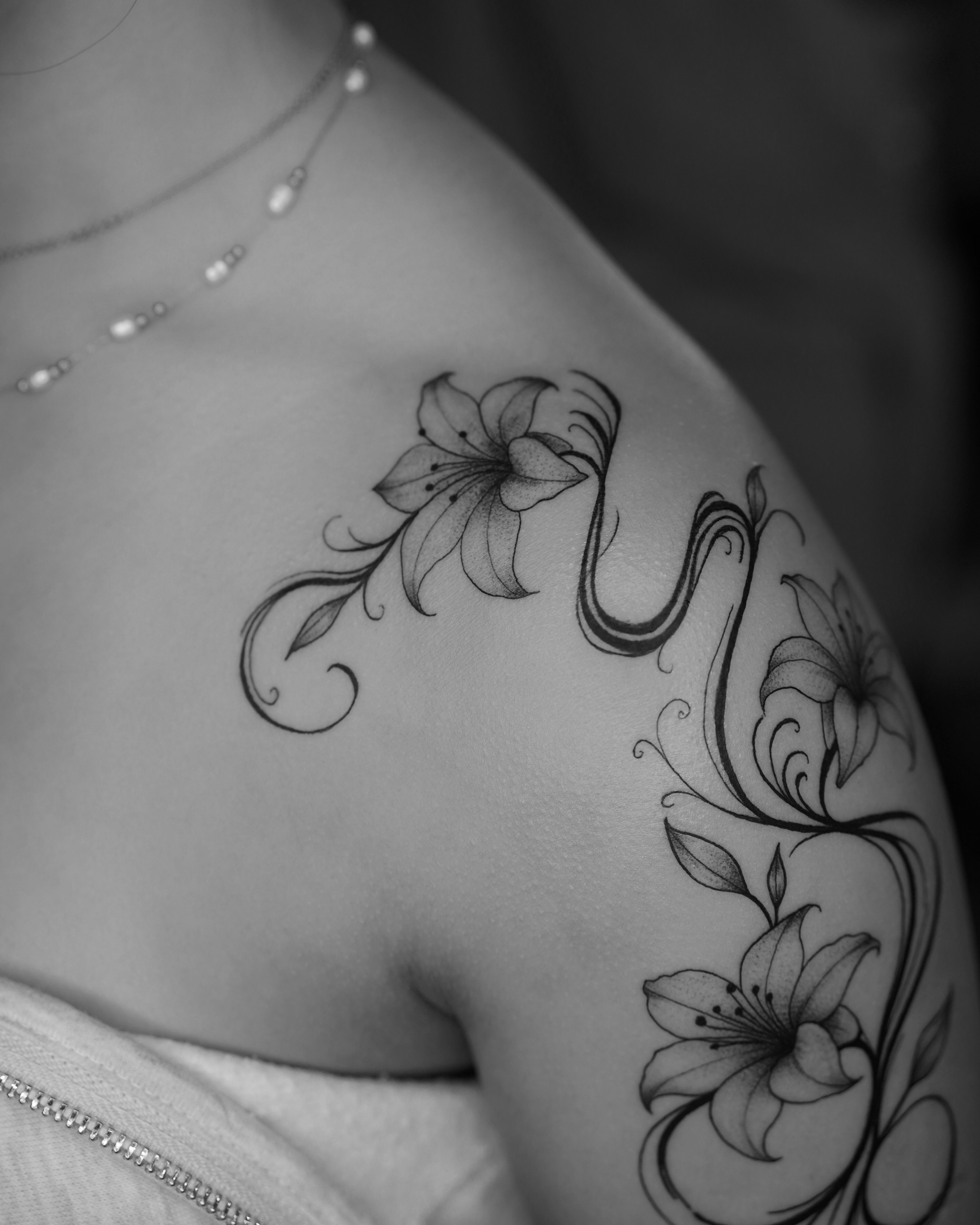
Healed photos reveal whether the thinnest lines stay crisp or blur into the dermis. On a botanical piece, those hairline lines around leaf edges are often the first thing to spread if they were applied too shallow or too deep. Either way, you see it.
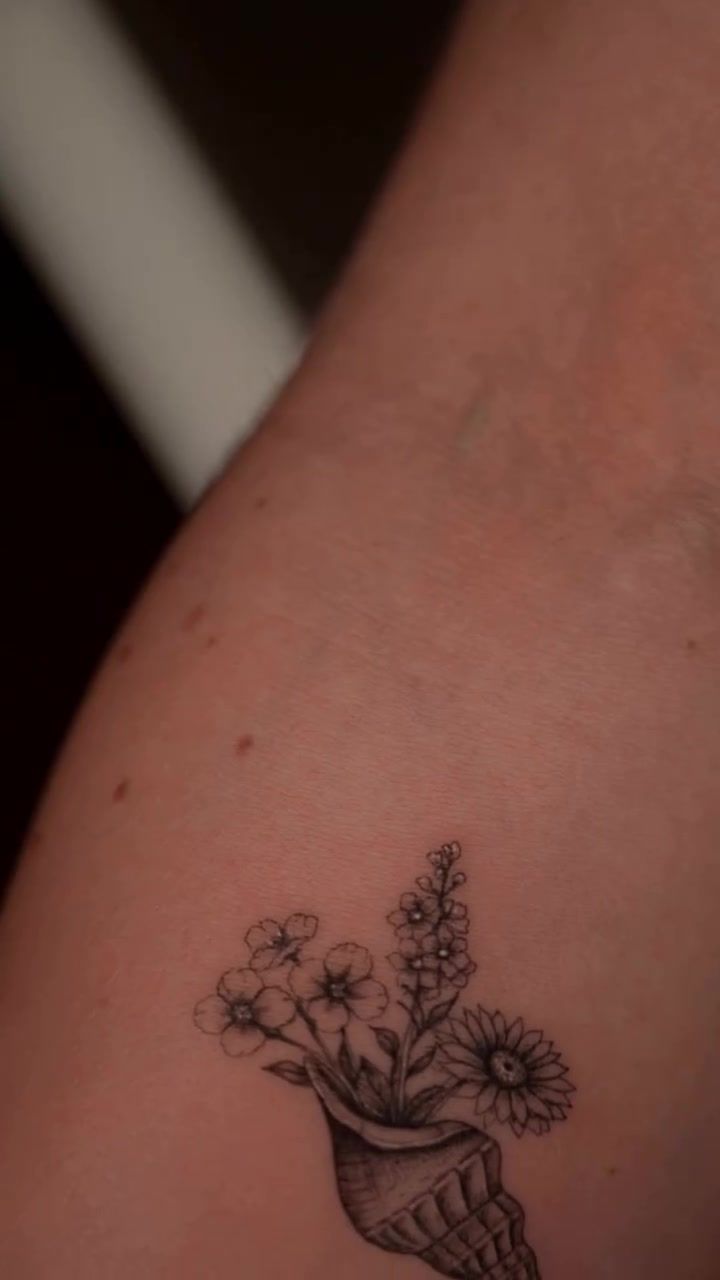
How the Studio Approaches Botanical Work in Lisbon
The consultation process
The consultation is where the design actually begins. The studio doesn't copy reference images wholesale. Reference is a starting point for conversation, a way to communicate mood, detail level, and composition preferences. What gets drawn is original work shaped by your ideas and the artist's technical judgment.
"Bring reference that shows what you're drawn to, not a blueprint you want reproduced. The best botanical tattoos come from a conversation, not a copy."
This matters for botanical work especially. Flower photos from the internet are shot under studio lighting with depth-of-field blur. Translating that into skin requires real artistic decision-making, not tracing.
Sizing and placement decisions
Lisbon's summers are humid and sunny. That combination affects placement advice in practical ways. Areas that flex, sweat, and catch direct sun, like inner elbows, wrists, and ankle fronts, heal differently than a shoulder or upper arm. The studio factors this into placement recommendations, not as a rule but as something to weigh honestly.
The neighbourhoods around Príncipe Real and Cais do Sodré have shaped a particular aesthetic in this city: understated, considered, nothing wasted. That restraint sits naturally alongside minimalist botanical compositions, where a single sprig of eucalyptus can carry more weight than a crowded bouquet.
Needle selection follows the design. Single-needle work handles the finest veining and hairline stems. A tight round liner, typically a 3RL or 5RL configuration, builds petal outlines with a bit more structure where the design needs it. The artist switches between these during a session depending on what the piece requires.
Placement, Sizing, and What to Expect in the Chair
A single botanical sprig with one or two stems and minimal shading will generally take around 90 minutes. A half-sleeve incorporating multiple plant species, tonal variation, and detailed leaf structures is a different project entirely, one that unfolds across multiple sessions.
| Placement | Typical Session Length | Healing Considerations |
|---|---|---|
| Shoulder / upper arm | 90 min to 3 hours | Heals well; less flex and sun exposure |
| Forearm (outer) | 90 min to 2.5 hours | Good surface area; watch sun exposure in Lisbon summers |
| Sternum / ribcage | 2 to 4 hours | Less movement; keep away from tight clothing during healing |
| Ankle / shin | 60 to 90 min | Lower legs swell; elevation helps in the first 48 hours |
| Inner wrist | 45 to 90 min | High flex area; fine lines need sizing room to age well |
| Full floral sleeve | Multiple sessions (4+) | Plan sessions across months; allow full healing between passes |
Lisbon's August heat and UV intensity are real factors for aftercare. A breathable adhesive bandage for the first few days, followed by fragrance-free moisturiser and strict sun avoidance, gives botanical linework the best chance of healing crisp. Direct sun on a healing fine line floral tattoo in Portugal's summer will fade it before it's even fully settled.
- Wear loose, breathable clothing that won't press against the fresh piece
- Eat a proper meal before your session; blood sugar steadiness matters during longer sits
- Arrive with clean, moisturised (but not freshly lotioned) skin
- Avoid alcohol for 24 hours beforehand; it thins the blood and affects how ink sits
- Plan your route, the studio is accessible from central Lisbon without needing to cross the city
For a broader look at what distinguishes the best floral work in this city, our guide to finding the right floral tattoo artist in Lisbon covers the questions worth asking before you commit to a booking.
What to expect on the day
- The stencil goes on first. Check its position carefully before the artist begins. On a symmetrical botanical composition, 2mm off-centre will bother you every time you see the piece.
- Line passes come before shading. The outlines define the structure; shading adds volume afterward.
- The artist will clean and wrap the piece at the end. Follow their specific aftercare instructions, not generic advice from the internet.
- Surface healing takes two to three weeks. Full dermal settling takes six to eight weeks. Don't judge the final result before then.
Touch-ups after a year or two are normal for botanical work of this kind. A good artist plans the design with that in mind, leaving enough structure in the linework that a single session of refinement keeps the piece looking intentional rather than faded.
Frequently Asked Questions
How do I find a good botanical tattoo artist near me in Lisbon?
Start with the portfolio, not the map pin. Look for healed work alongside fresh photos, and pay attention to whether linework stays crisp at petal edges. A studio that specialises in fineline and floral styles will handle the tonal gradients and negative space that botanical tattooing depends on. Proximity alone tells you nothing about capability.
How long does a botanical tattoo take to heal?
Surface healing generally takes two to three weeks. Full dermal settling takes six to eight weeks. In Lisbon's humid summers, keep the piece out of direct sun and away from seawater during that window. A fine line floral tattoo in Portugal's intense UV is especially vulnerable to sun exposure while the skin is still repairing itself.
Are botanical tattoos better in fine line or shading?
Usually both. Fine linework defines petal outlines and stems; controlled grey-wash shading builds depth inside those forms. The balance between the two is where the artist's skill shows most clearly. Pure outlines without shading can look flat. Heavy shading without clean line structure loses the precision that makes a delicate botanical tattoo read as botanical rather than just decorative.
What size works best for a botanical tattoo?
It depends on the detail level. A single flower with realistic petal structure needs at least 6 to 8 cm to read clearly. Smaller pieces work well for minimalist sprigs or single stems. Your artist should advise based on placement. Areas that flex and stretch need a little more room for fine detail to hold over time. See our notes on tattoo placement ideas for small tattoos for more on this.
Do botanical tattoos age well on the skin?
They hold well when sized correctly and placed on lower-movement areas with less sun exposure. Forearms and upper arms tend to age better than hands, elbows, or ankles. Touch-ups after a few years are common and entirely normal. A good artist designs with longevity in mind, building enough line weight into the structure so that natural softening over time reads as settling, not fading.