Why Botanical Work Is Harder Than It Looks
Pick up almost any tattoo portfolio and you'll find flowers. They're everywhere. And yet a truly well-executed botanical tattoo is genuinely rare. If you're searching for a botanical tattoo artist near me and you're based in or visiting Lisbon, understanding why the style is demanding will save you from a disappointing result.
The problem with 'simple' floral tattoos
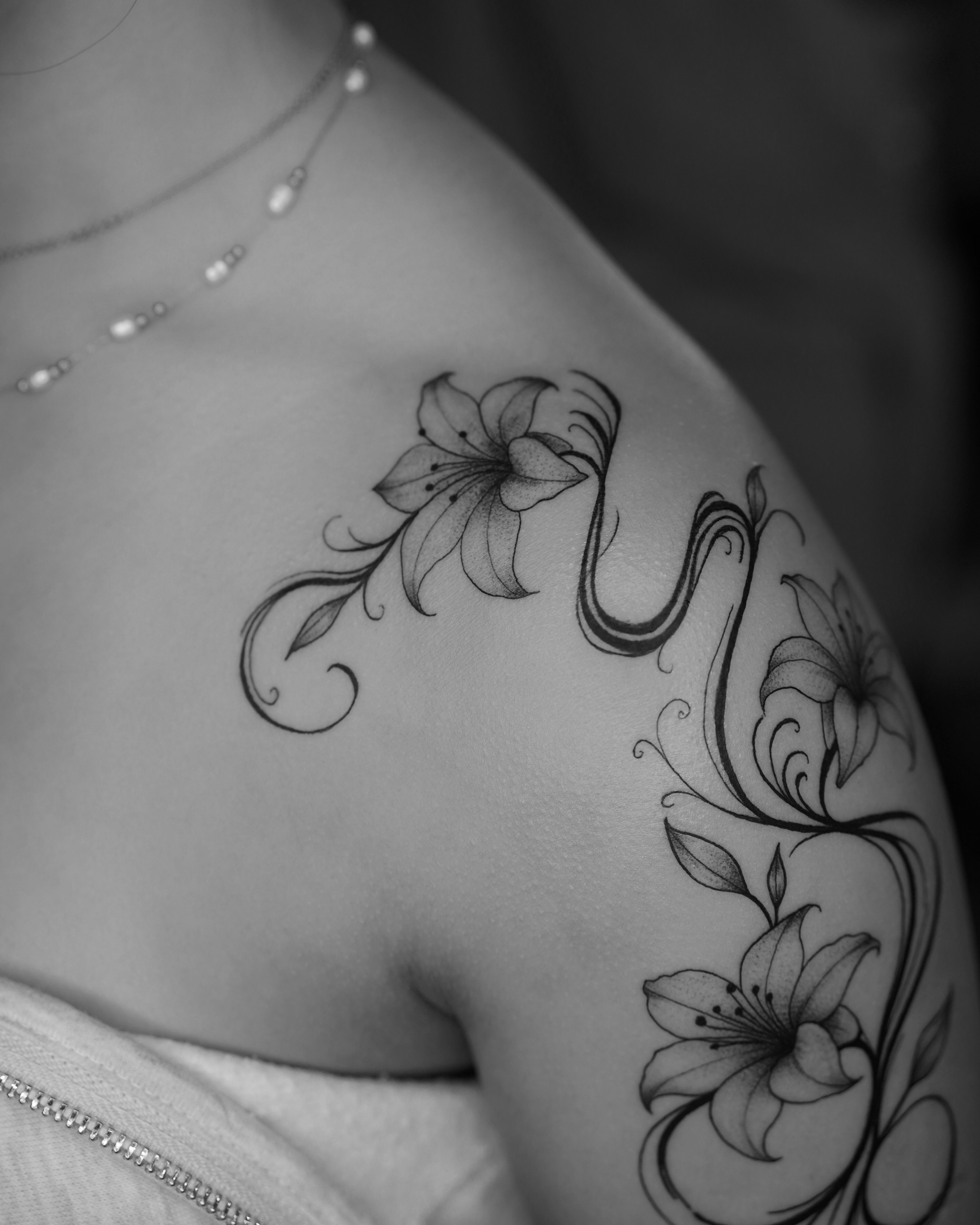
Geometric work has angles and symmetry to lean on. Lettering has structure. Flowers have none of that. Every petal edge is organic, slightly asymmetric, and entirely exposed. One wobbly line and the whole composition reads as amateurish.
Negative space matters just as much as the lines themselves. The gap between two petals, the way a leaf curls away from a stem, the tiny breath of untattooed skin that gives a blossom depth: all of it is deliberate. It doesn't happen by accident.
What separates a good botanical artist from a great one
The difference comes down to freehand confidence and ink knowledge. Tracing a stencil steadily gets you through geometric shapes. Botanical work demands that the artist understands how organic forms move, how they catch light, and how ink actually behaves inside the dermis over time.
Fineline botanical tattooing uses a single needle (sometimes a 3RL, which is three needles grouped in a round cluster) to draw ultra-thin outlines and build soft gradients. Those fine lines spread slightly as skin heals. A skilled botanical artist draws knowing what the piece will look like in eight weeks, not just the day it's done. That forward-thinking approach is what separates work that ages gracefully from work that blurs into a green smudge.
"Botanical work is a negotiation between what the plant looks like in nature and what the skin will let you do. You're always drawing for the healed result, not the fresh one."
What Botanical Tattooing Actually Involves
Fineline vs shaded botanical styles
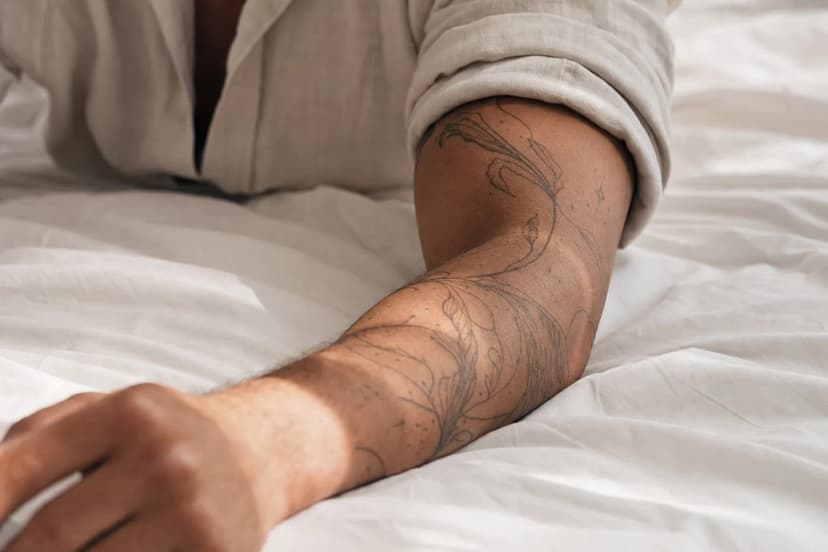
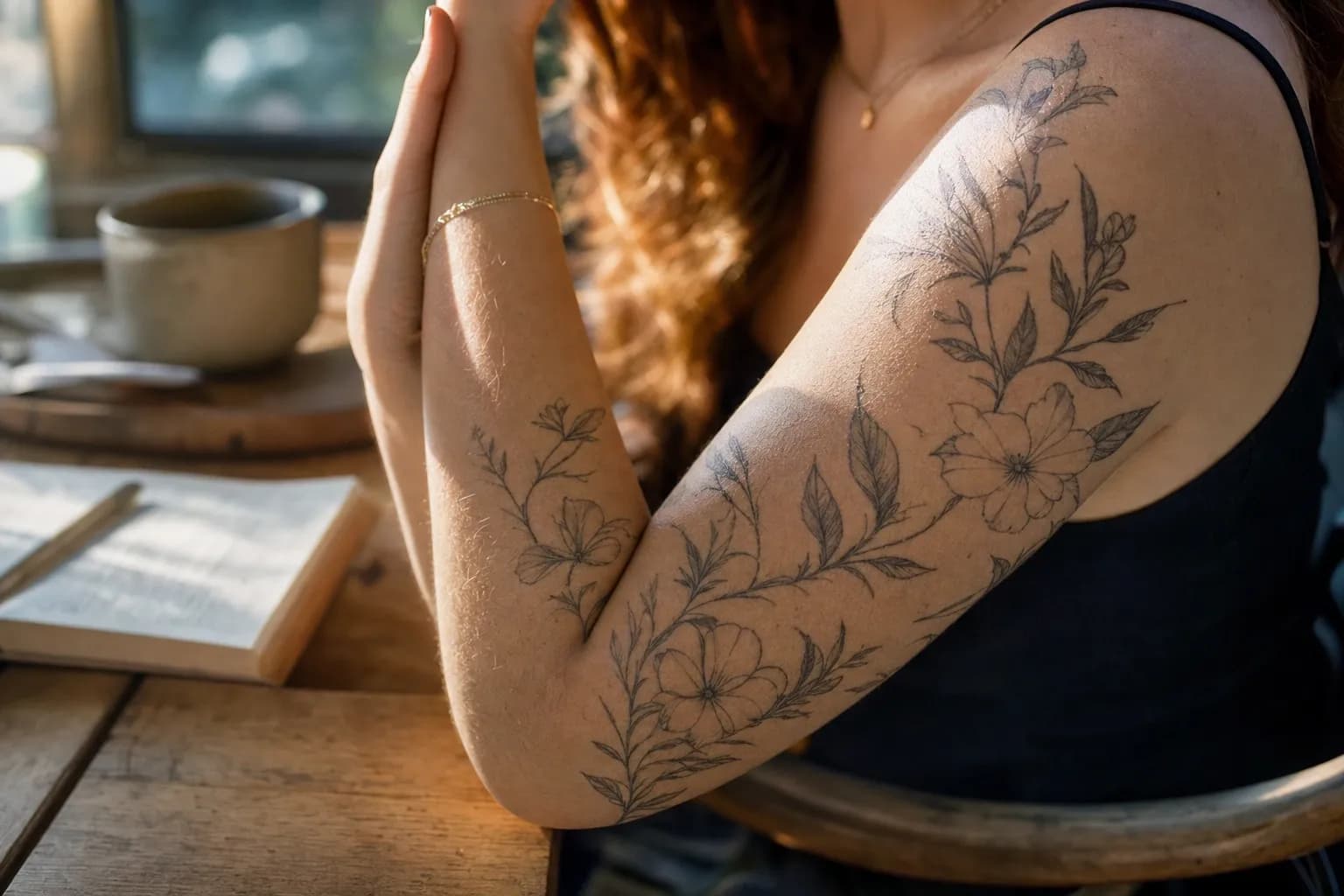
A pure fineline botanical piece relies almost entirely on outline work: thin, precise strokes that map each petal, leaf, and stem. The result is airy and graphic, almost like a botanical illustration pressed into skin. It suits clients who want something elegant and understated.
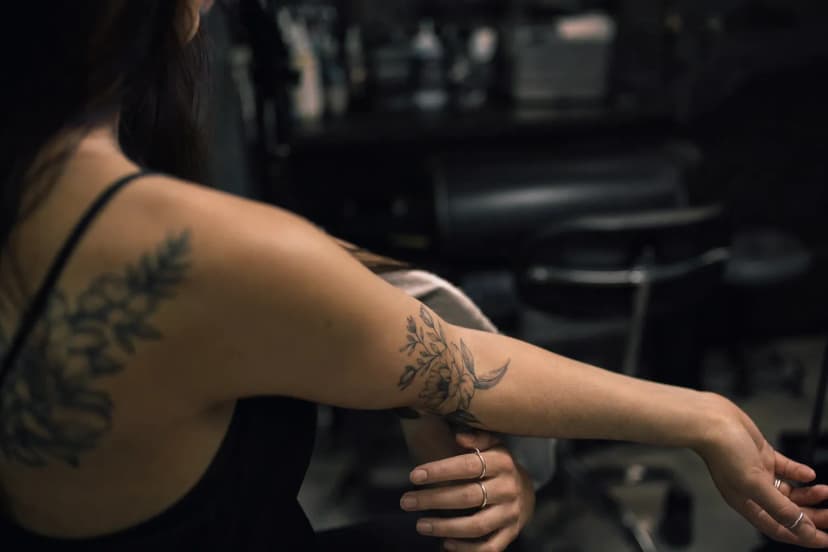
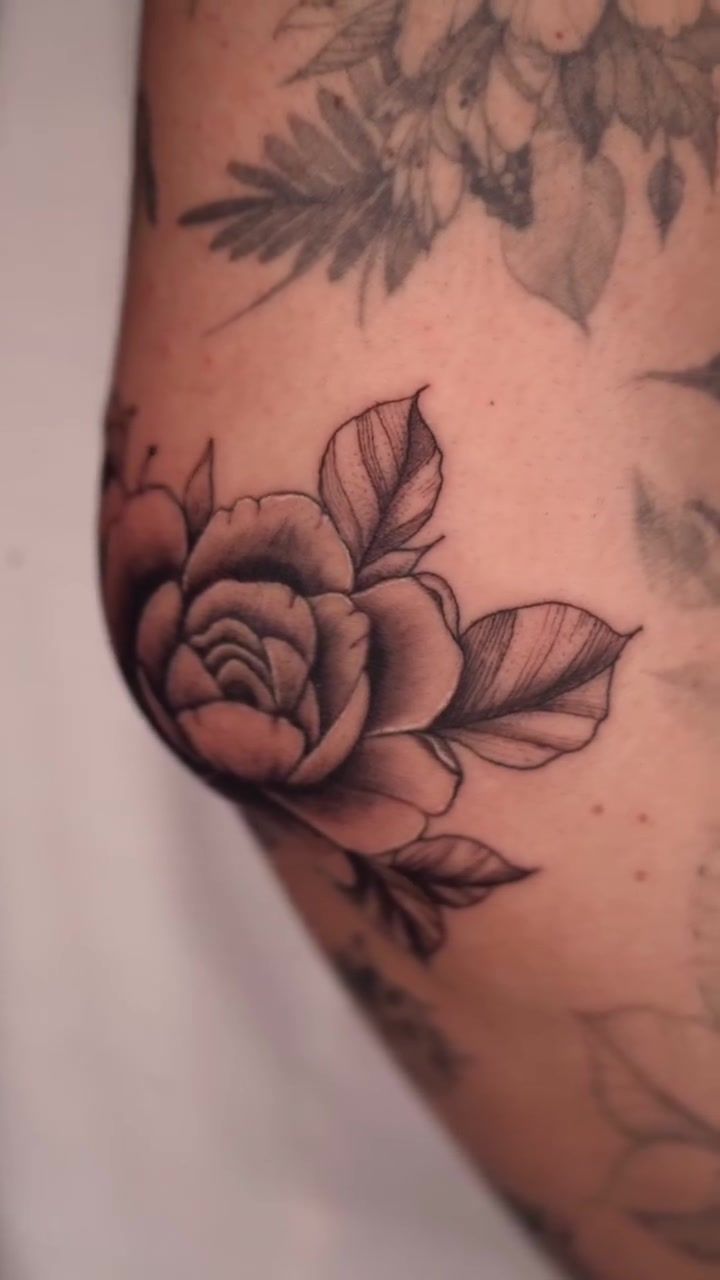
Shaded botanical work adds volume. The artist builds grey wash tones (diluted black ink applied in layers to create soft gradients) alongside the linework, giving petals a sense of roundness and leaves a believable weight. You can see both approaches demonstrated in the rose on the elbow, part of a floral sleeve in progress, where shading and fine linework work together across a larger composition.
Black-and-grey vs colour: what works in Lisbon's climate
Colour botanical tattoos photograph beautifully. But Lisbon summers are long, sunny, and intense. The city sits at roughly the same latitude as Morocco. That UV load accelerates pigment breakdown, and lighter colour pigments (pinks, yellows, pale greens) tend to fade within a few years when the skin sees regular sun exposure.
Black-and-grey botanical work ages more gracefully on most skin tones in this climate. The studio is upfront about this. If you want a fine line floral tattoo in Portugal, it's worth having an honest conversation about colour versus monochrome before you commit. Upselling colour is easy. Recommending what will actually hold is what a good artist does.
For a broader look at what great botanical work looks like in practice, the guide on what quality botanical work actually looks like in Lisbon goes into more detail on style comparisons and portfolio evaluation.
The studio's full range of botanical and floral tattoo work covers everything from single wildflower stems to complex multi-session arrangements.
How the Studio Approaches Botanical Pieces
Consultation: from reference to custom sketch
Nothing here is flash. Every botanical piece the studio produces is drawn specifically for that client, that placement, and that body. The artist sketches to the natural curves of the limb or torso rather than forcing a flat design onto a three-dimensional surface.
References help enormously. Bring 5 to 10 images that reflect the mood you're after: loose and wild, or structured and graphic, or somewhere between. The artist won't copy them. They use them to understand your visual language and what you respond to emotionally.
Placement and sizing: getting it right before needle touches skin
Stencil placement is tested dry before anything is committed to skin. This matters especially on the shoulder, collarbone, and ribcage, where the surface curves and the design can look shifted or lopsided if it isn't mapped correctly. If the stencil sits 2mm off-centre on a shoulder piece, you'll see it every single time you look in the mirror.
The artist also considers how the botanical piece might grow. A single stem on the forearm can stay standalone or become the anchor of a larger sleeve later. Designing with that future possibility in mind, even if you're not committing to it now, saves significant rework down the line.
Placement, Sizing, and Healing Realities in Lisbon
Best placements for botanical tattoos
Botanical work suits placements with some surface area to breathe. The shoulder, forearm, ribcage, shin, and collarbone all translate the style well. Tighter areas like wrists and ankles work for smaller single-element pieces.
If you're weighing up spots for a smaller piece, the guide on placement ideas for smaller botanical pieces covers the practical considerations in more depth.
| Placement | Typical Session Length | Healing Considerations |
|---|---|---|
| Wrist / ankle | 1 to 1.5 hours | High friction from clothing and accessories; keep jewellery off during healing |
| Forearm | 2 to 3 hours | Exposed to sun easily; long sleeves recommended for the first four weeks |
| Shoulder | 2 to 4 hours | Low friction, good blood flow; one of the most reliable healing spots |
| Collarbone | 1.5 to 2.5 hours | Thin skin over bone; moderate sensitivity and slower surface healing |
| Ribcage | 2 to 3.5 hours | Movement during breathing can extend early healing; no tight banding |
| Shin | 2 to 3 hours | Lower leg circulation is slower; keep elevated when resting in the first week |
Healing in Lisbon's climate: what to expect
Lisbon's summers are the biggest healing wildcard for botanical tattoos. The city sits in one of western Europe's highest UV zones, and clients who head to the beach at Cascais or Costa da Caparica two weeks after getting tattooed put their work at real risk. Sun exposure on healing skin causes fading, distortion, and patchy colour loss.
The city's summer humidity also matters. Breathable wrap (rather than thick bandaging that traps heat) is recommended for the first few days, especially in July and August. Conversely, Lisbon's mild winters are genuinely good healing windows. If you're planning a botanical sleeve tattoo in Lisbon, booking your first session in October or November gives you several comfortable healing months before the following summer.
What to Bring to Your Consultation
A good consultation moves quickly when a client arrives prepared. Here's what actually helps:
- Reference images, edited down. Bring 5 to 10 images, not 50. Curated references show you've thought about what you want. A folder of 80 images suggests you haven't decided yet.
- Clarity on placement. Know which area you want tattooed. If you're unsure between two spots, be honest about that rather than deciding mid-consultation under pressure.
- Clothing that exposes the area easily. A shoulder piece needs a top you can remove or adjust. A ribcage piece needs something loose. Don't wear a tight dress to a ribcage consultation.
- A sense of whether you want it to grow. A botanical piece designed as a standalone piece looks different from one designed as the start of a sleeve. Tell the artist upfront.
- Honest skin history. Keloid scarring, skin conditions, or previous work in the same area are all relevant. The artist can adapt; they just need to know.
If you're new to fineline work and unsure what to expect from the process, the guide on how to find a fine line tattoo artist covers what to look for in an artist's portfolio and how to evaluate quality before you book.
And if you want to understand what makes the best floral tattoo artist in Lisbon different from one who simply does flowers competently, look at healed work. Fresh tattoos always look sharper than settled skin. Ask to see pieces photographed at six weeks or beyond.
- Check that individual petal lines are still distinct after healing, not blurred together.
- Look at whether negative space has stayed open or filled in prematurely.
- Assess shading transitions. Do they graduate smoothly, or are there banding lines where one grey tone stops and another begins?
- Look at stem lines. A botanical tattoo Lisbon artists are proud of will show stems that are clean and consistent from base to tip, not thicker in some sections from uneven needle pressure.
Frequently Asked Questions
How long does a botanical tattoo take?
A small botanical piece, such as a single stem on the wrist, typically takes one to two hours. A detailed floral shoulder piece can run three to four hours. Larger compositions spread across a forearm or planned as part of a sleeve may need multiple sessions spread over several weeks.
Do floral tattoos age well?
Black-and-grey botanical work ages well when placed on low-friction areas like the shoulder, upper arm, or shin. Fineline work settles into the skin over six to eight weeks, softening slightly. Avoiding prolonged sun exposure and keeping skin moisturised are the two biggest factors in long-term appearance.
Can botanical tattoos work on darker skin tones?
Yes, though the approach changes. On deeper skin tones, high-contrast black linework with confident grey shading tends to read more clearly than very delicate single-needle fineline. A good botanical artist will adapt the design's contrast and line weight during consultation rather than apply the same technique to every client.
How do I find a trustworthy botanical tattoo artist in Lisbon?
Look at healed work in their portfolio, not just fresh tattoos. Fresh pieces always look sharper than settled skin. Check that lines are consistent, petals don't blob together, and negative space is clean. A reputable studio will show you healed results and discuss your design thoroughly before taking a deposit.
Should I get a botanical tattoo in summer or winter in Lisbon?
Winter is the better window for larger pieces. Lisbon's mild winters mean comfortable healing without the risk of sun exposure or sweaty skin against clothing. Summer sessions are possible but require strict sun protection and breathable aftercare, since the city's UV intensity and humidity can slow the healing process noticeably.