Why That Search Usually Leads You the Wrong Way
Type "best realism tattoo artist near me" into any search engine and you'll get a map pack of studios sorted by proximity and review count. Neither of those signals tells you what you actually need to know. Realism is one of the most technically demanding styles in tattooing, and the gap between average and exceptional is visible from across the room.
High review counts reflect customer service, punctuality, and cleanliness. All important. But they rarely reflect whether an artist can hold a clean tonal gradient across a healed upper arm after twelve months. That's the question worth asking.
What the search should really be asking is this: who has consistent, healed realism work in their portfolio? Fresh-off-the-needle photos look sharp on almost everyone. The real test is what the piece looks like at four months, when the skin has settled and the ink has found its depth. If a studio's Instagram only shows freshly-wrapped work, keep scrolling.
For a deeper look at what realism tattoos in Lisbon actually require, the studio has written at length about the craft demands and how the local environment shapes those decisions.
What Realism Tattooing Actually Is
Black and Grey vs Colour Realism
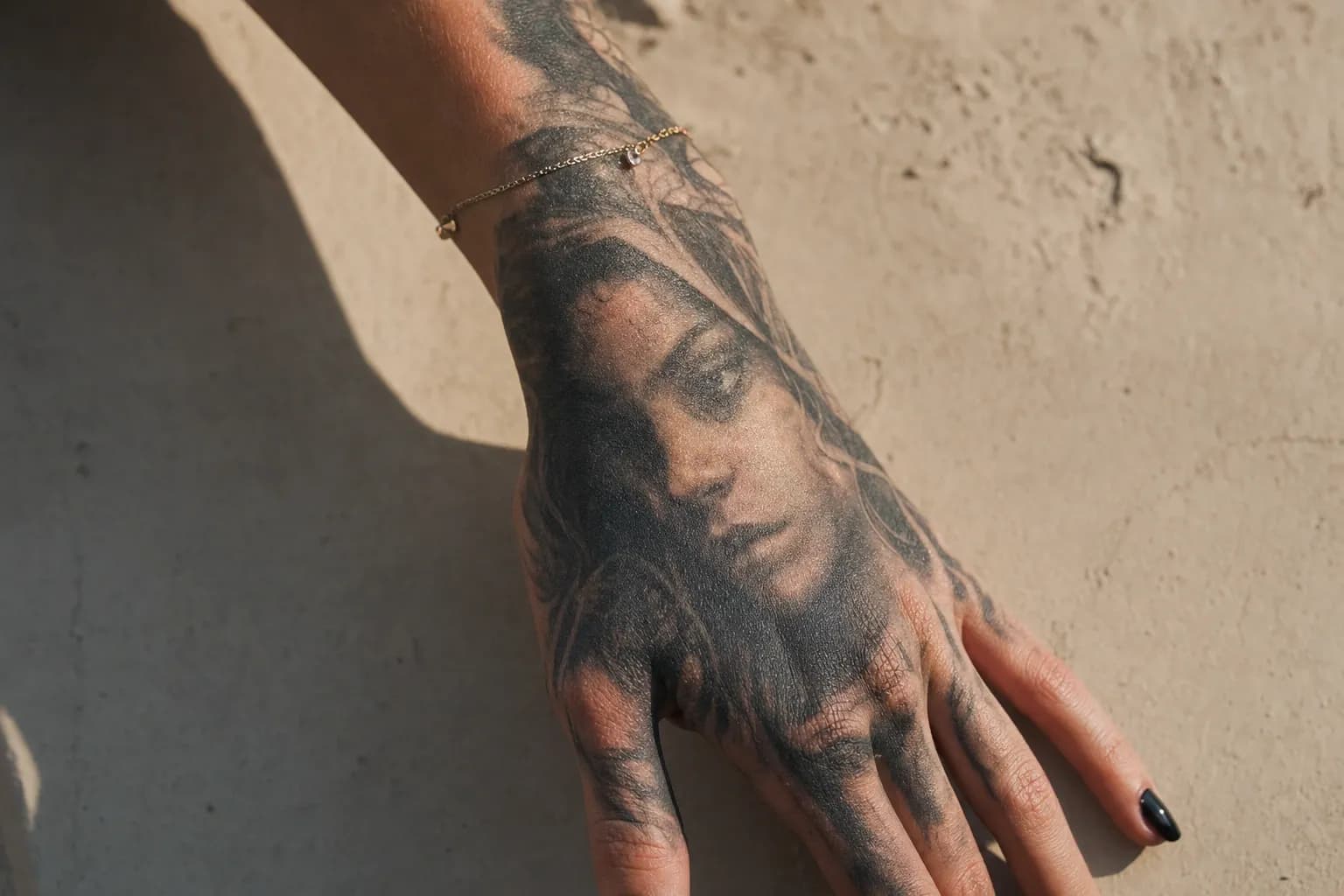
Realism tattooing attempts to recreate the visual language of a photograph on skin: light, shadow, texture, and depth, all without the solid outlines that define most other tattoo styles. There are no bold borders holding the image together. The structure comes entirely from tonal contrast and the precision of every needle pass.
Black and grey realism works through tonal gradients and a technique called whip shading, where the artist pulls the needle away at speed to create soft, feathered transitions between dark and light. Colour realism adds the complexity of pigment mixing and skin-tone integration; a warm highlight on olive Portuguese skin reads very differently to the same colour on a pale Northern European complexion.
Where the Style Comes From
The roots are in fine-art portraiture. The style evolved through the 1980s and 1990s in the US and Europe, as artists began pushing away from the conventions of traditional tattooing toward something that looked less like a graphic and more like a photograph or a painting. By the 2000s, the tools had caught up: finer needles, more stable pigments, and a broader understanding of how ink behaves in different layers of skin.
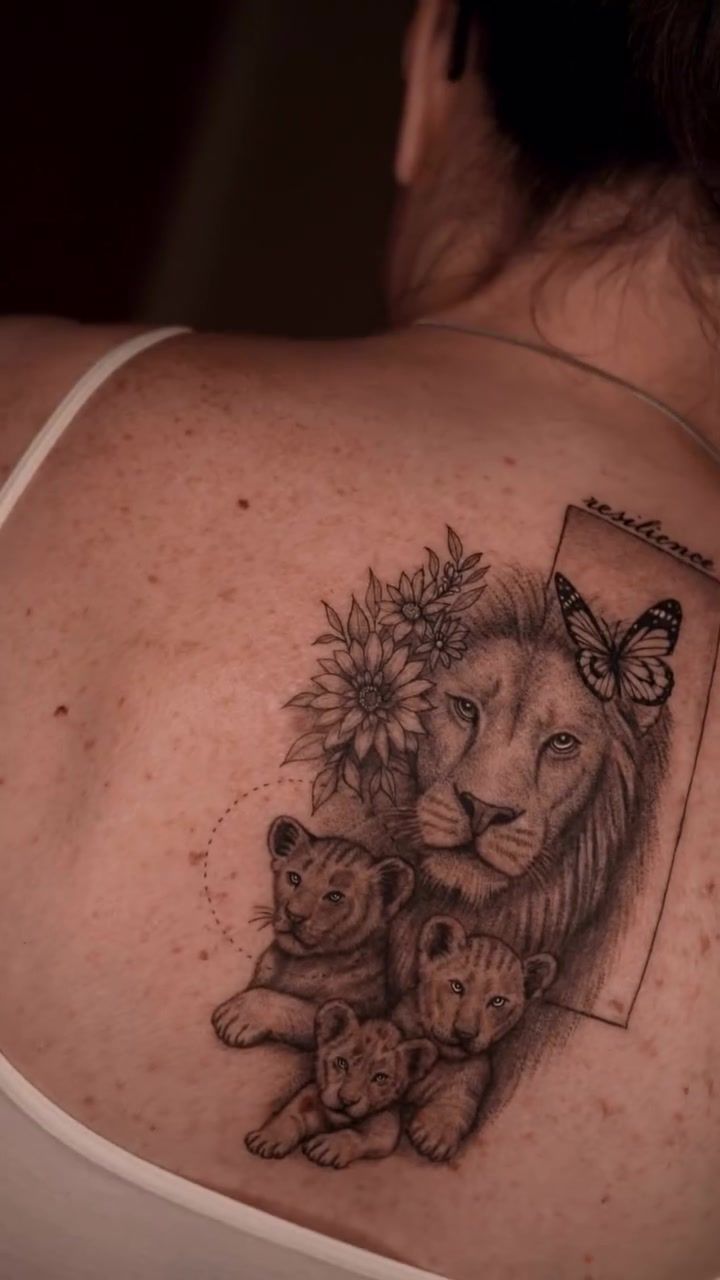
Today, realism suits clients who want portraits (of people, animals, or figures from mythology), nature scenes with photographic fidelity, architectural detail, or narrative-driven compositions where every element feels genuinely three-dimensional. It rewards patience. It demands space. And it punishes cutting corners.
What Separates Good Realism From Great Realism
Portfolio Signals to Look For
Healed work is the gold standard. Ask for photos taken at least three months after the session, ideally six. Fresh tattoos always look sharper because the ink is still sitting at the surface; once healing is complete and the skin closes, the true quality of the work reveals itself.
Look at tonal range. A skilled realism artist holds bright, almost-white highlights and deep, anchored blacks without the midtones turning grey and muddy. That clean separation is hard to achieve and even harder to maintain through healing. If every piece in a portfolio looks a little flat in the mid-range, that's a consistent limitation, not a one-off bad day.
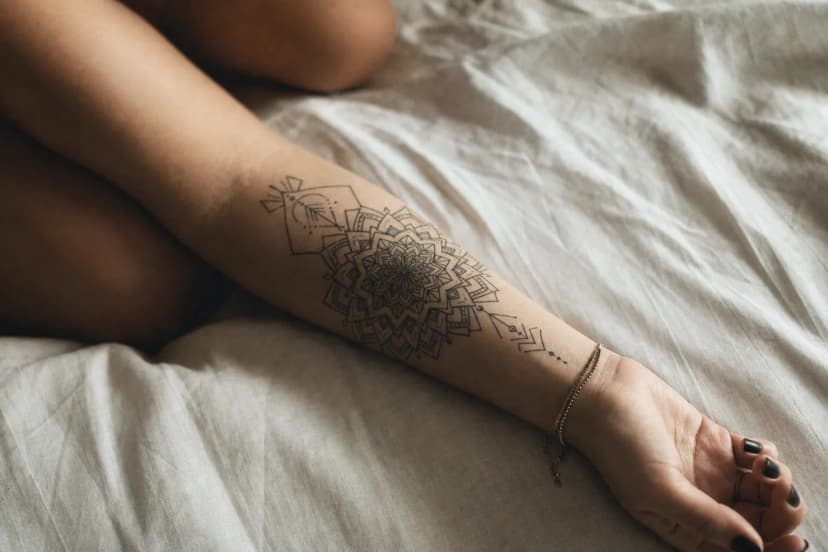
Stencil and placement accuracy matter enormously. If a portrait is 2mm off-axis on the arm, you'll feel something is wrong before you can name it. The proportions will read slightly distorted. On a mandala or geometric frame, a 2mm error at the centre point produces gaps at the perimeter that widen as the design extends outward.
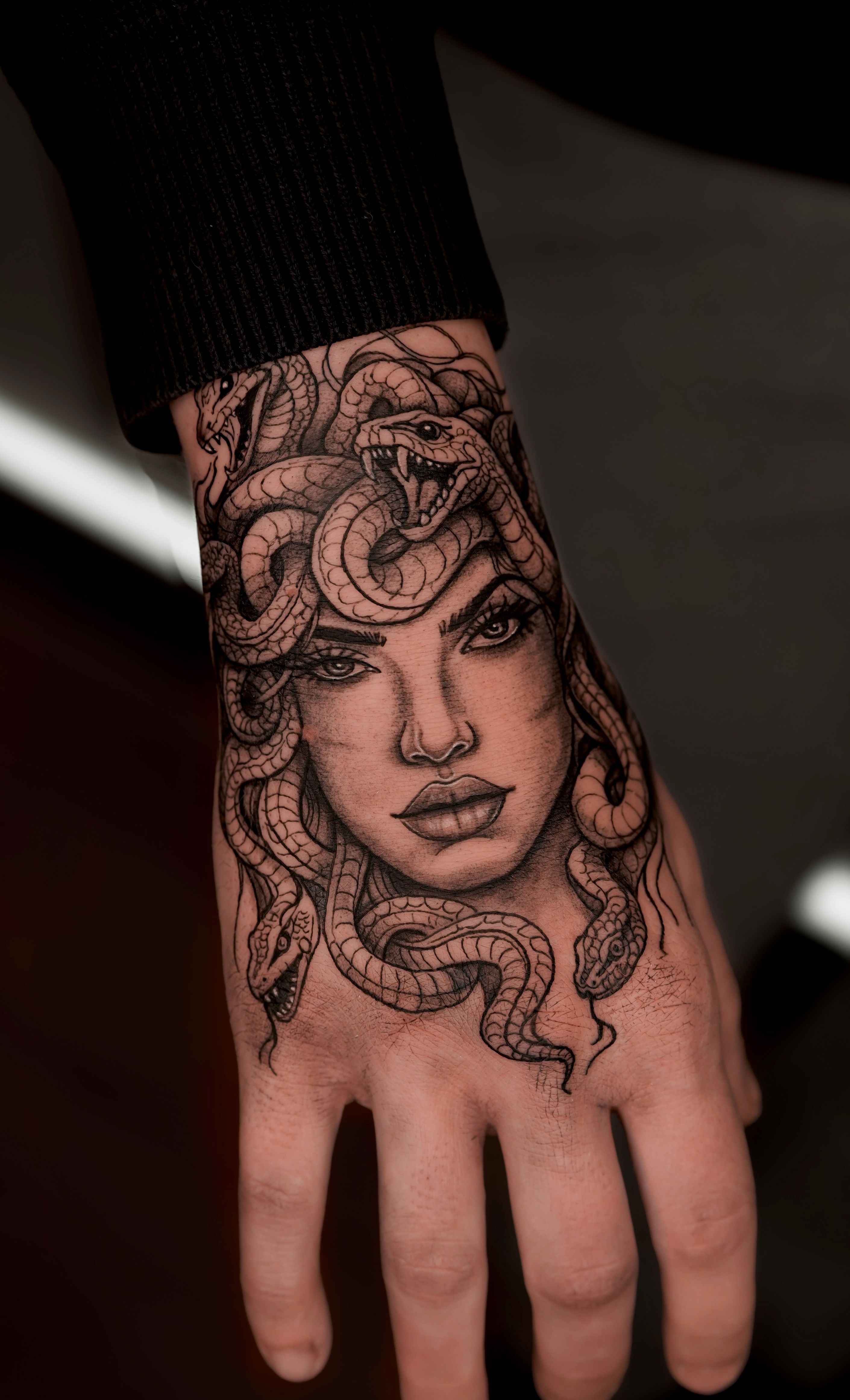
Skin undertone matching is something fewer artists discuss openly. Clients with olive or darker complexions. Common across Lisbon's mixed-heritage community. Need an artist who understands how warm undertones in the skin affect the perceived colour of grey washes. A cool-toned grey that looks clean on pale skin can appear greenish or uneven once healed on a warmer base. The best artists account for this during pigment selection, not after the fact.
Red Flags to Avoid
- A portfolio made up entirely of fresh, just-wrapped photos with no healed examples
- No close-up shots. If the artist doesn't photograph detail, the detail probably isn't there
- No variety in subject matter. A strong realism artist can handle portraits, animals, objects, and architecture, not just one category
- Social media images filtered or edited to boost contrast. This masks midtone quality and makes weak shading look stronger than it is
- No consultation offered before booking. Realism requires planning and reference work; walk-in realism is almost always a compromise
"A realism piece is built from the lightest wash first and the darkest anchor point last. If you reverse that order, or rush the layers, you lose the depth that makes the whole thing read as three-dimensional."
How the Studio Approaches Realism in Lisbon
The Consultation Process
The studio doesn't take walk-ins for realism pieces. That's not an arbitrary policy. Realism requires a conversation before a single line is drawn. Placement, skin condition, reference material, sizing, and the client's long-term vision for the piece all shape what the artist designs.
A consultation for the studio's realism service covers the reference material you've gathered, the placement you're considering, and the realistic scope of what's achievable in a single session versus a multi-session project. This is the stage where a skilled artist tells you honestly whether your idea will hold up at the scale you're imagining, rather than finding out two hours into a session.
Design and Reference Work
A direct copy of a photograph rarely works on skin. Photographs carry information that skin simply cannot hold: sub-millimetre detail, photographic grain, colour relationships that depend on screen light rather than reflected light. The artist interprets the source material rather than tracing it, identifying which elements carry the emotional weight of the image and building the design around those.
The studio often incorporates how micro-realism fits within a larger realism piece for sections that demand extreme fine detail at small scale, such as eyes in a portrait or feather texture on a bird. Knowing when to shift technique within a single piece is part of what keeps larger compositions readable at every viewing distance.
Session lengths reflect the work honestly. A contained realism piece on the upper forearm typically takes two to three hours. A full thigh composition or a back panel is planned across multiple sessions spaced four to eight weeks apart, giving the skin time to heal between layers and letting the artist assess how the ink has settled before continuing.
Placement, Sizing, and Healing in Lisbon's Climate
Realism needs room. A portrait compressed into 6cm loses all tonal detail during healing because the ink spreads slightly in the dermis (the layer of skin beneath the surface) and fine gradients merge together. For a portrait or complex nature scene, most experienced realism artists won't work smaller than 8 to 10cm on the longest axis. If you want something smaller, the subject matter needs to be simplified accordingly.
Placement affects longevity as much as size does. Areas with consistent skin texture and minimal daily stretch hold realism detail better over time.
| Placement | Minimum recommended size | Typical session length | Notes |
|---|---|---|---|
| Upper arm | 8cm longest axis | 2-4 hours | Consistent texture, low stretch |
| Thigh | 10cm longest axis | 3-5 hours (or multi-session) | Large canvas, good for complex scenes |
| Back (panel or full) | 15cm+ for meaningful detail | Multiple sessions | Best surface for large compositions |
| Forearm | 7cm longest axis | 2-3 hours | Visible daily; check sun exposure habits |
| Ribcage / side | 10cm longest axis | 2-4 hours | Skin moves with breathing; more complex to stencil |
| Hand | 5cm+ with simplified subject | 1.5-2.5 hours | High-fade area; requires experienced artist |
Lisbon's climate adds specific considerations. The city runs humid from June through September, with UV levels that stay high well into October. For a realism tattoo Lisbon clients get in summer, the bandage adhesion can weaken faster due to sweat, and the risk of UV exposure on a fresh piece is higher than in cooler months.
The studio advises keeping new realism tattoos fully covered and away from direct sunlight for at least three weeks post-session. That means no beach days at Cascais or Costa da Caparica, no outdoor dining in Príncipe Real without a sleeve, and no exercise that produces heavy sweating until the surface skin has fully sealed. Mild Lisbon winters, by contrast, are generally easier healing conditions: lower UV, lower ambient humidity, and less temptation to expose fresh skin to the elements.
The Angel and Geometry Memorial Thigh Piece is a useful reference point for placement decisions: the thigh offers a surface wide enough to support both the figurative realism elements and the surrounding geometric framing without either competing for space.
What to Bring to Your Consultation
Reference images matter, and so does their quality. Five to ten sharp, well-lit references give the artist more to work with than fifty low-resolution screenshots. The goal isn't to hand over a single image and say "copy this"; it's to communicate mood, lighting direction, tonal preference, and emotional register.
- Gather references that reflect the feeling you want, not just the subject. A portrait of a lion in dramatic side-lighting tells the artist something different from a portrait of the same animal in flat frontal light.
- Include at least one reference for the placement area, so both you and the artist can assess how the proportions will sit on your body.
- Be ready to discuss meaning. Realism pieces are often memorial or deeply personal; knowing the context helps the artist make decisions that serve the piece's intention, not just its aesthetic.
- Avoid heavily filtered social-media images. A portrait run through a contrast-boosting filter misrepresents the detail that actually exists in the original, and the artist will design to what the image appears to show.
After the consultation, the process moves to design approval, then deposit, then session scheduling. The artist doesn't begin detailed design work without a confirmed deposit because custom realism design takes significant time before anyone sits in the chair.
If you're considering a piece that blends photorealism with other elements, it's worth reading about what precision means in geometric tattooing and how both styles can coexist without one undermining the other.
Frequently Asked Questions
How do I find the best realism tattoo artist near me in Lisbon?
Look for healed portfolio work, not just fresh photos. A strong photorealistic tattoo artist in Lisbon will show consistent tonal range, clean midtones, and variety across subjects. Book a consultation rather than walking in, and ask specifically to see pieces photographed at least three months post-heal. That's where technique becomes visible.
How big does a realism tattoo need to be to hold detail?
For a portrait or complex scene, most experienced realism artists work at 8 to 10cm on the longest axis as a minimum. Below that, fine tonal gradients merge during healing and the image loses definition. Micro-realism techniques can push that threshold slightly lower, but the subject matter needs to be simplified accordingly. A full face in 5cm rarely survives the healing process cleanly.
How long does a realism tattoo session take?
A focused realism piece on a contained placement typically runs two to four hours. Larger compositions, such as a full thigh, a sleeve panel, or a back piece, are planned across multiple sessions spaced four to eight weeks apart. That spacing allows proper healing and lets the artist assess how tonal layers have settled before continuing.
Does Lisbon's climate affect how a realism tattoo heals?
Yes, noticeably. Lisbon's humid summers mean bandage adhesion can weaken faster and sweat irritates fresh skin. From June through September, the studio advises clients to keep new tattoos fully covered and out of direct sun for at least three weeks, and to avoid beach days or outdoor exercise until the surface is fully sealed. Winter healing conditions in Lisbon are generally more forgiving.
Can realism tattoos be combined with geometric or fineline styles?
Yes, and it's one of the more interesting creative directions available. A black and grey realism tattoo in Portugal can sit inside a geometric frame, or a fineline botanical can border a photorealistic animal. The key is consistent ink weight across both elements so neither overwhelms the other. That balance is planned during the design stage, not adjusted after the session begins.