A Style That Has No Room for Mistakes
Picture a portrait the size of a matchbox. Inside it: readable shadow under a cheekbone, a catch-light in the eye, the soft texture of skin rendered in black and grey. That is what micro realism does at its best. And it is exactly as unforgiving as it sounds.
Scale compresses every error. A 1mm misplaced shadow inside a 3 cm piece is visible every single time you look at it. The same shadow dropped 1mm on a full sleeve barely registers. This is the central reality of working at this scale, and it shapes every decision the artist makes from the first consultation onward.
So what does it actually take to pull this off? That is what this article will walk you through.
What Micro Realism Actually Is
Micro realism is photorealistic imagery. Portraits, animals, objects, botanical details. Rendered at small scale, typically between 3 and 8 cm. The goal is the same as full-scale realism: make the viewer's eye read the piece as dimensional, with believable light, shadow and texture. The difference is the space available to achieve it.
How it differs from standard realism
Standard realism has room to breathe. A large portrait can build tonal gradients across several centimetres, blending shadow into highlight gradually. Micro realism must achieve the same depth in a fraction of that distance. Every tonal shift is compressed. There is no room to ease into it.
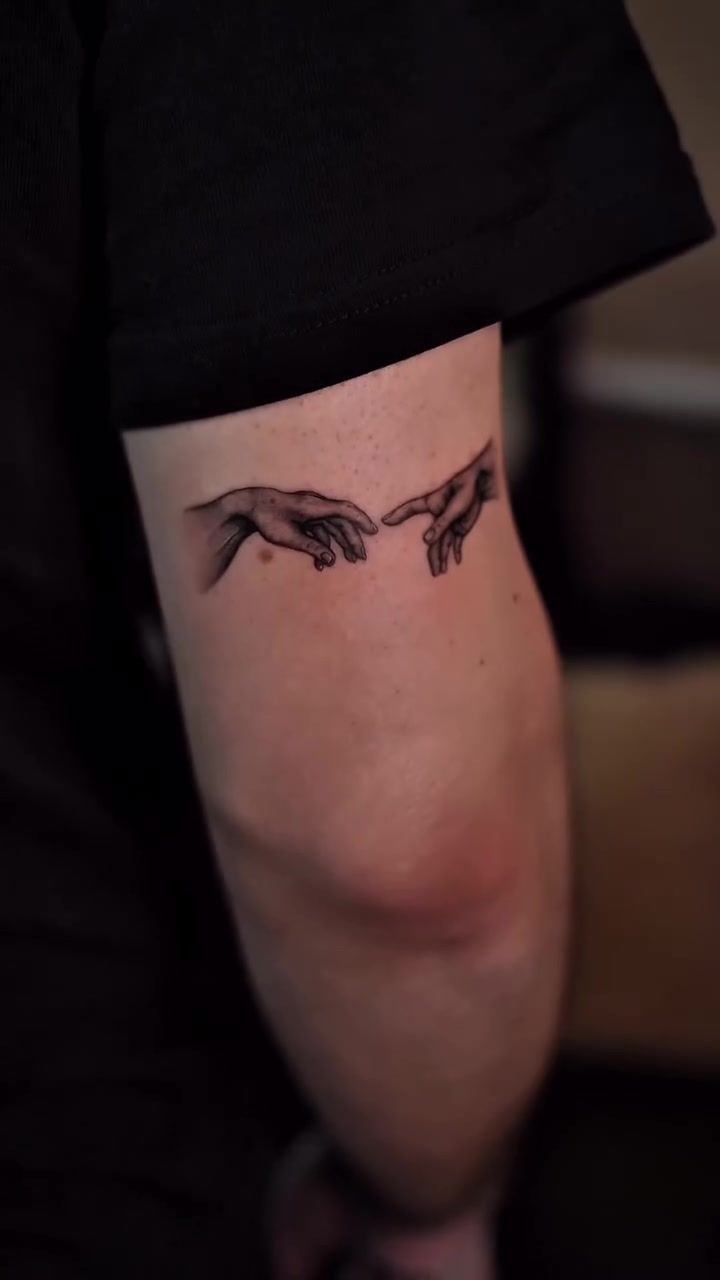
If you want to see what that compression looks like in practice, the Creation of Adam micro realism arm piece shows Michelangelo's composition. Fingers, hands, divine light. Packed into a compact format while retaining full tonal depth.
How it differs from fineline
Fineline uses single-needle work to build delicate outlines and minimal shading. The visual language is about elegance and restraint. Micro realism, by contrast, prioritises tonal graduation and optical texture over line. The two techniques share needle types but pursue different results.
Fineline asks: how little can we use to say something? Micro realism asks: how much tonal information can we pack into this space without losing legibility? For a fuller breakdown of where the two approaches diverge, see how fineline technique differs from micro realism.
Why the Technique Is So Demanding
Needle selection and ink density
The artist works with single-needle or 3RL needles. RL stands for round liner. A circular grouping of needle tips. A 3RL is three needles arranged in a tight cluster, giving slightly more ink deposit than a single needle while still allowing fine detail. Choosing between them depends on the subject and the skin.
Ink saturation requires careful calibration. Too heavy and the piece muds. The tones merge into a dark, undefined mass. Too light and the piece fades to near-nothing within 12 months. Getting this balance right is one of the reasons what micro realism actually demands from an artist goes well beyond aesthetic preference.
Stencil precision at small scale
If the stencil sits 1mm off-centre on a 4 cm piece, the whole composition reads as wrong. You'll see it every time. On a larger piece, 1mm is noise. At micro realism scale, it is a structural problem. Stencil placement is not optional precision. It is the foundation the entire session rests on.
Skin behaviour at this scale
Not all skin responds the same way. The outer forearm has relatively firm, consistent texture. The inner wrist and inner bicep are softer, and ink can migrate slightly as it settles into the dermis. The ribcage moves with every breath during the session, which affects how evenly the artist can deposit ink.
Lisbon's humid July and August add another variable. Sweat during the healing phase can affect how fresh ink settles in the upper layers of skin. Clients booking in summer should plan to keep the piece covered and dry for the first two weeks. Practical guidance, not excessive caution.
How the Studio Approaches Micro Realism
The consultation and reference phase
The consultation for a tiny photorealistic tattoo is not about choosing a design from a wall. It's a conversation about what visual information survives at the chosen size. A complex reference photo might have twenty elements. At 4 cm, five of them are legible. The rest become noise.
The studio's approach is to sketch a reduced version and show you exactly what will read at skin scale before any stencil is prepared. Nothing gets committed to skin until both parties agree the composition works at the size it will actually be.
"A reference photo shows you what you love about the image. The sketch shows you what the tattoo can actually be. Those two things are not always the same, and it's better to know that before you sit down."
Design reduction: fitting the image to the scale
A 4 to 5 cm micro realism piece typically takes 1.5 to 2.5 hours in the chair. That might sound short for photorealistic work. But over-working the skin causes it to swell, and swollen skin blurs fine detail as you apply it. Slow and deliberate wins here.
The micro realism tattoo service page covers the full range of subjects the studio works with. Below are two pieces that show the style's range: a precise natural subject and a grouped composition.
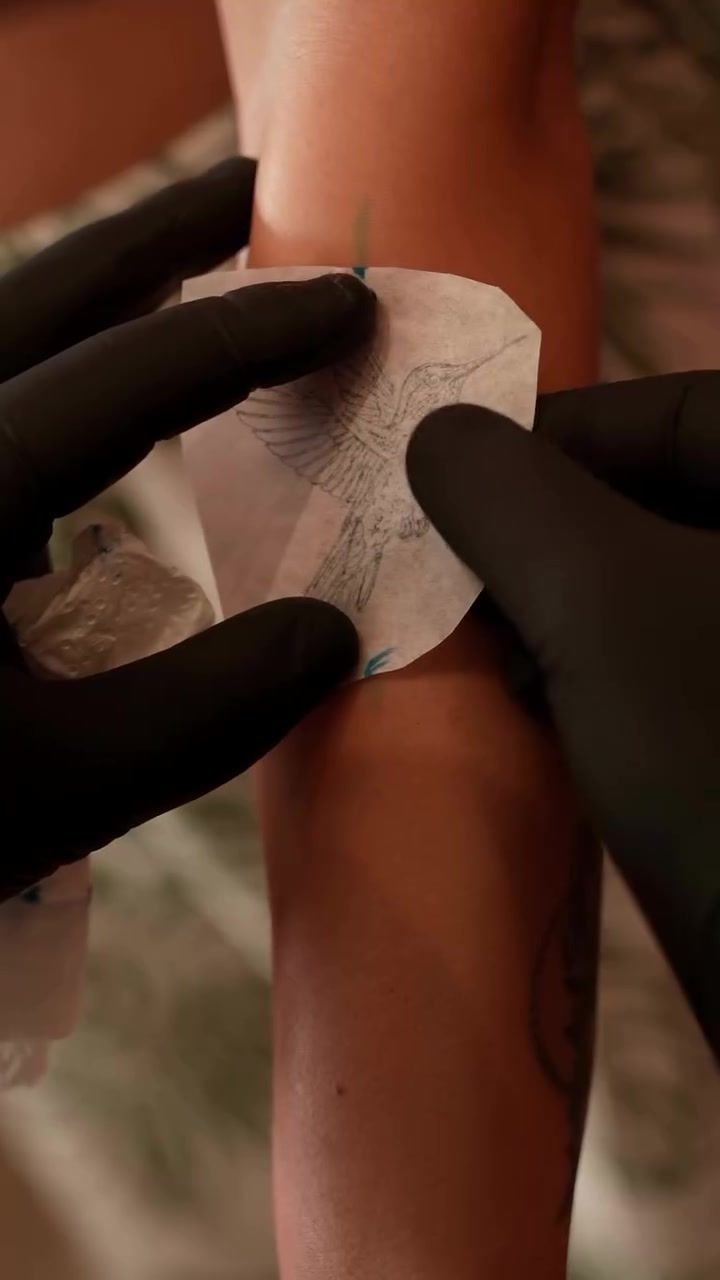
For a sense of how multiple subjects can coexist at this scale, the seahorse and leopard trio packs three distinct subjects with very different textures into one cohesive composition.
Placement, Size and Session Planning
Placement is not just an aesthetic choice in micro realism. It directly affects how the ink settles, how long the piece stays sharp, and what minimum size makes sense for that location. The table below summarises the most common placements and what to expect from each.
| Placement | Skin behaviour | Recommended minimum size | Notes |
|---|---|---|---|
| Outer forearm | Firm, stable, consistent texture | 3 cm | One of the most reliable placements for micro realism |
| Upper arm / outer bicep | Good elasticity, relatively flat surface | 3-4 cm | Holds fine detail well; ages steadily |
| Inner wrist / inner bicep | Softer, ink can spread slightly on settling | 4 cm | Slightly higher fade rate; go no smaller here |
| Ribcage / sternum | Movement during session; skin stretches | 5 cm | Harder to keep ink even; clarity requires more size |
| Fingers / hands | Very high friction; ink fades fastest | Not recommended for micro realism | Even larger realism fades here; micro detail is especially vulnerable |
When you come to the consultation, bring high-resolution reference photos. At least 2000px on the longest edge. Soft, flat-lit or heavily filtered images lose their tonal structure when scaled down. Strong contrast and a clear light source give the artist something to work with.
- High-res reference photo (2000px minimum, sharp focus, strong contrast)
- A clear idea of placement. Or openness to placement advice based on your chosen subject
- Healed portfolio examples you're drawn to, as a style reference (the portfolio section has several)
- Any previous tattoos nearby, so the artist can plan how the new piece sits in relation to existing work
Healing a Micro Realism Piece in Lisbon
Micro realism heals with the same basic protocol as other fineline work, but it has less tolerance for picking or peeling. The ink is laid in thin, precise layers. If a flake of peeling skin takes pigment with it, that loss is proportionally larger than it would be in a heavily saturated piece. Leave it alone.
Lisbon gives you roughly 300 sunny days a year. That matters a lot for a healed photorealistic small tattoo in Portugal, where sun exposure is a year-round reality, not just a summer concern. SPF 50 on the healed piece is non-negotiable. Not once, but every time the skin is exposed.
For the first three weeks, avoid the beach and pools. Saltwater and chlorine both leach fresh ink from the upper dermis. In a city like Lisbon, where the Atlantic is twenty minutes from Príncipe Real and Cais do Sodré, this takes deliberate planning in summer.
- Keep the piece wrapped or covered for the first day as directed by the studio.
- Wash gently with unscented soap twice daily for the first two weeks.
- Apply a thin, unscented moisturiser. Enough to prevent tight dryness, not so much the skin can't breathe.
- No swimming, no direct sun, no picking for the first three weeks.
- Apply SPF 50 to the healed piece every time it will be in sunlight, indefinitely.
The realistic healing timeline: the surface looks healed in 2 to 3 weeks. The deeper dermis settles over 6 to 8 weeks. The piece will look visibly sharper at the 8-week mark than it did at week two. That is normal. Judge the work when it's fully settled, not when it's still in flux.
Frequently Asked Questions
How small can a micro realism tattoo actually go?
Most experienced micro realism artists work at a minimum of 3 cm for simple single-subject pieces. Below that threshold, fine tonal gradients compress into a grey smudge within a few years of healing. The artist will advise the smallest viable size for your chosen subject during the consultation, based on its tonal complexity.
How do I choose a reference photo for a micro realism tattoo?
Bring a high-resolution photo with strong contrast and a clear light source. Soft, flat-lit or heavily filtered images lose their detail when scaled down to skin. The artist will identify which elements survive at your chosen size and redraw the composition accordingly, so the final piece reads clearly rather than just resembling the original.
Does micro realism age well?
It ages well when placed and sized correctly. Thin ink layers in high-friction or sun-exposed areas fade faster than the same work on the upper arm. Consistent SPF 50 on the healed tattoo, especially in a sunny city like Lisbon with its 300 days of sun per year, makes a measurable difference to how the piece looks five years on.
How long does a micro realism session take in Lisbon?
A focused 4 to 5 cm single-subject piece typically runs 1.5 to 2.5 hours. The artist works slowly and deliberately at this scale: over-working skin causes it to swell and blur fine detail. Rushing a micro realism piece is one of the most common reasons the finished result disappoints.
Can micro realism be combined with geometric or fineline elements?
Yes, and it's one of the more interesting directions in contemporary tattooing. A photorealistic portrait set inside a geometric frame, or a small animal in fine tonal shading with a delicate botanical border, lets the two visual languages complement each other. The studio has completed several pieces in this combined approach. See the portfolio for examples.