Why People Search for the Best in the World
Nobody searches "best realism tattoo artist in the world" because they plan to fly to Tokyo on a whim. They search it because they're planning something permanent and they're scared of getting it wrong. That's a reasonable fear.
Realism is one of the most demanding tattoo styles technically. A portrait rendered by someone without the right control doesn't just look average. It looks distressing. The face is recognisably human but wrong in ways you can't ignore.
Most people asking this question want a quality benchmark. They want to understand what elite actually looks like, so they can recognise it in a local studio. That's exactly what this guide covers.
What Realism Tattooing Actually Is
Realism aims to replicate a photograph or three-dimensional subject on skin. Shadows, highlights, texture, depth. All of it. The goal is that double-take moment when someone isn't sure if they're looking at a tattoo or a print.
It's one of the newer styles in the broader history of tattooing. Photorealistic work only became viable in the 1970s and 80s, when pigment quality and needle technology improved enough to hold fine tonal gradients. Before that, the tools simply couldn't do it.
Black and Grey vs Colour Realism
The monochrome approach uses ink dilutions, called washes, to build tonal range from deep black through to near-white. It's precise, controlled, and tends to age predictably. Our realism tattoo service covers both approaches, but the two require very different planning.
Colour realism adds pigment complexity. Each colour has a different viscosity, different depth behaviour in the skin, and a different fade timeline. Lighter yellows and pastels can shift within a few years, especially with UV exposure. The artist has to account for that before the needle touches the skin.
Realism vs Fine Line Realism
Fine line realism sits between single-needle work and full photorealism. The scale is smaller. The line weight is finer. It produces a different kind of intimacy. More like an engraving than a photograph. If you're considering a smaller piece with photographic detail, micro realism as a smaller-scale alternative might be worth reading before you decide on scale.
The Technical Markers of a World-Class Realism Artist
Craft is visible if you know what to look for. Three areas separate the elite from the competent.
Tonal Range and Value Mapping
Can the artist hit a genuine deep black and a near-white highlight without muddying everything in between? That full tonal spread is harder than it looks. It requires understanding how much ink the skin will absorb at different needle depths, and how that changes across body placement.
Value mapping goes further. A reference photo has its own light logic. When that image wraps around a curved surface. A shoulder, a thigh, a chest. The artist has to adapt the values so the illusion holds from viewing distance. A flat reproduction on curved skin reads as flat. A mapped one reads as real.
Texture Rendering
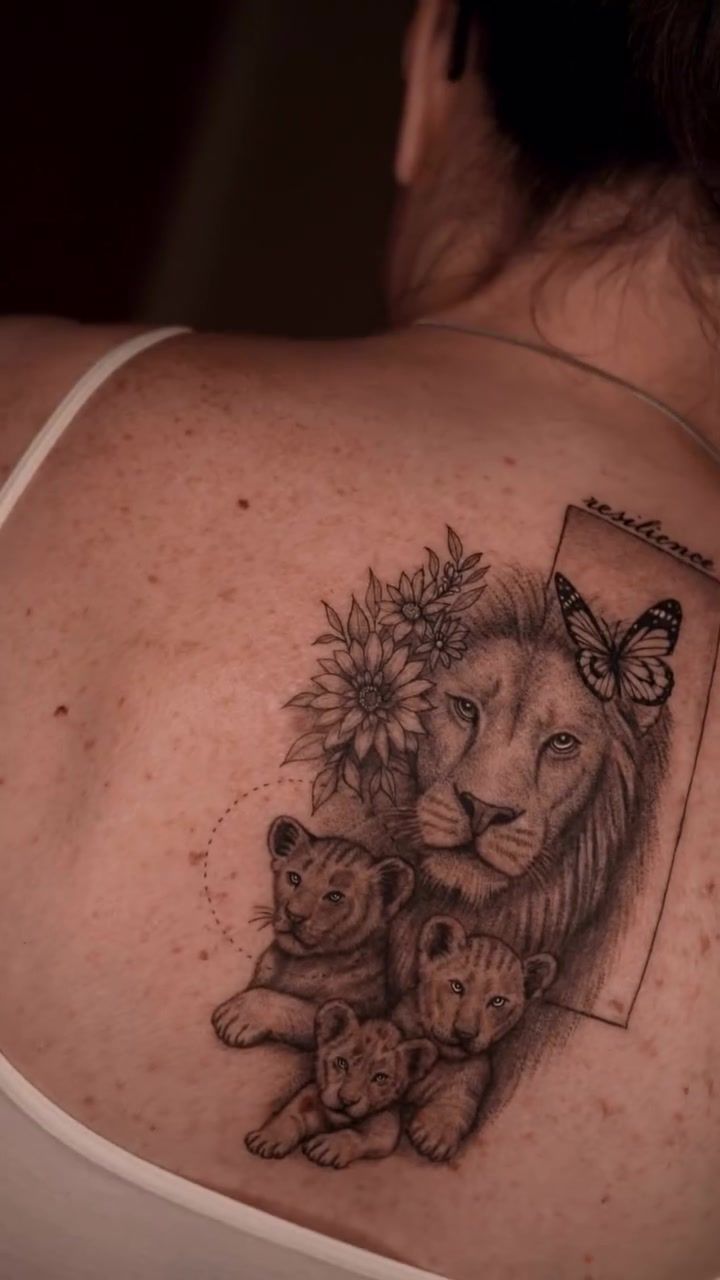
Skin, fur, feathers, stone, fabric. Each requires a different needle grouping and a different approach to pressure and speed. Fur comes from tight, directional strokes with a curved magnum (a wide needle grouping, curved to blend smoothly). Stone needs broken, irregular marks. Smooth skin needs seamless blending with almost no visible transition.
An artist who only renders one type of texture well is a specialist, not a realist. The best work in the world handles all of it, often within a single piece.
Healed Work. The Real Test
Fresh tattoos always look sharper than healed ones. Ink sits proud on the surface for the first few weeks. Then the skin closes over, the epidermis regenerates, and the tattoo settles into the dermis. That process takes 6 to 8 weeks, and it reveals everything.
The best realism artists show healed photos alongside fresh work. If a portfolio contains only needle-fresh images, that's not a good sign. Ask specifically. An artist confident in their healed results will have them ready.
What to Look for in a Realism Portfolio
A portfolio tells you what an artist can do. But you have to know how to read it.
- Ask to see healed photos. Not close-ups of fresh work. Healed pieces at normal viewing distance.
- Look for variety in subject matter. An artist who only tattoos wolves in a forest has practised one thing. That's not the same as versatility.
- Check the backgrounds. Does the negative space support the subject, or does it fight it? Backgrounds in realism work are deceptively hard to get right.
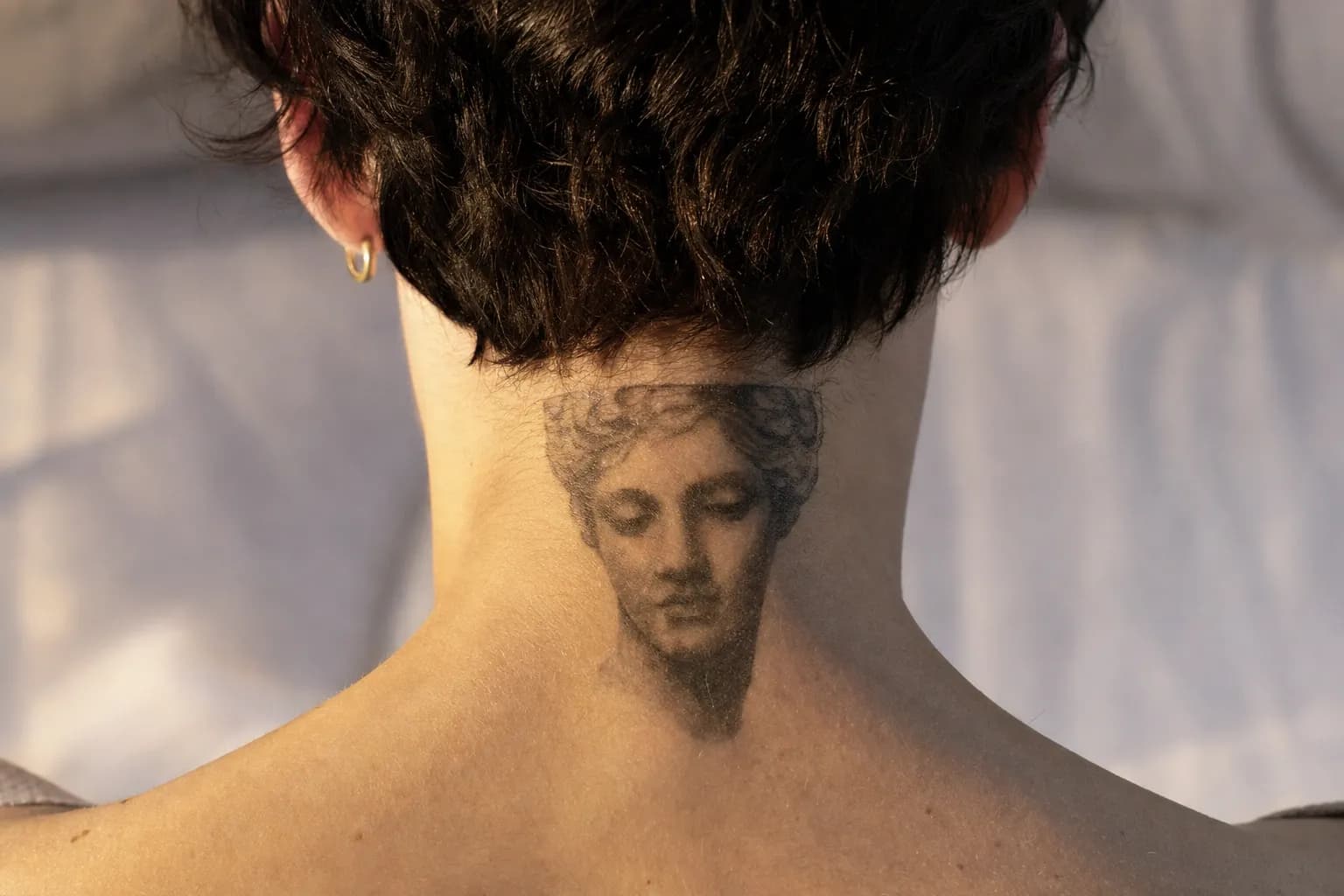
- Study the portraits. Eyes and skin texture reveal everything about an artist's control. A portrait that holds up under a close-up photo is genuinely rare.
- Note the placements. How does the artist handle the curves of a thigh versus a flat upper arm? Good adaptation is a real skill.
Portraits remain the hardest test in the style. If an artist can render a human face with accurate eye detail and believable skin texture, they can handle almost anything else. For a broader view of what quality looks like across different work, what to look for in a realism artist before you book goes deeper into those assessment criteria.
| Subject Type | Difficulty | What to Check in the Portfolio |
|---|---|---|
| Human portrait | Very high | Eye detail, skin texture, accurate likeness in healed photos |
| Animal / wildlife | High | Fur or feather direction, tonal depth in the face, background handling |
| Nature scenes | Medium-high | Depth cues (foreground vs background contrast), texture variety |
| Objects / still life | Medium | Surface material rendering, highlight accuracy, shadow logic |
| Architecture / landscapes | Medium-high | Perspective handling, fine structural lines held over time |
How the Studio Approaches Realism Work in Lisbon
Consultation and Reference Selection
The consultation comes first, always. The studio uses that time to look at your reference images, discuss your skin tone, and work out whether the source material is strong enough to produce the result you're imagining.
Reference photo quality matters more than most clients realise. A blurry 600-pixel image cannot become a crisp photorealistic tattoo. The source sets the ceiling. If the reference is soft, the tattoo will be soft. No amount of skill changes that.
For more on how realism work is approached locally, what realism work actually requires in Lisbon covers the full process from consultation through to healing.
"The reference you choose is half the tattoo. If you bring a great image, we can make something great. If you bring a screenshot from a small phone, we're both working against the material."
Session Planning
Realism takes time. A credit-card-sized piece runs roughly two to three hours. A larger composition. Covering a significant portion of the upper arm or thigh. Can take five to six hours and may need two sessions to finish properly.
Needle configurations shift depending on what's being rendered. Magnum shaders lay broad tonal washes efficiently. Round shaders blend transitions between values. Tight liner configurations build the fine edge detail that makes a subject read as sharp. The artist moves between these throughout a single session.
Lisbon's climate matters here too. Humid summers mean the skin sweats during healing, which can slow the outer peeling phase. The studio adjusts aftercare guidance seasonally. Summer clients get more specific instructions around washing frequency and sun exposure, given how direct the light gets in the Alfama and along the riverfront.
Placement, Sizing, and What to Bring to Your Consultation
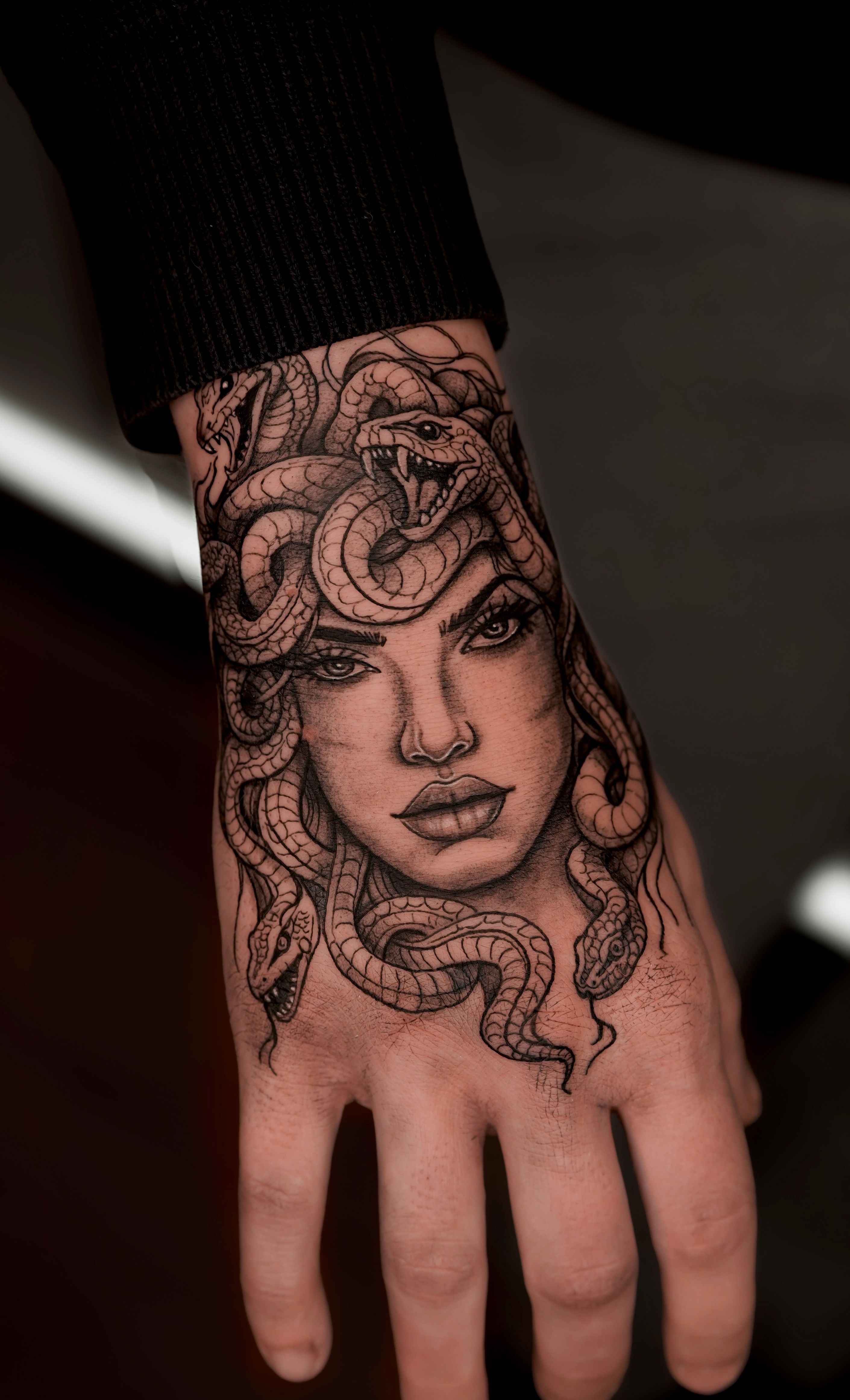
Placement shapes everything about how a realism tattoo ages. Large, relatively flat areas. The thigh, upper arm, back, chest. Hold fine detail well because the skin moves less and doesn't experience constant friction. The Medusa piece above demonstrates what's possible on the hand, but it's one of the harder placements to maintain: hands are exposed to UV constantly, rubbed against every surface, and the skin there regenerates quickly.
For portrait work specifically, size sets the floor. A face needs at least 8 to 10 centimetres in height to hold recognisable eye detail. Smaller than that and the iris, pupil and lash detail collapse as the skin heals and the ink spreads slightly into the dermis. The more complex the subject, the more space it needs.
- Bring reference images at 1,000 pixels minimum per side. Larger is better.
- Bring multiple angles of your subject if it's a portrait, especially if lighting varies between them.
- Wear clothing that gives easy access to your intended placement. For a thigh piece, shorts work. For a back piece, a loose top you're comfortable removing.
- Avoid alcohol for 24 hours before your session. It thins the blood and makes the skin bleed more, which affects ink saturation.
- Eat a proper meal beforehand. Realism sessions run long. A good breakfast before a morning appointment makes a real difference.
- Be ready to discuss your skin tone honestly. The artist adapts contrast strategy to your actual skin, not a generic template.
Frequently Asked Questions
How do I know if a realism tattoo artist is actually skilled?
Ask to see healed examples of their work, not just fresh pieces. Fresh tattoos always look sharper than healed ones. Look for consistent tonal range, accurate light logic, and fine texture detail in the healed photos. If an artist only shows fresh work, that tells you something.
Is black and grey realism better than colour realism for longevity?
The monochrome approach generally ages more predictably. Colour pigments. Especially lighter ones like yellows and pastels. Can shift or fade faster over years of UV exposure. A skilled artist will advise you on which approach suits your reference, skin tone, and placement before committing to either.
How large does a realism tattoo need to be to hold fine detail?
For a portrait with recognisable facial features, you need a minimum of around 8 to 10 centimetres in height. Smaller than that and the detail collapses as the tattoo heals and the skin moves. The more complex the subject, the more space it genuinely needs to read correctly.
Can realism tattoos work on any skin tone?
Yes, but the approach differs. On deeper skin tones, contrast strategy shifts. The artist leans into strong darks and mid-range values rather than relying on pale highlights. A good realism artist adjusts their technique to the client's actual skin, not a generic workflow designed for one tone.
How long does a realism tattoo session typically take?
A credit-card-sized piece takes roughly two to three hours. A larger composition covering the upper arm or thigh can run five to six hours and may require multiple sessions. The studio plans session length during consultation so you know exactly what to expect before you book.
Does Lisbon's climate affect how a realism tattoo heals?
It can. Lisbon's humid summers mean skin sweats more, which can slow the outer peeling phase. The studio provides seasonal aftercare guidance. Typically recommending more frequent gentle washing and avoiding direct sun on the fresh tattoo, which is easy advice to follow given how strong the Lisbon summer sun is.