Why Realism Is the Most Technically Demanding Style
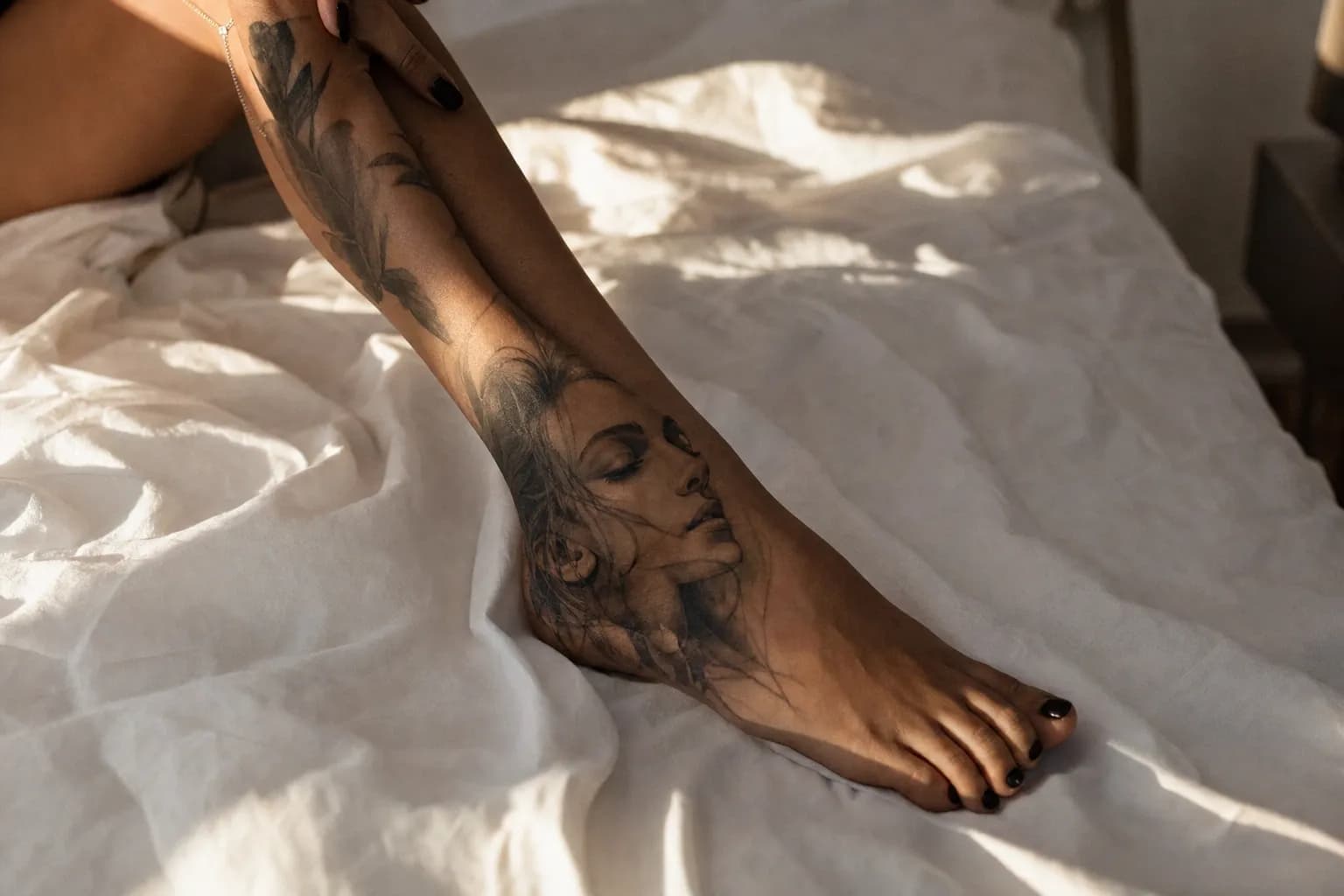
Realism tattooing means rendering a subject. A portrait, an animal, an object, a scene. So accurately on skin that it reads like a photograph. There are no outlines holding the composition together. No bold borders to lean on. Every shadow, every highlight, every soft transition has to earn its place through tonal gradation alone.
That's what makes it so hard. A geometric mandala can absorb a slightly uneven line and still look strong. A script piece can recover from a slightly heavier stroke. Realism cannot. A misplaced shadow reads as a bruise. An inconsistent highlight breaks the entire illusion of depth.
The margin for error is close to zero. Which means finding the right artist. Not just a capable one. Genuinely matters.
What a Strong Realism Portfolio Actually Looks Like
A polished Instagram feed proves very little on its own. Fresh tattoos always look dramatic. The ink sits high, the contrast is punchy, and a good camera does a lot of the work. The real question is what the piece looks like after three months of healing.
Healed work vs. Fresh work
Ask specifically for healed photos. Any artist who only shows fresh work. Or who cannot produce healed examples when asked directly. Is showing you half the picture. Ink settles, fine details can soften, and mid-tones shift. A skilled artist accounts for all of that during the tattoo itself, packing ink with future healing in mind.
Tonal range and contrast
Strong black and grey realism tattoo work needs a full tonal range. That means genuinely deep blacks at one end, and clean, unpigmented skin used as the highlight at the other. Everything in between should graduate smoothly. If a portfolio shows mostly mid-tone grey with little depth or no true black, the artist is likely under-packing. And healed results will look flat and washed out.
Edge control and skin texture
Soft edges make forms recede. Hard edges bring them forward. A skilled realism artist switches between the two intentionally, sculpting the illusion of three dimensions on a flat surface. Look for both in a portfolio. If every edge is the same softness, depth is missing.
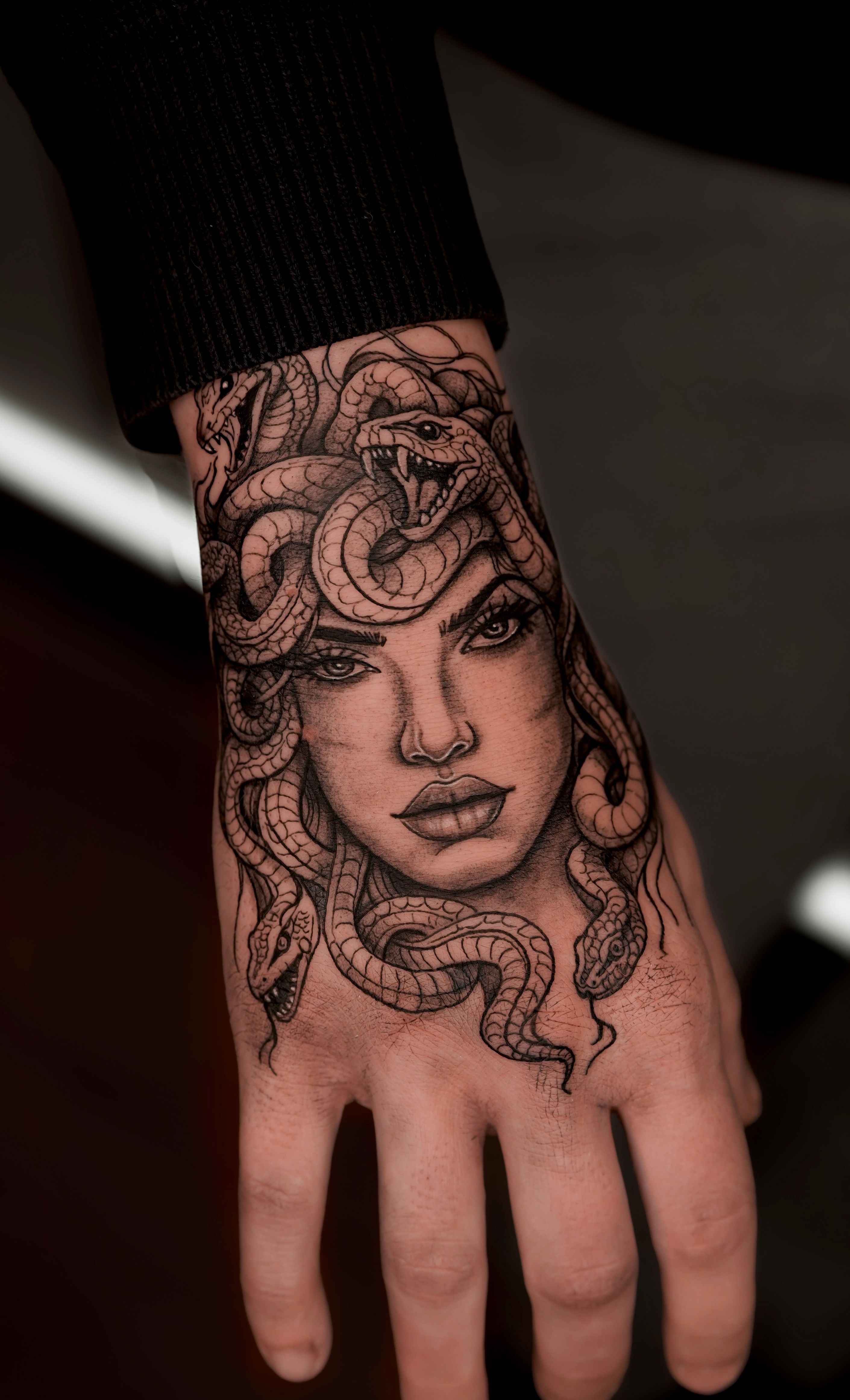
Look also for rendered skin texture inside the piece itself. Visible pores, hair strands, fabric grain. These details show real command of the style. They're difficult to fake and even more difficult to execute cleanly on skin.
The Techniques That Separate Good from Great
The technical vocabulary of realism is different from most other styles. Understanding it helps you ask better questions before you book.
Needle groupings and machine settings
Realism artists work primarily with round shaders and magnums. A magnum is a curved grouping of needles. Often 7 to 15 needles arranged in two rows. Designed to lay ink softly over large areas without harsh lines. This is very different from the single-needle or tight round liner used in fineline work. Magnums allow the artist to build gradients and pack tonal areas efficiently without overloading the skin in one pass.
Machine settings matter too. Voltage, needle depth, and speed all affect how ink enters the dermis. An experienced realism artist adjusts these constantly based on the skin's response, the needle grouping, and the tonal value they're building toward.
Layering and packing
Tonal depth comes from layering. The artist builds passes of ink gradually, working from light to dark, rather than trying to hit the final value in one go. Overworking a single area causes blowouts. Where ink spreads beyond the intended boundary into surrounding tissue. And muddy mid-tones that age badly. Patience in the layering process is what separates a realist who's technically competent from one who's genuinely skilled.
Reference management
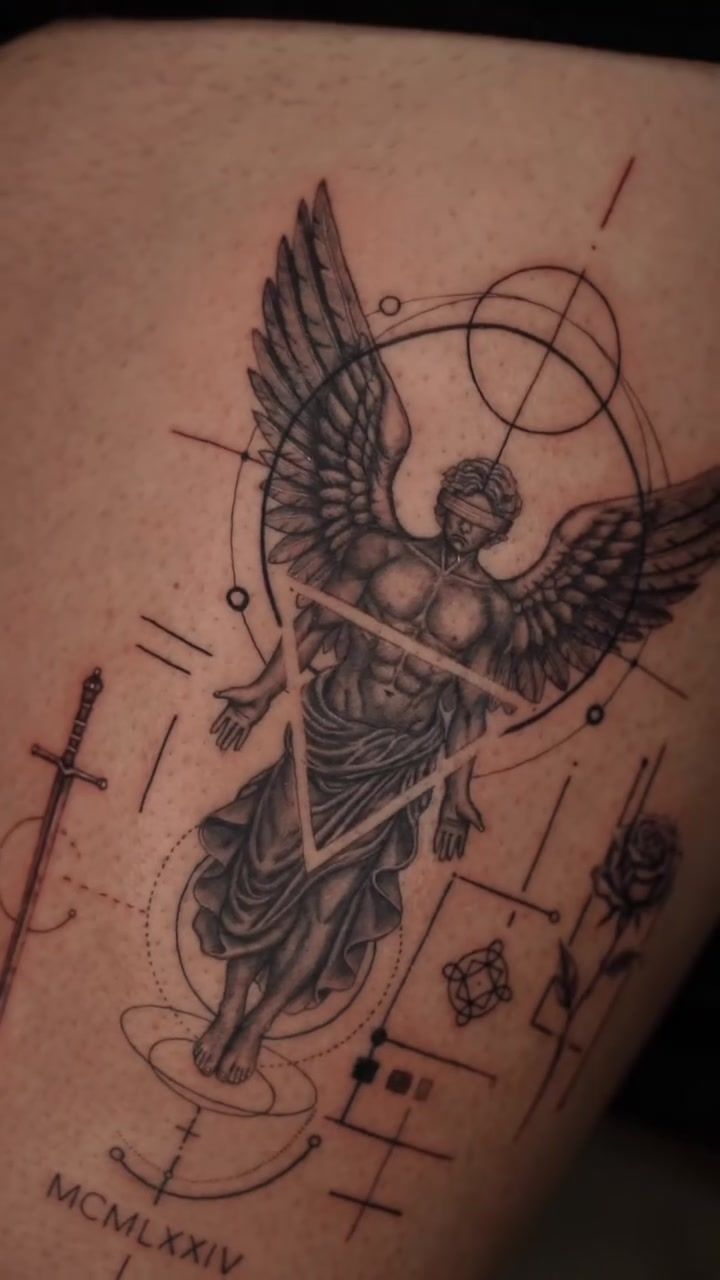
A serious realism artist starts from high-resolution reference, not memory or approximation. Before the stencil is even prepared, many artists sketch a tonal map. A simplified greyscale version of the composition that identifies where the deepest blacks, mid-tones, and skin highlights will sit. That map guides every needle pass during the session.
For portrait work, the studio shoots its own reference photography where possible. A photo taken in controlled lighting removes the ambiguity that comes from a client's blurry phone snapshot. You can explore the realism tattoo service page for more on what this consultation process involves.
How the Studio Approaches a Realism Piece in Lisbon
Every realism piece at this studio starts with a consultation. Not because it's a formality, but because the decisions made before a needle touches skin determine the entire result.
Consultation and reference
The consultation covers subject matter, placement, sizing, and whether colour or black and grey suits the design. Skin tone matters here. On warmer skin tones, certain colour pigments shift in ways that are hard to predict, and the studio will advise accordingly. For a guide to finding the right realism artist near you in Lisbon, this kind of honest pre-booking conversation is one of the clearest signs you're talking to the right person.
Stencil placement
The stencil is dry-fitted before any ink touches skin. This means positioning the printed design on the body and checking it from every angle before committing. If the stencil sits 2mm off-centre on a portrait face, you'll see asymmetric features every time you look at the piece. The dry-fit check is non-negotiable on realism work, particularly on faces and symmetrical compositions.
Session structure
Large realism pieces are split across multiple sessions. This isn't about artist preference. It's about skin integrity. Overworked skin becomes inflamed and stops accepting ink cleanly. By returning to a piece after it's healed, the artist can layer additional depth into areas that need it without fighting a damaged surface.
Lisbon's climate adds a real variable to healing. The city's humid summers. Particularly in July and August. Slow the outer skin's recovery slightly compared to the drier winter months. The studio adjusts its aftercare guidance seasonally. You can read more about what realism tattoos actually require in Lisbon, including specific aftercare notes for the local climate.
Placement, Size, and What to Realistically Expect
Realism has hard sizing minimums. A portrait face needs at least 8 to 10 centimetres of height to hold its detail long-term. Below that threshold, the features compress and merge as the skin ages and the ink spreads naturally in the dermis.
The best placements for a photorealistic tattoo in Lisbon's climate. Where summer sun and frequent outdoor activity are facts of life. Are areas with lower distortion risk and easier aftercare management.
| Placement | Detail Retention | Longevity | Typical Session Length |
|---|---|---|---|
| Upper arm | Excellent | High | 3-5 hours (palm-sized) |
| Thigh | Excellent | High | 4-6 hours (larger panel) |
| Back | Excellent | Very high | Multiple sessions, 4-6 hrs each |
| Forearm | Good | Moderate-high | 3-5 hours |
| Hand / fingers | Poor | Low | Short sessions, frequent touch-up |
| High-flex joints | Poor | Low | Not recommended for realism |
Hands and fingers age poorly for realism. The skin there is thin, the flex constant, and detail migrates within months. The Medusa hand piece shown above is an exception that works because of its scale and the artist's experience with that placement. It's not a starting point for a first realism commission.
Once healed, any exposed placement needs SPF 50 applied consistently. Lisbon's sun is strong from April through October, and UV exposure is the single biggest accelerant of ink fade. No aftercare routine matters more on an uncovered piece. If you're considering a smaller-scale photorealistic piece, the guide to micro realism in Lisbon covers the specific sizing and technique considerations that apply at that scale.
Red Flags When Evaluating a Realism Artist
Before you book, run through this checklist. A single red flag doesn't disqualify an artist, but a pattern of them should.
- Only fresh tattoos in the portfolio. No healed results means no evidence the work holds up. Every artist has fresh pieces. The question is whether they're proud of those same pieces six months later.
- No true blacks in the work. Mid-tone grey throughout is a sign of under-packing. The piece may look soft and moody fresh, but it'll look faded and muddy within a year.
- Vague answers about process. If an artist can't explain their needle choices, layering sequence, or how they approach tonal mapping, the technique may be instinctive rather than deliberate. Instinct alone doesn't scale to complex pieces.
- No stencil dry-fit. Applying a stencil and going straight to ink is a shortcut. On realism work. Especially portraits. That shortcut shows in the result.
- Unusually low session quotes for large work. A half-sleeve realism piece cannot be done well in three hours. If the session length feels too short for the scope, the layering will be compressed, and the result will be flat.
The realism tattoo studio Portugal clients should be looking for is one that asks as many questions as you do. A good consultation goes in both directions.
"The reference photo a client brings is the beginning of the conversation, not the end of it. We're translating something into a permanent material with its own rules. That translation requires decisions, and those decisions need to be made together before the session starts."
And one more thing worth considering: the portrait tattoo artist in Lisbon who turns down a project because the reference photo isn't strong enough is showing you something important. That refusal protects your skin and their portfolio in equal measure.
- Ask to see healed work. Not just fresh pieces from the last month.
- Ask how the artist approaches tonal mapping before a portrait session.
- Ask what needle groupings they use for large tonal areas, and why.
- Check whether the studio offers a pre-session consultation or goes straight to booking.
- Bring your reference images to the consultation and watch how the artist responds to them.
Frequently Asked Questions
How long does a realism tattoo session typically take?
A palm-sized realism piece generally takes three to five hours. Larger work, like a half-sleeve or a back panel, is split across multiple sessions of four to six hours each. Rushing a realism piece compresses the layering process and produces flat, muddy results. Session length is non-negotiable for quality work.
Is black and grey better than colour for realism tattoos?
Neither is inherently better, but black and grey realism ages more predictably on most skin tones. Colour realism can be stunning on the right subject, but pigment shifts over time are harder to control. Most experienced artists recommend discussing your skin tone and the subject matter together before deciding which approach fits.
How do I know if my reference photo is good enough for a portrait tattoo?
The photo needs to be sharp, well-lit, and at least 1000px on the short side. Blurry, low-contrast, or heavily filtered images force the artist to interpret rather than replicate, and that gap usually shows in the final piece. Natural light from the side works best for face references. Avoid flash-lit photos entirely.
Can realism tattoos be done in small sizes?
Yes, but the approach shifts to micro realism. A discipline that demands even tighter needle control to pack photorealistic detail into a small area. Not all realism artists work at that scale. If you want a small photorealistic piece, look specifically for artists with a demonstrated micro realism portfolio before booking a session.
How should I prepare for a realism tattoo session in Lisbon?
Arrive with clean, moisturised skin and eat a solid meal beforehand. Bring high-resolution reference images if you have specific source material. For summer sessions, avoid sunburn on the placement area for at least two weeks prior. Lisbon's sun is strong from April onward. Wear loose clothing that gives easy access to the area being tattooed.