The question everyone asks before booking
"It's just a few words". That's the most common thing people say when they first enquire about a script tattoo. And it's understandable. A four-letter word on the wrist looks simple sitting in a Pinterest screenshot. But the gap between a four-letter word and a full-sentence quote with cursive flourishes is enormous, even if both pieces fit inside a 10 cm space.
Price varies significantly with craft complexity, not just with centimetres. That's the single most important thing to understand before you start getting quotes. This guide explains every variable, in plain terms, from a studio that works with custom typography and hand-lettered text every week in Lisbon.
What counts as a small lettering tattoo
Size versus complexity
In practice, "small" in the lettering world means roughly 3 to 10 cm in total rendered length. That covers everything from a single initial on the collarbone to a short quote wrapping the inner forearm. But within that range, the complexity gap is wide.
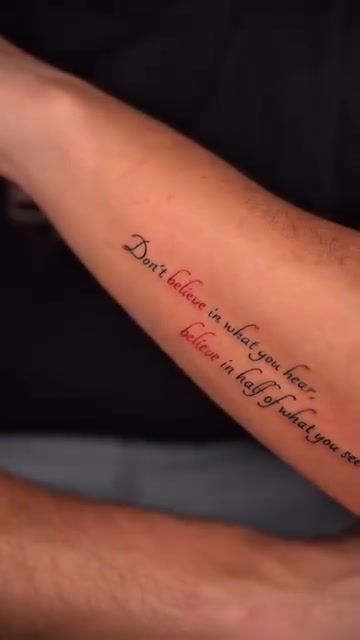
A single minimalist word in a clean sans-serif font. Think the kind of clean, unadorned letters you'd see on a modernist book cover. Is a very different technical job from a four-word phrase rendered in fine cursive with entrance strokes and exit flourishes. The first can be executed in under an hour. The second might need 90 minutes of needle work after a separate design session.
Font styles and what they demand technically
Font families matter because they dictate needle choice, pass count, and how much room the artist needs between strokes. Block fonts (clean geometric letters with uniform weight) are the most forgiving: consistent line width, clear negative space, and minimal risk of two strokes bleeding into each other. Serif fonts add fine horizontal feet to each letter, which requires thinner needle work to keep crisp. Script and cursive fonts introduce continuous flowing strokes, varying line weight, and letters that connect. Meaning a single hesitation in the machine's pressure can interrupt the visual flow of an entire word.
Hand-lettered custom typography sits at the top of the complexity scale. The artist draws the letterforms from scratch to match the scale, skin surface, and placement, rather than adapting an existing typeface. That design work happens before the session even starts. Our custom lettering tattoos service page covers the range of styles the studio handles, if you want a sense of what's possible.
What actually drives the price
Character count and spacing
More characters mean more time at the needle. That's the simplest version of the rule. But spacing matters just as much. Letters that sit too close together in a small script will bleed into each other once the skin heals and the ink settles slightly. The artist has to build deliberate breathing room between each character, which takes longer than just tattooing quickly through the phrase.
Studios in Lisbon. And professional studios generally. Price by session or by a minimum charge, not per letter. So a very short word will still hit the studio's session minimum. That floor exists because set-up, stencilling, and aftercare briefing take time regardless of how many letters go on the skin.
Font complexity and custom lettering
A reference font you bring from your phone gets redrawn by hand before it ever touches your skin. The artist scales it to the placement, adjusts stroke weight for skin texture, and checks that each letter reads clearly at the finished size. This adaptation process is design work. For fully custom typography. Letterforms drawn from scratch to your brief. That design time adds meaningfully to the overall cost.
The word tattoo price you see quoted online for "simple script" usually reflects a clean, pre-adapted typeface with minimal customisation. Custom hand-lettered work is a different conversation.
Placement on the body
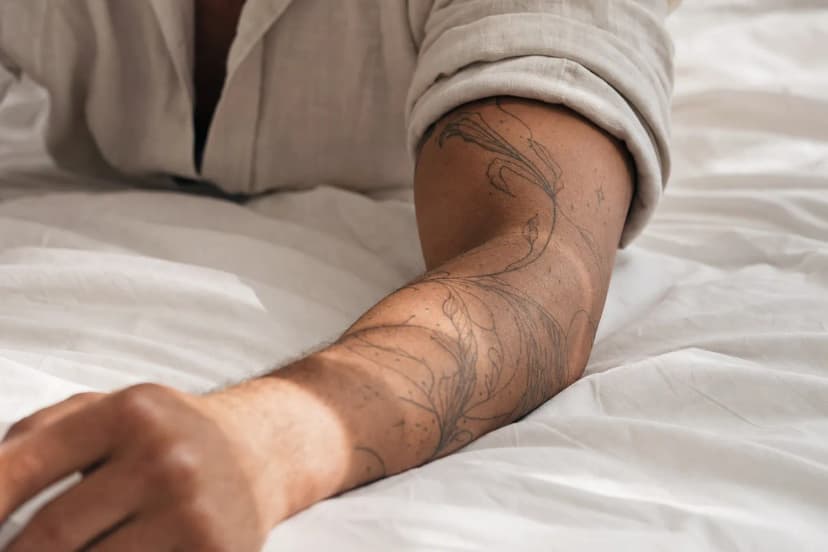
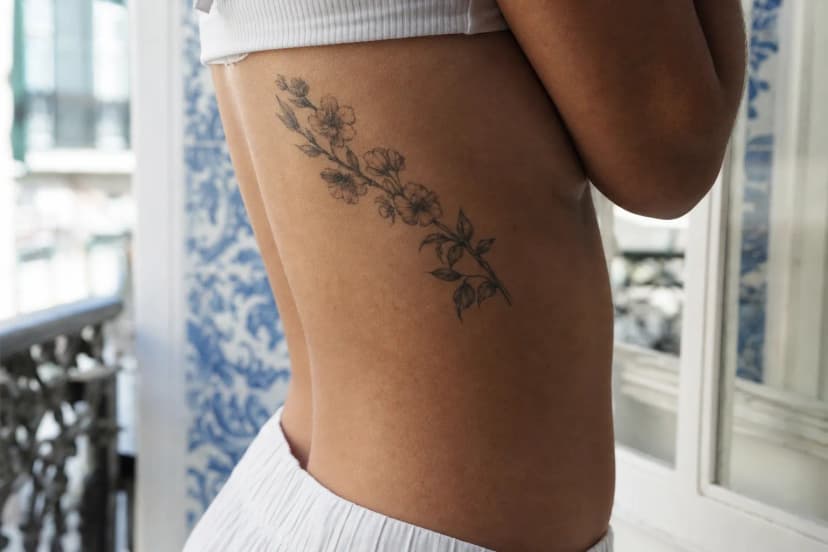
Wrist, collarbone, ribcage, and finger placements all behave differently. The wrist is a relatively stable canvas with consistent skin tension. The ribcage moves with every breath, which makes stencil placement harder and needle pressure more variable. Fingers have thin skin over bone, which means less ink retention and a higher likelihood of needing a touch-up pass after healing. Each of these factors affects the session and, with it, the script tattoo cost.
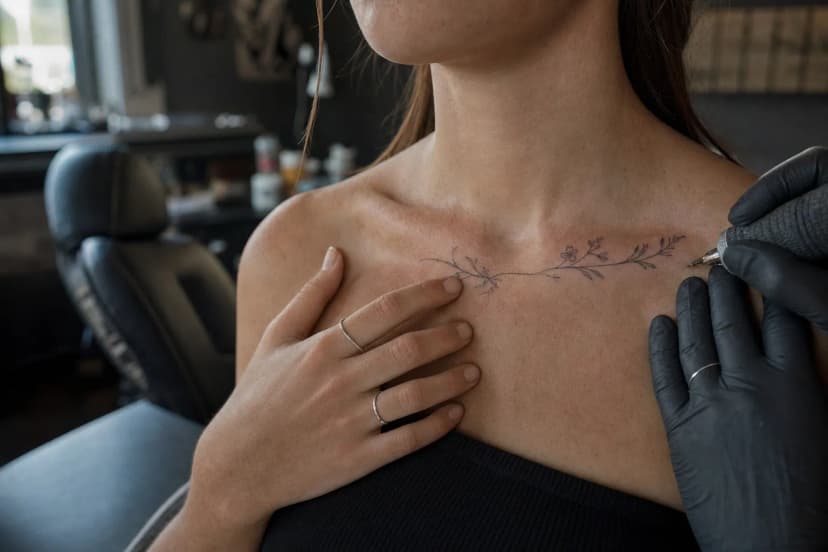
The collarbone is popular for lettering because it sits flat and reads well, but the skin near the sternum can be sensitive and the artist needs to work slowly to keep line quality consistent across the full span.
Session time
A 3-letter piece on the wrist might take 45 minutes including stencil placement and aftercare dressing. A forearm quote with cursive flourishes and careful baseline alignment can run to two hours. And if the stencil needs repositioning. Because getting a 6 cm phrase perfectly level on a curved forearm surface takes more than one attempt. That adds time before the machine even starts.
The session time is where fine line lettering tattoo cost and complexity meet most directly. Longer in the chair means higher cost, regardless of how many centimetres the piece measures.
| Font type | Estimated session time | Complexity tier | Key technical challenge |
|---|---|---|---|
| Block / sans-serif (1-4 words) | 30-60 min | Low-Medium | Consistent line weight, clean corners |
| Serif (1-4 words) | 45-75 min | Medium | Fine horizontal strokes require thinner needles |
| Script / cursive (short phrase) | 60-90 min | Medium-High | Continuous strokes, varying pressure, letter connection |
| Custom hand-lettered | 90-120 min + design time | High | Full letterform design before session; precision stencil |
| Script + floral or geometric elements | 90-150 min | High | Multi-element composition, density management |
How the studio approaches lettering work
The consultation starts with layout. The artist sketches the phrase at scale, positions it on a reference outline of the placement area, and checks proportion before anything is agreed. This step matters more than most clients expect. If the baseline of a 6 cm quote sits even 1 mm off-centre on your forearm, you'll read that tilt every single time you glance at it. Getting the stencil right is where precision starts, not where it ends.
"Take as long as you need with the stencil. Once we pick up the machine, the conversation is over. Everything before that moment is an opportunity to get it exactly right."
For delicate script work, the studio uses fineline single-needle work: a single, very fine needle that draws each stroke individually rather than packing ink across a wider field. This technique produces the hairline strokes you see in elegant cursive, but it requires slower, more deliberate movement. A single pass that goes slightly too fast can produce an inconsistent line that reads as amateur in the finished piece.
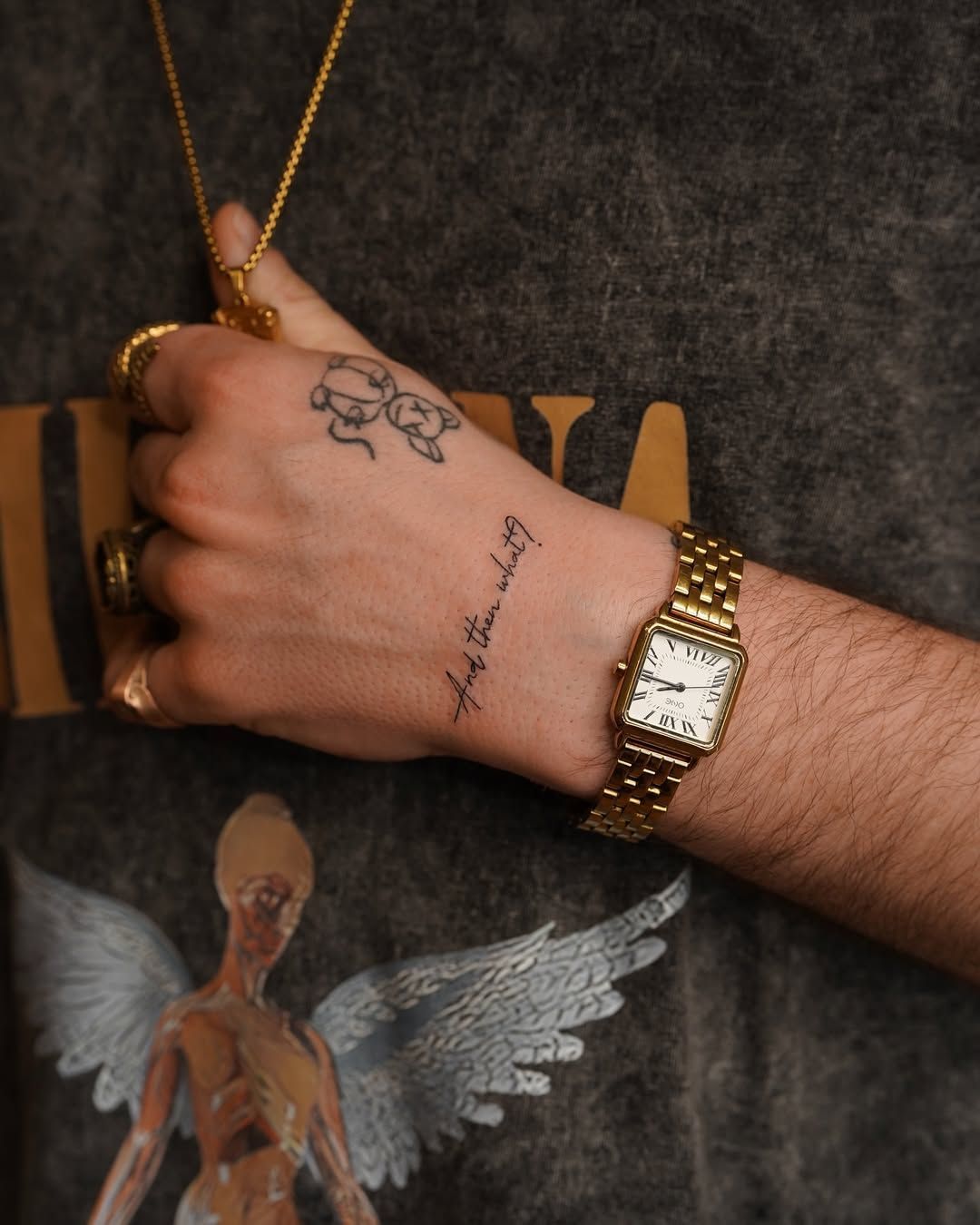
When lettering combines with floral or geometric elements, the design scope expands considerably. A word surrounded by fine botanical sprigs or nested inside a geometric frame requires the artist to balance multiple visual weights. That's a different job from a standalone phrase, and the price reflects it. You can read more about what goes into this kind of work in our guide to lettering and script tattoos in Lisbon.
Placement, healing, and what that means for lettering
High-movement areas affect how fine ink settles over time. Fingers flex constantly, which means the skin over the knuckles and sides stretches and compresses every day. Fine lines in those areas tend to spread slightly more than the same lines on the upper arm or shoulder blade. Inner wrists move too, though less dramatically. On the ribcage, the skin thins over bone and expands with breath, which can affect how consistently ink deposits during the session.
Lisbon's humid summers add another variable. Sweating in the first week after a tattoo. Which is genuinely hard to avoid in August, especially if you're walking between Alfama and Cais do Sodré. Can soften the healing surface and blur tight script before it's had time to set. The studio will give you specific guidance for the time of year you book. For the full day-by-day picture of what your skin is doing after a session, the day-by-day aftercare guide covers it clearly.
Touch-ups are a normal part of fine lettering, not a sign something went wrong. After the tattoo has fully healed. Which takes 6 to 8 weeks, not the two weeks the surface peeling suggests. Some letters on wrists or fingers may need a light second pass to restore crispness. The studio discusses this at consultation so it doesn't come as a surprise when you're budgeting.
Size, placement and session length at a glance
| Size range | Common placements | Approx. Session length | Complexity notes |
|---|---|---|---|
| 3-5 cm (1-3 words) | Wrist, ankle, finger, behind ear | 30-60 min | Simple font: low complexity. Finger/ear: touch-up likely |
| 5-8 cm (short phrase) | Collarbone, inner forearm, upper arm | 60-90 min | Script fonts add complexity; stencil alignment critical |
| 8-10 cm (longer quote) | Forearm, ribcage, shoulder blade | 90-120 min | Ribcage and forearm require careful baseline work |
| Combined lettering + elements | Hand, forearm, thigh | 120-150 min | Multi-element; design time adds to overall cost |
What to bring to your lettering consultation
- Screenshots or printouts of fonts you like. Even rough references help the artist understand your direction
- The exact text you want, written out in full, with any punctuation you intend to include
- Notes on placement: which arm, which wrist, roughly where on the forearm
- Examples of sizing. A piece of paper marked with the approximate length gives the artist a starting point
- Any previous tattoos near the intended placement, so the artist can plan around them
- Comfortable, loose clothing that gives easy access to the area (a loose short-sleeve for forearm work, a strapless top for collarbone)
Custom typography tattoo pricing becomes much clearer after a consultation, because the artist can see the actual text, assess the font, and map the stencil to your specific anatomy. What looks straightforward in a screenshot often reveals nuances. A letter combination that won't kern cleanly at small scale, or a placement curve that changes the baseline. That only show up when the design meets the body.
- Studios charge by session or minimum fee, not per character. A very short word still hits the floor price
- Custom hand-lettered designs carry a design fee for the pre-session work
- Touch-up passes for finger, wrist, or ribcage placements are worth factoring into your overall budget from the start
- Combined lettering and floral or geometric pieces take significantly longer than standalone text
Frequently Asked Questions
Is a small lettering tattoo cheaper than other styles?
Not always. A short word in a clean block font can be one of the quickest pieces to execute. But fine-script quotes with custom lettering, flourishes, or combined floral elements take real design and needle time. The studio sets a session minimum, so very small pieces rarely cost less than that floor regardless of style.
How long does a small word tattoo take?
A simple 3 to 5 letter piece on the wrist or ankle typically takes 30 to 60 minutes in the chair. A longer quote, a more complex font, or a placement that requires careful repositioning of the stencil can push a session to 90 minutes or more. Design consultation adds time before that.
Do finger or hand lettering tattoos cost more?
The session time may be similar, but fingers and hands are technically harder placements. Skin moves constantly, ink retention is lower, and touch-ups are more likely. Some studios factor this into the overall assessment at consultation. Expect an honest conversation about longevity before you commit to the placement.
Can I bring my own font to the consultation?
Yes, and it helps. Arriving with a reference font, a screenshot, or even handwritten examples gives the artist a clear starting point. The studio redraws or adapts the font by hand to suit the scale, skin surface, and placement. So the final stencil is always a custom piece, never a direct print from your phone.
Does a small lettering tattoo need a touch-up?
Fine script on high-movement areas like the wrist, ribs, or fingers sometimes fades or spreads slightly after full healing, which can take 6 to 8 weeks. A light touch-up pass restores crispness. The studio discusses this likelihood at consultation so you can factor it into your plans before booking.