The Question Behind the Question
When people ask how much a micro realism tattoo costs, they're usually asking something else: is this worth it, and will I actually get what I'm imagining? Those are fair questions. And they deserve a straight answer.
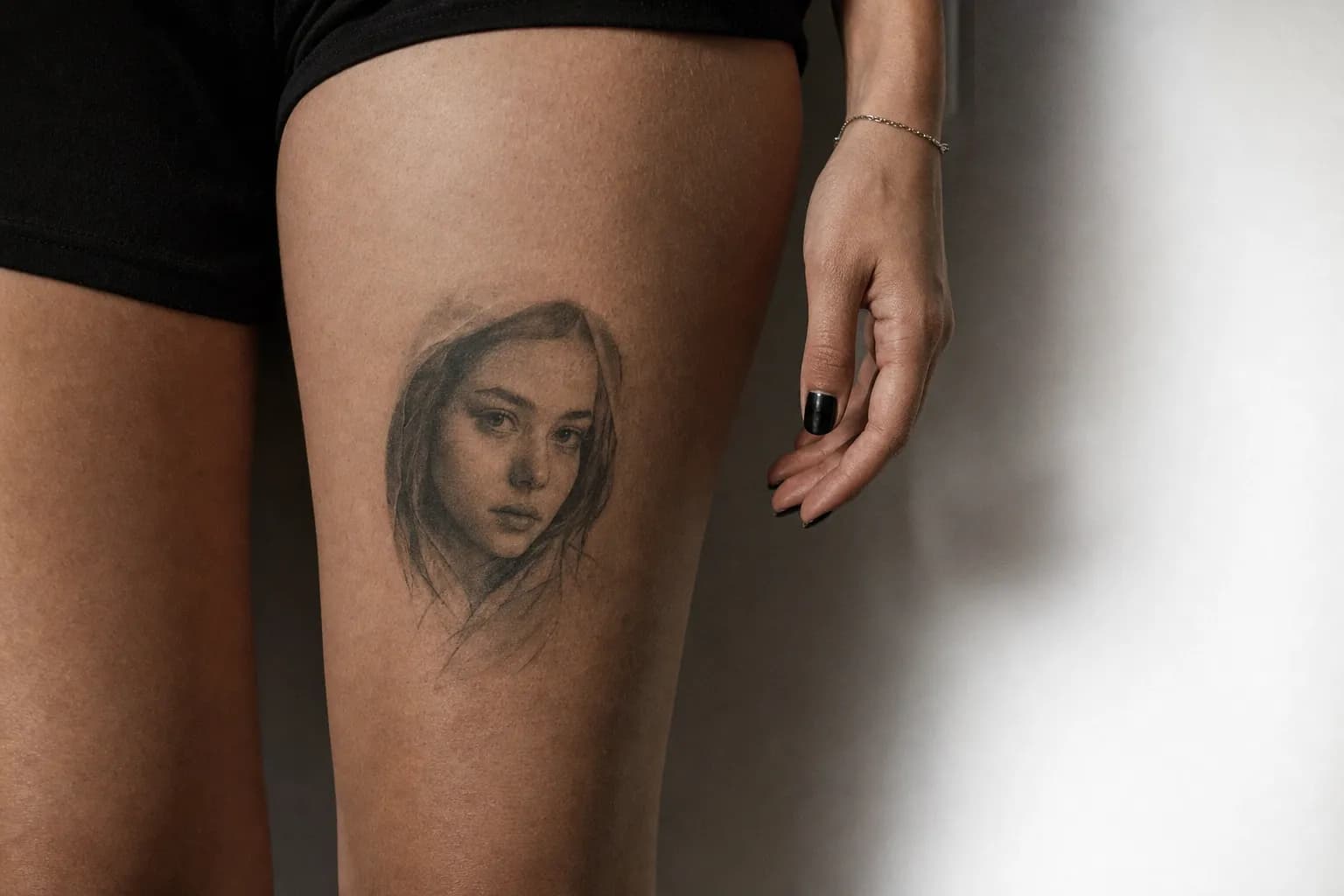
This style sits at the technical ceiling of tattooing. A coin-sized portrait can take longer to complete than a 10cm tribal band, and cost more as a result. That's not arbitrary. It reflects what the work actually demands.
Understanding the pricing logic before you walk into a consultation will help you budget realistically, evaluate whether a quote is fair, and get the result you came for.
What Micro Realism Actually Is
The style in plain language
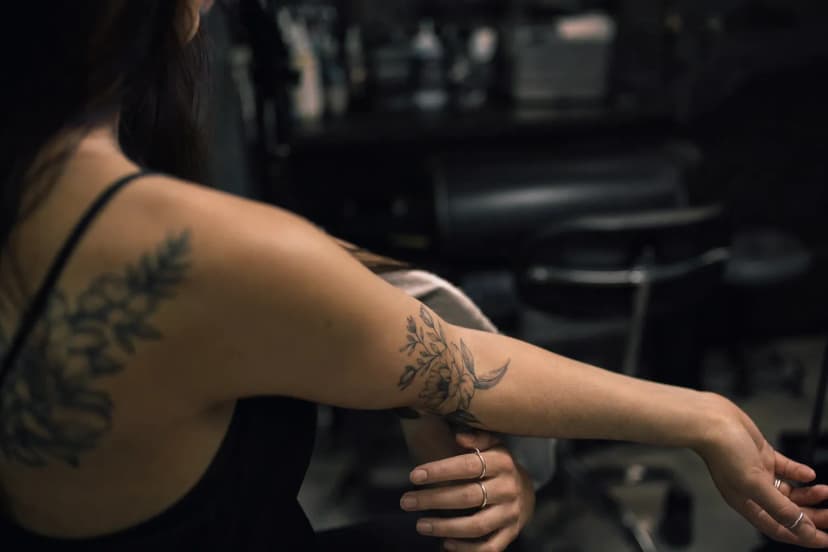
The micro realism tattoo style compresses photorealistic imagery into a small format. Faces, animals, objects. Rendered with accurate shadow, highlight, and mid-tone, all within a few centimetres of skin. The visual impact is immediate. So are any errors.
Artists work with a single needle or a tight 3-round-liner grouping (three needles arranged in a close triangle). Both configurations leave very little room for correction. A stray pass at this scale shows. That's precisely why the work slows down compared to bolder styles.
Why it's technically demanding
At small scale, the artist repositions the hand constantly to keep shadow gradients clean. Larger realism allows longer sweeping strokes. Here, every millimetre of blending is deliberate. The magnification required for that precision reduces working speed significantly.
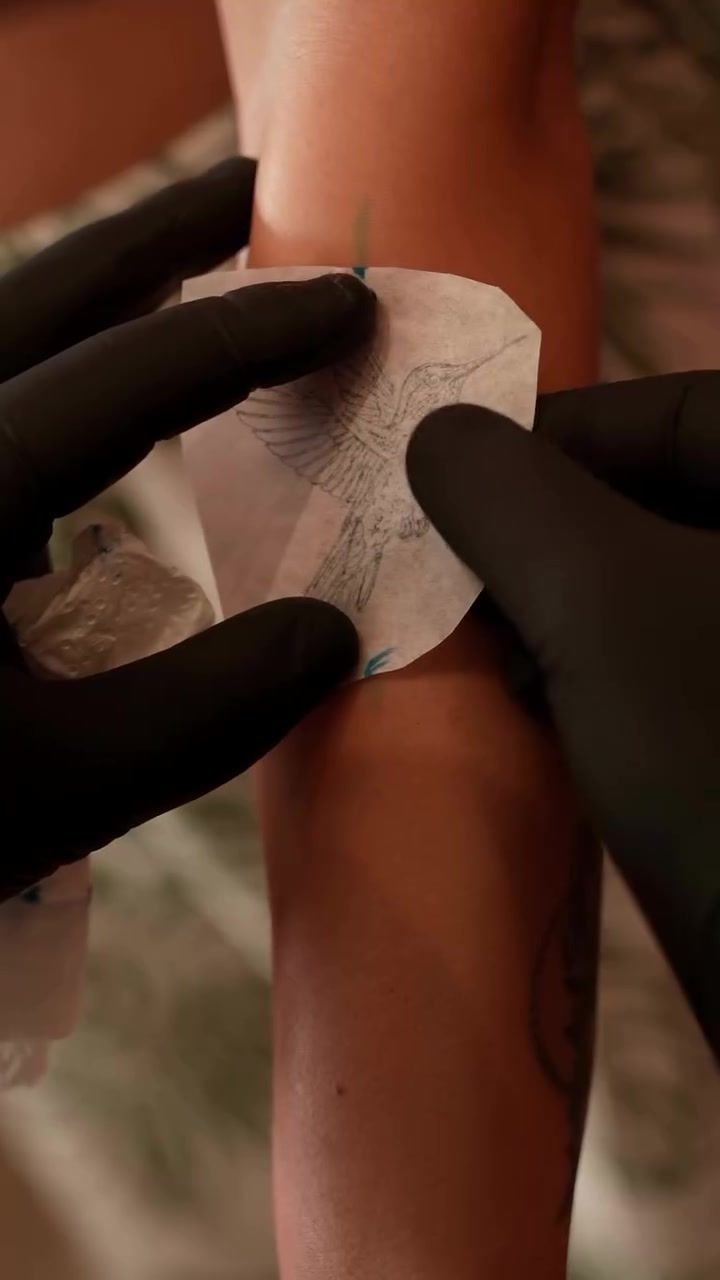
Detail density also affects needle wear. Fine configurations blunt faster than larger groupings. Responsible artists swap needles mid-session on complex pieces, which adds time but protects both the skin and the outcome.
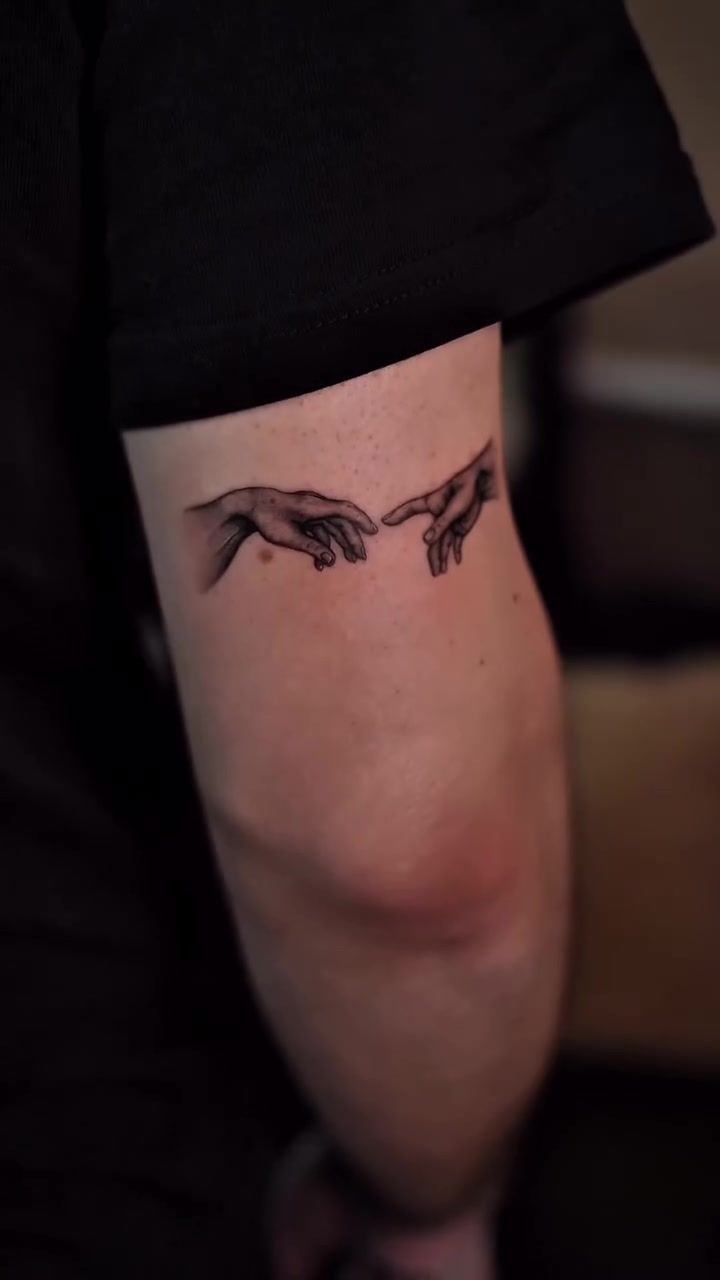
The Real Factors That Drive Pricing
Complexity and detail density
A single subject. One animal face, one flower. Requires focused shading across a contained area. A scene with background elements, multiple subjects, or textural variation throughout multiplies the work considerably. Both might be "small." Neither takes the same time.
Skin texture within the subject matters too. Fur, feathers, and fabric each require a different needle approach and more repositioning than smooth skin or flat objects. An artist quoting on a wolf portrait and a geometric symbol of the same size is quoting on fundamentally different workloads.
Size and placement
A 4cm piece and an 8cm piece can differ by a full session. That's not padding. It's math. Double the area means roughly four times the detail surface to work across, because realism scales in two dimensions.
Placement changes things too. The inner forearm is flat, stable, and easy to stencil accurately. The ribcage moves with every breath, sits on curved bone, and requires constant repositioning of both the client and the artist. Curved or mobile surfaces like the inner bicep or elbow ditch extend session length by 30 to 60 minutes on average, which feeds directly into the final cost.
Reference quality
High-resolution references. Minimum 2MB original files, not screenshot crops. Materially reduce design time at consultation. The artist can map tonal values accurately and adapt shadows to the skin's surface rather than guessing. Poor reference means more hours spent reconstructing detail the photo should have provided.
Number of sessions
Most single-subject pieces complete in one session. Multi-element compositions or anything requiring a full texture pass across a larger area often split across two. A touch-up at eight to twelve weeks is standard practice for this style, and it's worth budgeting for it from the start.
Session Length: The Honest Reality
Fine detail work at this scale moves slowly by design. A postage-stamp-sized piece takes a minimum of two to three hours. More complexity pushes that further. Below is a realistic guide to what different sizes and complexities actually require.
| Approximate Size | Complexity Level | Estimated Session Length | Touch-Up Likely? |
|---|---|---|---|
| 3-4 cm | Single subject, minimal background | 2-3 hours | Sometimes |
| 5-6 cm | Single subject with texture (fur, feathers) | 3-4 hours | Usually |
| 7-8 cm | Detailed subject or two elements | 4-5 hours | Yes |
| 9-12 cm | Scene with background or multiple subjects | 5-7 hours (may split) | Yes |
These ranges are approximations. Skin tone, skin elasticity, and placement all shift them. For a deeper look at what micro realism actually demands from an artist, the studio has covered the technical side in full elsewhere.
How the Studio Approaches Quoting
No price goes out before a consultation. That's not a formality. It's how accurate quotes happen. The artist needs to see your reference, understand the placement, and assess the complexity before any honest number can be attached to the work.
Design time is part of the labour. Adapting a photographic reference into a workable stencil that accounts for skin curvature, tonal compression, and long-term legibility is skilled work. Studios that skip this step tend to produce results that look nothing like the reference once healed.
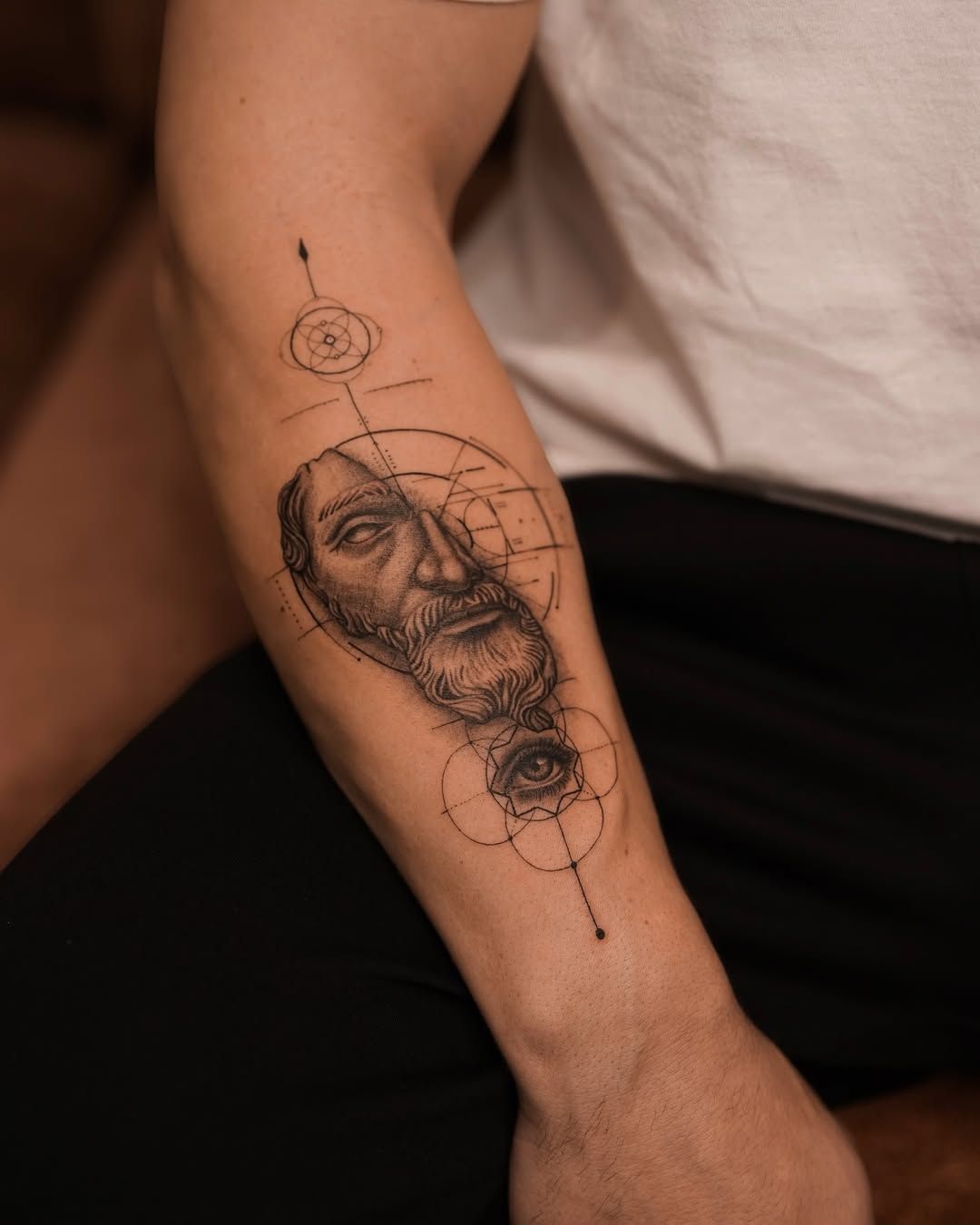
Chasing a lower micro realism tattoo price in Lisbon specifically tends to go wrong at the detail level. Finer needle work is less forgiving of technique gaps than bold styles. What looks acceptable immediately after can blur or fade within the first year if the needle control, depth, or ink saturation was off. Rework on this style is expensive and not always possible to the original standard.
The studio's consultation model ensures that budget conversations happen before design work begins. If a composition needs to be scaled back to fit a realistic price, that's a conversation worth having at the start. Not after a design is already drawn.
"The reference you bring to consultation is half the tattoo. A sharp, well-lit photo in natural light tells me the shadow structure before I touch a pencil. A blurry screenshot means I'm inventing detail. And that uncertainty costs both of us time."
What to Bring to Your Consultation
Preparation directly affects the quote you receive and the outcome you get. The more specific the information you bring, the more accurately the artist can scope the work.
- High-resolution reference images: original files from a camera or reputable source, not screenshots. Minimum 2MB. Multiple angles if you're working from a subject like a pet or person.
- Placement photos: a clear photo of the body area you have in mind, ideally in natural light. This helps the artist visualise how the design will sit on your specific anatomy.
- Size expectations: bring a rough idea, even if it changes. "Around 5 or 6cm" is a useful starting point.
- Your honest budget range: say it upfront. A good artist will tell you what's achievable within that range. Or tell you honestly if it's not enough for what you're imagining.
- Questions about the process: healing timelines, touch-up scheduling, and aftercare are all worth discussing at this stage, before any booking deposit is paid.
You can also review the studio's guide on why small tattoos demand the most precision before your consultation. It covers sizing decisions and technique tradeoffs that apply directly to this style.
Healing and the Cost of Getting It Wrong
Fine detail work heals differently from bold tattooing. Healed lines settle into the dermis over six to eight weeks. During that window, the surface skin sheds and the ink shifts slightly deeper. This is normal. But it means the final result takes time to reveal itself. And that aftercare during that window matters more than with bolder styles.
Lisbon's summer humidity is worth noting. Between June and September, the city runs warm and damp, especially in lower neighbourhoods like Cais do Sodré and Alfama. Sweat and moisture under a sealed wrap can affect how the skin recovers in the first 48 hours. The studio accounts for this in its wrap and aftercare guidance, adjusting recommendations seasonally.
- Do keep the piece out of direct sun for the full healing period. UV breaks down fine pigment faster than bold ink.
- Do moisturise lightly and consistently; dry skin pulls at healing fine lines.
- Do attend your touch-up appointment at the eight to twelve week mark.
- Don't submerge the piece in pools, the ocean, or baths for the first three to four weeks.
- Don't pick or scratch the surface during peeling. Micro realism loses detail permanently this way.
- Don't wrap too long in summer heat; ask the artist for specific guidance based on your session date.
Poor aftercare on this scale of work often means a touch-up is needed sooner than planned, which adds cost. Following the studio's guidance precisely is the most cost-effective thing you can do after the session ends. For further context on healing fine detail, Healthline's tattoo aftercare guide covers the general dermis healing process clearly.
Frequently Asked Questions
Is micro realism more expensive than regular realism?
Often, yes. Compressing photorealistic detail into a small format demands more precision per square centimetre than a large-scale piece. The artist works with finer needles at higher magnification, which slows the process considerably. A 5cm portrait in this style can take as long as a 15cm standard realism piece to complete properly.
How many sessions does a micro realism tattoo take?
Most single-subject pieces complete in one session of two to four hours. More complex compositions. Multiple elements, backgrounds, or fine texture throughout. Often benefit from a second session. A touch-up at eight to twelve weeks is common practice and keeps fine detail crisp long-term. Budget for it from the start.
Can I get a micro realism tattoo for a fixed budget?
Yes, with honest communication upfront. A good artist will work with your budget by adjusting scope. Simplifying a background, focusing detail on one subject, or scaling slightly. Tell the studio your budget at consultation. Trying to negotiate price after a design is already drawn rarely ends well for either side.
Why do micro realism tattoo prices vary so much between artists?
Experience, needle control, and portfolio consistency drive the gap. An artist who has tattooed hundreds of these pieces has developed muscle memory that reduces error and rework. Lower prices often reflect less experience or different equipment standards. In this style specifically, the margin for error is very small. And corrections are difficult.
Does placement affect the price of a micro realism tattoo?
Placement affects session length more than it changes a base rate, but the two are connected. Awkward surfaces. Ribcage, elbow ditch, inner bicep. Make stencil application harder and slow the needle work. More time means higher total cost. The inner forearm and upper arm are typically the most efficient surfaces for this style.