Why Geometric Work Reads So Strongly on Men
Walk through Príncipe Real on a warm afternoon and you'll notice geometry everywhere. The repetitive blue-and-white geometry of azulejo tiles on building facades, the octagonal cobblestone patterns on Lisbon's pavements. The city has always understood that mathematical order is visually powerful. Geometric tattoos tap into that same instinct.
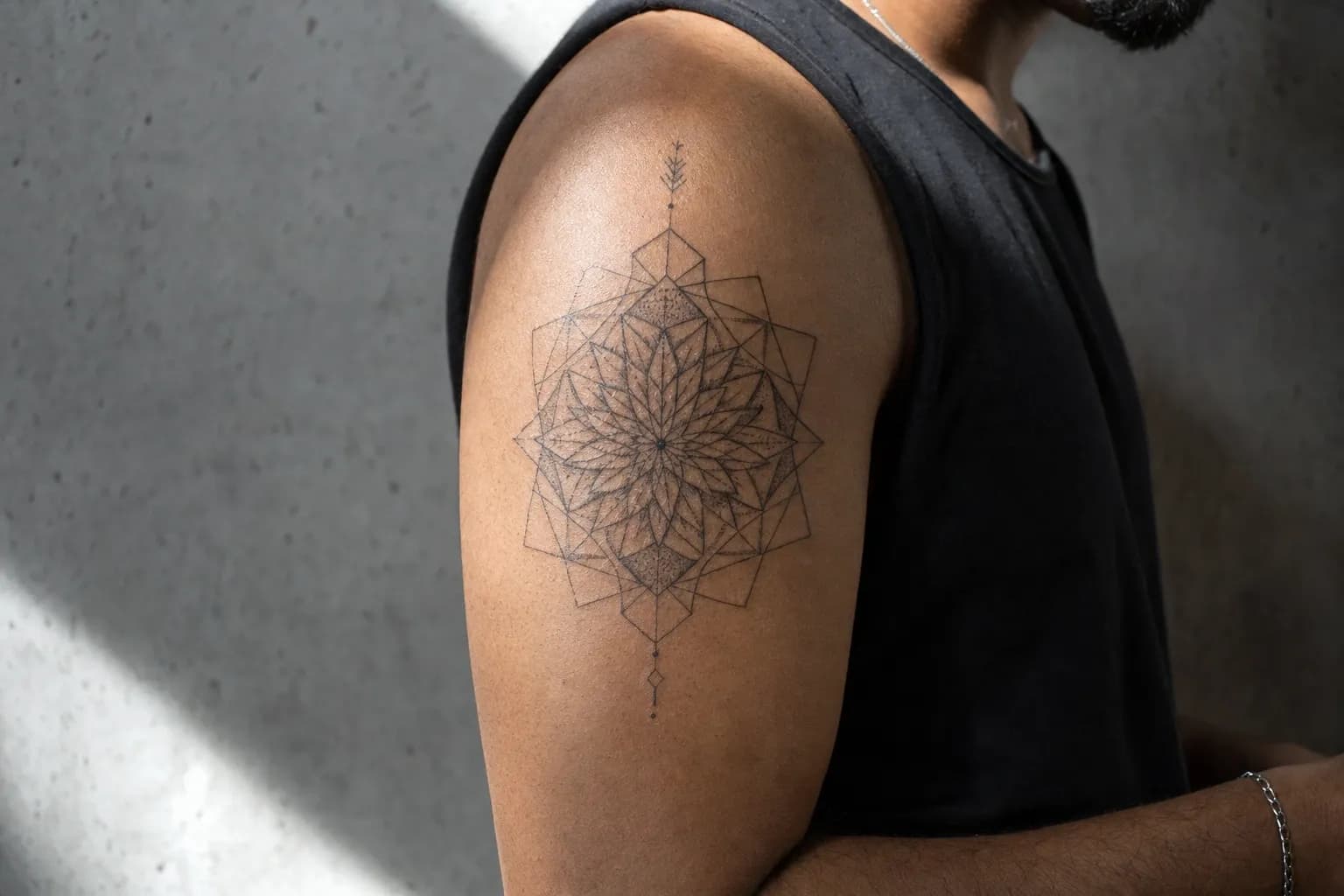
They suit the male body for a practical reason. Shoulders, forearms, chests, and sternums offer flat planes and gently contoured surfaces that geometry can map cleanly. A mandala tattoo centred on the upper arm, or a sacred geometry chest panel that mirrors the body's own symmetry. These placements feel intentional rather than incidental.
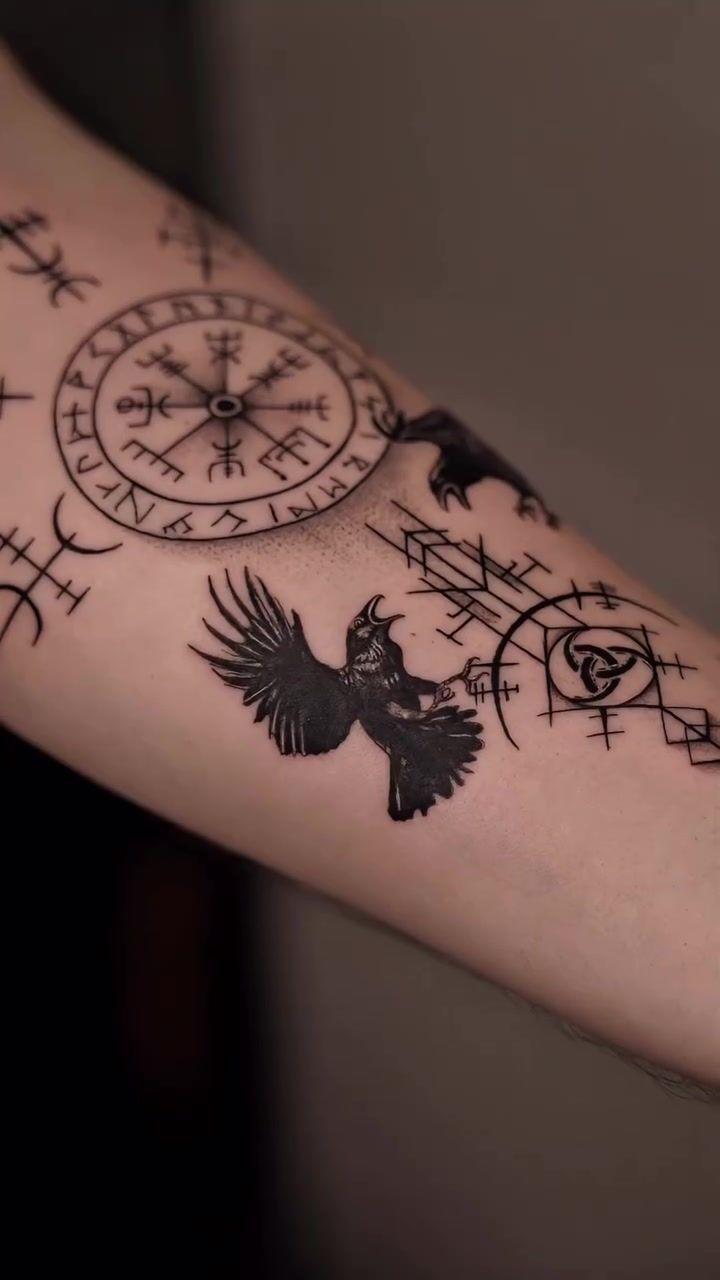
This is not a trend that arrived last decade. Geometric patterning appears in ancient Greek pottery borders, in Moorish tile architecture, in Norse rune carvings. What's new is the needle technology and the artists skilled enough to translate that visual language accurately onto skin. Popularity hasn't made the style easier to execute well. If anything, the bar is higher now. Everyone has seen sharp geometric work online, so the gap between precision and imprecision is more obvious than ever.
What 'Geometric' Actually Covers
The word gets used loosely. Before you start pulling references, it helps to know which branch of geometric tattooing actually appeals to you.
Sacred Geometry and Mandalas
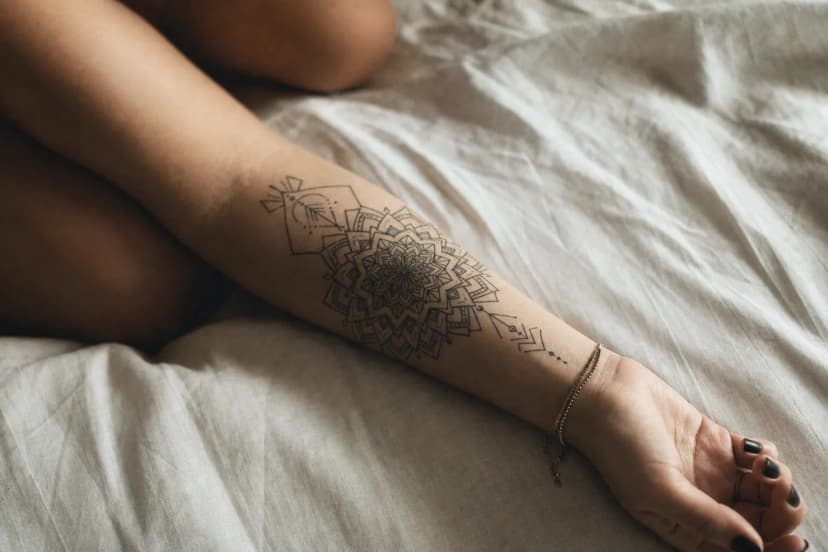
Sacred geometry uses specific shapes. The Flower of Life, Metatron's Cube, Fibonacci spirals. That carry symbolic weight beyond decoration. These aren't arbitrary patterns. Each carries a history of meaning across cultures and traditions. A mandala (a radially symmetrical pattern built outward from a central point) is the most common expression of this approach. They vary enormously in complexity, from a clean 5cm wrist piece to a full back composition with layered rings and fine dotwork detail.
Dotwork is worth understanding separately. Instead of solid lines, the artist builds tone and texture through thousands of stippled dots placed close together. The effect is softer, almost engraved-looking. It works particularly well in sacred geometry tattoos for men who want depth without heavy black fill.
Linework Geometry and Dotwork
Pure linework geometry strips everything back. No imagery, no portraits. Just architectural patterning, negative space, and the rhythm of repeated shapes. A geometric arm tattoo built entirely from interlocking triangles or a repeating hexagonal band can be more striking than anything figurative. The composition lives or dies on the consistency of every single line.
Geometric Combined With Realism or Fineline
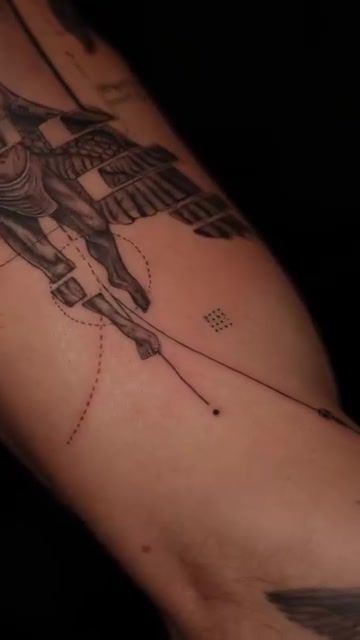
This hybrid approach is where the most interesting geometric male tattoo work happens right now. A realistic figure. A sculpted face, a mythological character, a bird mid-flight. Sits inside or partially breaks out of a geometric framework. The geometry provides structure; the realism provides life. When one style is clearly dominant and the other frames it, the result is visually compelling in a way that neither style achieves alone.
Where the Craft Gets Difficult
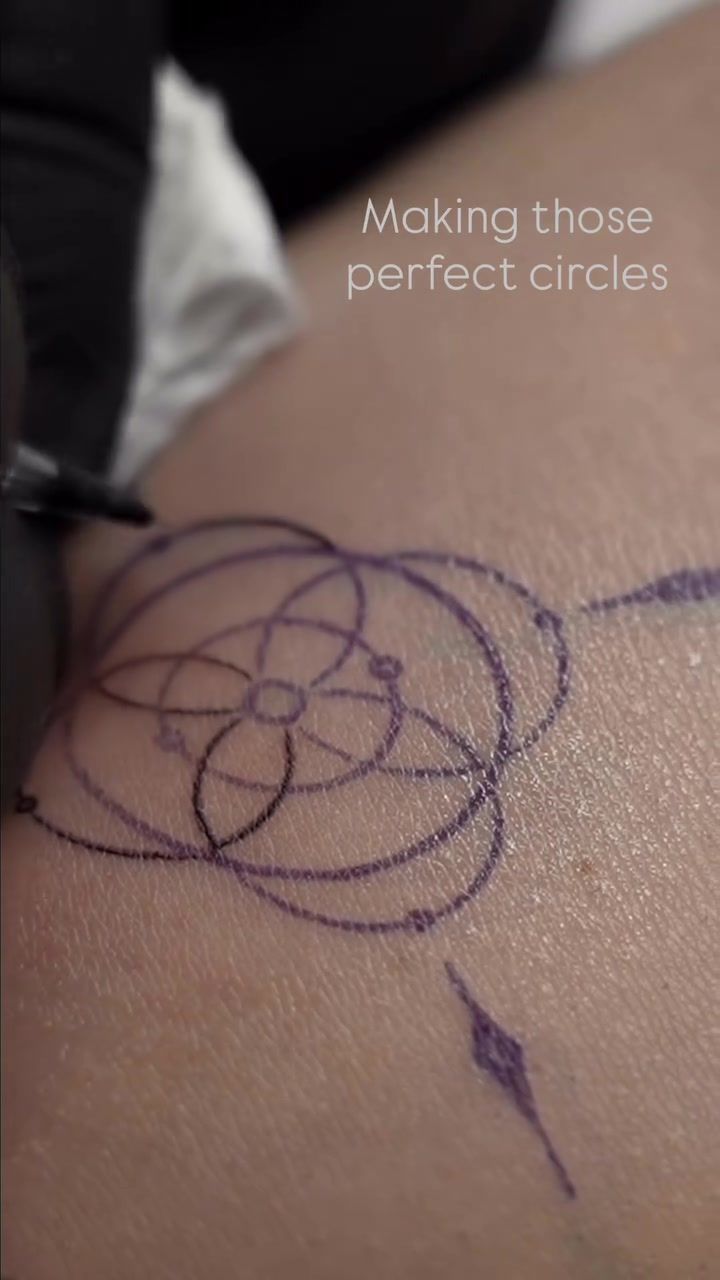
If the stencil for a mandala sits 2mm off-centre on your arm, you'll see it every time you look at the piece. Not because you're looking for it. Because the human eye finds asymmetry instantly, especially in designs built around a central axis. That's the unforgiving reality of geometric tattooing.
Straight lines that wobble collapse the entire composition. One inconsistent segment in a repeating border pattern draws the eye immediately. Not to what's working, but to what isn't. Ink saturation has to stay even across the piece. A line that's been over-worked sits thicker than its neighbours; a line that's been under-worked sits thin. In a design built from identical repeating elements, the difference between those two outcomes is immediately obvious.
Symmetry on a curved surface creates an additional layer of difficulty. A bicep isn't flat. A calf muscle has contour. Geometric work that reads as perfectly symmetrical on those surfaces has to be designed with compensation built in at the draft stage. Not corrected during execution. This is why the studio's design phase for complex geometric pieces takes longer than many clients expect. It's also why reviewing healed portfolio work matters far more than looking at fresh-off-the-machine photographs. Fresh ink looks sharp on almost anything. Healed ink tells you whether the lines held.
For a deeper look at the technical demands of the style, the article on what geometric tattoo design actually demands covers the process in detail.
How the Studio Approaches Geometric Tattoos for Men
The Consultation
The first conversation is about intention. Are you drawn to sacred geometry tattoos for the symbolism, or is this primarily a visual choice? Do you want something that reads clearly from a distance, or are you after fine detail that rewards a close look? Skin tone, lifestyle, and how much sun the placement gets regularly. All of these shape what the finished design should look like.
The studio also asks about your body's relationship to the placement. Someone who trains heavily has different muscle contour than someone who doesn't. A mandala tattoo for men that sits beautifully on a relaxed forearm needs to account for how that forearm looks when flexed.
Design and Stencil
Geometry is designed digitally before it becomes a stencil. This allows exact symmetry testing, proportional adjustments, and the ability to see how the design scales to your specific body. The stencil goes on deliberately, checked from multiple angles before a single line is placed. No rushing that stage.
"The design phase for a complex geometric piece should take longer than the tattooing itself. If you're spending more time with the needle than with the drawing, something has been skipped."
Session Realities
A small geometric forearm piece. A clean mandala or a single sacred geometry symbol. Typically takes 90 minutes to two hours. A geometric sleeve tattoo with interlocking elements spread across the full arm is a different commitment: two to three sessions, spaced at least four weeks apart to allow the skin to recover between appointments. The studio's geometric tattoo service covers the full range, from single-session pieces to multi-session sleeves.
Best Placements for Geometric Tattoos on Men
Placement affects how the design is built, how long the session runs, and how the piece ages over time. The table below gives a practical overview of the most common choices.
| Placement | Surface Type | Typical Session Length | Longevity Note |
|---|---|---|---|
| Inner forearm | Flat, stable | 90 min. 2 hours | High UV exposure; sunscreen matters year-round in Lisbon |
| Upper arm / bicep | Curved, varies with muscle | 2. 3 hours | Needs design compensation for contour; ages well with limited sun |
| Chest | Large flat canvas | 2. 3 sessions | Less sun exposure; heals well in Lisbon's milder months |
| Sternum | Narrow, vertical axis | 2. 3 hours | Suits single vertical compositions; sensitive area but very stable long-term |
| Calf | Good flat surface | 90 min. 2.5 hours | Underrated; less UV in Lisbon winters; heals reliably |
| Back | Maximum canvas | 3. 5 sessions | Ideal for large geometric architecture; very limited sun exposure |
The forearm is the most popular choice for good reason. The inner surface is flat, the visibility is high, and a medium geometric arm tattoo sits there without the symmetry complications of a curved placement. The calf is worth considering if you want a larger piece that can heal through Lisbon's mild winter (temperatures between 15 and 18°C) away from direct summer sun.
For men choosing between a smaller symbol and a more complex composition, the guide on tattoo placement ideas for smaller geometric pieces is a useful companion read before your consultation.
Practical Guidance Before You Book
Geometric sessions ask something of both the artist and you. A little preparation makes a real difference to how the day goes.
- Bring references, but hold them loosely. Show the studio what geometric style draws you. Line weight, complexity level, any symbolic elements. But an exact copy of someone else's mandala tattoo rarely fits a different body. The proportions, the placement, the skin all change things.
- Moisturise in the week before your session. Dry skin holds ink less cleanly. A simple unscented lotion applied daily is enough.
- Eat a proper meal two to three hours before you sit. Geometric sessions require sustained focus from both sides of the needle. Low blood sugar makes everything harder.
- Wear clothing that gives easy access to the placement. A sleeveless top for shoulder or upper arm work; shorts for calf or thigh; a loose-fitting shirt that can come off entirely for chest or back sessions.
- Plan your first four to six weeks of aftercare. Geometric linework peels in the first week of healing. Don't pick at it. A lifted piece of peeling skin can pull out a line segment and leave a gap in a repeating pattern that will need touching up at your follow-up appointment.
Lisbon summers are humid. That humidity can extend the peeling phase slightly compared to drier climates. Keep the piece out of direct sun for the first four to six weeks, apply unscented moisturiser twice daily, and avoid swimming in the sea or pool until the skin has fully closed. If you're planning a large piece, the mild winter months are genuinely the better season to sit for it.
A few things to remember when you arrive:
- Tell the artist if you've had any skin changes since your consultation. Sunburn, a rash, a new medication that affects the skin.
- Turn your phone to silent. The artist needs to concentrate, especially during the symmetry-critical early stages of a geometric piece.
- Ask questions before the needle touches skin, not during a complex line.
Frequently Asked Questions
Do geometric tattoos age well on men?
Geometric linework can spread slightly in the dermis over the years. Thicker lines hold their edge longer than single-needle hairlines. Placement matters: a forearm piece with regular sun exposure fades faster than one on the upper arm or torso. A solid aftercare routine in the first six weeks sets the foundation for how the piece looks at ten years.
How long does a geometric tattoo take to complete?
A small geometric symbol or sigil takes around one hour. A forearm band or medium mandala typically runs 90 minutes to two hours. Complex interlocking geometry covering a full arm or chest is usually split across two or three sessions, spaced at least four weeks apart to let the skin recover fully between appointments.
What size should a geometric tattoo be for it to hold detail?
For complex geometry with interlocking lines or fine dotwork, 7 to 10cm across is generally the safe minimum. Below that, fine lines sit too close together and can blur as the skin heals and settles. Simple geometric symbols or single shapes can work smaller. The artist will advise on what level of detail is achievable at your preferred size during consultation.
Can geometric tattoos be combined with other styles?
Yes, and it's one of the most striking approaches available. A realistic figure framed or partially deconstructed by geometric architecture creates strong visual contrast. The combination works best when one style is clearly dominant and the other provides structure or framing, rather than both competing equally for attention across the piece.
Is Lisbon a good city to get a geometric tattoo done?
Lisbon has a growing studio scene with artists working at a high technical level. The mild winter climate. Typically 15 to 18°C. Is ideal for healing a large piece away from harsh sun. Good studio light year-round makes for better sessions. And if you're booking from abroad, the city is compact and easy to move around, with straightforward metro connections to most studio areas.
What should I bring to a geometric tattoo consultation in Lisbon?
Bring reference images that show the geometric style you're drawn to, the placement you're considering, and any symbolic meaning behind the design. Avoid arriving with a single image and expecting an exact copy. The artist will adapt the geometry to fit your specific body proportions. Clear communication about intention consistently produces a stronger result than strict replication.