Why "Near Me" Is Only the Starting Point
Typing "geometric tattoo artist near me" into a search bar is a reasonable first move. But proximity is probably the least important factor when you're choosing someone to execute this kind of work. Geometric tattooing is one of the most technically demanding styles in the discipline, and a poorly executed mandala is immediately obvious in a way that a loose sketch-style piece simply isn't.
Lisbon has grown into a genuine tattoo destination over the past decade. Studios have multiplied across Príncipe Real, Cais do Sodré, and Alfama. Many are excellent. But not all of them offer true precision geometry, and portfolio depth matters far more than which metro stop the studio sits near.
Before you book anything, look hard at the work. Specifically, look at whether the lines are consistent, whether the symmetry holds across the full piece, and whether the artist has handled designs similar in scale and complexity to what you have in mind. That's the real filter.
What Geometric Tattooing Actually Is
Sacred geometry, mandalas, and structural patterns
Geometric tattooing covers a broad family of work. At its most structured end, you have sacred geometry: designs built on mathematical ratios and repeating forms, like the Flower of Life or the Metatron's Cube. These patterns appear across ancient architecture, Islamic tile work, and Renaissance art because the underlying proportions feel innately balanced to the human eye.
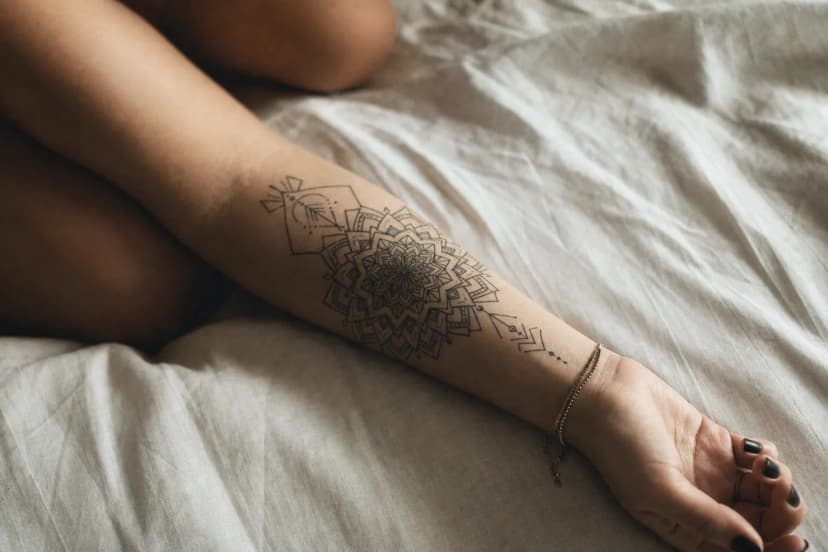
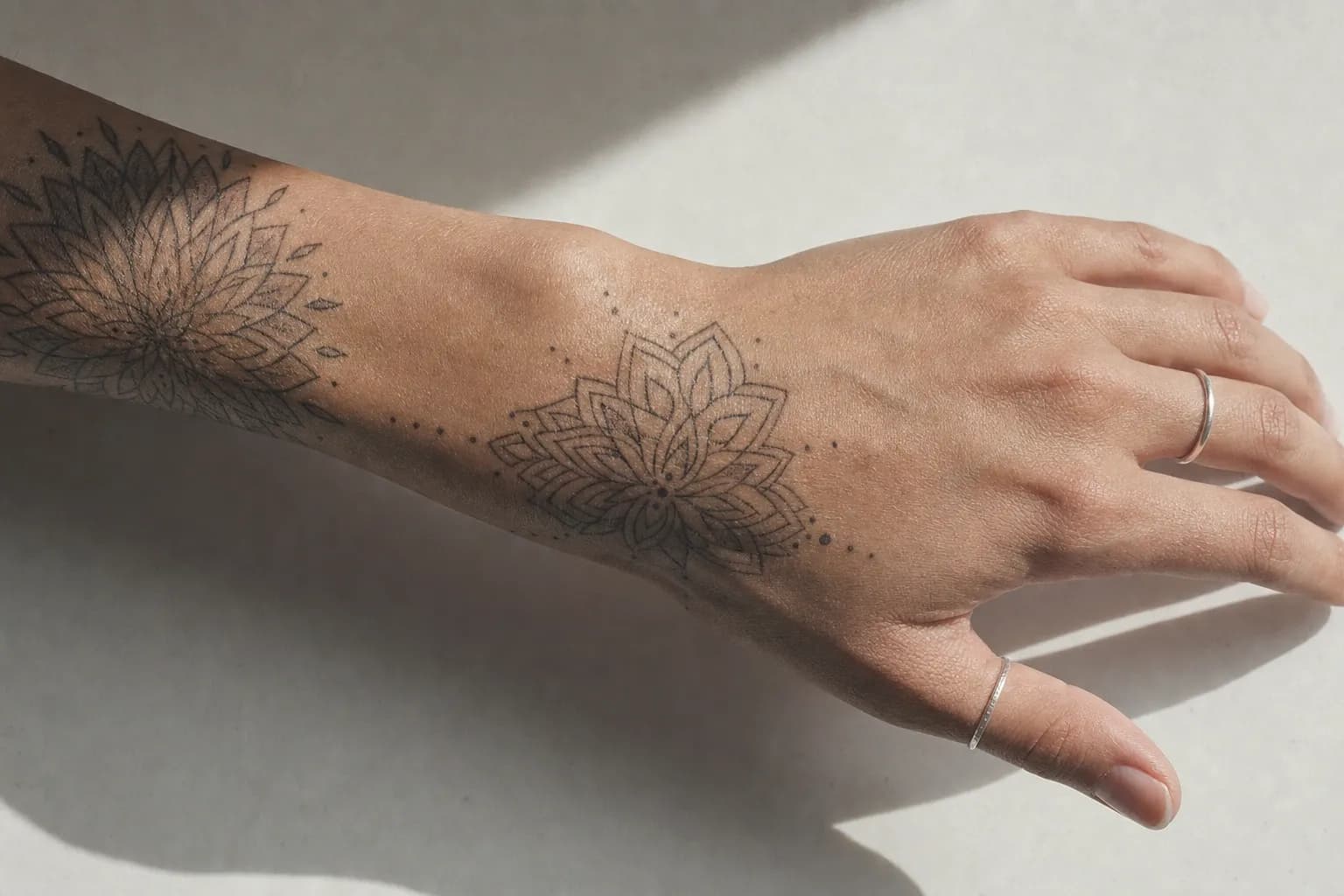
Mandalas are a related but distinct category. Derived from Hindu and Buddhist visual tradition, the mandala is a radially symmetrical composition typically centred on a focal point and expanding outward in concentric rings. In tattooing, the mandala has become a standalone genre, often stripped of specific religious meaning and appreciated purely for its geometry and meditative quality.
Then there are structural pattern pieces: interlocking triangles, tessellated hexagons, dot-work grids, and compositions that use geometric forms as architectural scaffolding for figurative elements. Our geometric tattoo service spans all of these directions.
Where the style comes from and who it suits
The interest in geometric tattooing accelerated significantly in the 2010s, but the visual language is ancient. Lisbon has its own version of this story. The city's azulejo tile tradition, those hand-painted blue-and-white ceramic panels that cover facades from Alfama to Lapa, is built on repeating geometric motifs, often with extraordinary precision achieved by hand. If you've ever stopped to study a tiled stairwell in an old Lisbon building, you've already been drawn in by the same logic that makes a well-executed mandala compelling. Our azulejo-inspired geometric piece brings that tradition directly onto skin.
The style suits clients who want precise, timeless, non-figurative work. It also pairs naturally with fineline and micro-realism for hybrid compositions, something the studio explores regularly. If you're drawn to structure over spontaneity, geometry is likely the right direction.
The Craft: What Separates Good Geometry from Great
Stencil accuracy and why 2mm matters
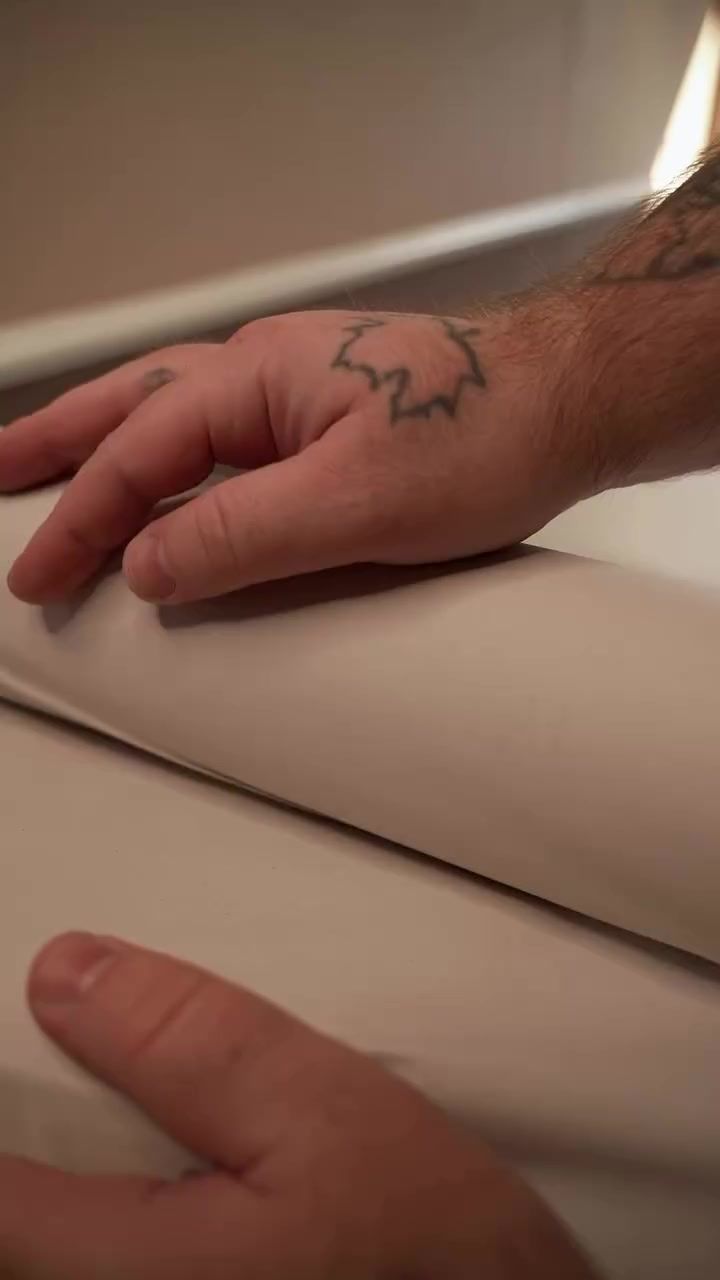
Stencil placement is everything in geometric work. If the stencil sits 2mm off-centre on a mandala, you'll see it every single time you look at the piece. This isn't like a freehand botanical where slight asymmetry reads as natural. Geometric designs promise the eye a specific kind of order, and any deviation breaks that promise visibly.
Good placement requires mapping the design to the body before the stencil goes on. Skin curves, muscle mass shifts, and body hair all affect how a flat design translates to a three-dimensional surface. The artist measures, adjusts, and checks alignment multiple times before the needle touches skin. It takes longer than clients sometimes expect. The time is worth it.
For a deeper look at what this process involves from first sketch to finished piece, the guide on what geometric tattoo design actually requires covers the full journey.
Needle choice and line weight consistency
Needle selection shapes the character of geometric work more than most clients realise. A single needle (often written as 1RL, where RL stands for round liner) produces the finest possible line, ideal for delicate mandala filigree or fine dot-work fills. A 3RL needle group, three needles arranged in a tight cluster, creates a slightly bolder line and moves ink more efficiently across longer straight runs, which matters when you're tattooing a large geometric sleeve and need consistency across several hours.
Line weight consistency across a four-hour session requires sustained hand control. Needle pressure, machine speed, and hand speed all interact. A line that starts at 0.3mm and drifts to 0.5mm midway through a mandala ring reads as an error. Experienced geometric artists develop a physical discipline around this, checking their work at every completed segment rather than pushing through a section and hoping it holds.
Common myths about geometric tattoos
The most persistent myth is that geometric work is easier than figurative styles because it's "just lines." It isn't. Straight lines are among the most demanding things to tattoo cleanly. A slightly wobbly portrait stroke reads as texture. A wobbly line in a sacred geometry tattoo reads as a mistake. The margin for error is genuinely smaller.
The second myth is that geometric tattoos fade faster than other styles. This isn't a function of the style itself. It depends on ink depth, skin type, placement on the body, and aftercare. A well-executed geometric piece on stable skin with proper sun protection holds sharp lines for years. What causes visible ageing in any tattoo, geometric or otherwise, is poor ink depth and high-movement placement, not the design category.
"Geometry doesn't forgive. Every placement decision, every line weight choice, every millimetre of stencil position shows up in the finished piece. That pressure is what makes it interesting to work in."
How the Studio Approaches Geometric Work in Lisbon
Consultation: mapping the design to the body
The consultation for a geometric piece starts with placement, not design. Before the artist sketches anything, they look at where the tattoo will sit and how the body's natural contours will affect radial symmetry. A mandala centred on a flat forearm behaves differently from one sitting over a curved shoulder. That conversation shapes everything that follows.
Portfolio review is part of every consultation. You'll look at completed pieces together, discuss line weights and scale, and narrow down the design direction. The studio doesn't rush this stage. A precise geometric tattoo that lasts decades is worth an extra half hour of planning. You can also explore the existing body of work across what precision means for geometric work in Lisbon to arrive at the consultation with a clear sense of what's possible.
Hybrid pieces: geometry meets fineline and micro-realism
Some of the most interesting geometric work the studio produces sits at the intersection of styles. A geometric framework gives structure and symmetry; figurative or fine line elements add depth and narrative. The Icarus in Geometric Architecture piece is a clear example: classical mythology rendered within a precise geometric structure, the two visual languages reinforcing rather than competing with each other.
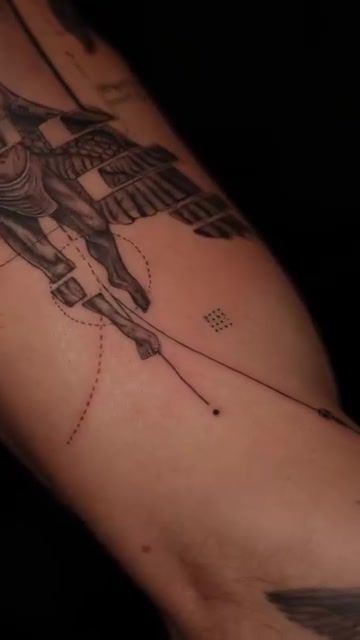
This hybrid approach works because the artist plans the composition from the very beginning with both elements in mind, rather than adding one style on top of another. The geometric fineline tattoo approach, precise geometric forms executed with fine-line needlework, also opens up possibilities for combining sacred geometry with botanical motifs or portraiture. See the Precision Geometry: Behind the Perfect Circle piece for how far a single, perfectly rendered circle can carry a composition on its own.
Placement, Size, and What to Expect on the Day
Which placements work best for geometric designs
Flat, stable skin surfaces hold geometric lines most reliably over time. The forearm, upper arm, sternum, upper back, and thigh all work well. These areas don't flex dramatically with movement, so the lines stay where they were placed.
High-movement areas cause problems. The inner elbow creases with every arm bend, which distorts lines gradually. Fingers are notoriously difficult: the skin on knuckles and sides of fingers turns over quickly, and line blurring begins within a few years regardless of how well the tattoo was executed. The artist will talk through placement honestly during your consultation, including cases where a preferred spot isn't the best technical choice for the design you have in mind.
The table below gives a practical overview of common placements for geometric tattoos in the context of longevity and session length:
| Placement | Line Longevity | Typical Session Length | Notes |
|---|---|---|---|
| Forearm (outer) | Excellent | 2 to 5 hours depending on scale | Flat surface; ideal for mandalas and sleeves |
| Upper arm | Very good | 2 to 4 hours | Slight curve requires stencil adjustment |
| Sternum / chest | Good | 3 to 5 hours | Weight changes can affect skin over time |
| Upper back | Excellent | 4 to 6 hours | Large canvas; ideal for complex sacred geometry |
| Thigh | Very good | 3 to 5 hours | Good surface; consider loose clothing on the day |
| Inner elbow / ditch | Poor | 1 to 2 hours | High flex; lines distort with repeated movement |
| Fingers | Poor | Under 1 hour | Fast skin turnover; blurring likely within years |
Healing geometric tattoos in Lisbon's climate
Lisbon's summers are warm and humid, particularly from June through September. Fresh geometric work needs to stay out of direct sun during those first weeks. UV exposure on a healing tattoo accelerates ink migration and can flatten fine line contrast before the lines have fully settled. Keep fresh work covered outdoors, and avoid the sea for three to four weeks after your session. Atlantic salt water is not gentle on open skin.
Mild winters are a genuine advantage. November through February offers lower UV, cooler ambient temperatures, and reduced sweating, all of which help a fresh tattoo heal cleanly. If you have flexibility with timing, those months are an ideal booking window for larger geometric pieces that need attentive aftercare.
- Wear loose clothing over the tattoo area on session day and for the first week after
- Eat a proper meal before you arrive; low blood sugar affects how your body handles a long session
- Bring three to five reference images that show the geometry style you want, not just a single image to copy
- Photograph any existing tattoos nearby so the artist can plan placement in relation to them
- Apply a fragrance-free, alcohol-free moisturiser once the tattoo begins to dry, from around day three onward
For broader context on how the studio's geometric pieces sit across different body placements, the geometric tattoo Lisbon guide gives a fuller picture of what the finished work looks like in practice. If you're also considering a mandala tattoo artist in Lisbon for a piece that combines sacred geometry with figurative elements, the consultation stage is the right moment to raise that conversation.
General healing guidance for tattooed skin is also covered by sources like the NHS's body art care guidance, which provides a solid baseline for what to expect from a fresh tattoo regardless of style. For the specific biology of how tattoo ink settles into the dermis over six to eight weeks, Healthline's tattoo healing breakdown is a reliable, plain-language reference.
- Day 1 to 3: the tattoo weeps plasma and ink; keep it clean and lightly wrapped if recommended by the artist
- Day 3 to 7: the surface begins to peel; do not pick at flaking skin, especially over fine geometric lines
- Week 2 to 3: outer skin looks healed; the dermis layer is still settling
- Week 6 to 8: lines fully settle into the skin and true colour and contrast become visible
Frequently Asked Questions
How long does a geometric tattoo session typically take?
A small wrist mandala, roughly 6cm across, usually takes two to three hours. A detailed forearm piece with layered geometry can run four to six hours across one or two sessions. The studio splits longer work deliberately; sustained line consistency is harder to maintain past the four-hour mark, and the difference shows in the finished piece.
Does geometric tattooing hurt more than other styles?
Pain depends far more on placement than on style. The inner elbow, sternum, and ribs are sensitive regardless of what's being tattooed. The forearm and upper arm, both popular spots for geometric work, sit in the moderate range for most people. The artist will work at a pace that keeps you comfortable across the session.
Can geometric designs be combined with other styles like realism or florals?
Yes, and it's one of the more interesting directions in contemporary tattooing. Geometric frameworks give structure while figurative or fine line elements add depth. A classical bust inside a precise circle, or a botanical motif anchored by radiating sacred geometry, are both strong directions. The key is planning the composition with both elements in mind from the very first sketch.
How do I prepare for a geometric tattoo consultation in Lisbon?
Bring three to five reference images that show the geometry style you have in mind, not just a single image you want copied directly. Note your preferred placement and come ready to discuss size and whether you have existing tattoos nearby. Arriving with an open mind about placement gives the artist room to advise on what will actually hold well long term.
Will geometric tattoo lines blur or spread over time?
All tattoo lines migrate slightly as skin ages. Geometric work is more sensitive to this because symmetry makes any spread visible immediately. Proper ink depth during application, placement on stable low-movement skin, and consistent sun protection are the main factors that keep lines sharp for longer. High-movement areas like fingers blur faster regardless of style.