Why Floral Tattoos Demand More Than They Look Like They Do
A rose tattooed with an unsteady hand looks like a bruise within five years. That's not an exaggeration. It's the most common outcome when someone chooses a floral tattoo based on a flash sheet rather than on a careful look at an artist's healed work.
Botanicals are deceptive. From a distance, a cluster of wildflowers seems forgiving. Soft edges, organic shapes, nothing that needs to be perfectly symmetrical. Up close, the opposite is true. Precise linework defines each petal. Controlled shading gradients. Moving from deep shadow to almost-white highlight in the span of a few millimetres. Create the impression of depth. And negative space (the bare skin left untouched around a form) does as much visual work as the ink itself.
When any of those elements slip, the piece suffers fast. Poor linework on petals bleeds outward as the ink settles into the dermis over months and years. A gradient that was rushed becomes a muddy smear. The delicacy you chose the design for disappears. This is why choosing the right studio matters before a single line is drawn.
A Brief Background: Where Floral Tattooing Comes From
From Old School Roses to Fine Line Botanicals
Floral imagery has been part of tattooing for well over a century. The bold, black-outlined roses of American traditional work. Heavy fills, limited colour palettes, designed to last on sun-damaged sailor skin. Are the style most people picture when they hear "flower tattoo." That style has genuine craft behind it. But it's not what this studio does.
The contemporary fineline botanical movement is something different. It grew from a renewed interest in single-needle work: one very fine needle, moving slowly, depositing ink in thin, precise lines. The goal is to capture what a real petal actually looks like. The translucency of a poppy, the velvet texture of a rose, the way light catches a leaf's edge. It's closer to botanical illustration than to classic tattooing.
Lisbon has become a natural home for this approach. The city's light is extraordinary. Clear, warm, northern-Atlantic-angled. And its visual culture is already attuned to intricate repetitive pattern. Anyone who has spent time studying the azulejo tilework in Alfama or Príncipe Real understands instinctively how geometry and organic form can coexist. That same sensibility carries directly into fineline botanical design.
What Styles of Floral Tattoo the Studio Offers
Fineline Floral
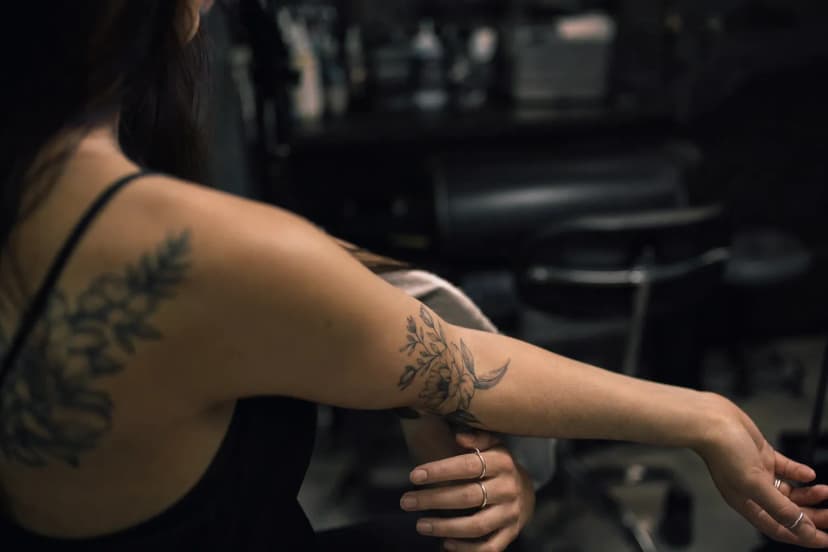
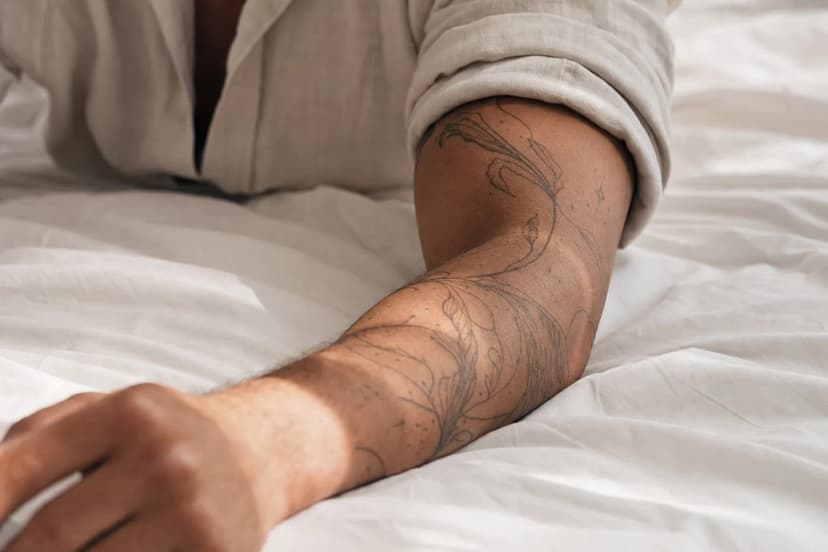
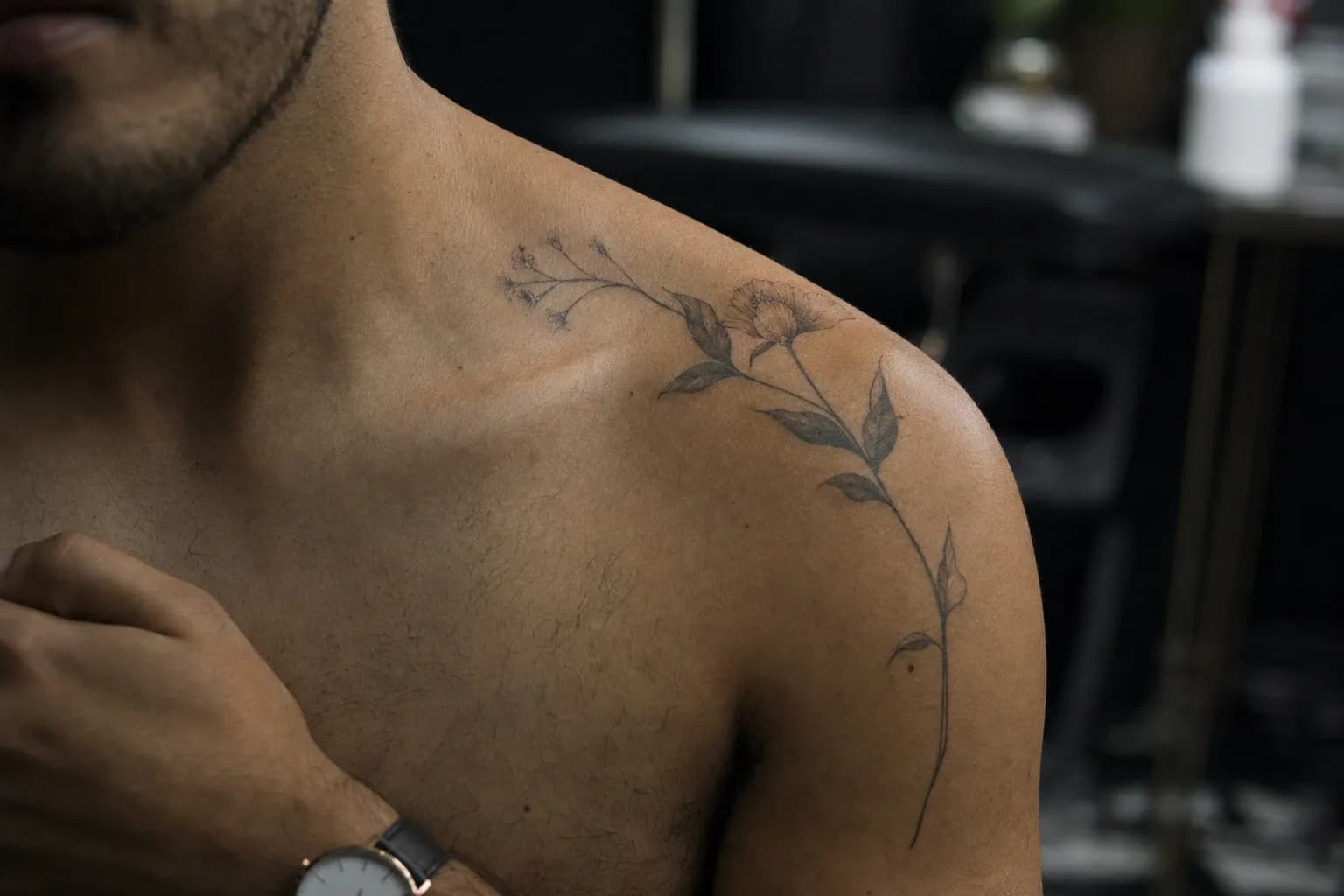
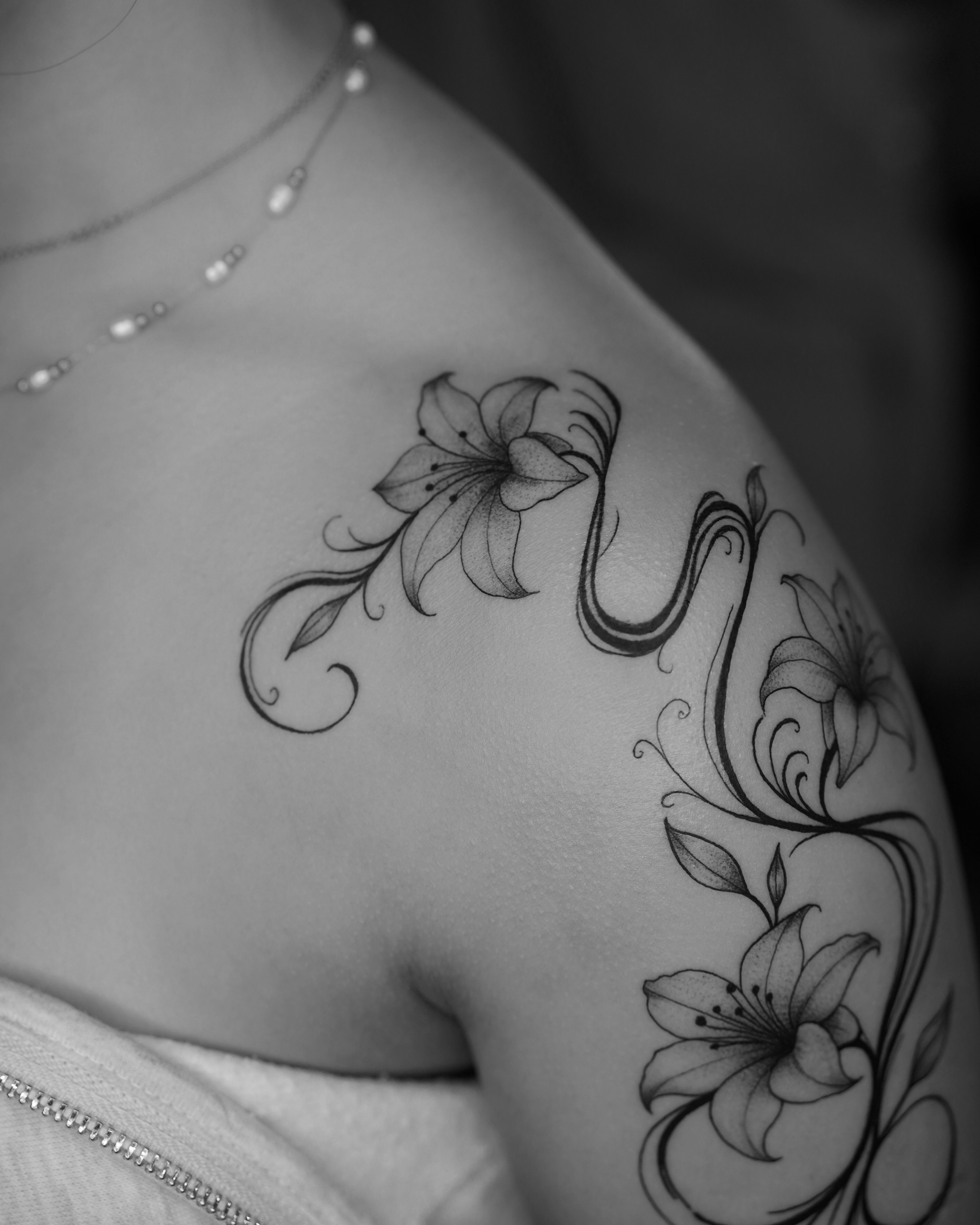
This is the studio's primary approach to botanical work. A single needle traces outlines and interior detail at a scale that rewards close inspection. Compositions can be small and spare. A single stem on the inner wrist. Or medium-format arrangements covering the shoulder or forearm. If you're searching for a fine line floral tattoo that holds its definition over time, this is the technique to focus on.
The floral tattoo service page shows the range of formats the studio takes on, from isolated blooms to more involved botanical arrangements. Worth a look before your consultation.
Floral with Realism Elements
Micro realism applied to botanicals captures actual surface texture at small scale. A peony rendered in this way has discernible petal layers, visible veining, a sense that light is catching the edges differently from the centre. It requires slower, more deliberate work than standard fineline. And it rewards patience from both artist and client.
The studio's approach to what fineline technique actually demands goes into more depth on needle control and ink deposit. Useful reading if you're deciding between styles.
Floral Combined with Lettering or Geometry
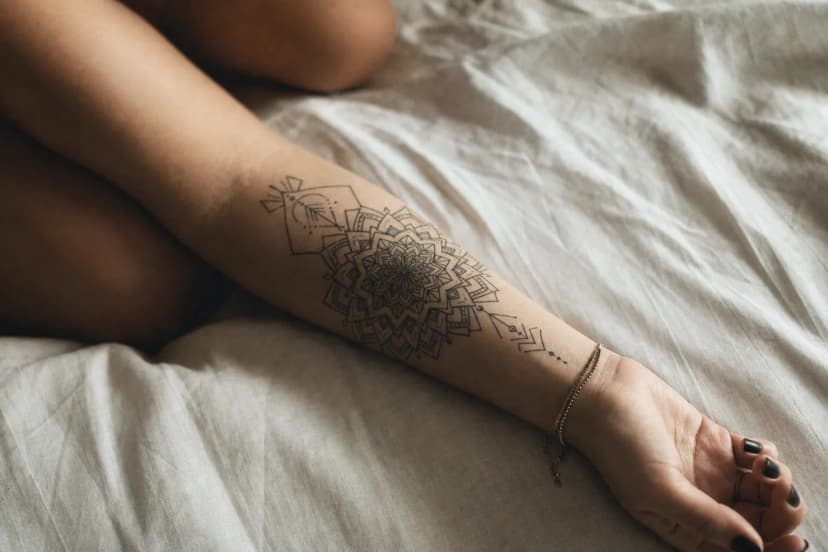
Multi-element compositions work when each component has room to breathe. A script line framed by botanical sprigs. A geometric border containing a loose floral arrangement. The studio takes these on when the design logic is clear and the placement supports it. Not as a way to fill space, but as a genuine compositional choice.
One thing to be direct about: the studio does not offer watercolour, neo-traditional, or old school floral styles. If those are what you have in mind, this isn't the right fit. But if your reference images lean toward delicate floral tattoo work in Portugal's contemporary fineline tradition, you're in the right place.
The Craft: What Actually Happens During a Floral Tattoo
Stencil Placement and Composition
Before any needle touches skin, the design goes through a stencil stage. The artist sketches or adapts a reference to suit the chosen placement, accounting for how that part of the body actually curves. A shoulder has a three-dimensional dome shape. A forearm has a relatively flat plane on the outer face but curves significantly toward the wrist. A composition that looks balanced on paper can pull apart or compress once it wraps around real anatomy.
If the stencil sits 2mm off-centre on a symmetrical floral arrangement, you'll see it every time you look at the piece. That's not a figure of speech. The studio takes stencil placement seriously, which sometimes means repositioning two or three times before committing.
Linework First, Shading Second
Once the stencil is approved, linework comes first. Every outline, every interior vein, every petal edge is drawn before shading begins. This matters because shading over inaccurate lines cannot fix them. It only obscures the problem temporarily.
Needle choice shifts depending on the stage. A single needle (typically a 1RL, meaning one round liner) handles the fine detail work. A magnum shader. A curved grouping of multiple needles. Spreads ink more softly across larger tonal areas, useful for filling shadow regions without harsh edges. The transition between the two, when handled well, is what creates that gradient from dark centre to luminous petal edge.
The studio works primarily in black and grey for botanical pieces. Colour fades unevenly in Lisbon's sunny climate, particularly with outdoor lifestyles. Black and grey botanical tattoo Lisbon work, done in quality ink, ages significantly better. The tonal relationships remain legible even as the piece settles into the skin over years.
Placement, Sizing, and What to Realistically Expect
A detailed peony that reads beautifully at 10cm will lose most of its interior linework compressed to 4cm. The skin ages. Ink migrates very slightly outward over years. Fineline detail that starts tight will spread by a hair's width. Which at large scale is invisible, but at small scale can merge adjacent lines into a smudge. At consultation, the studio will give you an honest size recommendation based on the complexity of your chosen design.
| Placement | Typical Session Length | Healing Considerations |
|---|---|---|
| Inner wrist / forearm | 1 to 2 hours | Low friction; avoid water immersion for 2 weeks |
| Shoulder / upper arm | 2 to 3 hours | Bra straps and bag straps cause friction. Plan clothing carefully |
| Ribcage / side | 1.5 to 2.5 hours | Movement during breathing; tight waistbands are a risk |
| Thigh | 2 to 4 hours | Inner thigh rubs during walking. Loose clothing essential |
| Ankle / foot | 1 to 2 hours | High friction from footwear; slow to heal, needs careful monitoring |
Lisbon's humid summers. Particularly June through September. Affect how the surface layer heals. The outer skin can be slow to peel cleanly in high humidity, which means the fresh tattoo sits under a slightly tacky film for longer than in drier climates. Keeping the piece moisturised and completely out of direct sun during this window is not optional. It's the difference between clean healed lines and a patchy result.
- Bring reference images. Three to five examples that reflect the mood, scale, and detail level you want
- Know your placement before you arrive; indecision at consultation extends the process
- Come with healed, unburned skin. Sunburned or peeling skin cannot be tattooed safely
- Avoid alcohol for at least 24 hours before your session; it thins the blood and makes clean linework harder
How the Studio Approaches Floral Work
Every floral piece begins with a consultation. Reference images are gathered, discussed, and sometimes combined into something that doesn't exist in any single reference. A composite drawn specifically for your placement. The stencil is tested on skin before the session begins. Nothing is rushed to the needle stage.
"A botanical design should follow the body's contours the way a climbing plant follows a wall. Force a flat illustration onto curved skin and it will always look like exactly that. A flat illustration."
That principle shapes every composition. On a shoulder, stems curve gently to follow the deltoid's arc. On a forearm, the arrangement is planned to face naturally when the arm hangs at rest, not when it's held up for photographs. These decisions happen in the design stage. And they're what separate a piece that feels like it belongs on the body from one that merely sits on it.
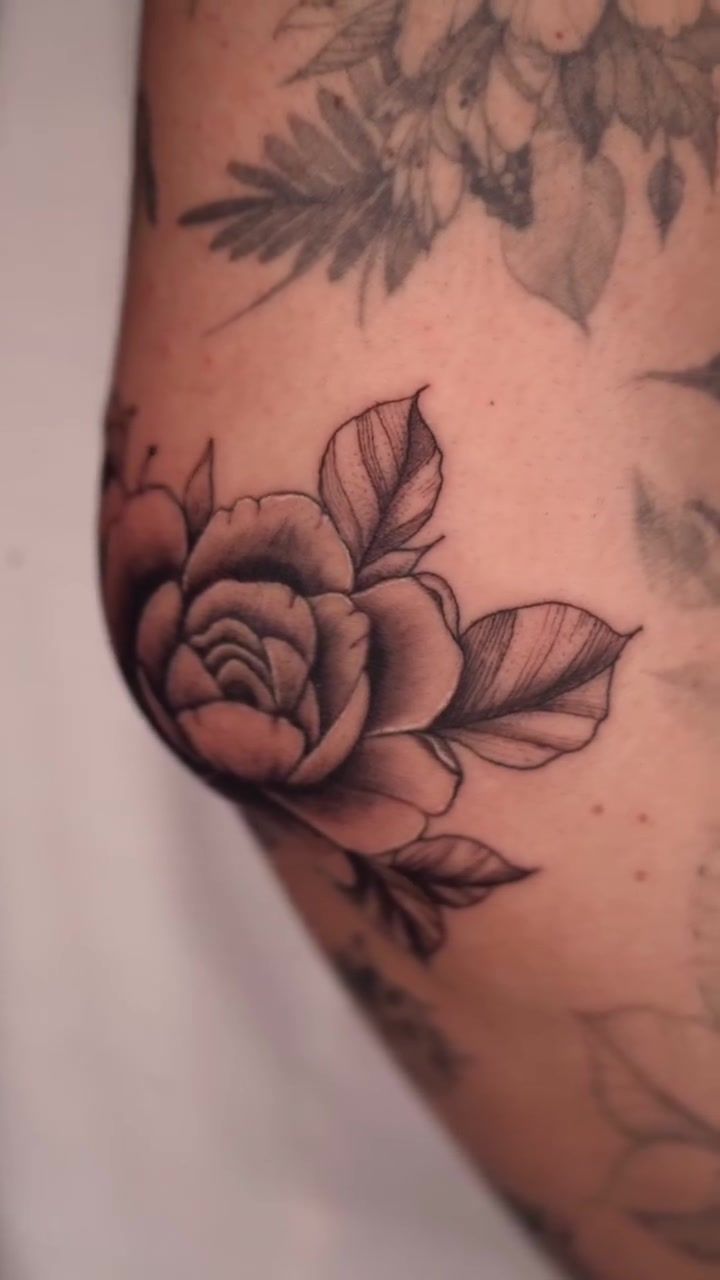
Aftercare for fineline floral work follows a specific pattern. Moisture is essential. Dry, tight skin causes fine lines to heal jagged. The studio will walk you through the full routine at your appointment, but the core principle is consistent: keep it clean, keep it lightly moisturised, and don't pick. A single picked scab on a fineline petal edge can remove a full line segment and leave a gap that's very difficult to touch up invisibly.
Practical Checklist Before You Book
If you're looking at botanical tattoo artist Lisbon options and ready to move forward, the process follows a clear sequence. Knowing what to expect at each stage removes most of the uncertainty.
- Research healed work. Fresh tattoos photograph beautifully regardless of quality. Ask to see pieces at least six weeks post-healing in any portfolio you're evaluating.
- Send an enquiry with references. Share your placement idea, a rough size range, and three to five reference images. The studio uses these to assess fit and advise on feasibility before any booking is confirmed.
- Attend the consultation. This is where the design is discussed in detail, custom drawing begins if needed, and a session date is agreed.
- Prepare your skin. In the week before your session: no heavy sun exposure on the placement area, no alcohol the day prior, no blood thinners unless medically prescribed.
- On the day: eat beforehand. A proper meal two hours before your session helps your body handle the process without a blood sugar dip mid-session.
- Plan your aftercare supplies. Unscented gentle soap and a fragrance-free moisturiser are all you need. Have them ready before you sit down.
For a broader look at what to expect from a botanical specialist, read our guide on what to look for in a botanical tattoo artist near you. And if you want a deeper understanding of how studios approach this style across Lisbon, the piece on finding the right floral tattoo artist in Lisbon covers the key questions worth asking before you commit.
Frequently Asked Questions
How do I find the best floral tattoo artist near me in Lisbon?
Look at healed work in a portfolio, not fresh tattoos. Fine line petals should have clean, unbroken edges and smooth tonal gradients weeks after healing. Ask whether the studio specialises in botanical styles and check that their existing work includes pieces similar in scale and complexity to what you want.
How long does a floral tattoo take to heal?
Surface healing typically takes two to three weeks, but the deeper dermis settles over six to eight weeks. Lisbon's humid summers can slow the outer skin layer from peeling cleanly, so keeping the tattoo moisturised and out of direct sun is especially important between June and September.
What size should a floral tattoo be to hold its detail?
A fineline botanical with interior petal detail needs at least 6 to 8 cm across a single flower to hold clearly over time. Smaller is possible with simplified designs, but a detailed peony compressed below 4 cm will lose its interior linework as the skin ages and ink migrates slightly outward.
Can floral tattoos be combined with lettering or geometric elements?
Yes, and it's one of the more compelling approaches when executed with care. Each element needs its own visual space rather than competing for attention. A well-composed piece might frame a script line with botanical sprigs, or use a geometric border to contain a loose floral arrangement without crowding either element.
Do fineline floral tattoos fade faster than bolder traditional flower tattoos?
They can, if placed on high-friction areas or exposed to heavy sun without protection. Fineline work uses thinner ink deposits than bold traditional styles, so sun damage and skin movement affect it more visibly. With proper aftercare and consistent sun protection, quality fineline botanicals hold well for many years.