Why "Near Me" Is the Wrong Starting Point
When you search for the best botanical tattoo artists near me, the map result is almost useless. Distance tells you nothing about whether someone can render a convincing peony or get the veining on a eucalyptus leaf to read from three feet away. Proximity is a convenience filter, not a quality filter.
Botanical tattooing sits right at the intersection of fineline precision and realistic observation. A lot of artists do decorative flowers. Far fewer can hold the line weights needed to capture how a real stem tapers, or leave enough negative space to stop petals bleeding into each other after two years on skin.
A poorly rendered petal outline looks sharp the week it heals. By year two, if the linework was inconsistent or packed too tight, it reads as a smudge. That's the real cost of choosing by convenience.
What Botanical Tattooing Actually Is
Fineline botanical vs. Illustrative botanical vs. Micro realism floral
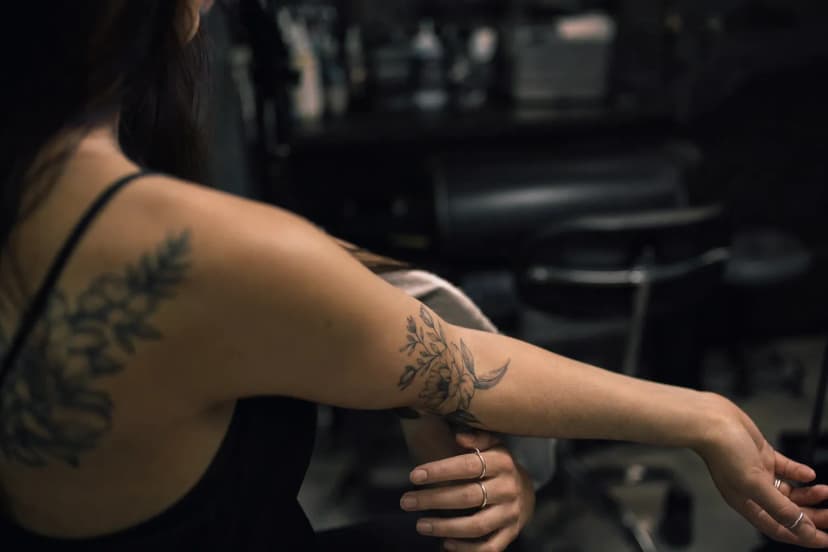
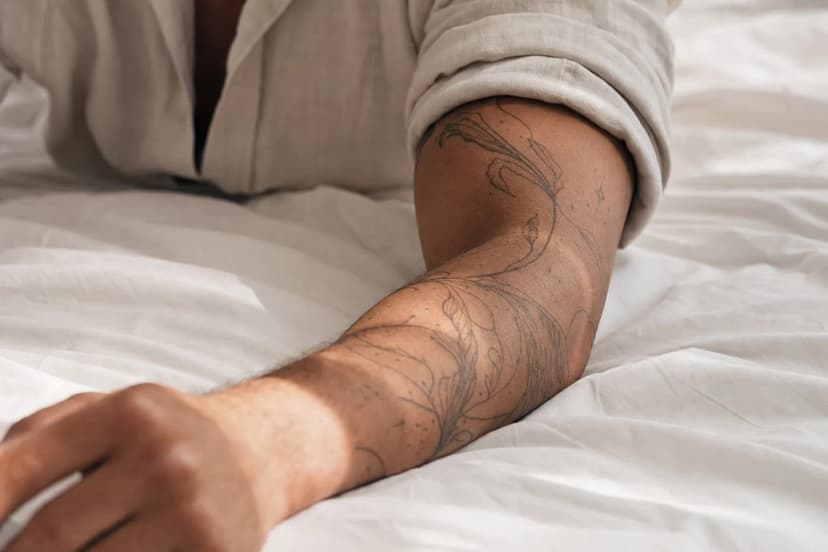
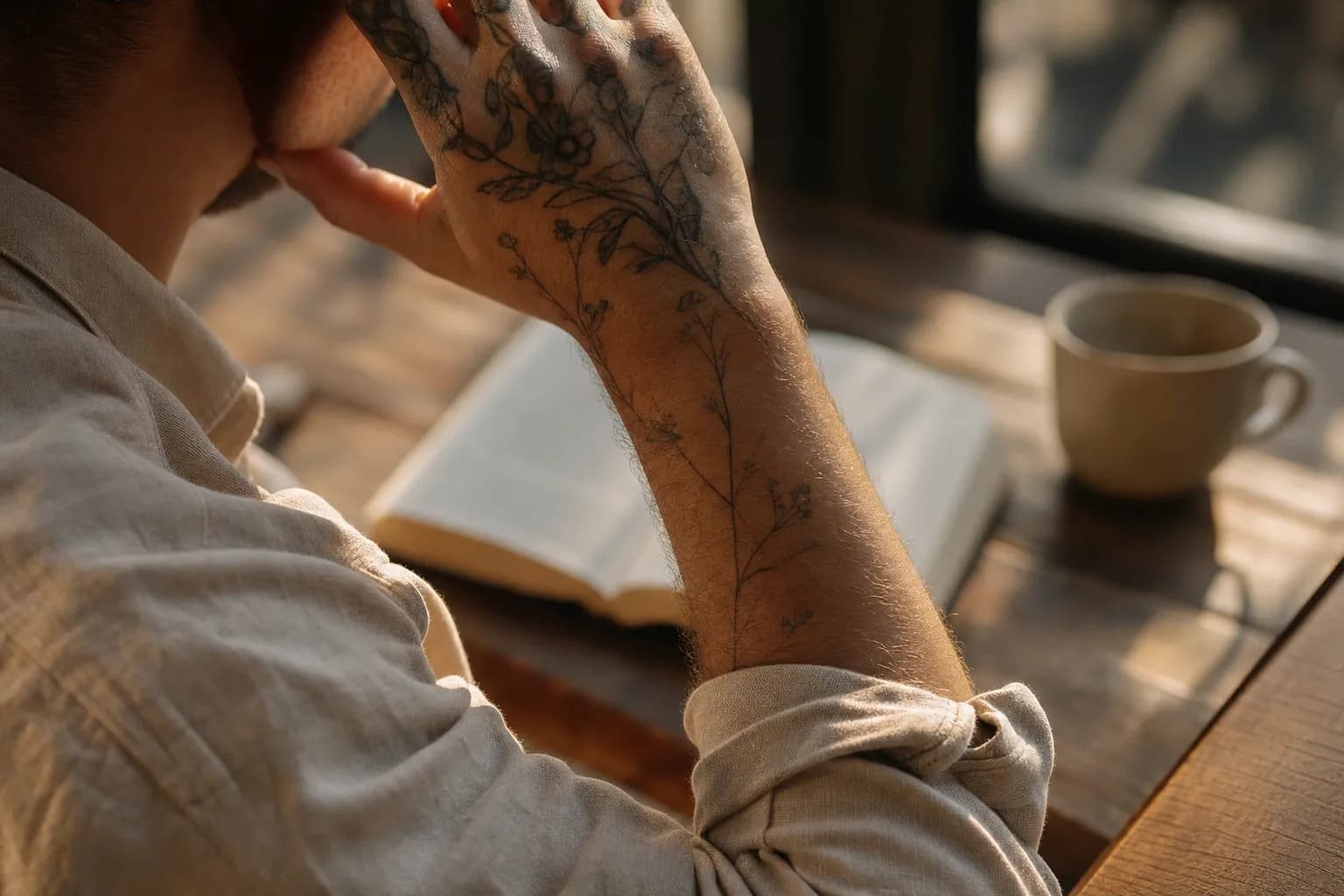
These three sub-styles get confused constantly, and the differences matter when you're deciding what you want. A fineline botanical tattoo uses single-needle or very fine needle configurations to draw precise outlines with minimal shading. Think clean ink drawings, delicate and graphic. A fineline botanical tattoo rewards spare compositions and open space on the skin.
Illustrative botanical work adds soft grey shading within those outlines, closer to the feel of a printed herbarium plate. It reads as warmer, more dimensional. Micro realism floral work goes further still, building photographic depth and shadow into a small canvas. The techniques, needle groupings, and time required are all different.
Knowing which sub-style you're drawn to helps you brief an artist properly. Our floral tattoo service covers all three approaches, and a consultation is where you work out which direction fits your skin and your idea.
Where the style comes from
Botanical illustration has a long history in scientific documentation. Victorian-era herbarium plates were precise, detailed, and built on close observation of actual plant specimens. That tradition is what separates a botanical tattoo from a decorative flower motif. The goal isn't just a flower that looks nice. It's a flower that looks like a specific species, with accurate petal count, correct leaf structure, and believable light.
Skin is a far more difficult canvas than paper. It stretches. It fades. It has texture and movement that a flat sheet never has. That's why botanical tattoo design in Portugal, and anywhere else, demands an artist who understands both the illustration tradition and the material realities of tattooing on a living body.
How to Read a Botanical Portfolio
Line consistency and taper
A confident botanical artist varies line weight deliberately. At the base of a stem, the line should be heavier. At the tip, it thins out. That taper mimics how a real plant grows and gives the tattoo a sense of organic life. If every line in a portfolio sits at the same weight from start to finish, that's a sign the artist isn't thinking about natural form.
Check consistency across multiple pieces, not just one standout image. One strong piece could be a lucky session. Ten consistent pieces across different subjects and placements shows genuine command.
Petal shading and negative space
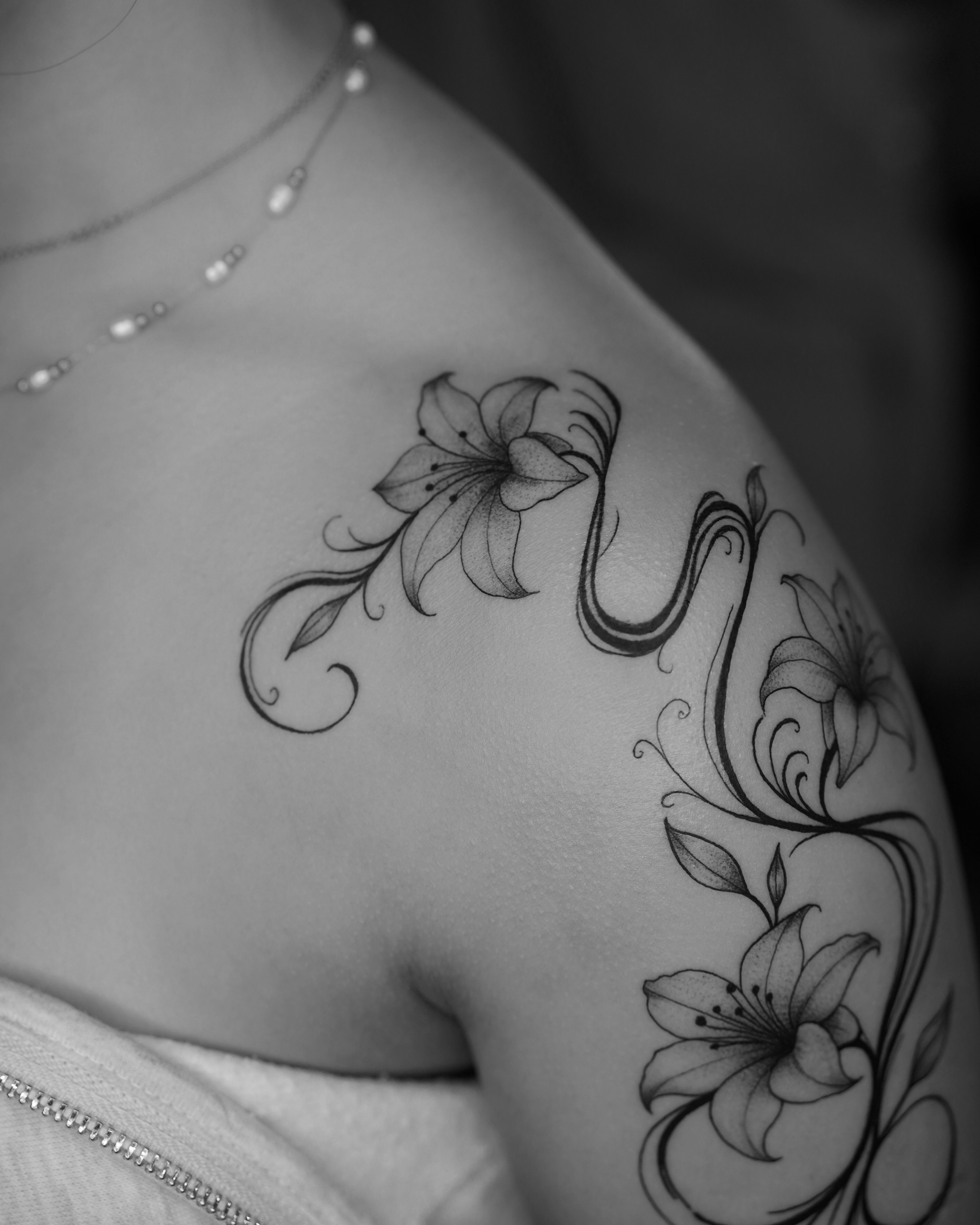
Negative space is the untattooed skin that shapes the design. In botanical work, it defines petal edges, separates overlapping leaves, and gives the composition room to breathe. Artists who crowd every millimetre with ink create pieces that merge into one grey mass within a few years.
Shading inside petals should graduate smoothly from dark to light. Look for even transitions without streaking or patchiness. Blotchy shading in portfolio photos almost always worsens with healing.
Healed vs. Fresh photos
Fresh tattoos look sharp in photographs because the ink sits slightly raised and the skin is still swollen. The real test is six to twelve months later, when the ink has settled into the dermis and the skin has returned to its natural state. Always ask to see healed work.
If a portfolio shows only fresh pieces, that's a gap worth noting. A skilled artist is proud to show healed results because they know their work holds up. For something as detail-dependent as a fineline botanical tattoo, healed photos are the clearest evidence of technical reliability.
How the Studio Approaches Botanical Work
Consultation and reference gathering
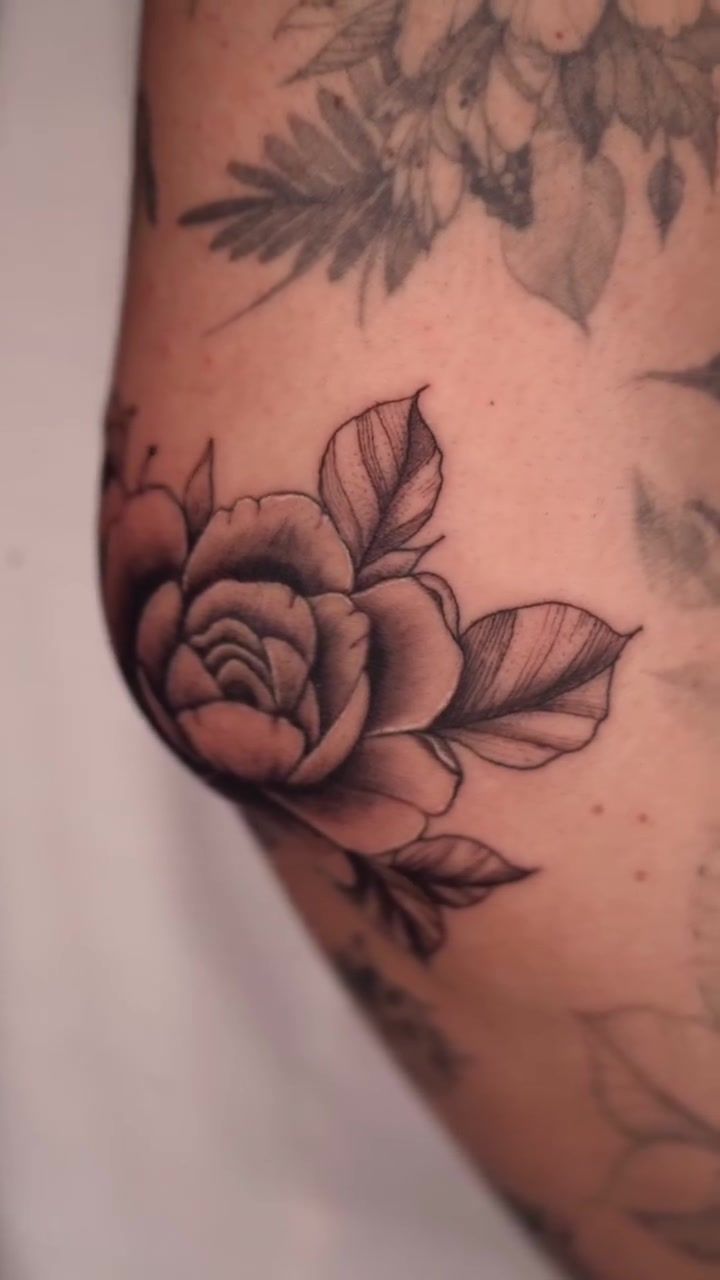
The studio doesn't work from flash sheets for botanical pieces. Every design is custom-sketched to fit the specific client, the specific body, and the specific placement. That process starts with reference gathering, and the studio asks for more than a Pinterest board.
Real botanical accuracy comes from real botanical images. Photographs of actual specimens, field guide illustrations, or high-resolution plant photography give the artist accurate leaf veining, correct petal count, and believable proportions. A mood board of other people's tattoos shows aesthetic preference. A photograph of the actual flower shows what needs to be drawn.
Custom design from scratch
Sketching a botanical piece from scratch takes time before the appointment even begins. The artist maps the composition to the natural curves of the muscle beneath the skin, not just to a flat silhouette. A stem that runs straight on paper may need to bend slightly to follow a forearm's rotation and still read as straight to the eye. That kind of spatial thinking is what separates a custom botanical tattoo design from a transferred template.
"Rushing the stencil placement on a botanical piece is the fastest way to ruin it. One millimetre off on a symmetrical leaf cluster and the whole composition reads as unbalanced. Every time the client looks at it."
Placement mapping for Lisbon clients
Lisbon's humid summers create specific aftercare considerations that affect placement choices. The inner arm and behind the knee are high-moisture, high-friction zones that need extra attention in July and August. The studio factors this into placement recommendations during consultation, particularly for clients getting tattooed in the warmer months.
For more context on what finding a quality floral tattoo artist in Lisbon actually involves, the guide on what to look for in a Lisbon botanical tattoo studio covers the local specifics in detail.
Placement, Sizing, and What to Expect on the Day
Size and placement aren't independent decisions. A 6cm botanical spray reads beautifully on a forearm but gets lost on a thigh. A full shin botanical illustration needs room to breathe vertically. The table below gives a practical starting point, though every piece is assessed individually in consultation.
| Approximate Size | Estimated Session Length | Recommended Placements | Notes |
|---|---|---|---|
| 4-7 cm (small sprig or single bloom) | 1.5-2 hours | Wrist, ankle, inner arm, collarbone | Ideal for fineline outline work; heals quickly |
| 8-15 cm (medium botanical cluster) | 2.5-4 hours | Forearm, shoulder, outer calf | Room for shading and negative space detail |
| 16-25 cm (large illustrative piece) | 4-6 hours | Shin, thigh, ribcage, upper back | Multiple reference plants; may need two sessions |
| Sleeve or large panel | Multiple sessions | Full arm, full leg, back panel | Planned in stages; healed sections reviewed before continuing |
The ribcage and shin are popular choices for botanical work because the relatively flat surface lets long stems and leaf arrangements flow naturally. The shoulder suits curved, wrapping compositions. The forearm, with its constant visibility, rewards confident linework with proper taper.
- Bring reference images of the specific plants you want, not just general flower photos.
- Wear loose clothing that gives easy access to the placement area without you having to undress entirely.
- Avoid sunburn on the area for at least two weeks before the appointment. This matters particularly during Lisbon summers, when UV exposure is intense even on overcast days.
- Eat a proper meal two to three hours before the session. Low blood sugar makes long appointments harder on the body.
Before a single drop of ink goes in, you should see the stencil on your skin and approve the placement. If an artist skips this step or rushes past it, that's a reason to pause. The stencil check is where you confirm the design sits where you imagined it, and it's much easier to correct before the needle starts.
You can also read more on what floral work actually demands from an artist to understand the level of preparation a quality session requires.
Aftercare for Botanical Tattoos in Lisbon
Fine lines carry less ink volume than bold traditional outlines. That's what makes them elegant. It also makes them more sensitive to UV degradation. Lisbon gets over 300 days of sun per year, and even a few unprotected minutes during the first three months can soften detail that took hours to place.
Once healed, apply SPF 50 every time the tattooed area is exposed to sun. During healing, keep the area out of direct sun entirely. A lightweight cotton covering works well for forearm pieces during the first two weeks.
- Apply a thin layer of unscented, fragrance-free moisturiser twice daily for the first two weeks. Heavily scented creams can irritate healing skin.
- Avoid the ocean and public pools for at least three weeks after your session. Lisbon's coastal access is one of the city's best features, but saltwater and chlorinated water both interfere with the healing process.
- Pat the area dry rather than rubbing it after washing. Rubbing can lift forming scabs and pull ink with them.
- Don't pick at peeling skin. The flaking phase looks alarming but is normal. Picking shortens the life of fine linework noticeably.
The deeper dermis layer takes six to eight weeks to fully settle, even when the surface looks healed. That's when colours shift slightly and lines find their final appearance. For more on managing the healing process for detailed, delicate work, see the guide on aftercare considerations for delicate tattoo work.
Lisbon's mild winters are actually a good time to get botanical work done on areas that would be sun-exposed in summer. December through February gives you the full healing window with minimal UV risk before the beach season begins.
Frequently Asked Questions
How long does a botanical tattoo take to heal?
Surface skin heals in two to three weeks, but the deeper dermis takes six to eight weeks to fully settle. During Lisbon's humid summer months, keep the area dry and out of direct sun. Fine line botanical work is particularly sensitive to UV exposure in the first three months, so SPF is non-negotiable once the surface has closed.
Do botanical tattoos fade faster than other styles?
Fine lines use less ink volume than bold-lined styles, so they can soften more visibly over time. Placement matters enormously: high-friction spots like fingers or inner elbows fade fastest. A skilled artist compensates with deliberate line weight choices and gives honest placement advice from the start, before you commit to a position that will work against the piece.
What is the difference between a floral tattoo and a botanical tattoo?
A floral tattoo treats the flower as a decorative motif. A botanical tattoo draws from scientific illustration tradition, capturing accurate leaf structure, stem growth, petal count, and veining. Botanical work prioritises naturalistic accuracy. Both styles overlap heavily, and many of the best pieces combine elements of both approaches within a single composition.
How do I find the best botanical tattoo artist near me in Lisbon?
Look for a portfolio showing healed botanical work, not just fresh pieces. Check that line weights vary naturally and that shading doesn't blob or bleed with age. Ask whether designs are custom-drawn for your body or taken from a flash sheet. Consistency across multiple different botanical pieces is the clearest signal of genuine skill in this style.
Can botanical tattoos be done in colour?
Yes, though the studio works primarily in black and grey, which suits the scientific illustration aesthetic of botanical work particularly well. High-contrast black and grey botanical work reads clearly across all skin tones. Fine, pale grey shading can lose definition on deeper tones, so an experienced artist adjusts contrast ratios and line weights accordingly to maintain clarity through the full healing process.