What Draws People to Fineline Work
Most people who walk into a fineline tattoo studio in Lisbon know what they don't want before they know what they do. No heavy outlines. No solid black fill. Nothing that shouts. They want something quiet, precise, and considered. A piece that rewards a close look without demanding attention from across the room.
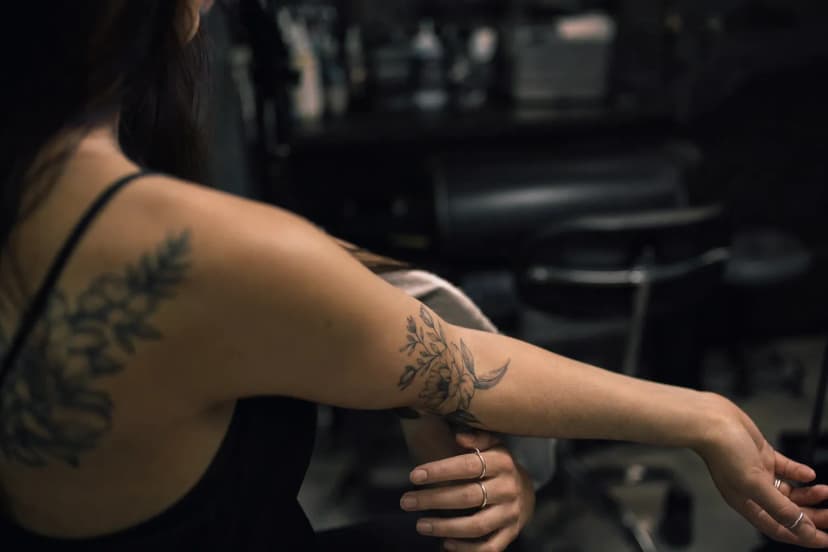
Fineline work does that through restraint. Hairline strokes. Generous negative space. Compositions where what's left out matters as much as what's drawn in. It's a visual language that Lisbon seems to understand intuitively. The city's azulejo tilework. Those intricate blue-and-white ceramic panels covering everything from church facades in Alfama to metro station walls near Príncipe Real. Operates on the same principle: fine, repeated linework building into something surprisingly complex.
This article explains what fineline tattooing actually involves technically, how the studio approaches it, and what you need to know before booking a consultation.
What Fineline Actually Means (and What It Doesn't)
Single-needle vs. Standard needles
A single-needle tattoo in Lisbon uses one needle grouping. Typically a 1RL (round liner) configuration. To deposit ink into a very narrow channel in the dermis, the layer of skin that sits just below the surface. Standard liner groupings like 3RL or 5RL bundle three or five needles together. The difference in resulting line width is measurable in fractions of a millimetre, but once healed, the visual contrast is obvious.
That narrower channel means more control over gradients and lighter tonal values. It also means less margin for error. A 3RL moving slightly off-path leaves a thicker line that still reads as intentional. A 1RL doing the same thing leaves a line that looks uncertain.
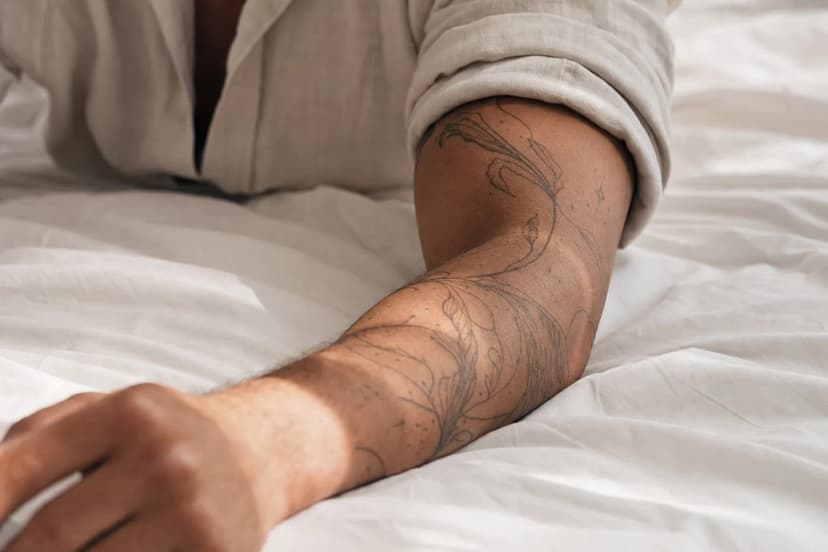
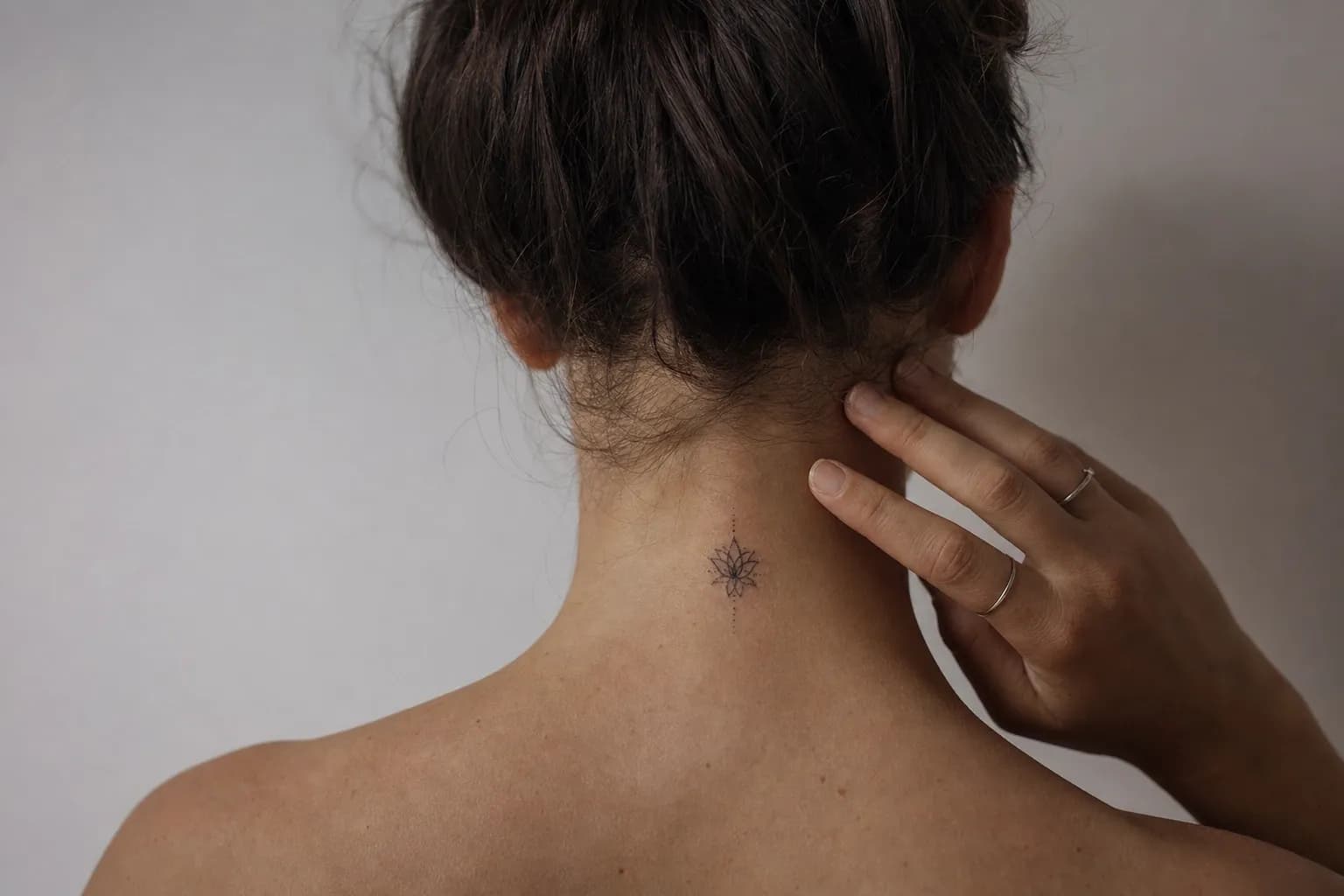
One myth worth addressing: fineline doesn't mean small. A piece can run 20 centimetres across a forearm and still use only hairline strokes throughout. Scale and needle gauge are separate choices. Fineline tattooing at the studio spans everything from discreet wrist pieces to large back compositions.
Fineline vs. Minimalism: related but not the same
These two get conflated constantly. Fineline is a technical method. It describes how the needle enters the skin and deposits ink. Minimalism is a design philosophy. It describes how much visual information a composition contains. The two overlap often, but they're independent decisions.
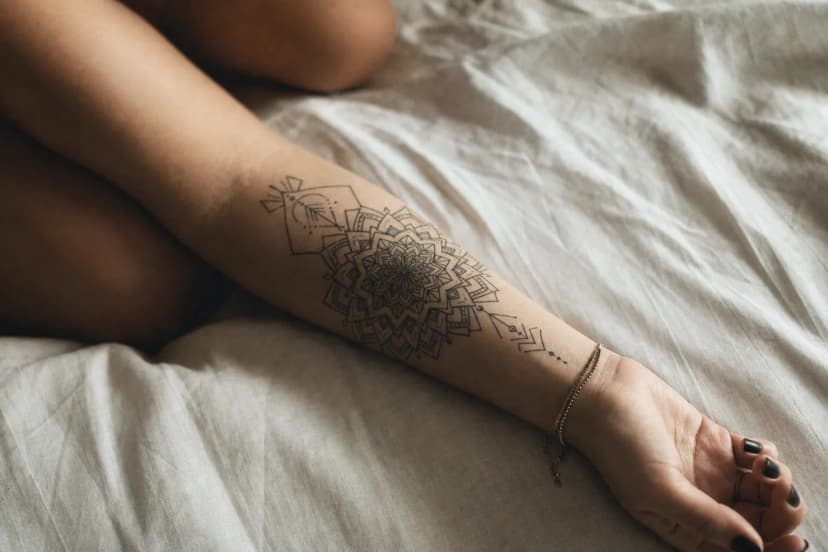
A fineline piece can be visually complex: dense botanical illustration, figurative portraiture, layered geometric construction. And a minimalist piece can be executed with a standard 5RL liner. If you're drawn to clean, stripped-back imagery, explore minimalist tattoo work alongside the fineline service. The consultation will help clarify which approach suits your idea.
The Craft Behind a Fineline Tattoo
Stencil placement and why 2mm matters
Before a single needle touches skin, the stencil has to be exactly right. If the stencil sits 2mm off-centre on a geometric fineline mandala, you'll see it every time you look at the finished piece. Not as a flaw you have to hunt for. As an asymmetry that catches your eye immediately. Fine work amplifies placement error; it has nowhere to hide.
The artist takes time with stencil positioning. That means adjusting for the natural curves of the body, checking alignment from multiple angles, and occasionally redrawing the transfer entirely before starting. This part of the session isn't wasted time. It's where the result is either protected or compromised.
Needle depth and skin tension
Ink needs to land in the dermis. Too shallow and it migrates upward as the skin heals, producing soft, blurry edges. Too deep and the strokes bleed laterally into surrounding tissue, widening lines over weeks. The acceptable window, especially for single-needle work, is narrow.
Skin tension is part of how the artist controls that depth. For bold work, the skin is stretched firmly to create a taut, even surface. Fineline work requires a more calibrated tension. Enough to stabilise without distorting the tissue, which would change how the needle enters and exits. It's a tactile skill built through practice, not something you can read in a manual.
Ink saturation in fine work
Fineline pieces use lighter pigment loads than bold work. Ink is deposited in passes rather than saturated fills. This produces the soft gradients and tonal variation that make delicate tattoo work in Lisbon so visually distinctive compared to traditional styles. Specific black inks behave differently under single-needle application. Some dilute predictably for grey-wash effects, others stay dense and sharp for pure linework.
Lisbon's humid summers add a variable that matters during healing. In July and August, the ambient moisture in the air softens the thin scabs that form over fresh fineline work. Soft scabs are more likely to lift prematurely, which can pull ink out of the dermis. During summer sessions, the studio recommends dry-wrap care for the first 48 hours rather than the breathable bandage approach used in cooler months.
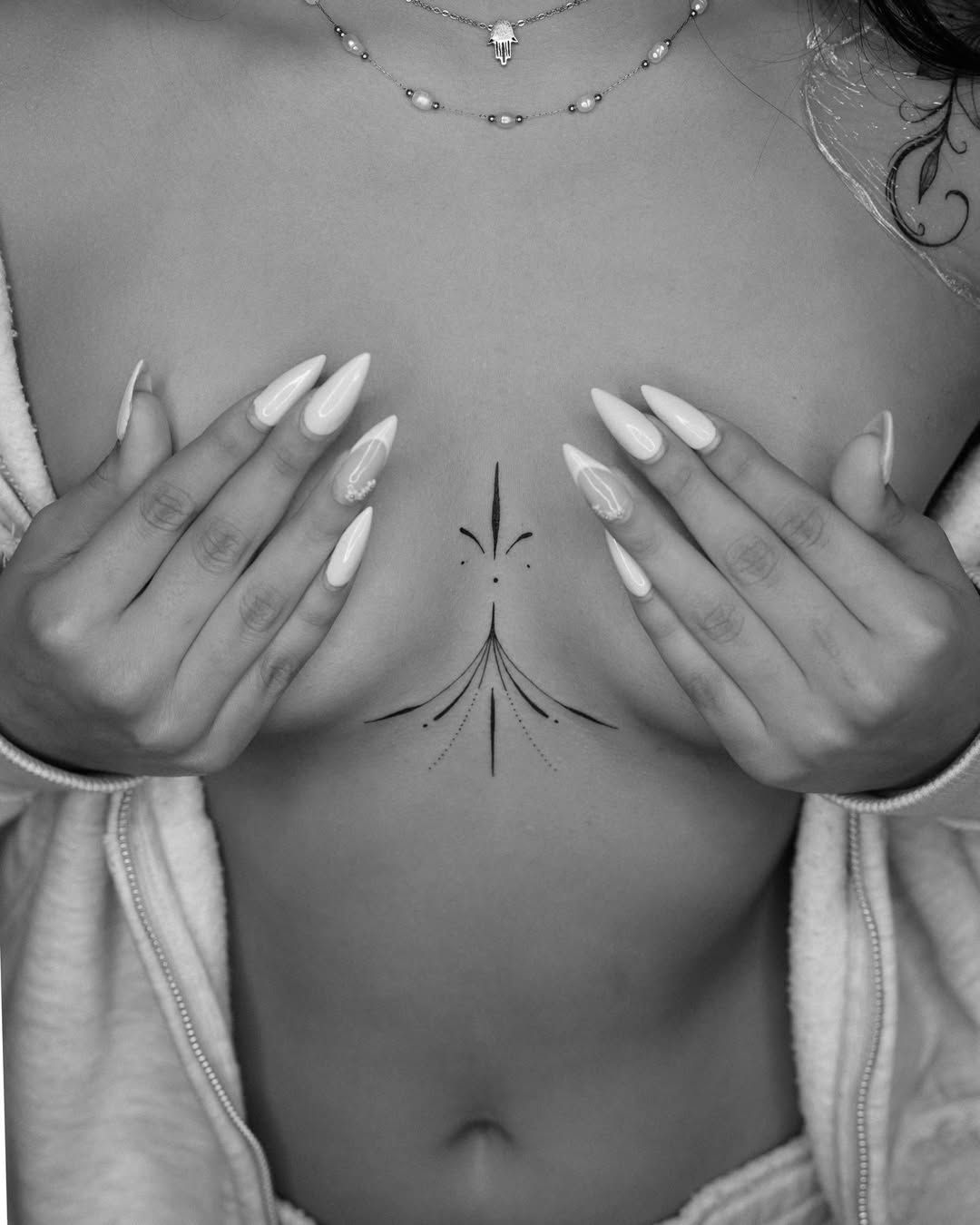
"A fineline design holds up over years when the linework is confident from the start. Not overworked, not too light. If the needle passes are right on the day, the piece earns its longevity. No amount of aftercare rescues a line that was laid in wrong."
How the Studio Approaches Fineline in Lisbon
The consultation: from reference image to custom sketch
You bring references. Photographs, sketches, screenshots. Anything that communicates the feeling you're after. The studio uses those as a starting point, not a template. Every design is sketched from scratch for your specific placement, proportions, and skin. Copy-pasting a reference directly onto skin is not how this studio works.
The consultation is also where the artist might push back on an idea. Not to be difficult, but because a design that looks beautiful on a phone screen sometimes doesn't translate to skin. Thin text at 1cm height. Micro-detail in a shadow area. Gradient work on a placement that gets constant friction. These are conversations worth having before the needle starts.
Placement decisions for long-term results
Where you put a fineline tattoo affects how long it stays crisp. Inner wrist and finger placements blur faster than outer forearm or upper arm. The mechanical reason is straightforward: skin on the inner wrist flexes constantly, fingers contact surfaces all day, and both areas receive significant UV exposure. That combination. Movement, friction, sun. Accelerates how quickly hairline strokes soften.
The outer forearm, upper arm, and sternum are more stable. Less daily flexion, easier to keep out of direct sun, and generally smoother surface texture for stencil transfer. The table below shows how placement affects typical session length and long-term crispness for fineline work.
| Placement | Skin stability | Sun exposure risk | Expected crispness (years 3-5) | Typical session length |
|---|---|---|---|---|
| Outer forearm | High | Medium | Good with sun protection | 2-3 hours (palm-sized) |
| Upper arm | High | Low-medium | Very good | 2-3 hours (palm-sized) |
| Sternum / chest | Medium-high | Low | Very good | 2-4 hours depending on size |
| Inner wrist | Low | High | Moderate; touch-up likely | 1-2 hours |
| Fingers / hands | Very low | Very high | Low; fading common | 45-90 minutes |
| Back / shoulder blade | High | Variable | Excellent | 3-5 hours for larger pieces |
Combining fineline with other styles
Fineline pairs naturally with micro-realism, geometric patterning, and botanical illustration. These combinations aren't forced fusions. They share the same technical demand for precision. A Greek mythology fineline work commission, for example, might combine a classical figurative subject rendered in micro-realism with geometric framing elements, all executed with single-needle linework throughout.
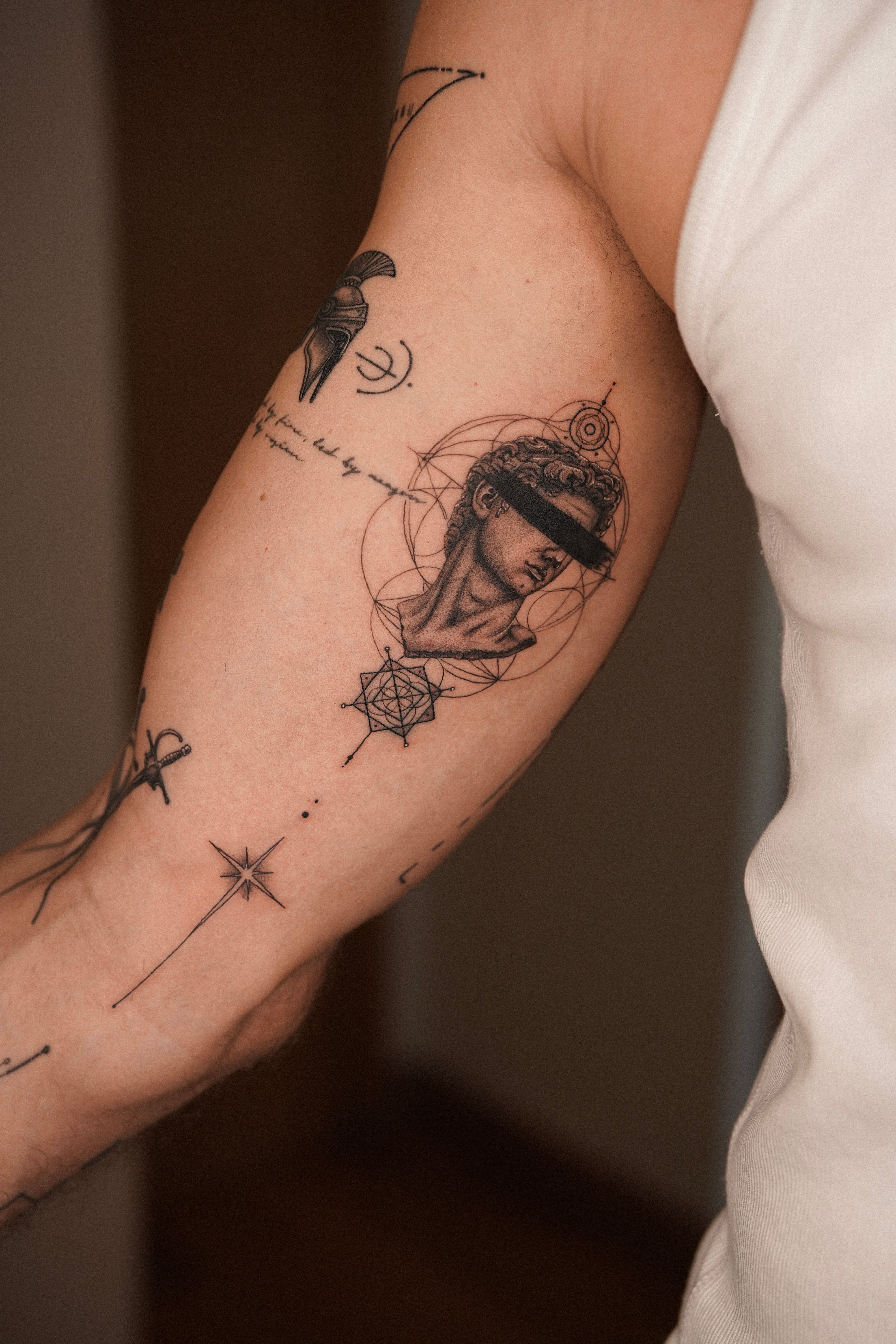
The studio handles this kind of multi-style composition regularly. The skill is knowing which elements to render with more density and which to leave light. Get that balance wrong and the piece reads as busy rather than layered.
Practical Guide: Preparing for Your Fineline Session in Lisbon
What to bring and how to prepare your skin
Skin condition on the day affects how cleanly a fine line tattoo artist in Lisbon can work. Dehydrated, flaky skin resists the needle unevenly. Hydrate daily with an unscented moisturiser for at least one week before your session. Nothing fancy needed. A basic fragrance-free lotion applied morning and evening does the job.
Lisbon's sun is strong from April through October. If your placement area has caught significant sun in the two weeks before your appointment, reschedule. Sunburned or tanned skin changes texture and pigment behaviour. The studio will ask about recent sun exposure at the start of your session.
- Moisturise the placement area twice daily for 7-10 days before the session
- Keep the placement out of direct sun for at least two weeks before
- Wear or bring loose clothing that allows easy access to the area. A button-front shirt for chest work, a sleeveless top for arm placements
- Eat a full meal around 90 minutes before your appointment
- Avoid alcohol for 24 hours before the session. It thins the blood and can cause the skin to bleed more, which interferes with ink settling
- Bring a small snack and water for longer sessions
Session length and what to expect
A palm-sized minimalist fine line tattoo in Lisbon typically runs two to three hours from stencil application to final wrap. Larger compositions. A detailed floral wrap from shoulder to elbow, or a figurative half-sleeve. Are spread across multiple sessions of three to four hours each. Splitting larger work keeps the skin in better condition and gives the artist clearer visibility on fresh tissue.
Healing a fineline piece follows a fairly consistent pattern over two weeks. The early days are about protection; the later days are about leaving it alone.
- Days 1-2: Keep the area clean and dry. The studio will apply an initial wrap. Follow the specific aftercare instructions given at your session.
- Days 3-4: Light peeling begins. Do not pick or scratch. Apply a small amount of unscented lotion once or twice daily.
- Days 5-7: Surface skin continues to peel. The piece may look dull or patchy. This is normal and temporary.
- Days 8-10: Peeling subsides. The lines start to look more settled. Continue moisturising gently.
- Days 11-14: Surface is largely healed. The design looks closer to its final state. Avoid sun exposure on the area.
- Weeks 3-6: The deeper dermis continues to settle. Keep the area out of direct sun. Avoid beach days and pool sessions. Lisbon's Atlantic coastline is close, but salt water and chlorine both affect healing fineline work.
For context on how the same level of technical precision applies to lettering and script work, the studio's guide on what great lettering actually takes covers adjacent territory worth reading before a consultation involving text.
Frequently Asked Questions
Does fineline fade faster than traditional tattooing?
Fineline tattoos can soften over time, particularly on high-movement or sun-exposed placements. On stable skin. Outer forearm, upper arm, sternum. And with consistent sun protection, a well-executed fineline piece holds its character for many years. Aftercare in the first month is the single biggest factor in long-term crispness. Placement is the second.
How small can a fineline tattoo be?
Most fineline pieces work best above 3-4 centimetres in their smallest dimension. Below that threshold, hairline details merge as the skin heals and the design loses legibility. Micro-realism techniques can push this further, but even then the artist sets a minimum size during consultation to ensure the finished piece reads clearly once fully healed.
Can I get a fineline tattoo over an existing piece?
It depends on the existing tattoo's density and colour. Fineline over light or well-faded work is often possible. Over saturated black or heavy colour, the hairline strokes simply disappear into the existing pigment. The artist assesses cover-up suitability in person and will give an honest answer rather than accept a booking that won't produce a good result.
How many sessions does a fineline sleeve take?
A full fineline sleeve typically requires four to seven sessions of three to four hours each, depending on the complexity of the design and how well the skin heals between appointments. The studio maps the full composition during consultation and confirms a realistic session estimate before any work begins. Rushing a sleeve rarely ends well.
Is fineline suitable for all skin tones?
Fineline works across a wide range of skin tones, though the design approach shifts. On deeper skin tones, higher-contrast compositions and slightly heavier line weights keep the piece readable long-term. The artist reviews skin tone during consultation and adjusts the design, ink selection, and needle configuration accordingly. This is a standard part of the process, not an afterthought.