Why Geometry Has Always Belonged on Skin
Geometric patterns predate the written word. You find them in ancient Greek friezes, in the interlocking stars of Islamic tilework, and in the knotwork that Celtic craftspeople carved into stone centuries before tattooing arrived in Western Europe. Structure and symmetry have always carried meaning. People have always wanted to carry that meaning on their bodies.
Lisbon carries its own geometric tradition. Walk through Alfama or stop outside almost any building in Príncipe Real and the azulejo tile panels stop you mid-stride. Those repeated geometric modules. Each one hand-painted, each one part of a larger grid. Are exactly the kind of thinking that informs serious geometric tattoo work. The studio has drawn directly on that tradition, as you can see in the Azulejo Tattoo. A piece inspired by Portuguese tile geometry.
Modern geometric tattooing is not tribal work. It's not old-school flash. It combines mathematical proportion with a contemporary fine art sensibility, and it tends to attract people who value structure, want their design to age with dignity, and find beauty in the things that don't move.
What 'Geometric' Actually Covers
The word gets used loosely. Worth being specific about what it means in practice, and what falls under this studio's work.
Sacred geometry and mandalas
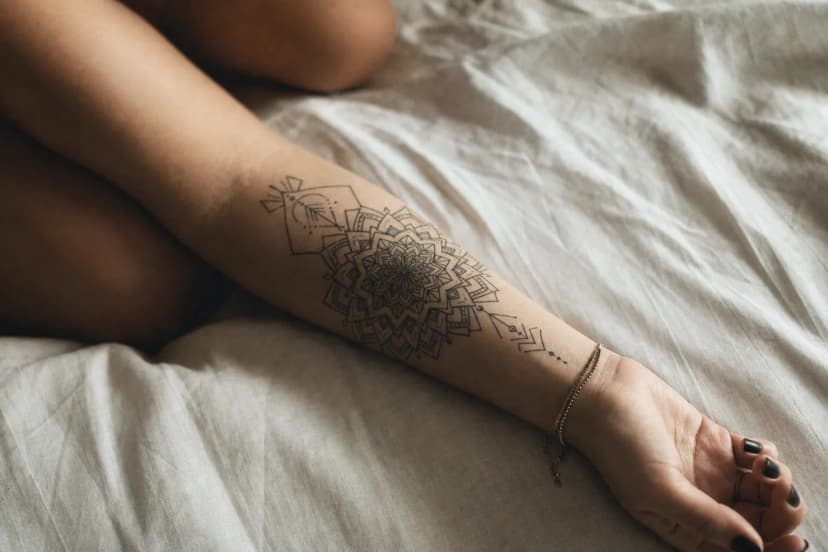
Sacred geometry refers to forms like the Flower of Life, Metatron's Cube, and the Vesica Piscis. Each carries specific proportional rules. Change one ratio and the whole system breaks. Mandalas sit in the same family. They're radially symmetrical designs where every segment must mirror the others exactly. A mandala with a single wayward line reads immediately as wrong, even to someone who can't explain why.
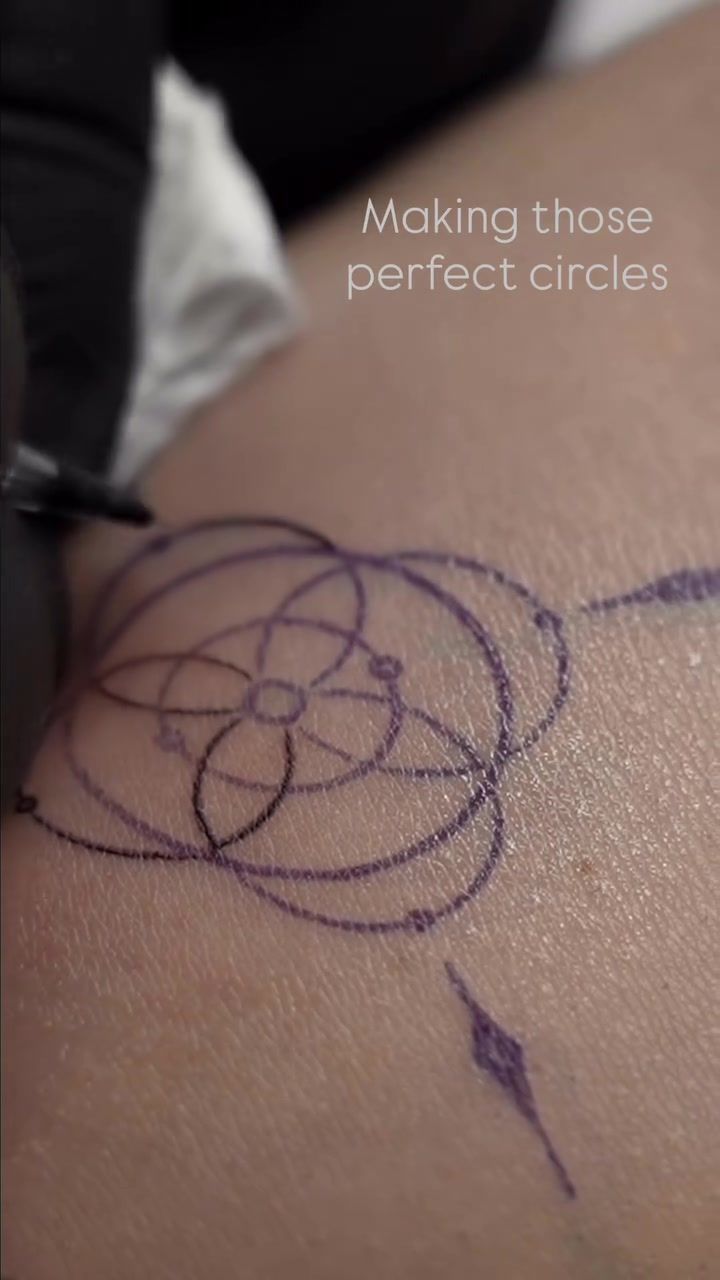
Linework and minimalist geometry
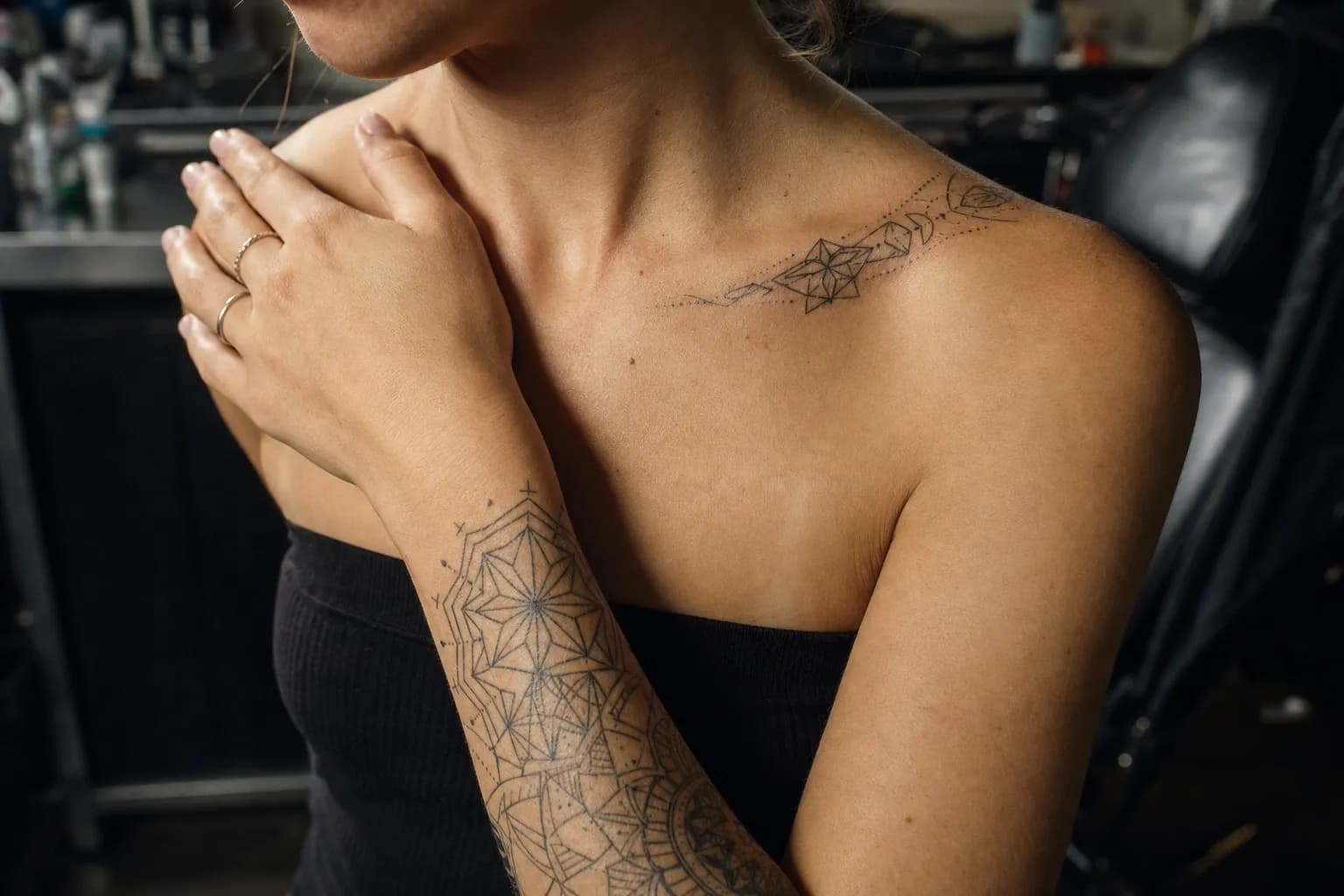
This covers pure geometric tattoo design: circles, polygons, grids, and the negative space between them. Stripped back to essentials, it belongs comfortably alongside the studio's geometric tattoo service and often overlaps with minimalist and fineline approaches. One misplaced vertex in a regular polygon is immediately visible. There's no organic variation to hide behind.
Geometric realism and hybrid pieces
Some of the most compelling work happens when a geometric framework surrounds a realistic figure. A portrait inside a precise linework border. A mythological scene held inside a hexagonal structure. The geometry gives the piece architectural backbone; the realism gives it warmth. This is a territory the studio works in regularly. See Icarus in Geometric Architecture for a clear example of how both languages can coexist in the same piece.
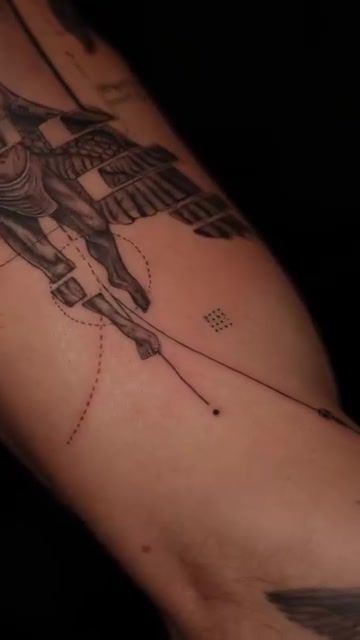
The studio does not take tribal work, old-school American traditional, or Japanese irezumi. If your reference sits in one of those categories, this is the honest moment to know that upfront. Geometric work here is mathematical, contemporary, and intentional.
Why Precision Is Non-Negotiable
Geometric tattooing is unforgiving in a way that organic styles are not. A slightly loose petal in a floral piece reads as natural variation. A slightly loose line in a mandala reads as a mistake.
The stencil problem
If a mandala's central axis sits 1-2mm off-centre when the stencil is applied, the asymmetry is visible every time you look at the piece. It never goes away. The challenge is that bodies are curved, and stencils are flat. Transferring a geometric design onto a forearm, ribcage, or shoulder means mapping the design to compensate for the curve, or the geometry will distort the moment the skin relaxes. This is one of the reasons what precision means in geometric tattooing is worth understanding before you book.
Needle choice and machine settings
Fine geometric lines typically use a single needle or a 3RL configuration. A 3RL. Three-round liner, a tight cluster of three needles. Produces a slightly heavier line than a single needle while remaining precise enough for geometric work. Single needles create the finest possible mark; they suit sacred geometry tattoos and mandalas where line weight needs to be consistent throughout. Shading fills inside geometric shapes call for different needle groupings entirely. Each choice affects how the finished piece reads.
Skin tension and placement
The artist holds the skin taut throughout the session. On looser areas. Inner arm, belly, inner thigh. Maintaining that tension is harder, and line wobble becomes a real risk. Flat, relatively stable planes of skin are more forgiving. The upper arm, outer thigh, and back panel all suit complex geometric work well. Wrists and ankles are possible but require extra planning to account for the way the skin wraps around the joint.
How the Studio Approaches Geometric Work
Geometric pieces don't get winged. The artist sketches or renders every design digitally before the session begins. That step isn't an upsell. It's the only way to verify that the proportions work, that the symmetry holds, and that the scale suits the placement you've chosen.
"With geometric work, the design either adds up or it doesn't. We check everything on screen before it ever touches your skin, because some corrections are impossible once the ink is in."
Many pieces combine geometric frameworks with fineline or micro-realism elements in the same session. The mandala tattoo that borders a portrait, the compass rose that sits inside a precise hexagon. These hybrid approaches are standard practice here, not experimental departures. If that combination interests you, the guide on finding a geometric tattoo artist in Lisbon covers what to look for when evaluating that kind of work.
Lisbon's humid summers affect aftercare in specific ways. Breathable wraps rather than cling film help the skin settle without trapping excess moisture. The artist covers this at consultation, not as a footnote after the session is done.
Sizing, Placement, and Session Lengths
Scale and complexity drive session length more than any other factor. Here's a general guide.
| Piece type | Approximate size | Typical session length | Best placements |
|---|---|---|---|
| Small mandala or sacred geometry symbol | Palm-sized | 2-3 hours | Inner wrist, forearm, sternum |
| Medium forearm linework panel | Forearm width, 15-20 cm | 4-5 hours | Outer forearm, upper arm, calf |
| Large geometric fineline tattoo or hybrid piece | Back panel or full thigh | Multiple sessions, 4-6 hours each | Back, outer thigh, upper arm |
| Geometric realism hybrid (portrait in geometric frame) | Variable, typically 15-30 cm | 2-4 sessions depending on detail | Upper arm, thigh, back |
Placement affects more than aesthetics. Complex, symmetrical work belongs on skin that holds still and heals predictably. The upper arm, outer thigh, back panel, and calf all fit that description. The wrist, sternum, and ribs are possible. But each requires deliberate planning to account for curvature and movement during healing.
Here's what to prepare before you come in:
- Visual references: architecture photographs, tile patterns, geometry illustrations, or screenshots from design apps. The more specific you are about line weight and proportion, the more useful the conversation becomes.
- Moisturised skin, free of any product on the day of the session. Dry or flaky skin makes stencil transfer unreliable.
- A clear sense of where on your body you want it placed, and ideally why. Placement decisions affect the design.
- Food and water before a longer session. A four-hour sit demands that your body is properly fuelled.
Aftercare for geometric work follows a clear sequence:
- Keep the initial wrap on for the first 24 hours. Your artist will advise on whether a breathable film wrap or a standard bandage suits your skin and the session length.
- After removing the wrap, clean gently with unscented soap and pat dry. Apply a thin layer of fragrance-free moisturiser two to three times daily.
- Avoid submerging the tattoo in water. No swimming, no baths. Until the skin has fully closed, typically around two weeks.
- Stay out of direct sun during the healing period. Lisbon's summer UV is intense, and new fine linework fades faster than you'd expect under that kind of exposure. Once healed, use SPF 50 any time the piece will be in the sun.
Fine geometric lines settle into the dermis over six to eight weeks. The piece will look different at week one than it does at week eight. Trust the process, follow the aftercare, and judge the final result after the skin has fully settled.
Frequently Asked Questions
Do geometric tattoos age well?
Fine geometric linework fades slightly as ink migrates in the dermis over years, but well-executed pieces with adequate line weight hold their structure for a long time. Lines placed in low-friction areas. Upper arm, back, outer thigh. Tend to age far better than those on hands or fingers, where constant movement and sun exposure take a toll.
Can geometric work be combined with other styles?
Yes, and it produces some of the most compelling results available. A geometric framework can surround a realistic portrait or mythological figure, giving the piece architectural structure without competing with the organic detail inside. The studio works regularly in this hybrid territory, blending precise linework with micro-realism elements in a single piece.
How long does a geometric tattoo session take?
Scale and complexity set the pace. A small palm-sized mandala typically runs two to three hours. A forearm panel with intricate linework can take four to five hours. Large back or thigh pieces covering geometric and realism hybrid work usually require multiple sessions spaced a few weeks apart to allow for proper healing between stages.
Is geometric tattooing painful?
Pain varies by placement more than by style. Flat areas like the upper arm and outer thigh are generally manageable for most people during a standard session. Bony spots. Ribs, spine, wrist. Are more intense. Geometric work can involve long stretches of repetitive linework, so session pacing matters. Communicate with your artist throughout.
What should I bring to a geometric tattoo consultation in Lisbon?
Bring visual references: architecture photographs, tile patterns, geometry illustrations, or screenshots from design apps. The more specific you are about proportions and line weight, the better the artist can plan. Come with moisturised, product-free skin and a clear sense of placement. Precise references lead to better consultations and stronger final designs.
How do I care for a geometric tattoo in Lisbon's summer heat?
Keep the fresh tattoo out of direct sun entirely during the initial healing period. Lisbon's summer UV is intense and will fade new fine linework quickly. The humidity means breathable wraps help the skin settle without trapping excess moisture. Once fully healed, use SPF 50 any time the piece will be exposed outdoors.