Why Fineline Is the Most Technically Demanding Style You Can Choose
Pick up any two tattoo needles and hold them side by side. A standard shader needle is a tight cluster of five, seven, or nine points soldered together. A single needle is exactly what it sounds like: one point. Everything the fineline style produces. Every hairline curve, every botanical petal, every portrait shadow. Comes from that single contact with skin. There's nowhere to hide.
What 'single-needle' actually means
A single-needle setup runs at a lower voltage and a slower stroke speed than a conventional liner. The artist controls depth with hand pressure alone, driving ink into the dermis (the stable second layer of skin beneath the surface epidermis) without punching through it. Too shallow and the ink falls out during healing. Too deep and you get blowout. Ink spreading sideways beyond the intended line like a bruise that never fully resolves.
The margin for error is measured in fractions of a millimetre. That's not an exaggeration.
Why thin lines punish any error immediately
Bold traditional work uses solid black fills and thick outlines. Those fills absorb small wobbles the way a wide brushstroke absorbs a slight hand tremor. Fineline has no fill, no buffer. A 0.5mm inconsistency in line weight is visible from arm's length on a finished piece. Experienced artists working in bolder styles will tell you fineline keeps them honest.
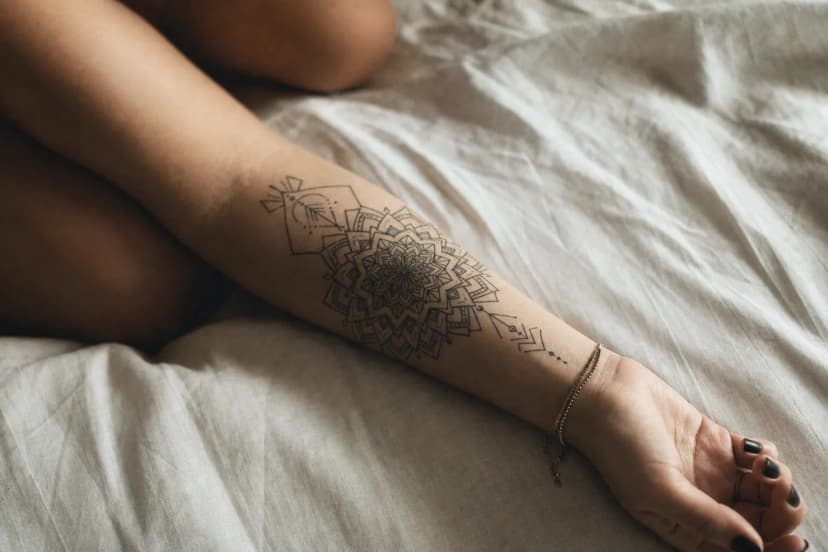
"If the stencil sits 2mm off-centre on a mandala, you'll see it every time you look at the piece. We check alignment from three angles before a single needle pass happens."
This is why the studio's fineline service is consultation-only. Rushing placement on delicate work shows immediately, and fixing it is far harder than getting it right the first time.
What Good Fineline Work Actually Looks Like
Fresh tattoos always look sharper than they really are. The skin is slightly inflamed, the ink sits right at the surface, and the contrast is at its absolute peak. That's why healed photos are the only real test of a fineline artist's quality. If a studio's portfolio is exclusively fresh shots taken the same day, that's worth noticing.
Line consistency from start to finish
Look at the last inch of a line, not the first. Artists warm up. Hand pressure steadies over time. The tell is whether the line weight at the tail end of a long curve matches the beginning. On a well-executed piece it does. On rushed work, lines taper or thicken unpredictably.
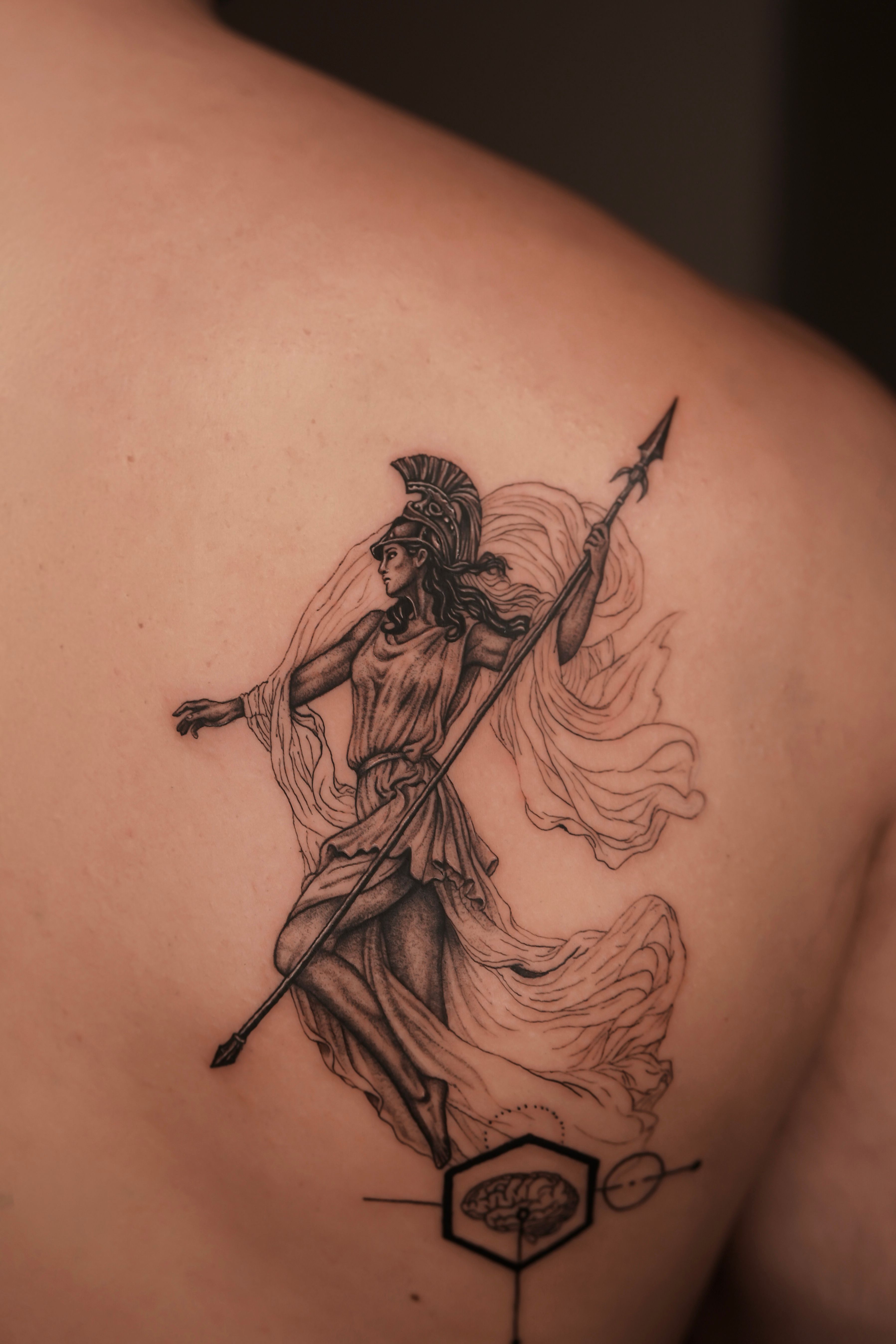
Ink saturation is another marker. The artist needs to deposit enough pigment to survive the healing process without oversaturating. Which causes blowout. On the back and upper arm, where skin is thicker and more stable, saturation is more forgiving. On the ribcage or sternum, the skin moves constantly with breathing, and the technique has to adapt.
How the studio approaches design before the needle touches skin
Every fineline piece starts with a digital sketch review during consultation. Sizing gets confirmed against the actual placement area. The stencil (the temporary transfer that guides needle placement) gets checked for alignment before any session begins. This isn't formality. It's quality control built into the process.
Fineline Healing in Lisbon's Climate
Lisbon sits on the Atlantic coast at about 38 degrees north. Summers are dry by Iberian standards, but the city's proximity to the river and the ocean means ambient humidity climbs steadily through July and August, especially in lower neighbourhoods like Cais do Sodré and Alfama. That moisture matters for healing tattoos.
Humid summers and what they mean for aftercare
Second-skin wrap (the thin adhesive film applied immediately after the session) traps moisture against the tattoo. In Lisbon's summer heat, leaving wrap on too long allows sweat and plasma to pool underneath, which can lift pigment and soften the skin. The studio gives specific wrap-removal timing based on the season. In July, that window is shorter than in January. Follow it precisely.
Thin lines settle into the dermis over six to eight weeks. During that window, UV exposure breaks down pigment before it's fully stable. Lisbon's UV index peaks between May and September, so a summer fineline tattoo needs consistent SPF50 cover once it's fully surface-healed (around the two-week mark). No ocean dips, no pool sessions for at least three weeks. The salt and chlorine pull moisture from the skin and interfere with pigment retention.
A simple weekly aftercare schedule
- Days 1-3: Leave second-skin wrap on per the artist's instructions. Keep the area dry and out of direct sun.
- Days 4-14: After wrap removal, wash gently with fragrance-free soap twice daily. Pat dry. Apply a thin layer of unscented moisturiser (fragrance triggers contact dermatitis on healing skin).
- Weeks 3-4: Surface skin closes. Avoid swimming pools, ocean water, and prolonged soaking. The tattoo may look slightly faded. This is normal as the epidermis regenerates.
- Weeks 5-8: Lines settle into the dermis. Apply SPF50 if the area is exposed to sunlight. Avoid tanning beds entirely.
Winter healing in Lisbon is more stable. Temperatures stay mild (rarely below 10°C), sweating is minimal, and UV is lower. If you can choose your session timing, late autumn or winter is a reasonable option for complex pieces. For more on how aftercare parallels across detailed styles, what great lettering actually takes covers similar ground from a different angle.
The NHS tattoo aftercare guidance covers general principles well, though it doesn't account for Lisbon's specific climate conditions.
Placement: Where Fineline Thrives and Where It Fades Fastest
Skin is not uniform. It varies in thickness, elasticity, and how much friction it takes every day. A fineline tattoo on your upper arm lives a very different life from the same design on your index finger. Understanding why helps you make a placement decision you won't regret in three years.
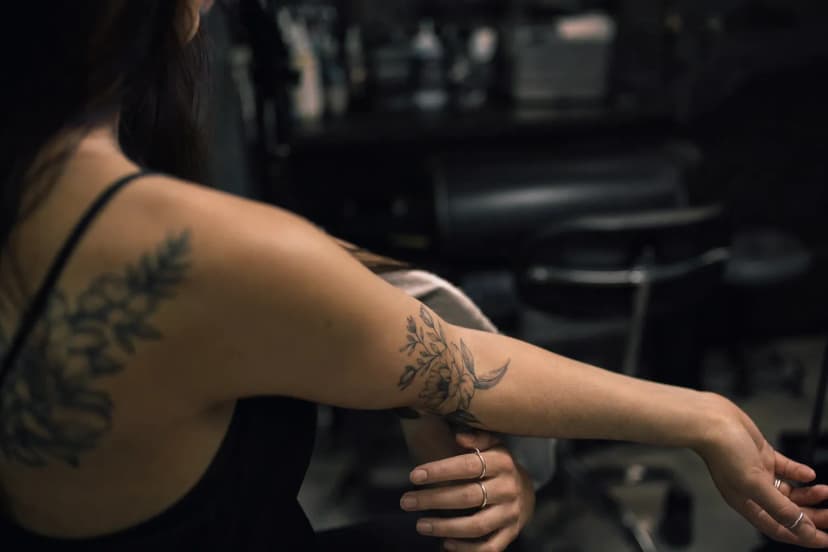
The outer arm and back have dense, stable dermal layers. Ink sits securely. Movement is limited. These placements give fineline its best chance at long-term clarity. The ribcage and sternum are more complex. Skin is thinner and moves constantly. But with correct technique they produce striking results, as this ornamental sternum piece shows. Fingers, inner wrists, and feet are genuinely difficult. Friction, skin folding, and constant movement blur lines faster regardless of how well the tattoo was executed.
| Placement | Skin Stability | Expected Longevity | Typical Session Length |
|---|---|---|---|
| Upper arm / outer arm | High | Long-term with SPF care | 1-3 hours depending on size |
| Back (upper / lower) | High | Long-term | 3-5 hours with breaks |
| Forearm | Medium-high | Good; sun exposure is the main risk | 1-2 hours |
| Sternum / ribcage | Medium | Good with correct technique | 2-3 hours |
| Inner elbow / inner arm | Medium-low | Moderate; skin folds accelerate fading | 1-2 hours |
| Inner wrist | Low | Shorter; requires touchup sooner | 45 min-1 hour |
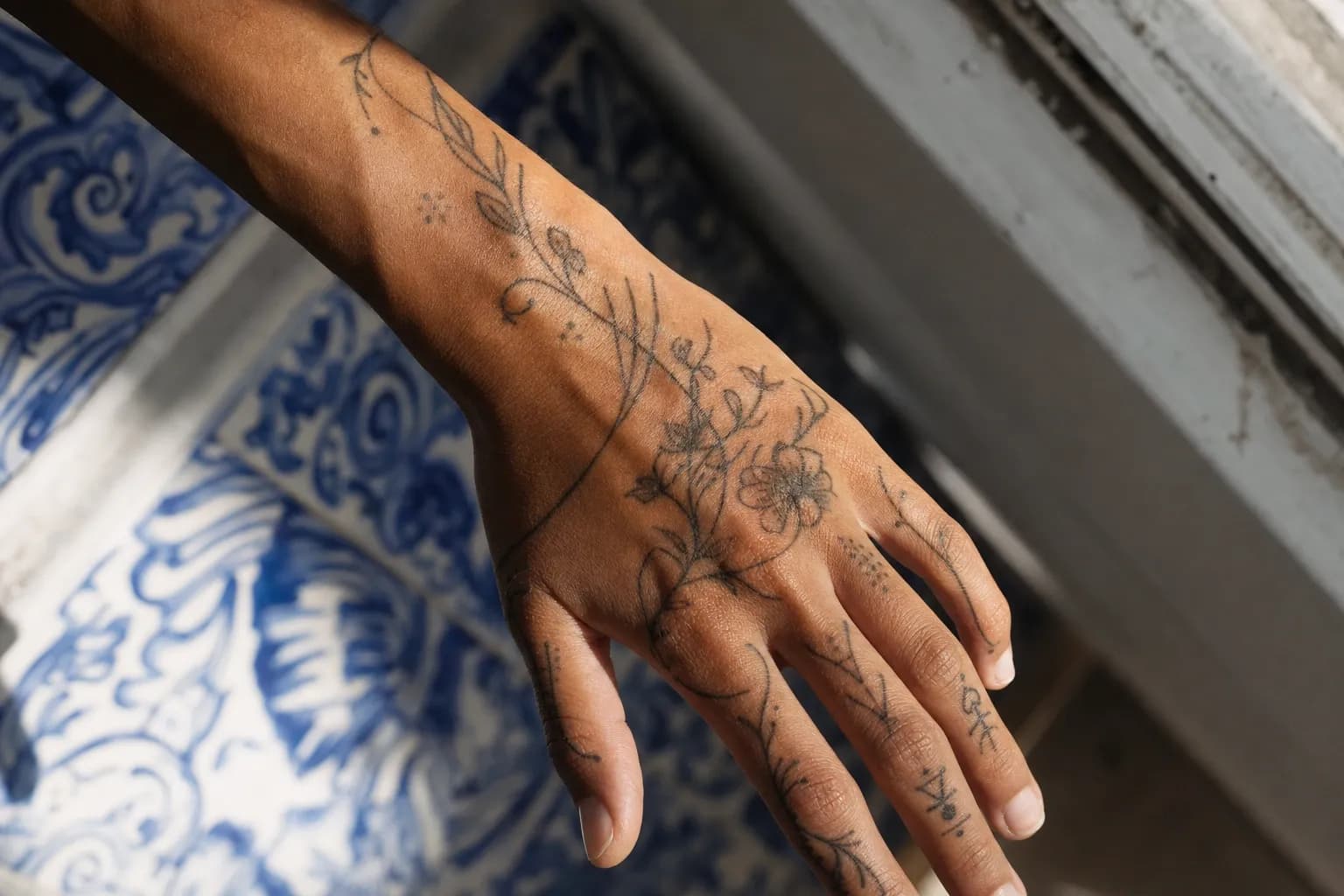
| Fingers / hands | Very low | Short; friction and skin cell turnover are constant | 30-45 min |
| Feet / ankles | Low | Short; footwear friction and sweat accelerate fading | 45 min-1 hour |
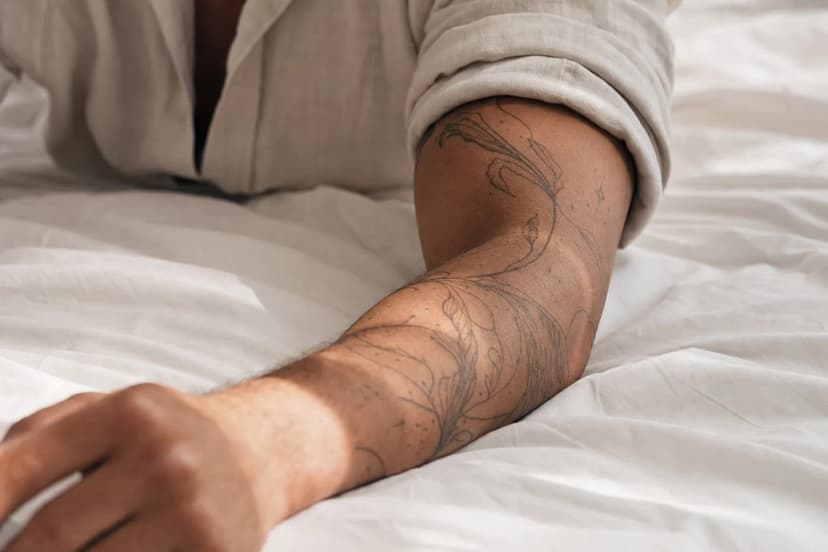
The inner elbow deserves a specific note. Skin there is thin and constantly creasing. Even a technically excellent fineline piece in that spot will show early fading along the fold lines. It's not a reason to avoid the placement entirely, but it is a reason to size up and simplify the design.
How to Choose a Fineline Artist (When 'Near Me' Searches Aren't Enough)
Searching for a fineline tattoo near you in Lisbon will surface a lot of results. Proximity is not the same as specialisation. Travelling from Alfama to Príncipe Real for an artist who genuinely specialises in single-needle work is worth it. Travelling from Lapa to a studio around the corner that dabbles in every style is not.
Portfolio red flags to watch for
- Only fresh photos posted. Every tattoo looks sharp the same day. Ask for healed results taken six weeks or more after the session.
- One hero image, inconsistent rest. A portfolio with one stunning fineline piece and mediocre surrounding work suggests the hero is an outlier, not the standard.
- No variation in scale. A fineline artist who only posts small simple designs and avoids larger complex pieces may not have the technical range for detailed work.
- No micro-realism or shading examples. Single-needle work often blends with micro-realism shading for depth. If the portfolio shows no tonal range, the artist may be working in a narrow band of the style's possibilities.
What to ask at consultation
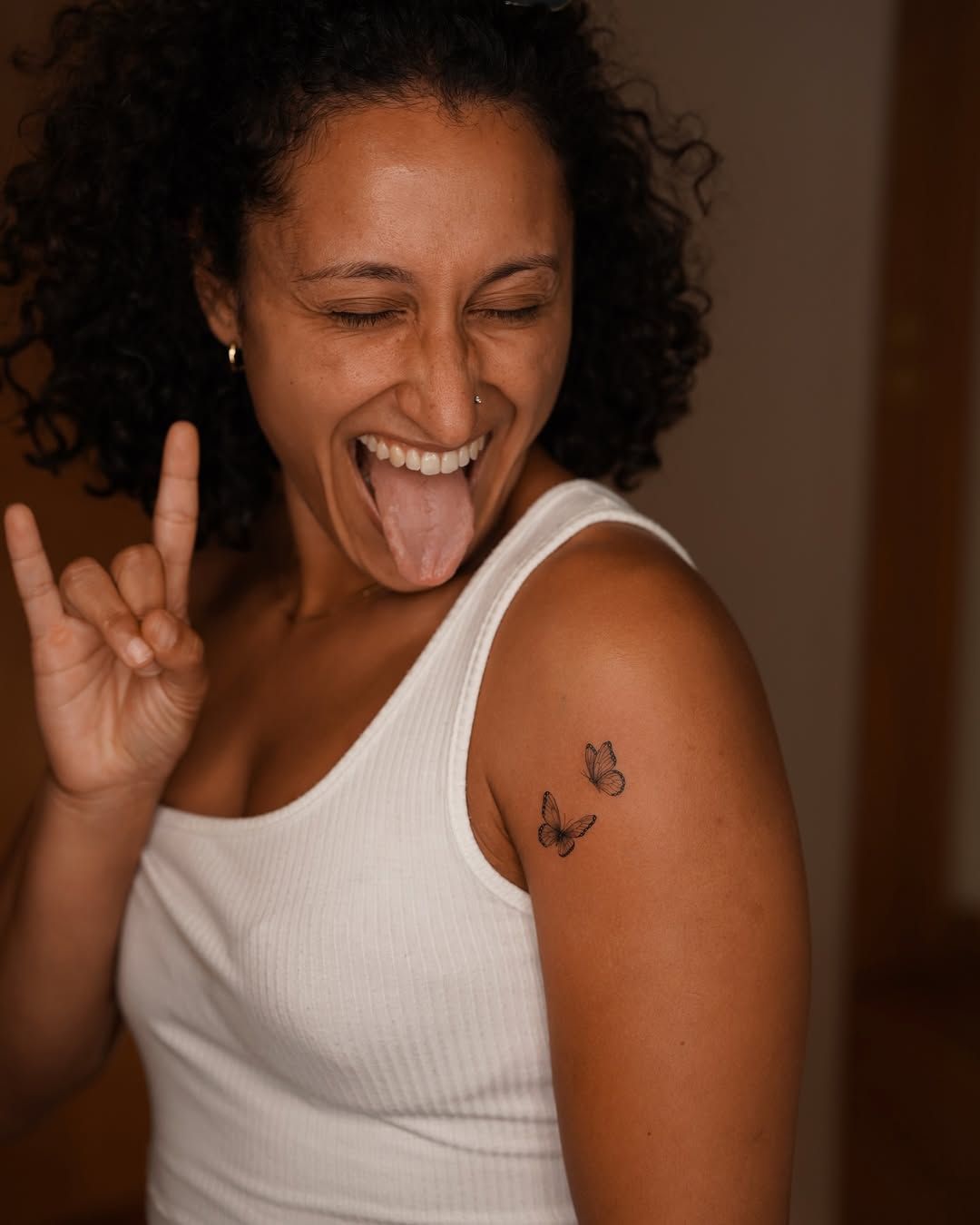
Ask directly about touchup policy. Fineline lines can require a touchup session four to six weeks after healing. Especially in challenging placements. A studio that charges full price for touchups on fresh work, or refuses to discuss the possibility, is not operating in good faith. Ask also how the artist adapts sizing recommendations for different skin tones; fineline detail on darker skin tones requires different line spacing to remain legible.
For clients interested in combining fineline technique with classical subjects, the studio's Greek mythology service shows how single-needle precision applies to figurative and historical iconography.
Practical Details Before You Book
A small fineline piece. A botanical motif at 4-5 cm, a simple geometric shape. Takes one to two hours including stencil preparation and placement checks. A detailed back piece like a large figurative or multi-element composition runs four to five hours with breaks built in. Sitting still for that long is its own skill; come rested, eat a light meal beforehand, and wear clothing that gives easy access to the placement area without needing to be removed entirely.
The studio sits in the Príncipe Real and Rato area of Lisbon, accessible by metro (Rato station on the Yellow Line) or a short walk from Avenida da Liberdade. No walk-ins for fineline work. The consultation process exists because this style demands precise sizing and placement discussion before any session is booked. Rushed fineline is simply bad fineline.
- Reference images: Bring three to five examples of work you like. Screenshots on your phone are fine. Showing what appeals to you is faster than describing it.
- Sizing minimum: For multi-element designs with internal detail, the studio generally recommends a minimum of 4-5 cm at the widest point. Below that, fine lines sit too close and blur as the skin heals. A single-element minimal design (a small flower, a geometric shape) can work at 2-3 cm.
- Avoid alcohol for 24 hours before: Alcohol thins blood, which increases bleeding and can affect how cleanly ink is deposited.
- Skin hydration matters: Well-moisturised skin in the days before the session takes ink more evenly than dry skin. This is especially relevant in summer when Lisbon's wind dries exposed skin faster than people expect.
If you're considering a fine line tattoo Portugal clients often associate with a delicate, almost illustrative quality, it helps to see the full range of what the style can do. The studio's portfolio spans minimalist single-element work through to complex multi-session back pieces, and browsing it before consultation gives you a clearer sense of what's achievable at different scales. As a delicate tattoo artist in Lisbon working in this style demands, the standard is consistent line weight and ink saturation across the entire piece, not just the photographed detail shots.
For context on how the studio handles typography with the same single-needle discipline, the article on what great lettering actually takes is worth reading before a consultation that involves text.
The Healthline tattoo aftercare guide covers general wound care principles that apply to fineline healing alongside your artist's specific instructions.
Frequently Asked Questions
How long does a fineline tattoo take to heal?
The surface skin closes within two weeks, but thin lines settle fully into the dermis over six to eight weeks. During that window, keep the area out of direct sun and avoid saltwater or chlorinated pools. Lisbon's humid summers can slow surface healing slightly, so follow your artist's wrap-removal timing carefully.
Do fineline tattoos fade faster than bold tattoos?
They can, but placement and aftercare matter more than line weight alone. Fineline work on stable skin. Upper arm, back, sternum. Holds well for years. High-friction areas like fingers or inner wrists fade faster regardless of style. A well-executed fineline piece with consistent sun protection keeps its detail for a long time.
What size should my fineline tattoo be?
For a design with multiple internal details, the studio recommends nothing smaller than 4-5 cm at its widest point. Below that, fine lines sit too close together and blur as the skin heals. Simple single-element designs. A small botanical or geometric shape. Can work at around 2-3 cm. A minimalist fineline tattoo in Lisbon's sunny climate needs slightly more line spacing than equivalent work done in lower-UV environments.
Can fineline work include shading or realism elements?
Yes. Single-needle work pairs naturally with micro-realism shading, where the artist builds soft gradients using tiny dot clusters rather than solid fills. This technique adds depth without adding line weight, and it's one of the approaches the studio uses regularly in portrait and botanical fineline pieces.
Is a consultation necessary for a fineline tattoo, or can I just walk in?
A consultation is required for all fineline work at this studio. Fineline designs need precise sizing, stencil placement and skin-tone consideration before any booking is confirmed. Walk-ins don't give the artist enough time to plan the piece properly, and rushed placement on delicate work shows immediately in the finished result.